
The Ultimate List of 15 Apps for China: What You Really Need Before You Land

Travelling to China isn’t as straightforward as visiting many other countries thanks to the Great Firewall of China and our overall dependance on mobile phone apps as a society.
Whether you’re heading to Shanghai, like I did or somewhere more off the beaten path, there’s one thing you absolutely must prepare before your trip: your phone. The Great Firewall has been in place since 2006 and is designed to block many popular apps and sites to the public within mainland China.
Thankfully, there is a whole suite of incredibly powerful apps for China that you can download. The only catch is – you need to download and register them before you leave your home country.
Now, people will tell you that you need tons of apps to travel in China. Depending on the length of your stay and purpose of your trip, I would disagree. For a short trip to Shanghai, like ours, you really only need a handful – and I’d call these non-negotiable.
Essentially, Google is no-go zone, so locating places on google maps will be virtually impossible. Much to Mark Zuckerberg’s dismay, Whatsapp, Facebook and Instagram are all also blocked, along with YouTube, Netflix and and many others we are accustomed to using daily.
Sigh.
It’s not all bad news though, some of these Chinese apps are incredibly useful once you get the hang of them – and they’ll make your time in China much smoother.
Here’s my personal guide to the best apps for China, tried and tested on the ground myself.
This post may contain affiliate links which means that I may earn a small commission, at no extra cost to you, for qualifying purchases. For more information, read our disclaimer.
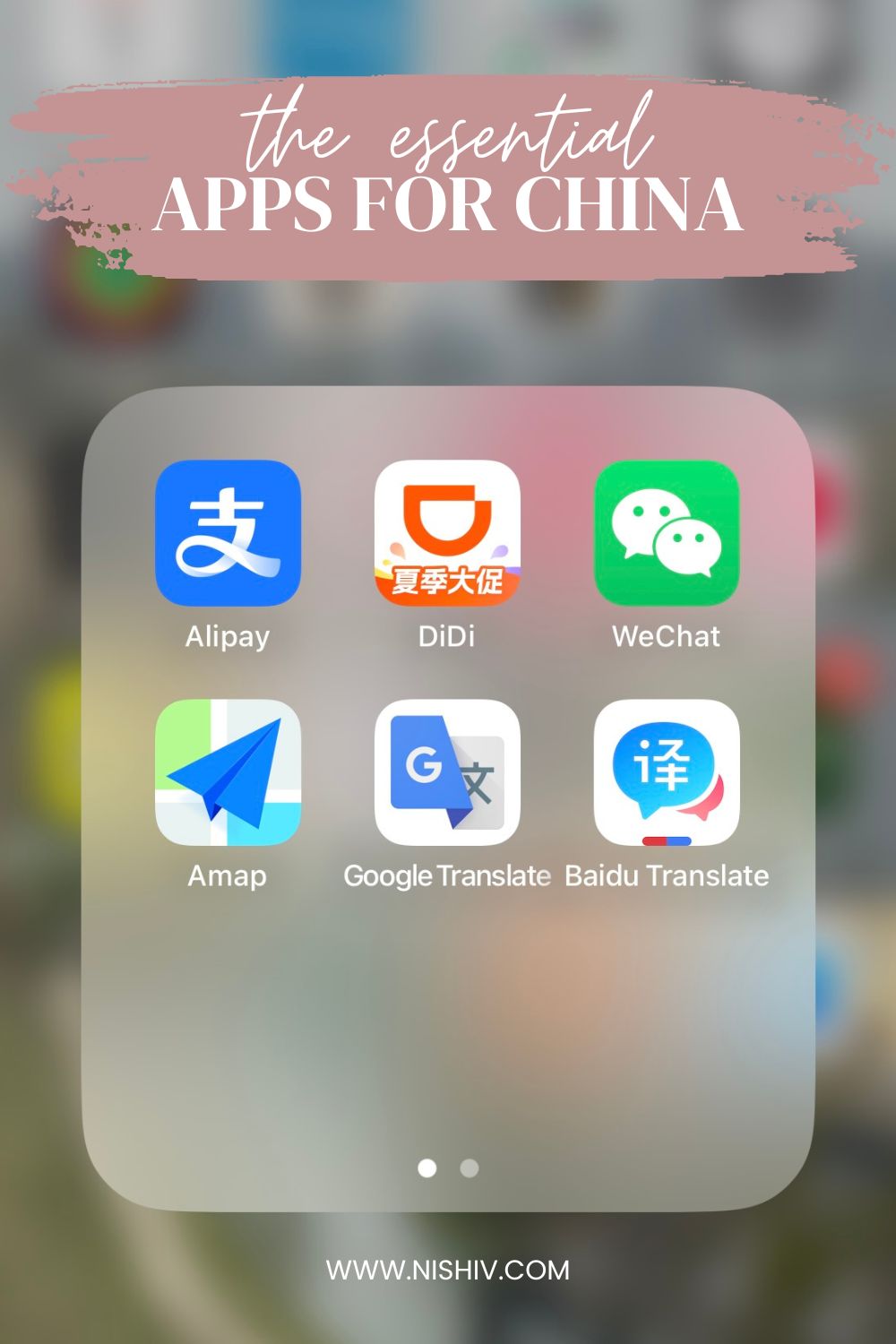
No time to read about apps in China now? PIN THIS for later!

The apps you really need before you land in China
While each app in China has its main purpose, many are multi-functional. This is great news if, like me, you want to save phone storage for the 5000 photos you’ll inevitably end up taking on your trip – true story.
My biggest tip? Download and register these apps before you go. I had issues registering one of them. It took a full week to resolve, and their customer support? Basically non-existent.

1. Alipay (支付宝 – Zhīfùbǎo)
If you’ve ever wondered how to pay in China, the simple answer is Alipay. While cash is still legal tender in China, almost nobody uses it. In fact, paying with cash can be so rare that people might even refuse to accept it.
Alipay is an essential app in China and one you will need to have installed and registered before you fly. Think of it as a cross between your bank card and Paypal. It’s used for everything; dinners, taxis, attraction tickets, and even for ordering food in certain restaurants through their QR code.
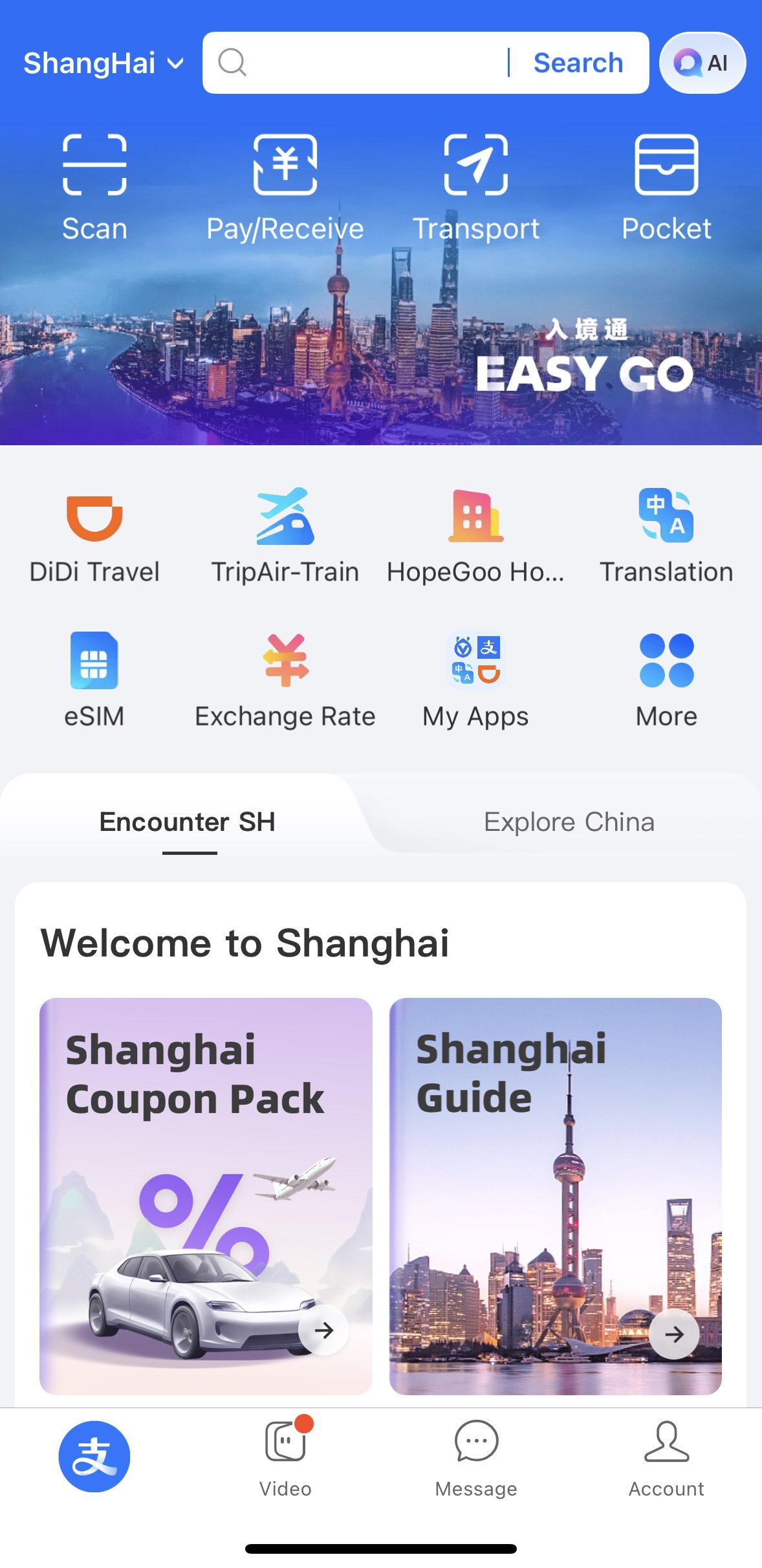
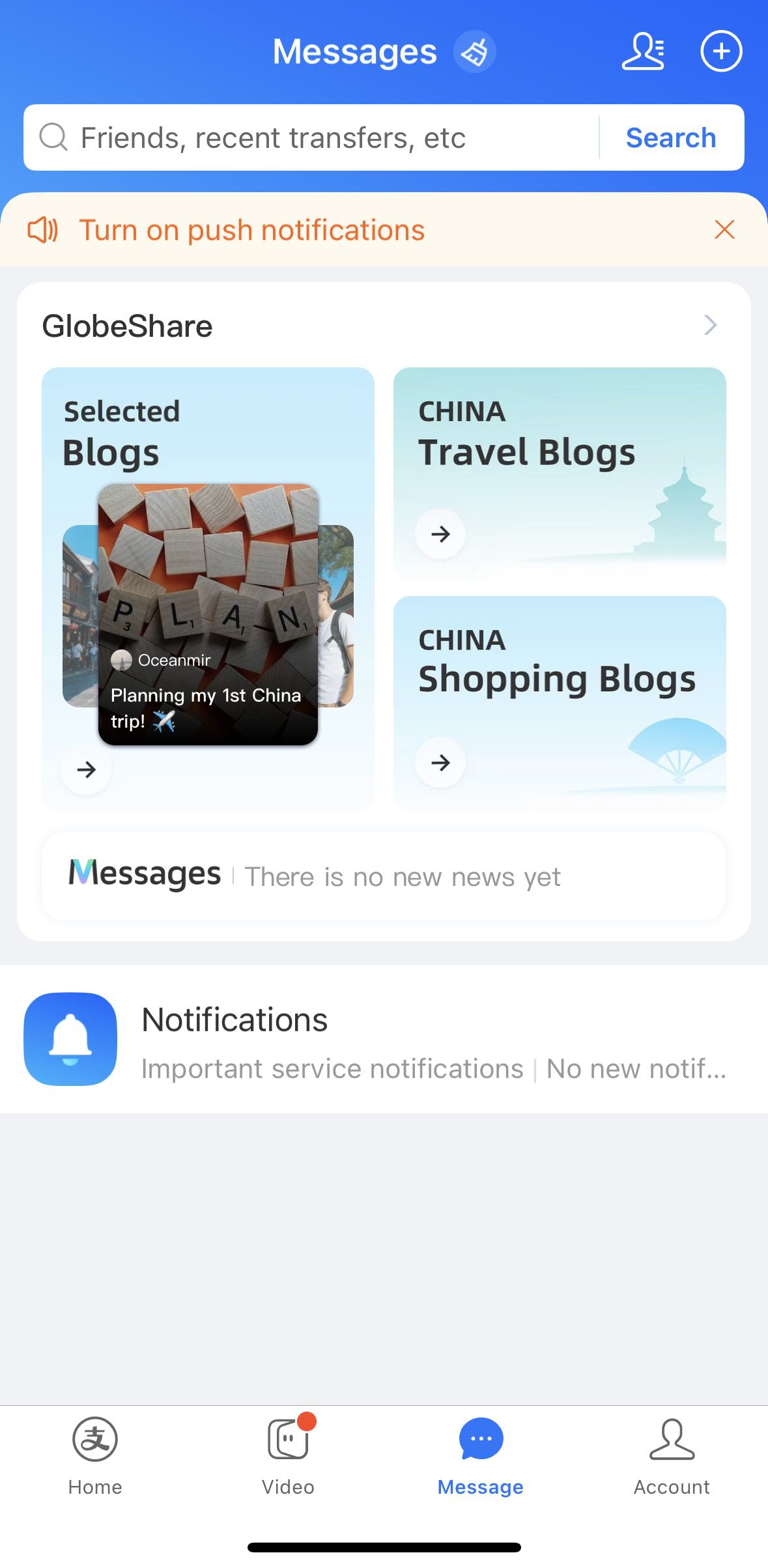
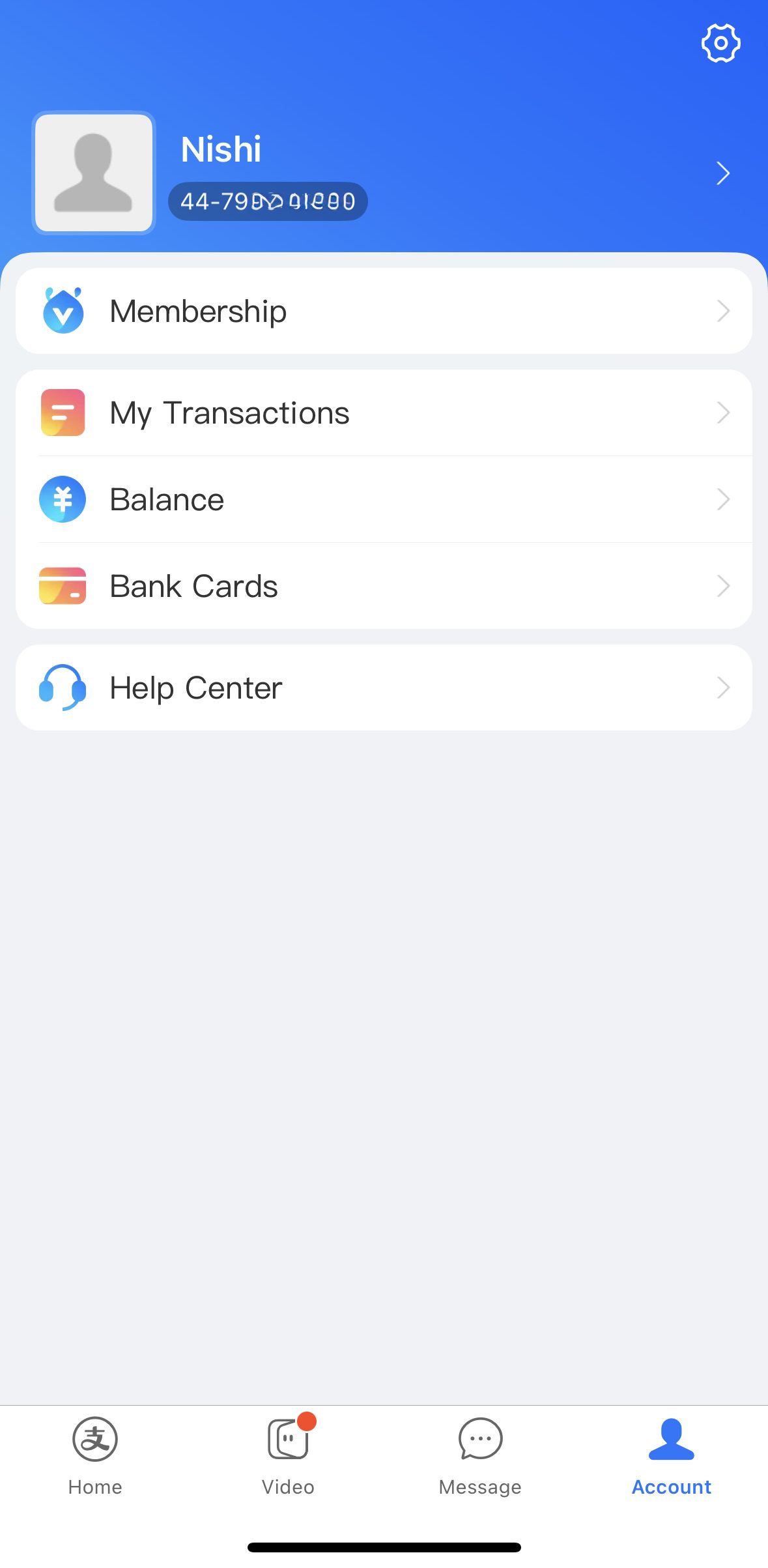
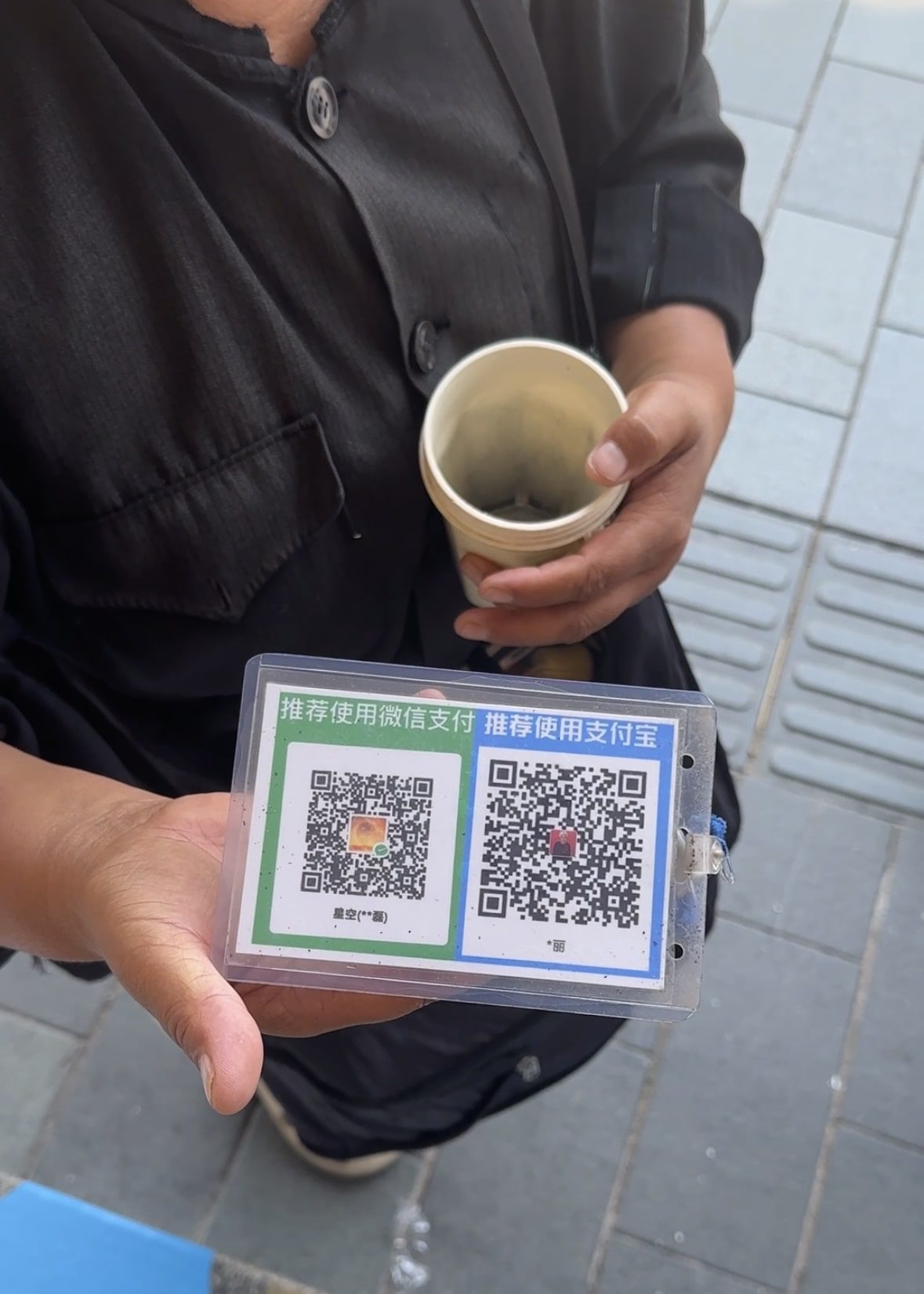
Everyone uses Alipay. Even beggars on the streets walk around with QR codes for donations like it’s the most normal thing ever!
It is worth noting that Alipay charges the user a small fee on any transactions over 200 Chinese Yuan (around £20). If you are making a large purchase, some store owners will suggest you to split it into smaller payments, for your own benefit. This is totally normal – I watched someone buy a 1,500 yuan handbag in the market by making eight different payments, and no one batted an eye.
Alipay supports foreign bank cards through their “Tour Pass” feature, so ensure you register in advance.
👉 Download Alipay on App Store (iOS) | Google Play (Android)
2. WeChat (微信 – Wēixìn)
WeChat is the app in China – and it is an integral part of daily life and is basically WhatsApp on steroids. Essential for communication, yes. However, unlike our equivalent, WeChat can do so much more.
It is your messaging tool, mobile wallet, social media feed, business card and even your ride-hailing and booking platform. Everyone uses it, from street vendors to tour operators and hotels.
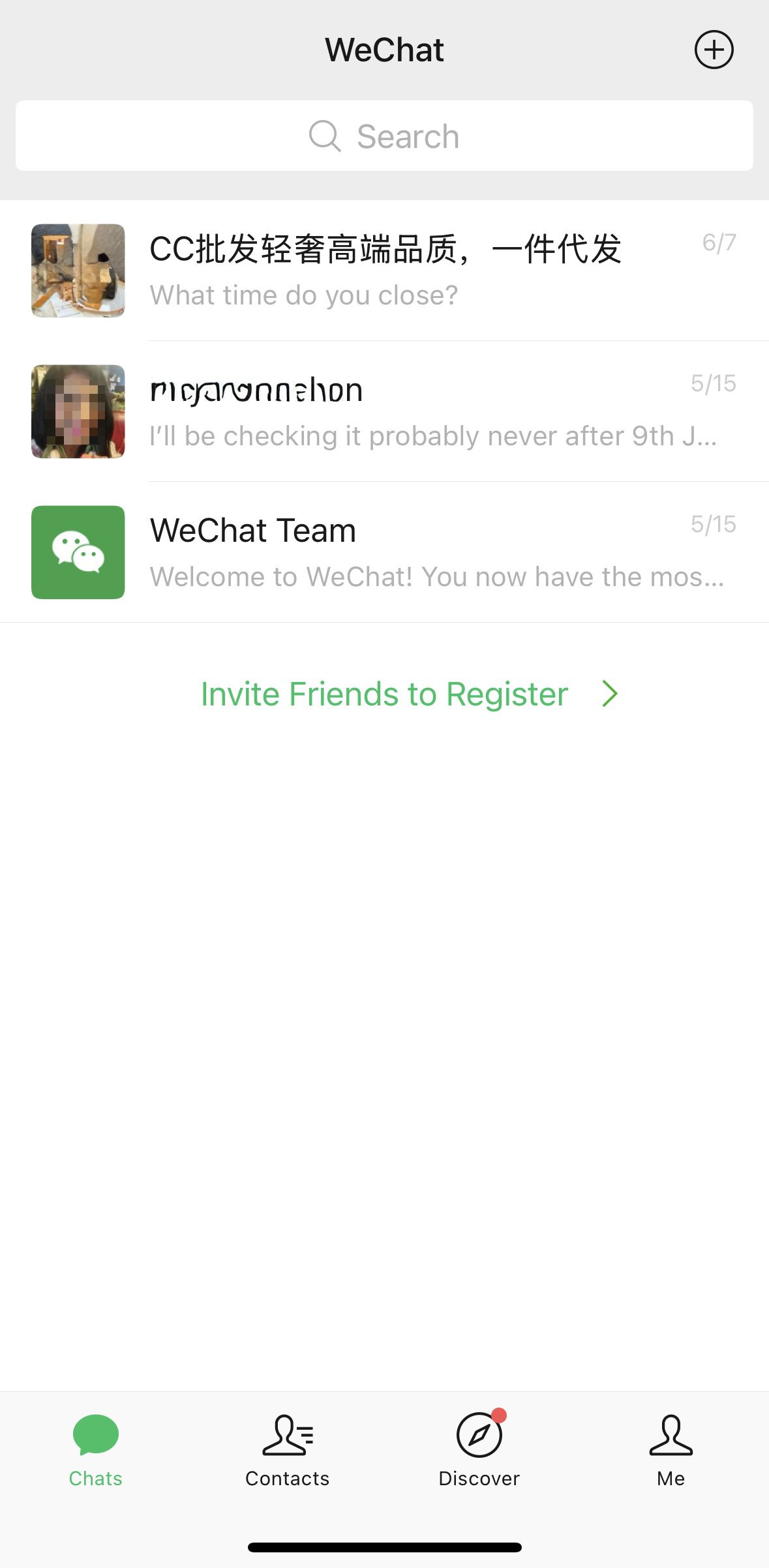
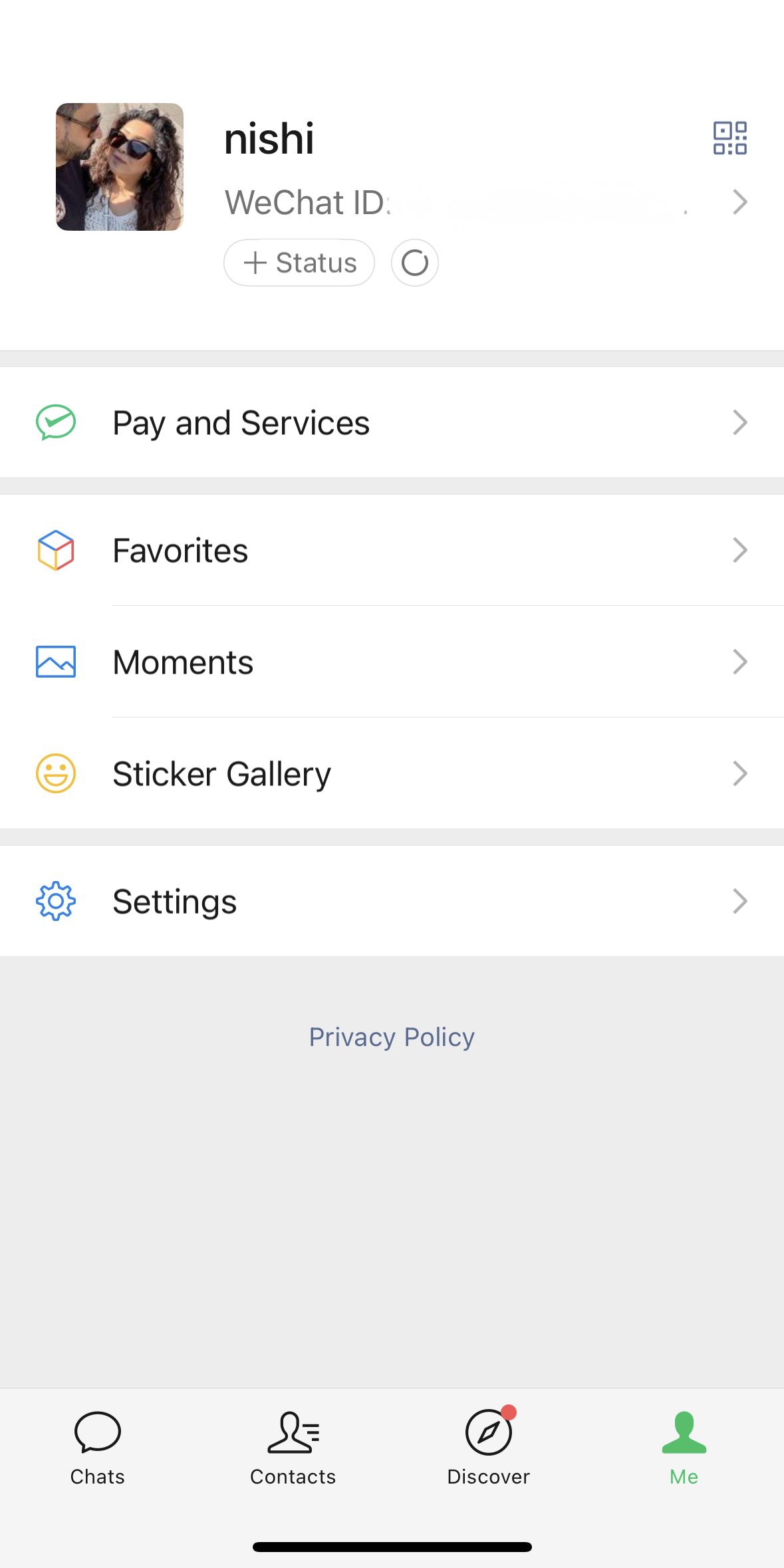
Pro Tip: Create an account with your real name and phone number before landing in China. The app can be quite glitchy, so a lot of patience is required and bear in mind that their customer support is pretty much non-existent. It took me a few attempts to get it working – thankfully I had a few weeks to figure it out. It turns out they didn’t like my Monzo card, but Revolut and HSBC worked just fine.
I personally didn’t use it for payments (Alipay had that covered), but if you’re staying longer than I did, it might be handy to have both options. For me, it wasn’t necessary to use both apps.
👉 Download WeChat on App Store (iOS) | Google Play (Android)
3. Didi (滴滴出行)
Didi is China’s answer to Uber and without it, hailing a cab the old-fashioned way, by waving your arm around frantically will be nearly impossible.
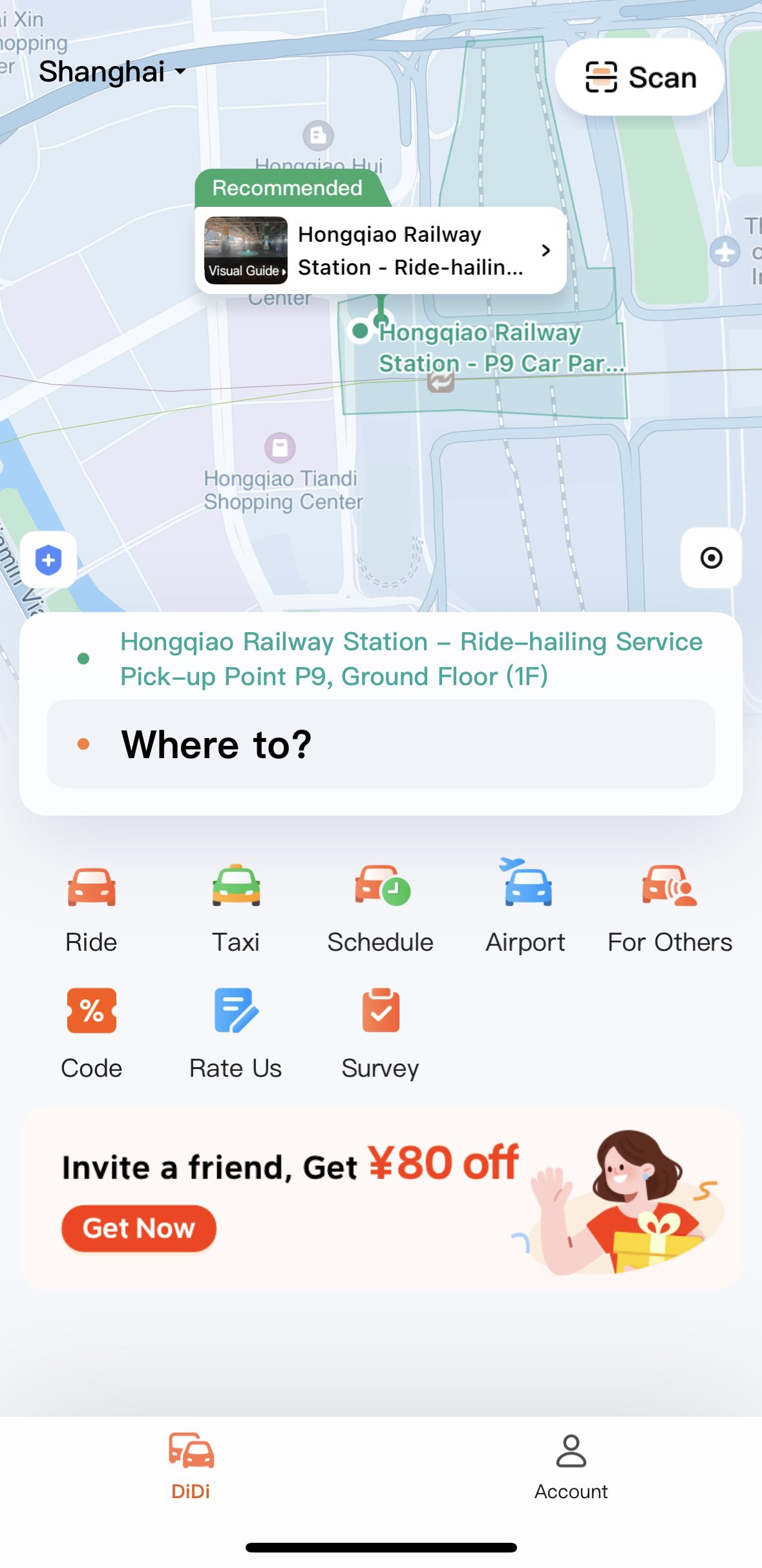
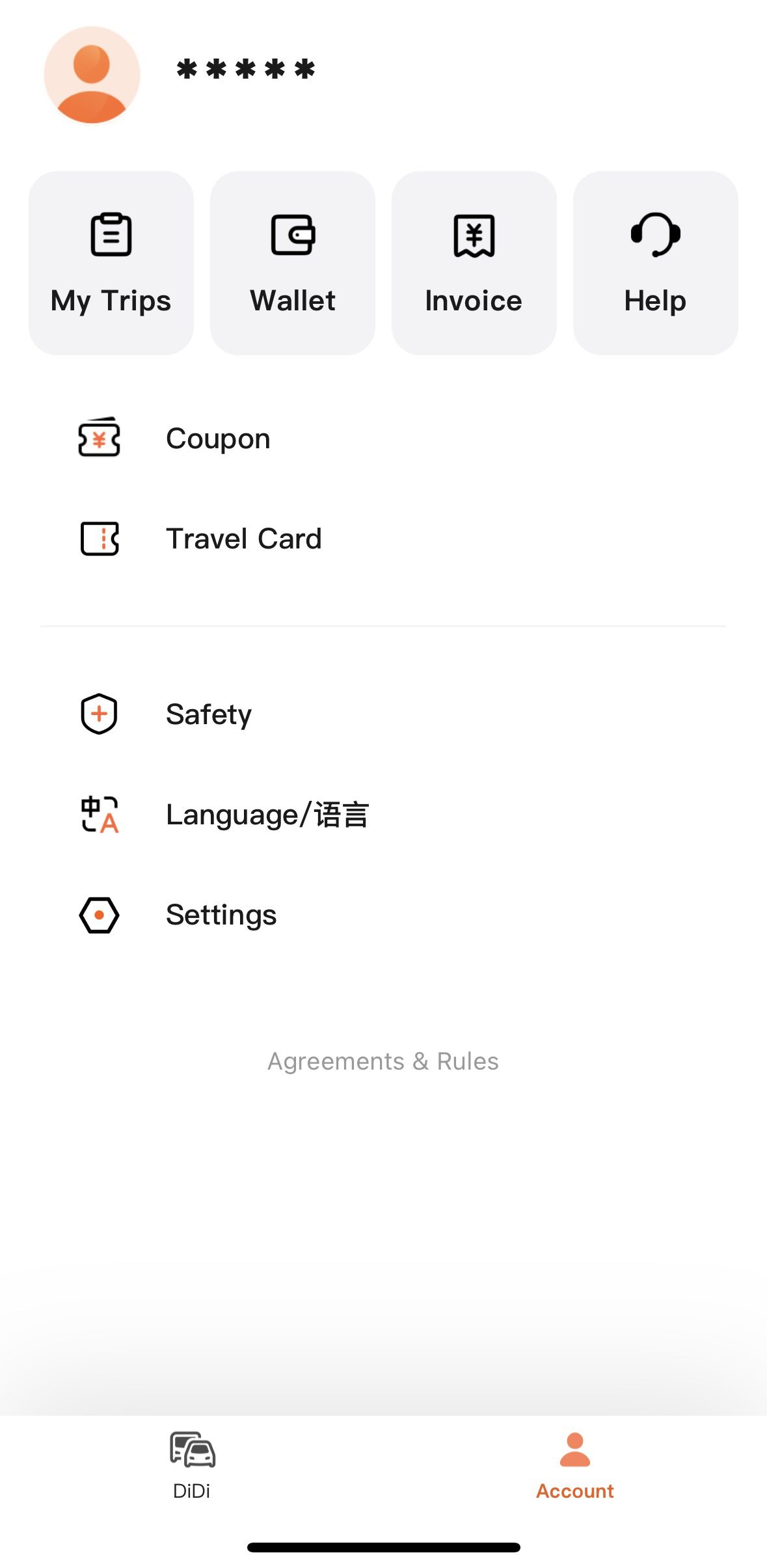
It’s easy to use, offers XL and private car options, and even has an English-language interface. You can communicate with drivers through built-in translation features, and they accept foreign card payments.
We found it really easy to use and the drivers were all great. It is easy to see why Didi is so well regarded by all mainland residents.
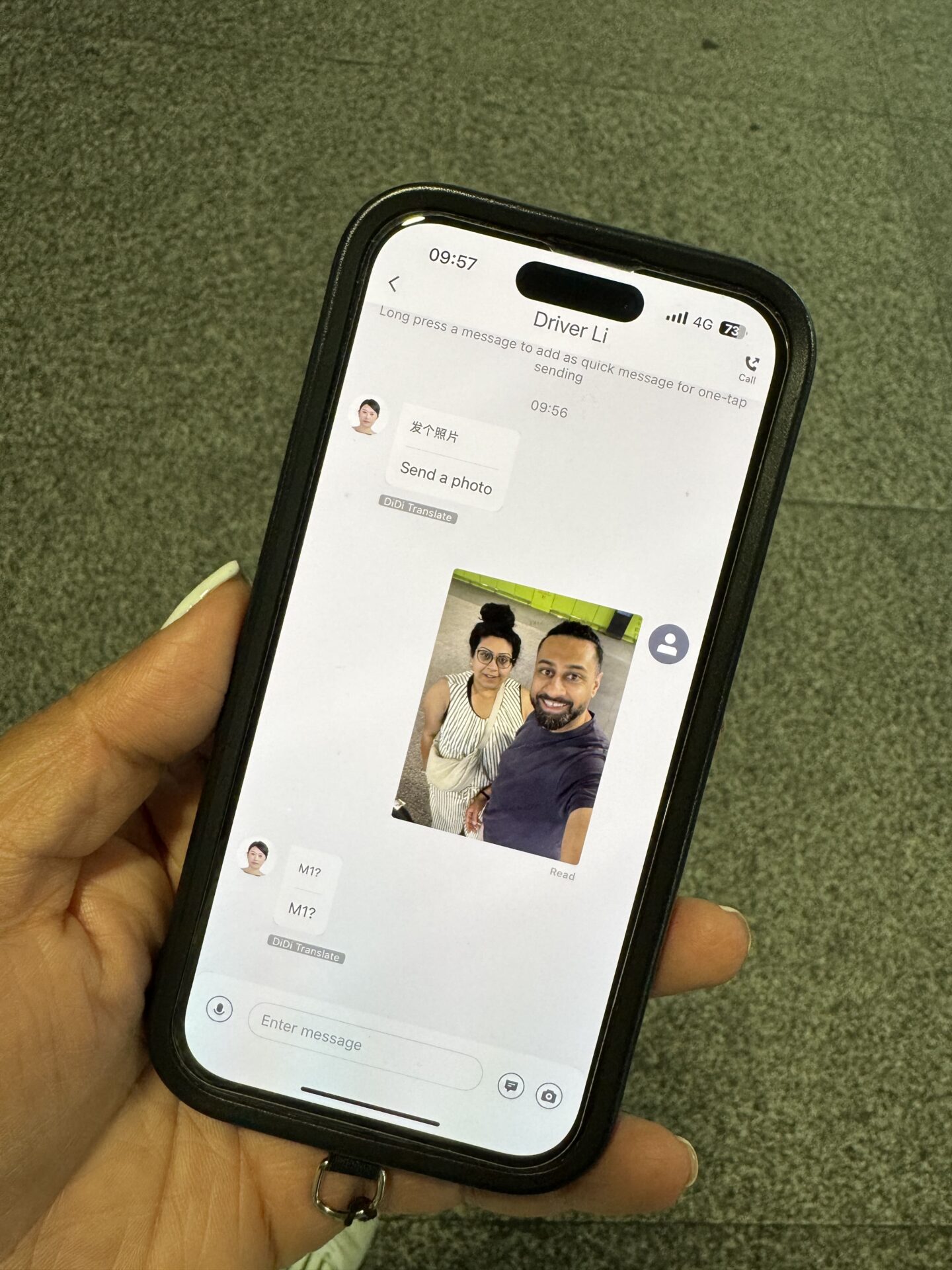
What did make me chuckle the first time we experienced it was, drivers will often send a message when they’re nearby – asking you to take a selfie and send to them through the app.
When you’re in a crowded area such as the airport, this is helpful for them to pinpoint you in a crowd. I thought that was quite quirky.
👉 Download Didi on App Store (iOS) | Google Play (Android)
4. Amap or Apple Maps
Google Maps doesn’t work in China, so you will need a local alternative. In fact, Google maps haven’t been updated in China since 2010, so you might even find planning your itinerary before you travel tough. I noticed many places are not in the exact location that you would expect them to be, and they are often further along the same road.
Baidu Maps was a popular one, but as of 2024, it is no longer in use and has been replaced by Amap (formerly Gaode).
Amap is a solid alternative and has an English interface. I used it initially but later switched to Apple Maps because I preferred the layout. Both are as accurate as one another and depending on whether or not you have an iPhone, you may not need to download Amap. I probably would, just to be on the safe side though.
👉 Download Amap on App Store (iOS) | Google Play (Android)
5. Google Translate / Pleco
Language barriers can be a significant challenge when travelling in China as English is not widely spoken. A translation app is therefore, indispensable for communication.
Google Translate lets you type, speak or use your camera to translate text instantly.
Most locals in tourist areas have a similar translation apps too, but having your own makes conversations smoother.
Now I know I said before that Google is a no-go zone in China, so I need to preface this by saying Google Translate only works with mobile data via eSIM and not over Wi-Fi in China.
An excellent alternative is Pleco, one of the best Chinese-English dictionary apps available. It essentially does all of what Google Translate does, but possibly better.
👉 Download Pleco on App Store (iOS) | Google Play (Android)
6. eSim
Understandably, you might want to keep in touch with friends and family at home, or at the very least – inform them that you have landed.
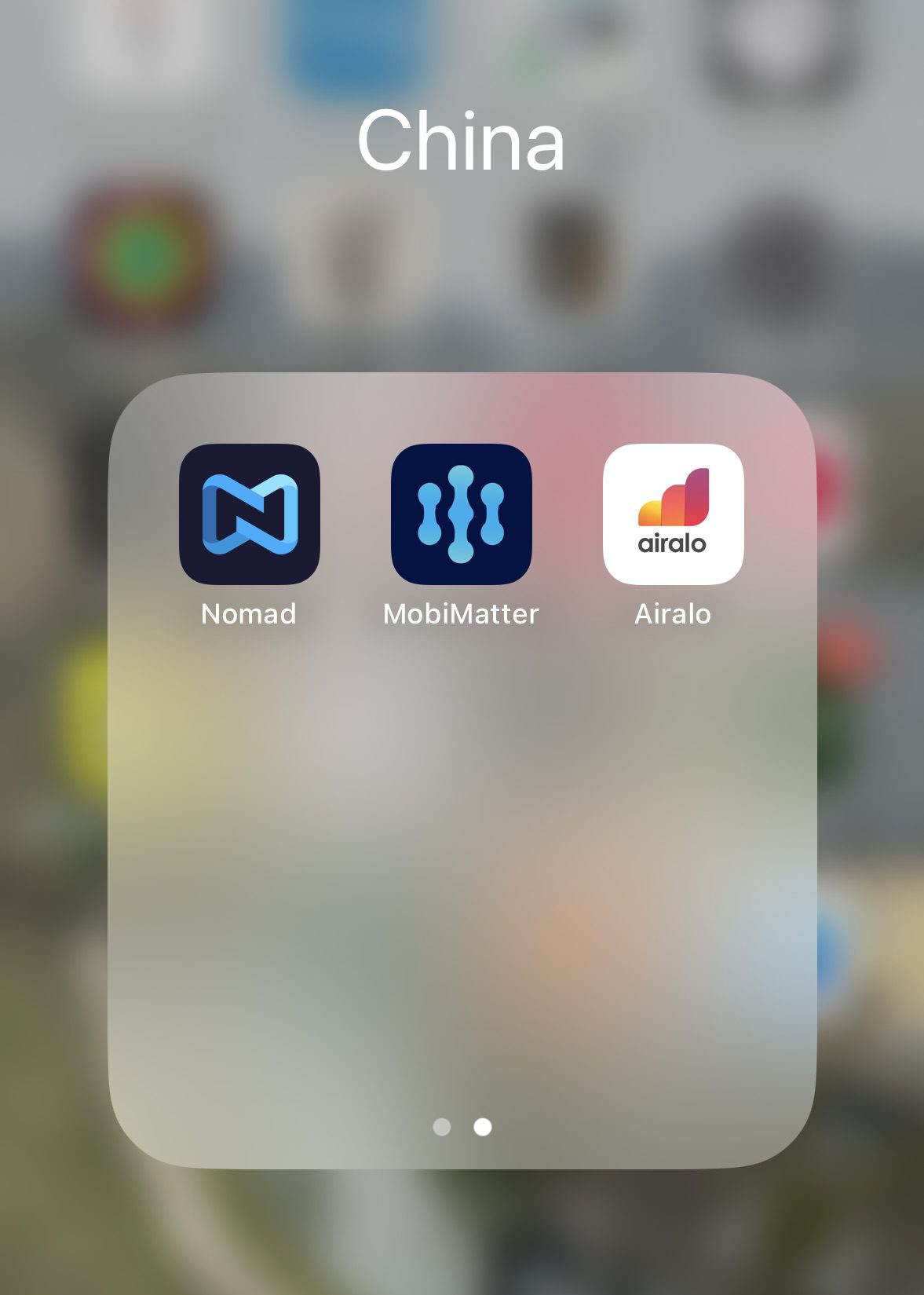
While this is not a specific app recommendation, using an eSIM instead of a local SIM card means you can stay connected without swapping SIM cards – and crucially, many eSIMs come with a built-in VPN.
This means you can continue accessing the likes of Google, Instagram, Gmail, etc., as normal – and is a much cheaper alternative to paying for a VPN.
I tested three eSims; Airalo, Nomad, and MobiMatter while in Shanghai and can confirm they all worked fine.
Airalo remains my top pick for ease and reliability – also simply because they cover a wide range of countries too. You can get £2.50 off your first purchase with my Airalo code NISHI9255 too.
Just make sure you buy enough data to cover your stay – you’ll barely use hotel Wi-Fi (trust me, nothing works on it).
7. A reliable VPN
To access any international sites or apps in China (Gmail, YouTube, WhatsApp etc), you’ll need a VPN. A virtual private network gets around China’s internet restrictions perfectly.
A VPN is especially useful for those who may need to work while abroad.
I personally didn’t pay for a VPN as I was only in Shanghai for a short period of time, and was able to could access Gmail via my eSIM. For longer stays, I can see how not having a VPN for your laptop this would become frustrating.
Popular options include:
- ExpressVPN
- NordVPN
- Surfshark
👉 Important: Download and install your VPN before arriving in China because unsurprisingly, VPN websites are blocked once you’re in the country.
8. Google Lens
I think Google Lens is an underrated, valuable tool for translating menus and any other text while in China.
Found on the Google app, you simply point your camera at the text, and Google Lens will translate it instantly. Here’s an example of when I used Google Lens in Taiwan to translate some text on a cake box.


The second image shows what the Mandarin translates to in English. Google Lens has translated any text that was on the box, including the flavour of the cake (bottom left corner).
It’s not always perfect, and I don’t think it works particularly well on handwriting. Translating printed text is certainly good enough and I found it incredibly useful in restaurants to help translate the menu.
Other apps to download for China
The above are all essential apps for China. However, here are a few more apps for travelling in China that are worth downloading if you want to travel like a local or are spending longer on the mainland.
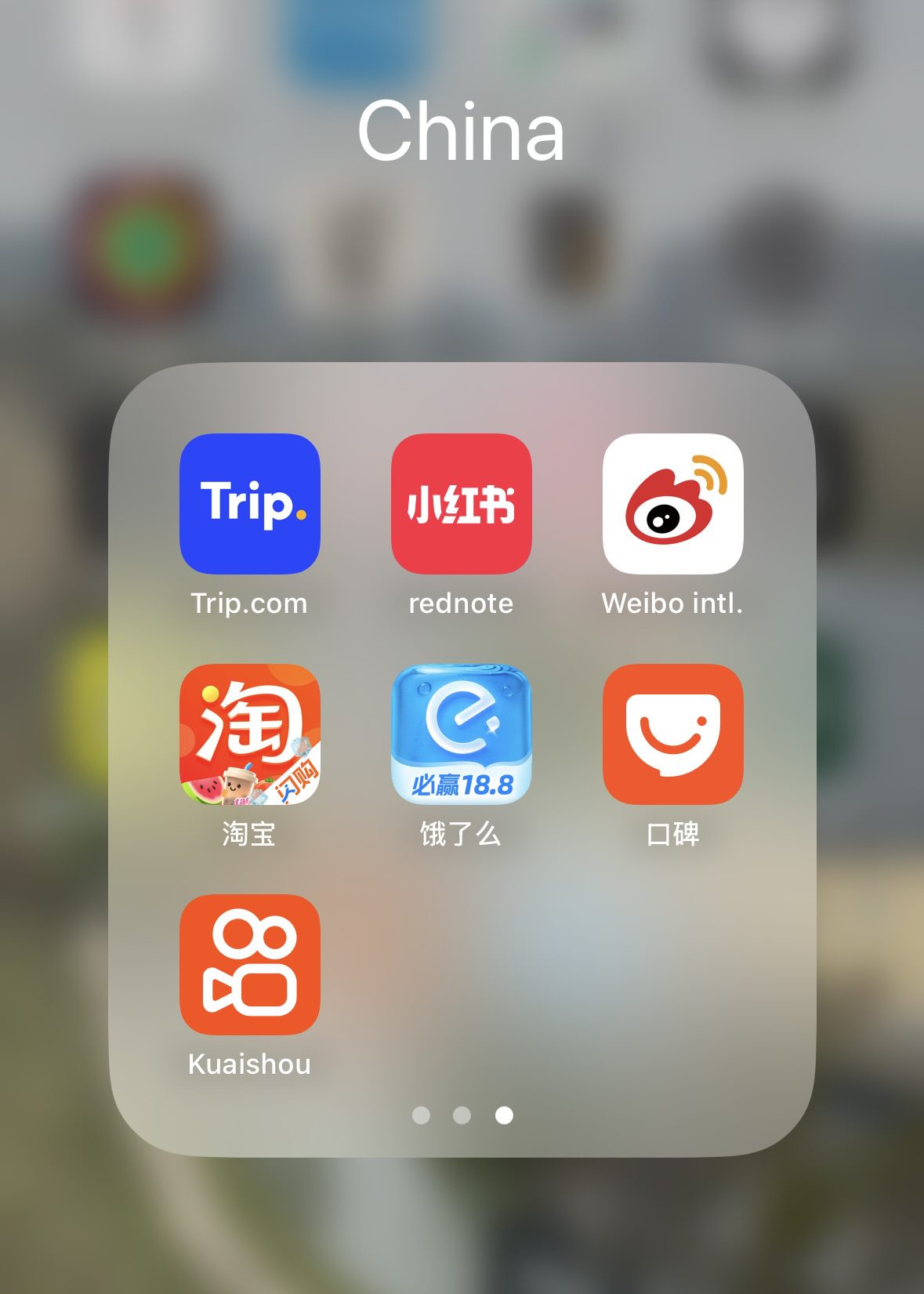
9. Dianping (大众点评 – Dàzhòng Diǎnpíng)
If you want to eat like a local or discover off-the-beaten-path food joints, Dianping is one of the most useful apps to have.
Similar to Google reviews, this app will help you find restaurants and attractions, check out reviews and you may even find some discount codes, making your experience in China significantly better. This app is a foodie’s dream.
👉 Download Dianping on App Store (iOS) | Google Play (Android)
10. Meituan (美团)
Meituan is like Uber Eats meets Groupon. Not only can you order food on this, you can book hotels, purchase tickets to attractions, snag local discounts on spa deals and more.
A great app in China if you are staying on the mainland for a significant amount of time.
👉 Download Meituan on App Store (iOS) | Google Play (Android)
11. Trip.com
Formerly known as Ctrip, Trip.com is the most foreigner-friendly way to book high-speed trains (Chinese High Speed Rail), domestic flights and hotels thanks to it’s English interface.
They have 24/7 customer service in English and for longer stays in China, this app is a lifesaver for travel planning.
👉 Download Trip.com on App Store (iOS) | Google Play (Android)
12. Xiaohongshu (小红书 – REDnote)
Often called the Little Red Book, this app is a social media and e-commerce hybrid of Pinterest, Instagram and TripAdvisor. It features fashion, travel and lifestyle content – localised for China.
It is widely used by millions of users in China to share their travel experiences, shopping hauls and more. It’s perfect for discovering hidden gems and trends from real locals.
👉 Download Xiaohongshu on App Store (iOS) | Google Play (Android)
13. Weibo (微博)
Often described as China’s version of Twitter, Weibo is a powerful social media platform that blends microblogging, news and entertainment all in one feed.
If you’re curious about what’s trending in China; from pop culture to breaking news, Weibo is the place to go. It’s widely used by celebrities, influencers, and government accounts, and can give you insight into the social pulse of the country.
The interface can be overwhelming at first due to the amount of content and the language barrier, but with a little exploration (and help from Google Translate or Lens), it becomes a great tool for discovering real-time updates or local happenings.
A must-have for anyone wanting to feel more connected to Chinese culture during their stay.
👉 Download Weibo on App Store (iOS) | Google Play (Android)
14. Douyin (抖音)
Douyin was around long before TikTok became a global sensation, its Chinese counterpart. Developed by the same parent company, Douyin offers a nearly identical short-form video experience, but is tailored for the Chinese audience and loaded with local trends, music, and viral challenges.
Very popular with Gen Z, it is a fun way to explore modern Chinese culture, food spots, lifestyle hacks and even travel tips from locals. The algorithm is incredibly sharp, and you’ll find yourself quickly sucked in.
Unlike its predecessor, Weibo, Douyin does not have an english translation feature – so this would only be useful for those who understand Mandarin.
👉 Download Douyin on App Store (iOS) | Google Play (Android)
15. Taobao (淘宝)
Taobao is China’s online shopping giant. Often described as Amazon of the East but better – they have even more variety than you can imagine.
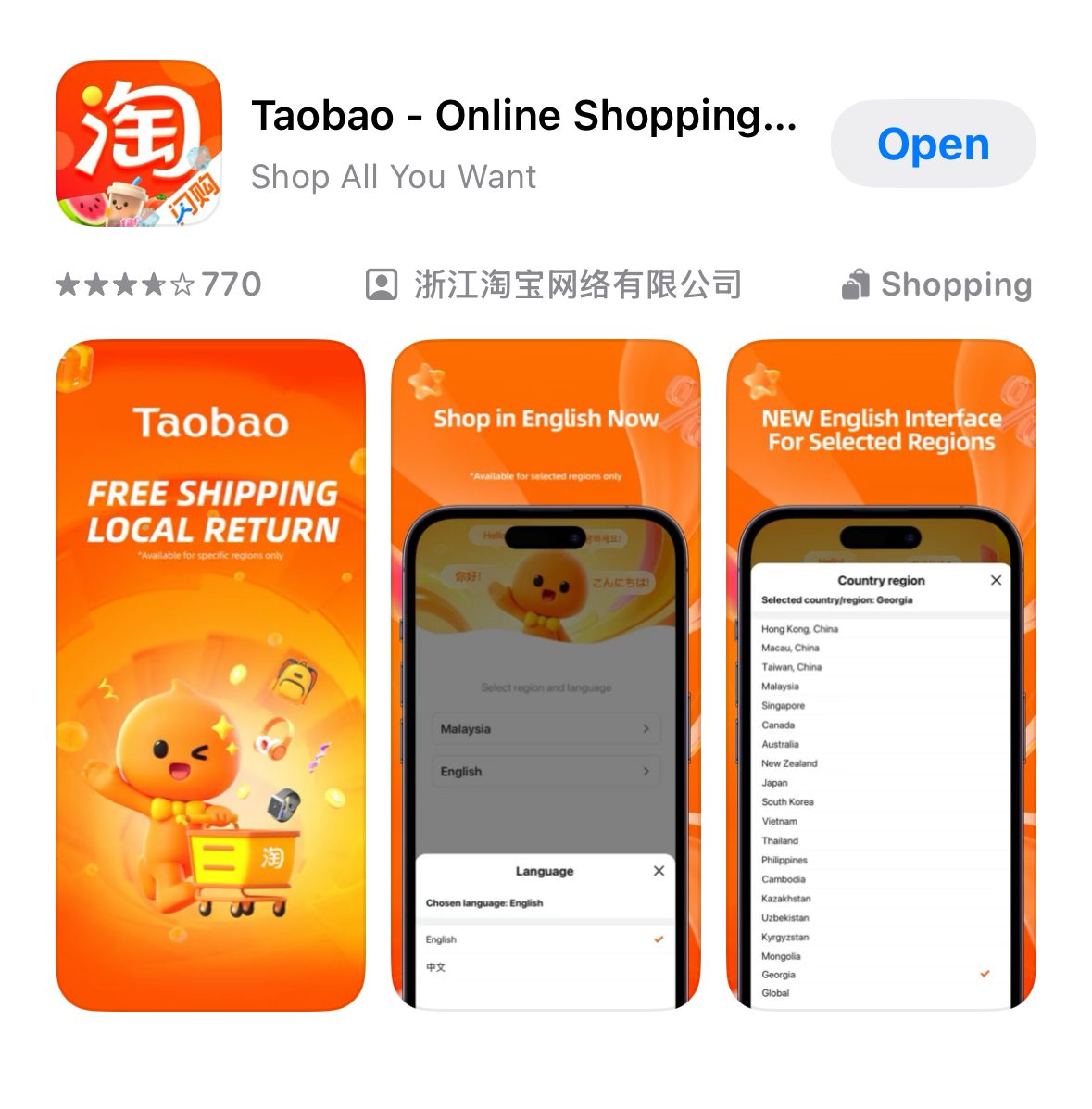
You can buy just about anything, from fashion and gadgets to local snacks and household goods, often at incredibly low prices. For travellers, it’s especially useful if you’re looking to buy affordable extras during your stay like clothing, power banks or even souvenirs.
While the app is entirely in Chinese, the visual interface, barcode scanner and built-in image search help make navigation easier even if you don’t speak the language. Just make sure to have your Alipay or WeChat Pay ready, as these are the primary payment methods.
👉 Download Taobao on App Store (iOS) | Google Play (Android)
So, why all these different apps for China?
China has essentially built its own digital ecosystem due to government restrictions on international platforms. As a result, most global apps (Google Maps, Facebook, Uber and more) are blocked in their country.
The upside? Many Chinese apps are extremely well-developed, and in some cases even better than the ones we’re used to.
To access both local and your international apps, ensure your phone is ready to handle it all. So here are a few things to keep in mind to keep your trip stress-free:
- Download all key apps before you leave.
- Install a VPN (if you need one).
- Prepare for a lot of QR codes. They are everywhere in China!
Apps in China are certainly intimidating at first – especially if, like me, you don’t love change. However, you’ll quickly realise that once you’re in the flow, these apps are efficient, fun and essential for a seamless trip. You can do everything from ordering a late-night bowl of noodles to catching a ride across the city.
China’s digital ecosystem is quite literally like nowhere else in the world, and exploring it is half the adventure.
If this guide to essential apps for China was useful, PIN IT for later!

Watch my Shanghai vlog below:
Need help planning your trip from start to finish?
Check out these helpful links:
- 👉🏼 Find cheap flights
- 👉🏼 Savings on accommodation from boutique hotels to affordable resorts
- 👉🏼 The most comprehensive resource to help plan excursions on your next trip
- 👉🏼 This pass gives you free lounge access to over 1500 airport lounges
- 👉🏼 Affordable car rental options
- 👉🏼 Book land and water transport for travelling around South East Asia
- 👉🏼 Use an eSIM to prepare your phone for international travel before leaving
- 👉🏼 Pay anywhere in the world, in any currency, using your debit card without fees
- 👉🏼 Travel insurance with essential medical & travel coverage at low premiums
Read more about China: