
How To Participate in Secret Fortune Telling at Longshan Temple Taipei


I’ll be honest, when I first walked into Longshan Temple Taipei, I wasn’t really expecting a spiritual awakening. I thought I’d admire the architecture, perhaps take a few photos, and then move on to the next stop on my itinerary.
As I’ve mentioned before, temple fatigue is very real when travelling around Southeast Asia. But Longshan Temple is different. It’s not the kind of place that lets you simply pass through.
The moment I stepped inside, I was captivated with people absorbed in prayer, the smell of the incense, the low rhythm of the chanting and way the sunlight cut through the courtyard in a way that made everything glow. It wasn’t just about sightseeing, it was a grounding moment – right in the heart of the city.

Unexpectedly, a man approached us to show us the ritual and explain how fortune telling at Longshan Temple works. I’ll admit, I was a little nervous about taking part in a ritual I didn’t fully understand – but Jass stepped up to the challenge and it was truly fascinating.
Now, I’m not talking about fortune telling in the form of tarot card readers, palm readers or horoscopes – this was different. This wasn’t packaged as entertainment or a gimmick. Instead, it was woven seamlessly into the spiritual heartbeat of the temple.
This post may contain affiliate links which means that I may earn a small commission, at no extra cost to you, for qualifying purchases. For more information, read our disclaimer.
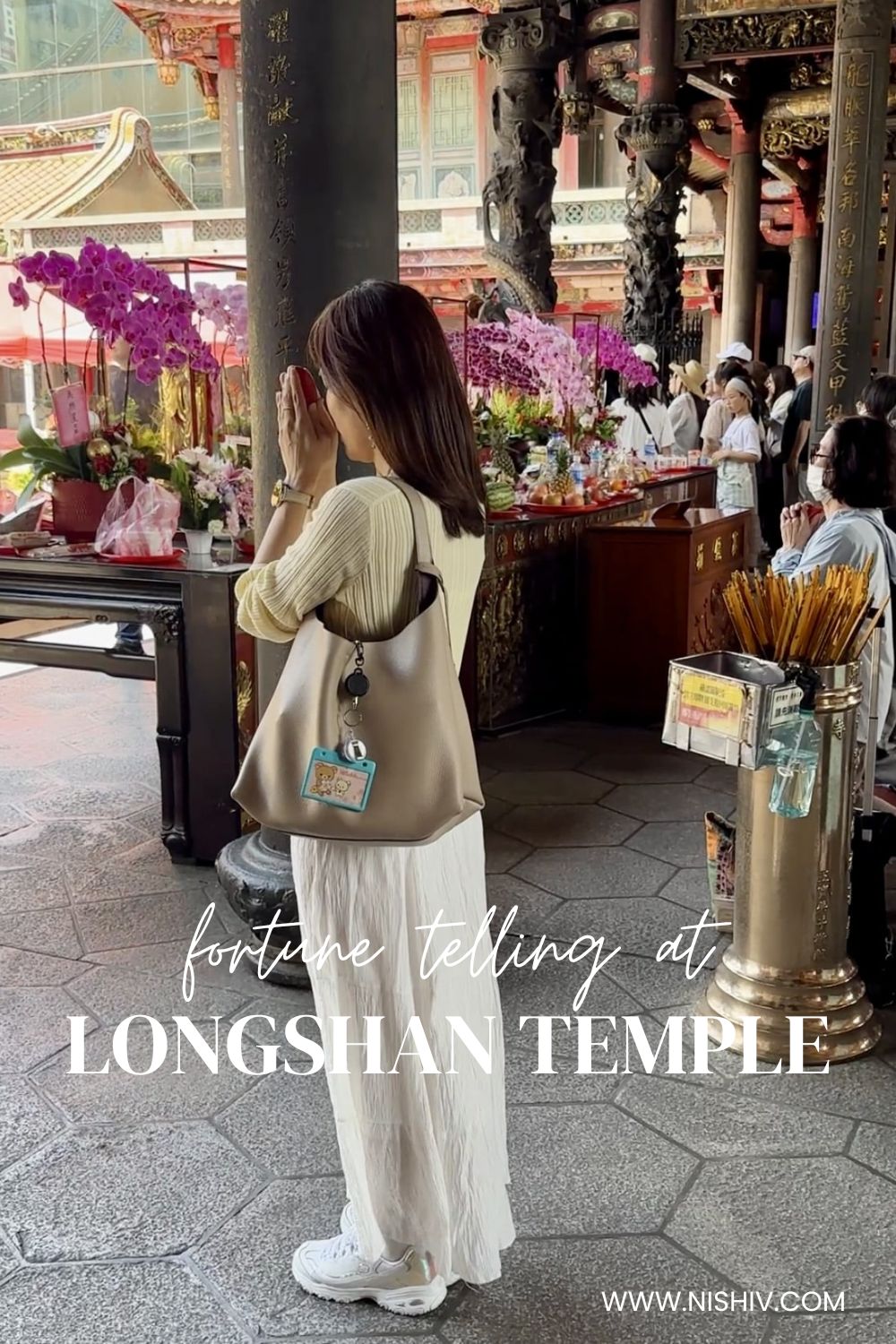
No time to read about fortune telling in Taipei now? PIN IT for later!

Longshan Temple Taipei
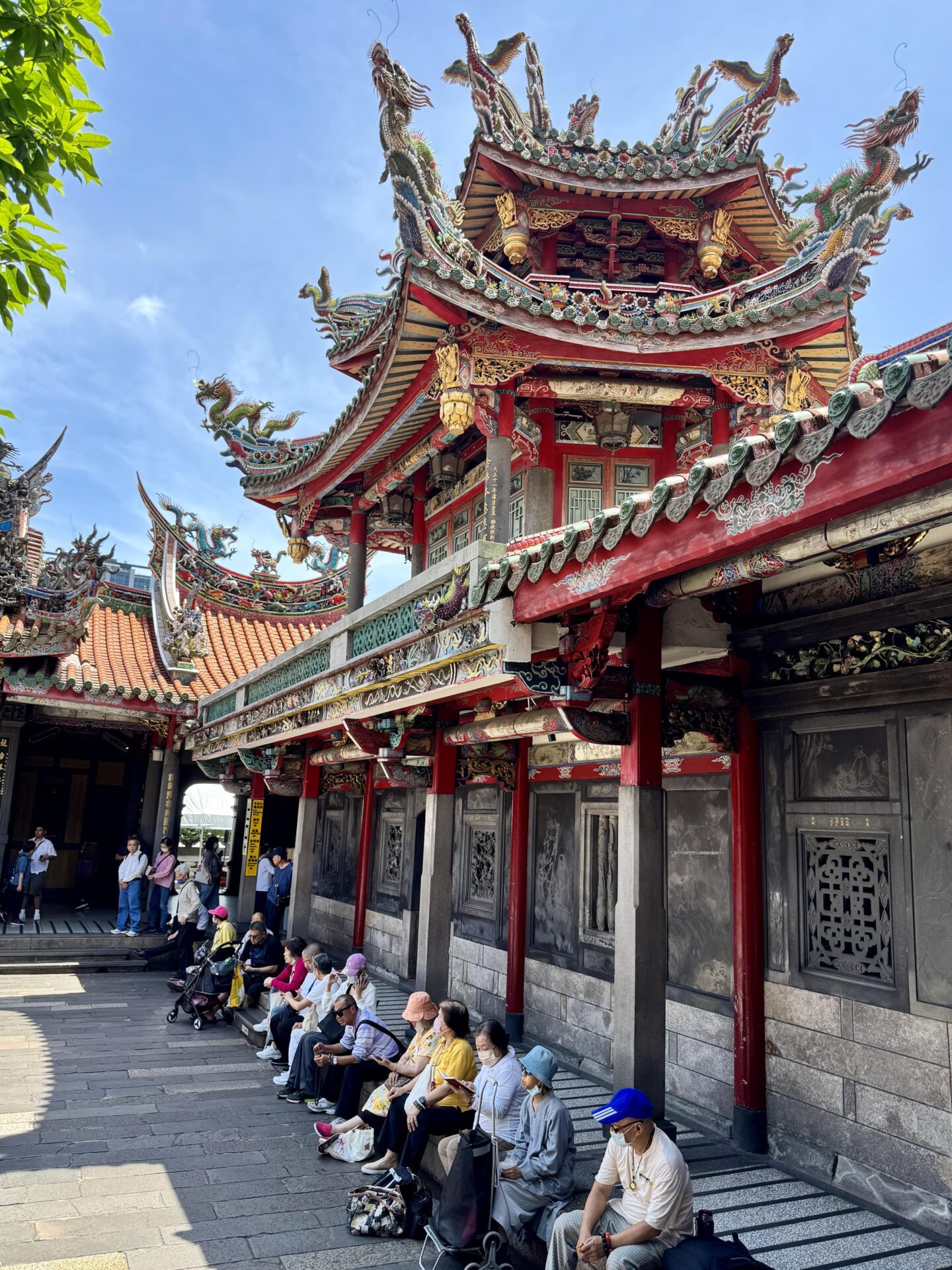
Longshan Temple is a living museum of Taiwanese spirituality. Built in 1738 by settlers from Fujian, China, it has survived earthquakes, fires and even bombings during the Second World War. Each time it was damaged, the community came together to rebuild it, which says a great deal about the role it plays in local life.
The temple is primarily dedicated to Guanyin, the Buddhist goddess of mercy, but inside, you’ll also find deities from Taoism and Chinese folk religion – such as Mazu (protector of fishermen and sailors), Wenchang Dijun (the god of literature and examinations), and other figures associated with health and prosperity.
In other words, it’s not a single-track temple. It reflects the layered, blended nature of Taiwanese religious practice, where Buddhism, Taoism and folk beliefs coexist quite comfortably.

That might explain why the atmosphere feels so expansive. You’re not walking into a place with rigid boundaries, but rather a spiritual hub where people bring their personal hopes, worries and dreams – in whatever form they take.
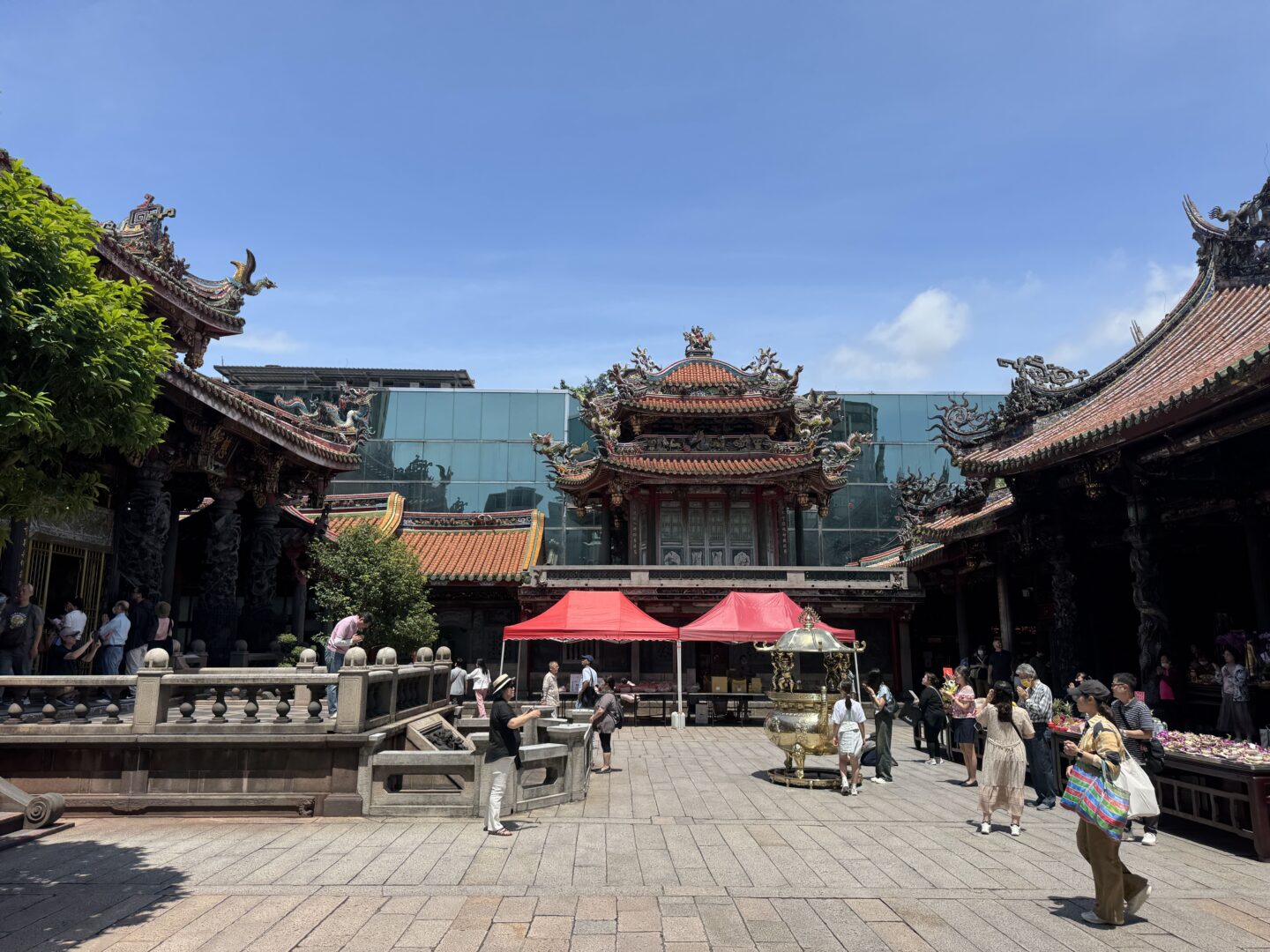
Longshan Temple is breathtaking in a way that feels alive. The dragons curling up the roof beams, the waterfall as you enter with the koi fish pond, the lanterns swaying slightly in the courtyard breeze, the way each intricate carving seems to hold its own story – it’s overwhelming, in the best possible way.

How fortune telling at Longshan Temple works
We later learned that the man who approached us was an English-speaking volunteer. We jumped at the opportunity to learn about how the fortune telling works, and suddenly felt like we’d been given permission to participate and not just observe.

He walked us patiently through the steps of drawing a divination lot, otherwise known as fortune telling, explaining not only the how but also the why. That’s when it clicked: this wasn’t anything like predicting lottery numbers. It was about a dialogue -between you and the divine, and between you and yourself.
You can book a walking tour of Longshan Temple here, but here’s the process we experienced:
Ask your question
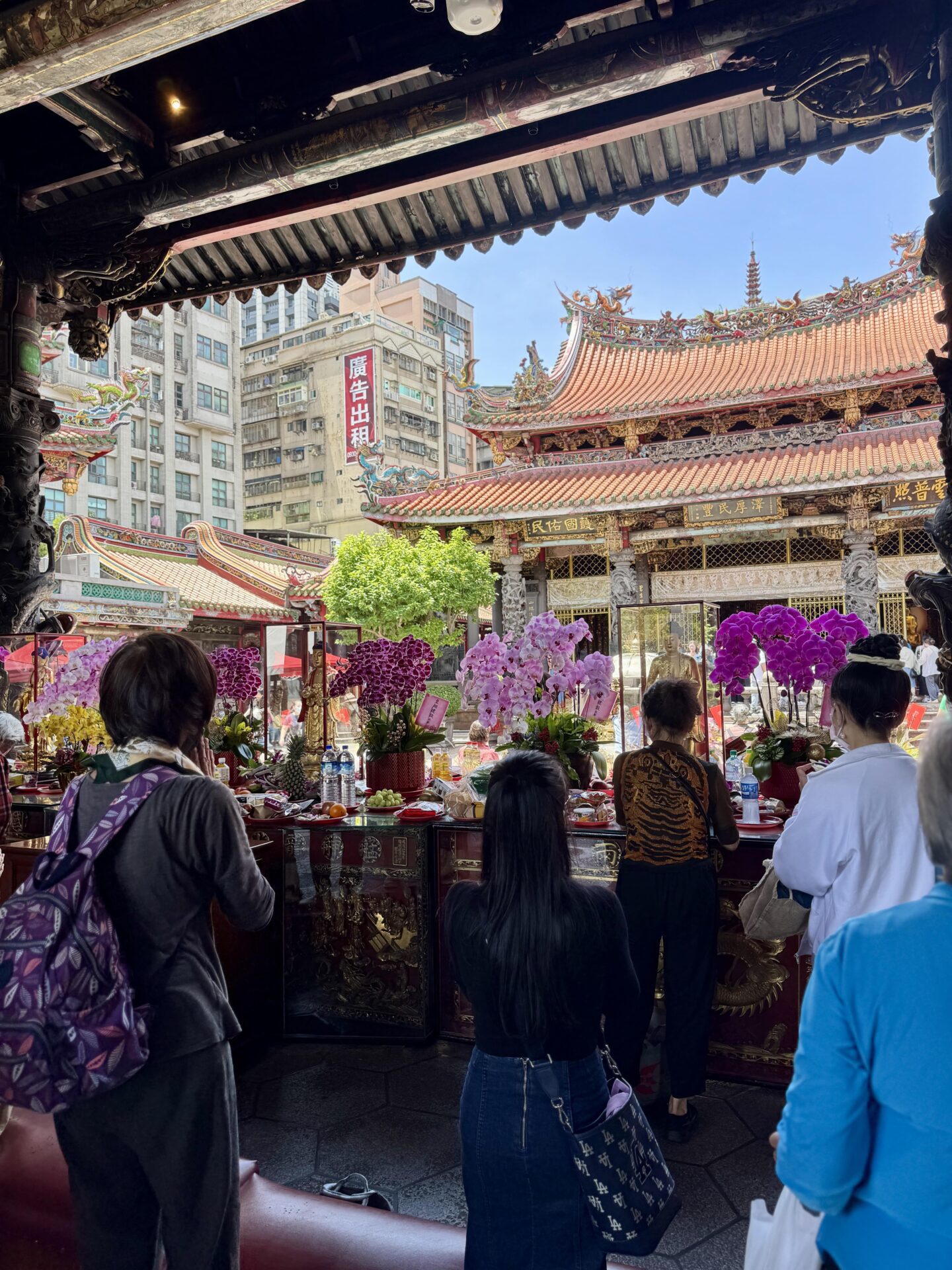
This part is deeply personal. Find a spot among the worshippers in the Front Hall, face forward to deity statues in the Main Hall and place your palms together. You can either stand or kneel, hold your thoughts close, and essentially ask the deities for guidance.
You don’t speak out loud, but your intentions are reflected through your thoughts. State your name, birthday, where you live and the question you have for them.

Pick up two wooden crescent blocks; jiaobei
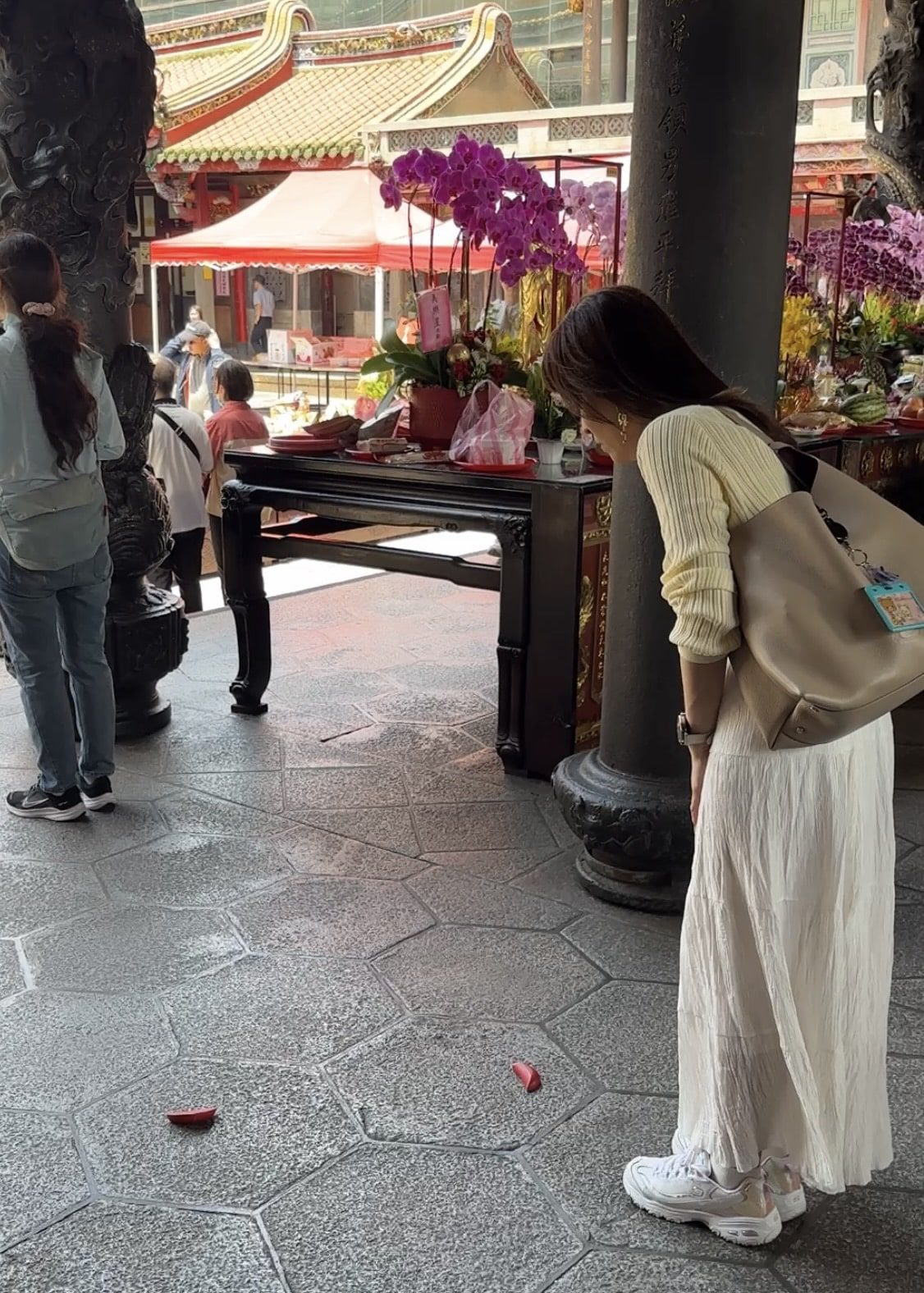
You then pick up two of the red crescent-shaped wooden blocks; they look like chunky half-moons. You focus on your question and drop them on the ground in front of you. The way they land determines whether the gods approve of your question, or whether you need to rephrase it and try again.
The blocks need to land in a specific configuration; one flat side up, and one rounded side up. This almost looks like an open mouth and this is what signifies as a ‘yes’.
Jass had numerous attempts before this happened, and then he was able to pick up a numbered stick.
If your blocks fall in any other configuration, you need to be patient and keep repeating this until you get both of them the correct way up.
Pull out a fortune stick; kau cim
Once you get the divine go-ahead, you pull out a tall bamboo stick from a container. You will see that the stick has a number on it and that stick is your fortune.
Confirming your stick
You’re not finished here, you don’t just take the stick and run with it. You confirm it again with the crescent moon blocks to make sure it’s the one you’re meant to have – dropping them again to ensure you have the right configuration. It’s like a cosmic double-check.
You get three attempts at the blocks landing in the right configuration, otherwise you can start again by rephrasing your question.
Your written fortune
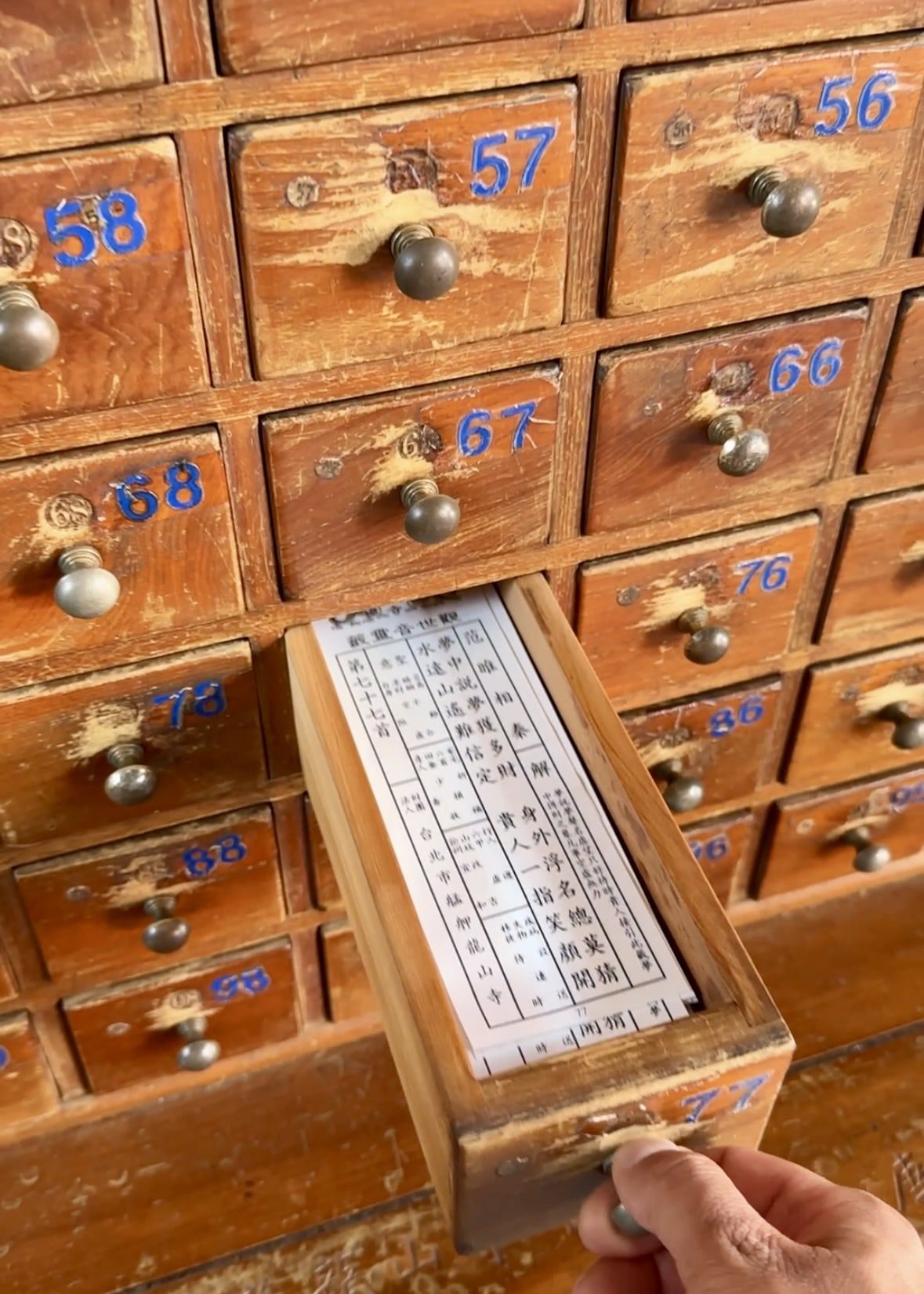
Once you have the ‘go-ahead’, you head to the cabinet at the side.
Each stick corresponds to the number on the drawers, in which you will find a slip of paper with your fortune written on it, often in Mandarin. Fortunately, the temple has volunteers who can help interpret it for you, or you can take a photo and use Google Lens to help translate it for you.
If you don’t fancy taking a chance on bumping into a volunteer at Longshan Temple Taipei, I highly recommend booking a cultural tour for less than 50 pence per person, in advance. Learning about the customs and rituals from a local is an invaluable experience, in my opinion.
What truly struck me was how much patience and humility the ritual demands. You can’t just grab your answer and leave; you have to ask for permission, confirm it, and be willing to try again if the first attempt doesn’t ‘land’. It felt less like a transaction and more like a conversation.
Learning about the rituals added such depth to what could have just been a visually beautiful stop, making it a memory I’ll never forget.
The reflection that follows
I won’t go into detail about the specific fortune Jass received (some things feel better kept between him and the temple), but I will say this: it isn’t about spelling out your future in neon lights. It was about guidance, perspective and reflection.
The fortune he got wasn’t a definitive ‘this will happen in your future’.
It was more like a mirror being held up; an invitation to think about his own intentions, doubts and the way he approaches challenges. And honestly, isn’t that what most of us are seeking when we turn to fortune telling anyway?
Not certainty, but clarity.

Why Longshan’s fortune telling stands out
I think what makes fortune telling at Longshan Temple so special is its context.
You’re not sitting in a bright booth at Raohe night market (though those can apparently be insightful too). You’re inside one of the most historically and spiritually significant temples in Taipei, surrounded by centuries of prayers, hopes and rituals. That atmosphere carries weight.
It’s also surprisingly accessible; even if you don’t speak Mandarin, the temple is extremely welcoming to outsiders.
The volunteers bridge the gap beautifully, and you never feel as though you’re intruding. Instead, you feel as though you’re being invited to participate in something meaningful.
A spiritual experience beyond religion
What really stayed with me, though, is that you don’t need to be religious – or even particularly spiritual to feel something profound at Longshan. The temple itself is a living testament to resilience. The fortune telling ritual, meanwhile, is as much about connecting with yourself as it is about reaching out to the divine.
So, even if you’re sceptical about fortune telling, I’d still recommend giving it a try. Think of it less as predicting the future and more as a guided moment of reflection. After all, when was the last time you paused in your day to frame a question, ask for guidance, and actually listen for an answer?
Longshan Temple is worth visiting for the architecture alone, but if you really want to experience the heartbeat of the place, have a go at the fortune telling for yourself. Let yourself be guided through the ritual, and don’t worry about ‘doing it wrong’.
Chances are, the experience will give you more than just a fortune – it’ll give you perspective.
Practical Tips for Visiting Longshan Temple Taipei
- Getting there: Take the MRT to Longshan Temple Station (Blue Line). The temple is right outside Exit 1, it couldn’t be simpler to find. Using the MRT to get around Taipei is incredibly easy with an EasyCard (you can read exactly how it works here).
- Opening hours: The temple is open daily from early morning until around 10 pm. Early mornings and evenings tend to be quieter if you prefer fewer crowds.
- Etiquette: It is important to visit the temple in a respectful manner; don’t be loud or get in people’s way when they are praying. There is a correct path to walk around the temple, and that is walking around the outside in an anti-clockwise direction – along the right hand side before you go round and come out on the left-hand side.
- Dress code: Dress respectfully – there’s no need to overthink it, as unlike when visiting temples in Bali or temples in Vietnam, surprisingly, there is no modesty requirement to cover your knees and shoulders here at Longshan Temple, or anywhere else in Taiwan.
- Photography: Photography is allowed, but be mindful not to disturb the worshippers around you.
- Fortune telling: The divination lot is inside, immediately as you enter, in the centre of the temple; look for the containers of fortune sticks and the crescent blocks. You will see people kneeling and standing to pray around them, but don’t hesitate to ask a volunteer for guidance.
Longshan Temple is not only a temple and a sightseeing attraction, but also a national heritage site. There are traditional Chinese medicine shops and antique shops surrounding the temple, similarly to Dihua Street, which makes it a really interesting area to wander around.
You will also find many Fortune Teller stalls just outside the temple too. This is where locals go to ask about their future, determine auspicious dates for major life events, assess compatibility with partners, help to choose names for children and more.
This isn’t the same as the fortune telling inside Longshan temple though. In Chinese society, fortune telling is a respected and important part of both social and business culture.
Watch my Taipei vlog, including our visit to Longshan Temple below:
If you’re spending a few days in Taipei, I’d recommend balancing cultural experiences like this with a scenic escape from the city in Jiufen. This offers a completely different atmosphere, with lantern-lit staircases and sweeping mountain views.
If you found this guide to Fortune Telling at Longshan Temple helpful, PIN THIS POST for later!

Need help planning your trip from start to finish?
Check out these helpful links:
- 👉🏼 Find cheap flights
- 👉🏼 Savings on accommodation from boutique hotels to affordable resorts
- 👉🏼 The most comprehensive resource to help plan excursions on your next trip
- 👉🏼 This pass gives you free lounge access to over 1500 airport lounges
- 👉🏼 Affordable car rental options
- 👉🏼 Book land and water transport for travelling around South East Asia
- 👉🏼 Use code: NISHI9255 to get £2.50 off your first eSIM before you travel
- 👉🏼 Pay anywhere in the world, in any currency, using your debit card without fees
- 👉🏼 Travel insurance with essential medical & travel coverage at low premiums
Read more about planning a trip to Taiwan:
- The Ultimate 2 Weeks in Taiwan Itinerary for First Time Visitors
- 40+ Unique Things to Do in Taipei for First Time Visitors
- How To Participate in Secret Fortune Telling at Longshan Temple Taipei
- Day Trip to Jiufen: Is it Worth it & How to Plan the Perfect Day
- 3 Days in Taipei: The Best Itinerary for First-Time Visitors
- Jiaoxi Hot Springs: What It’s Really Like + Is It Worth Visiting?
- Things to Do in Taichung We Wish We Had More Time For
- Where to Stay in Taichung: Le Méridien Taichung Review
- Sun Moon Lake Guide for First Time Visitors in Taiwan
- Shangri-La Far Eastern Tainan Review A Luxury Stay Without the Price Tag
- Things to Do in Kaohsiung for First Time Visitors
- Kaohsiung Itinerary: 1–3 Days (Easy 2 Day Plan + What to Skip)
- 8 Reasons to Get an EasyCard in Taiwan
- How to Use the Taiwan High Speed Rail (HSR) Guide
