
25 Things to Do in Regensburg That Make It Worth Visiting

This post may contain affiliate links which means that I may earn a small commission, at no extra cost to you, for qualifying purchases. For more information, read our disclaimer.
We spent two nights in Regensburg during our Christmas market trip around Bavaria, travelling there by train from Nuremberg before continuing on to Munich.
Although the Christmas markets were the main reason we visited, I was surprised by how much there was to see beyond them. We spent our full day exploring colourful streets, crossing the medieval Stone Bridge, wandering around little squares and discovering independent shops tucked away in the Old Town.
One of the things I liked most was how walkable Regensburg was. Almost everything seemed to be just a few minutes apart, which meant we could explore without constantly checking maps or worrying about public transport.
If you’re looking for the best things to do in Regensburg, I’ve rounded up 25 of the city’s most interesting attractions, from medieval landmarks and colourful squares to museums and riverside walks.
1. Walk across the Old Stone Bridge
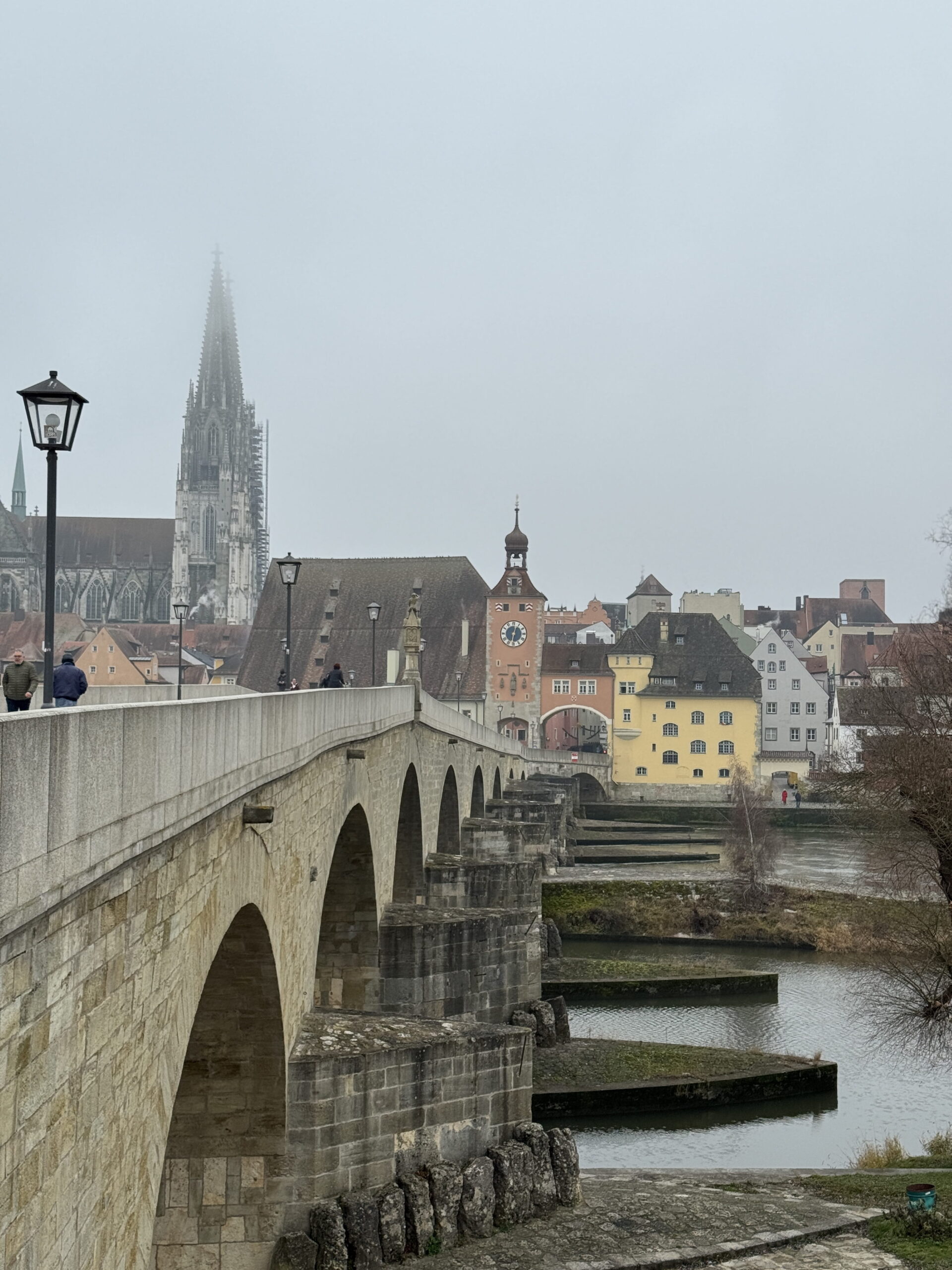
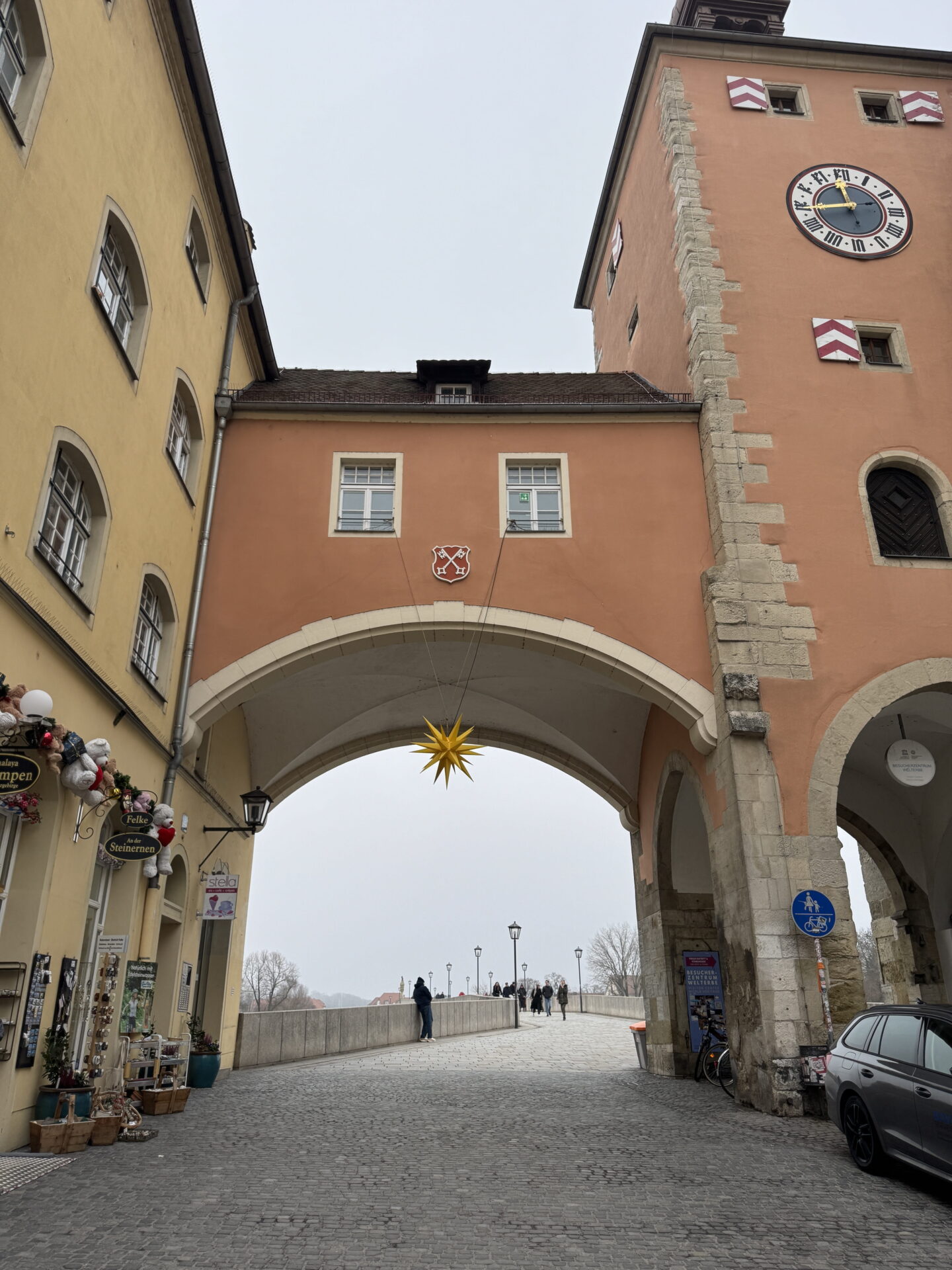
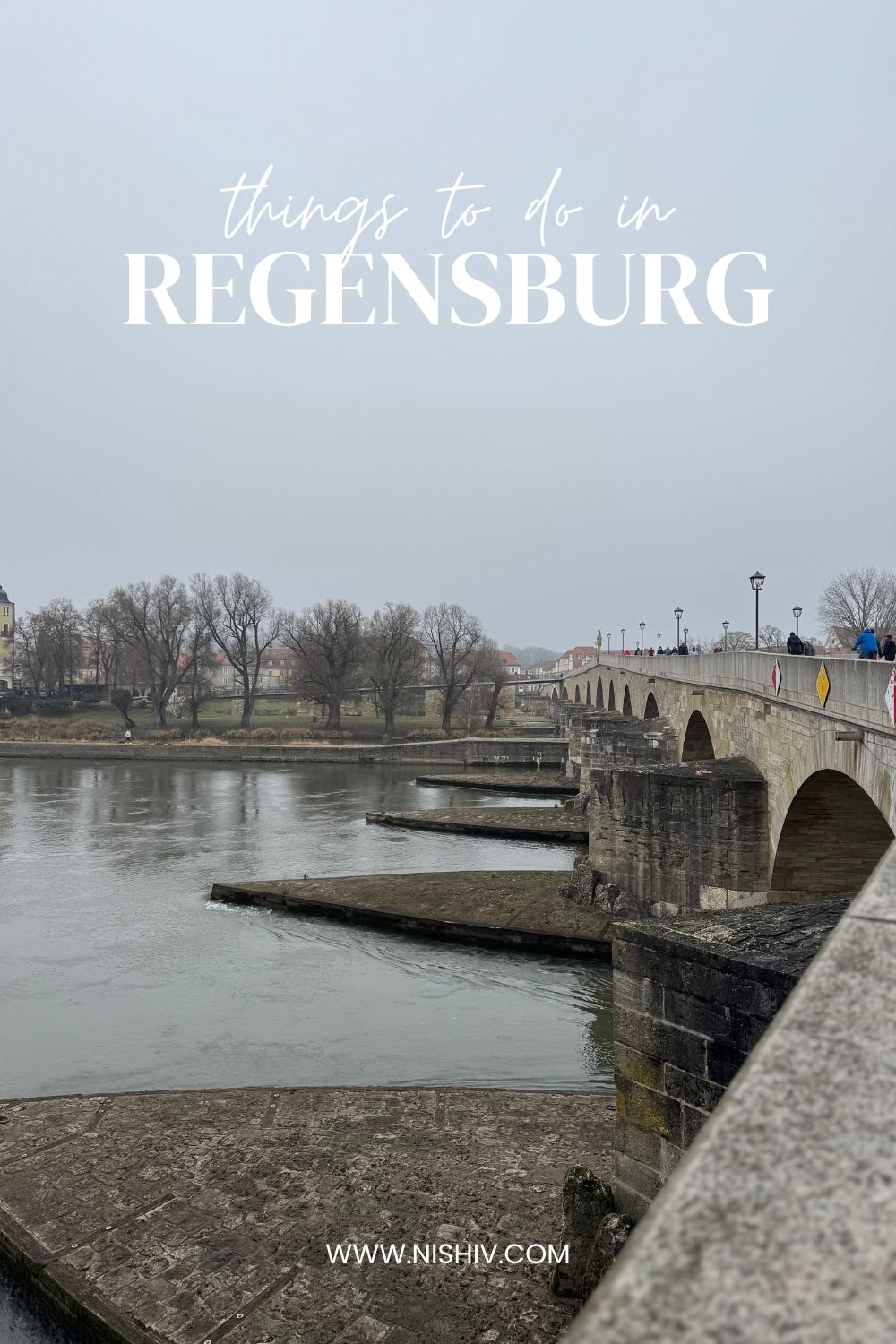
The Old Stone Bridge, or Steinerne Brücke, is one of Regensburg’s most famous landmarks and was one of the first places we visited.
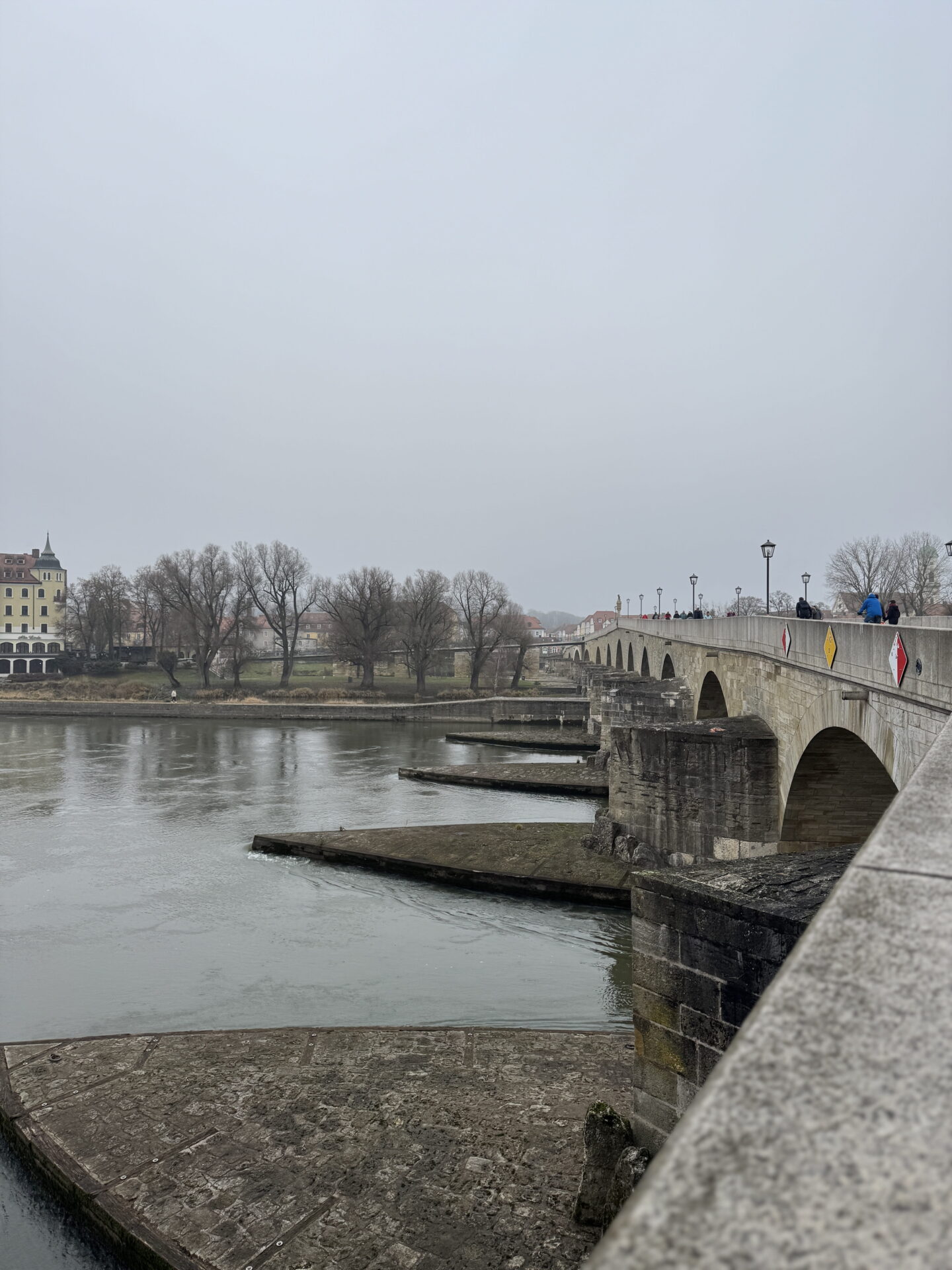
Built in the 12th century, the medieval bridge crosses the River Danube and connects Regensburg’s Old Town with Stadtamhof on the opposite side.
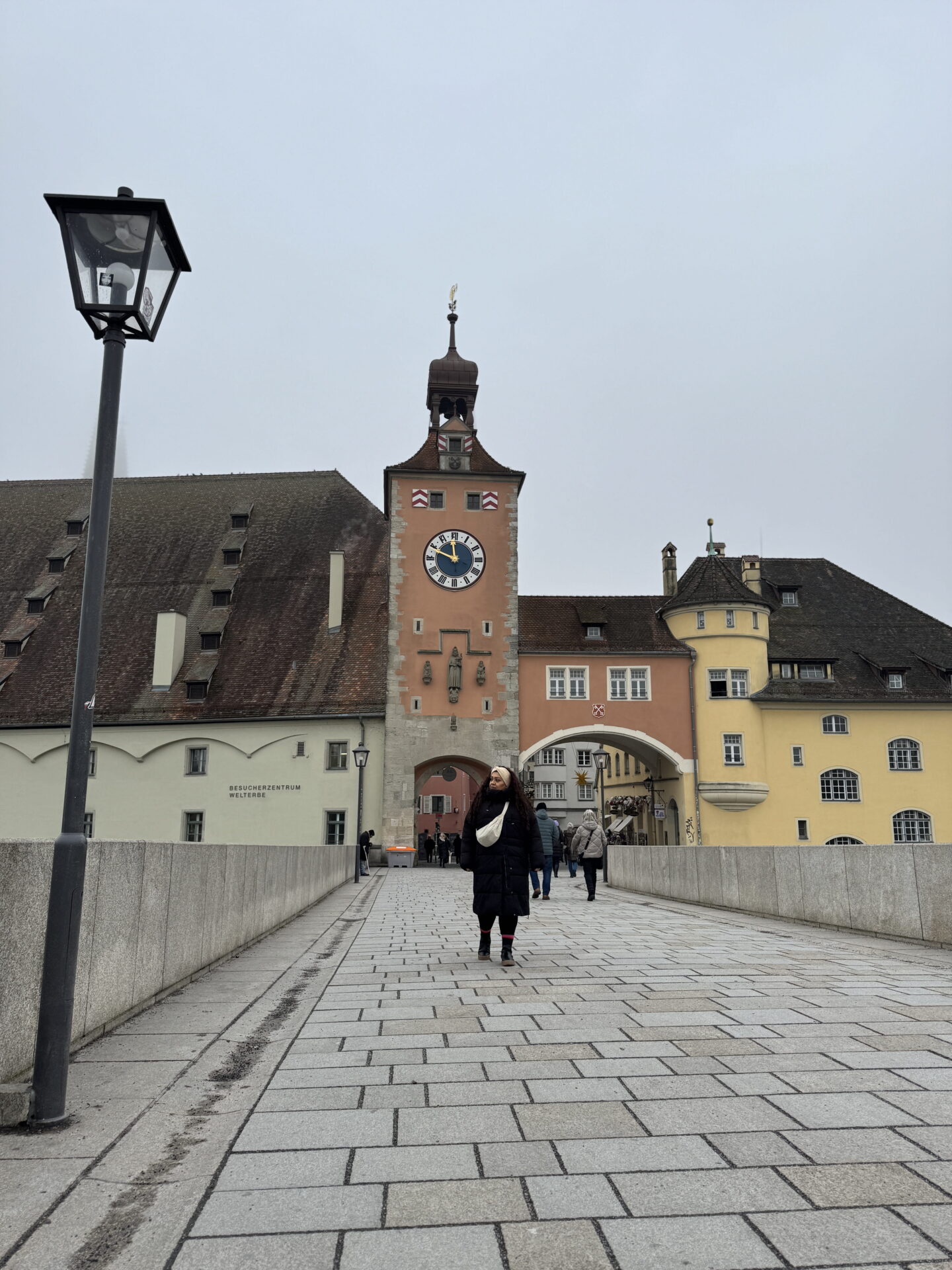
I’d seen plenty of beautiful photographs of it before our trip, although I have to admit it looked quite different when we arrived! It was an incredibly gloomy December morning, so we didn’t get the picturesque blue skies I’d been expecting.
Even so, I loved walking along the river and admiring the historic buildings on either side.
Before crossing the bridge, look out for the Salzstadel, Regensburg’s historic salt warehouse, which is another reminder of the city’s importance as a medieval trading centre.
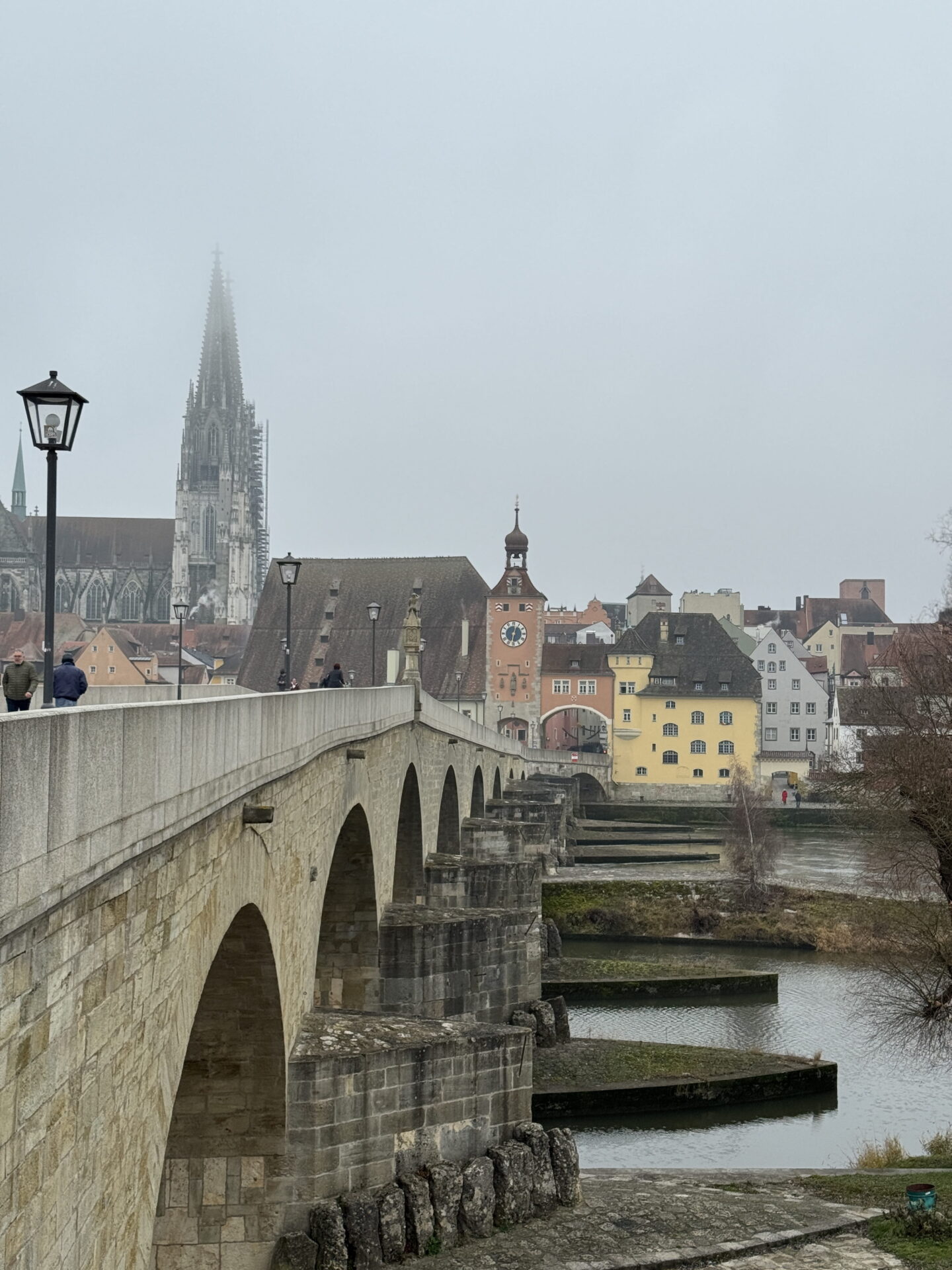
I’d recommend crossing the entire bridge rather than stopping at the entrance for photographs. There’s plenty to explore on the other side, and it’s worth turning around to admire the view back towards Regensburg.
2. Explore the colourful streets of Stadtamhof
Once you’ve crossed the Stone Bridge, you’ll reach Stadtamhof, a historic neighbourhood on the northern side of the Danube.
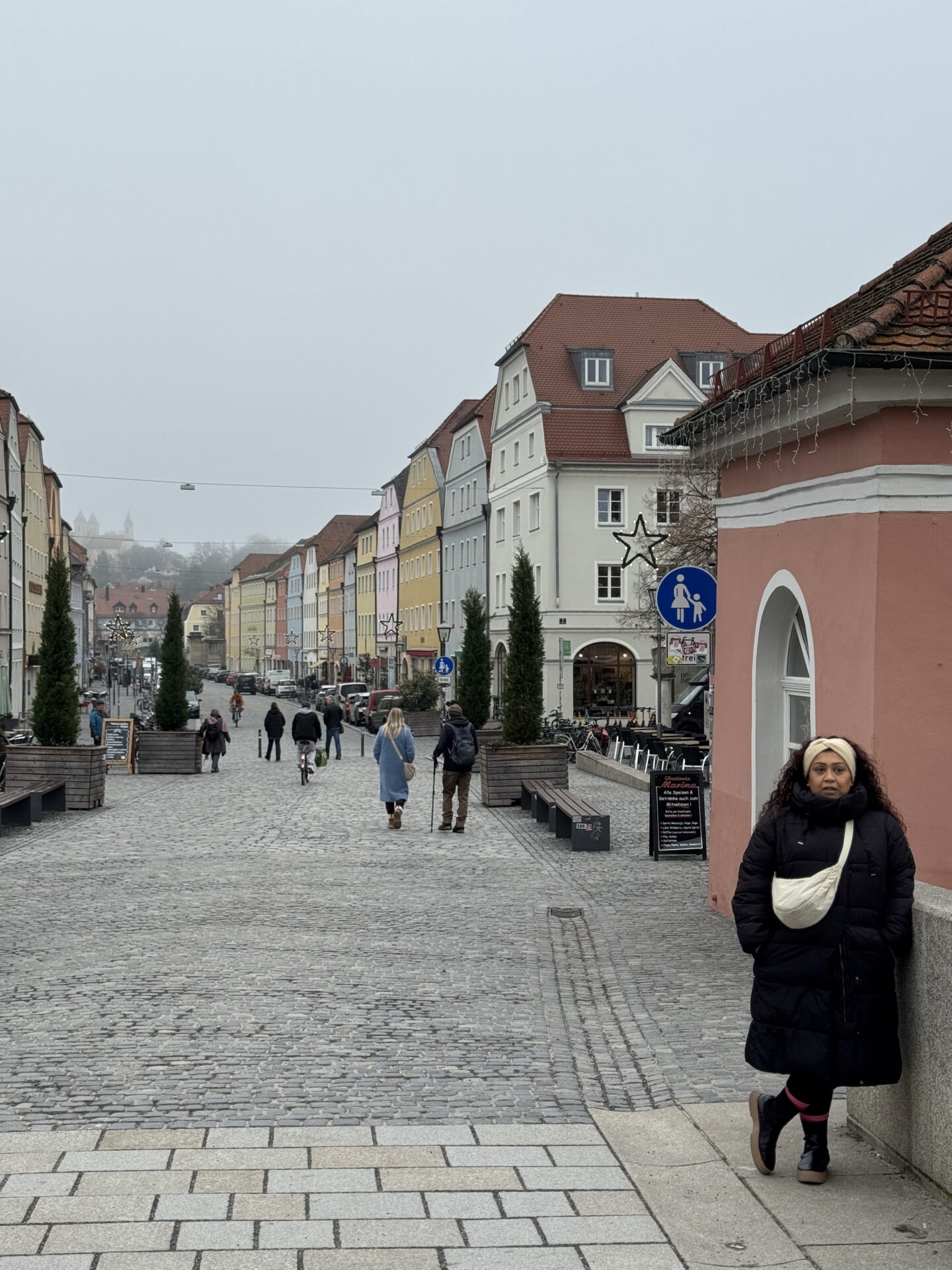
It’s known for its colourful buildings, pretty streets and slightly quieter atmosphere compared with the Old Town.
We spent some time wandering around without a particular route in mind, and I loved the pastel-coloured houses. Even on a grey winter’s day, they made the area feel incredibly cheerful.
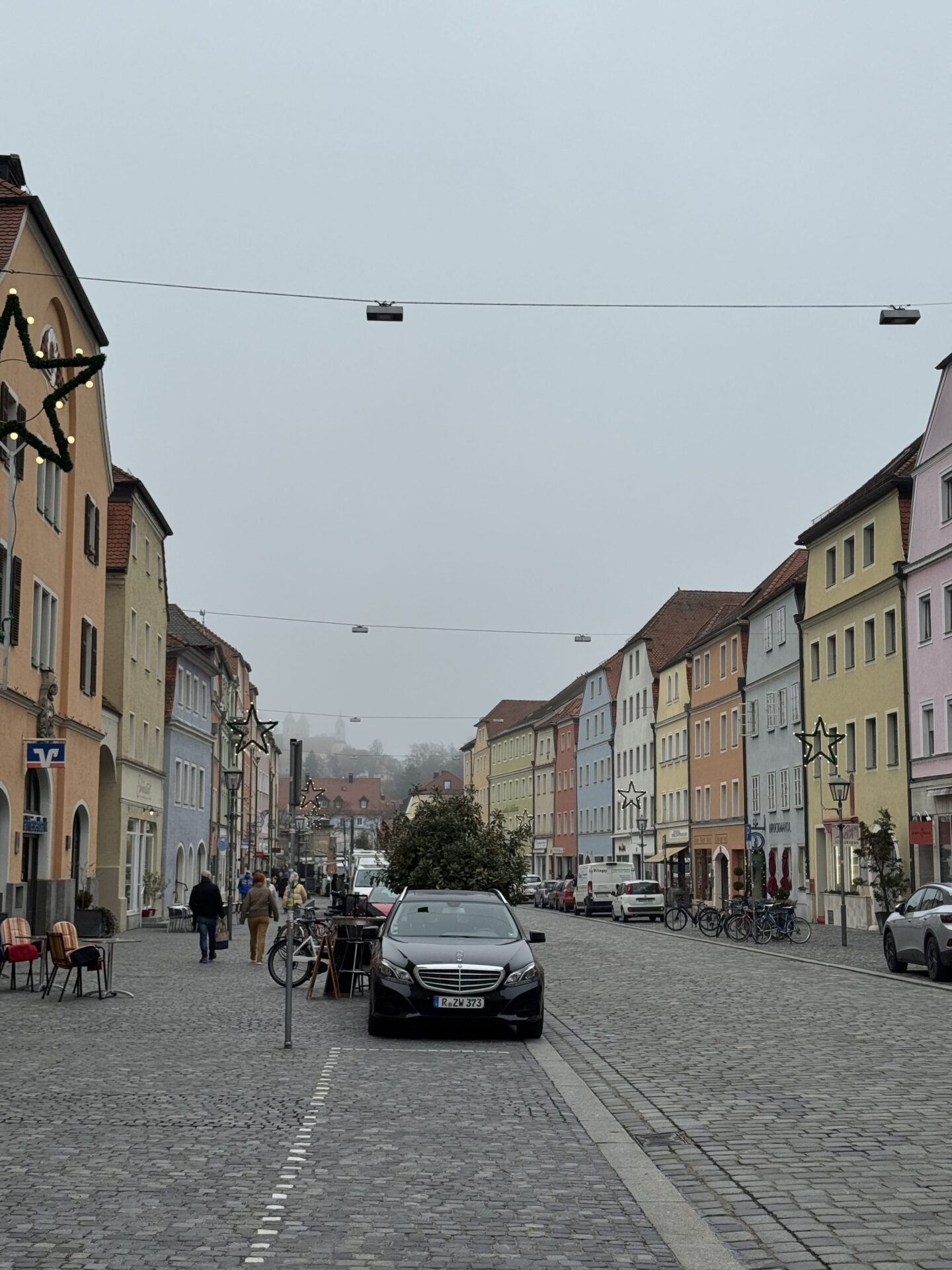
There are cafés, restaurants and little streets to explore, so I’d set aside some extra time to wander around rather than heading straight back across the bridge.
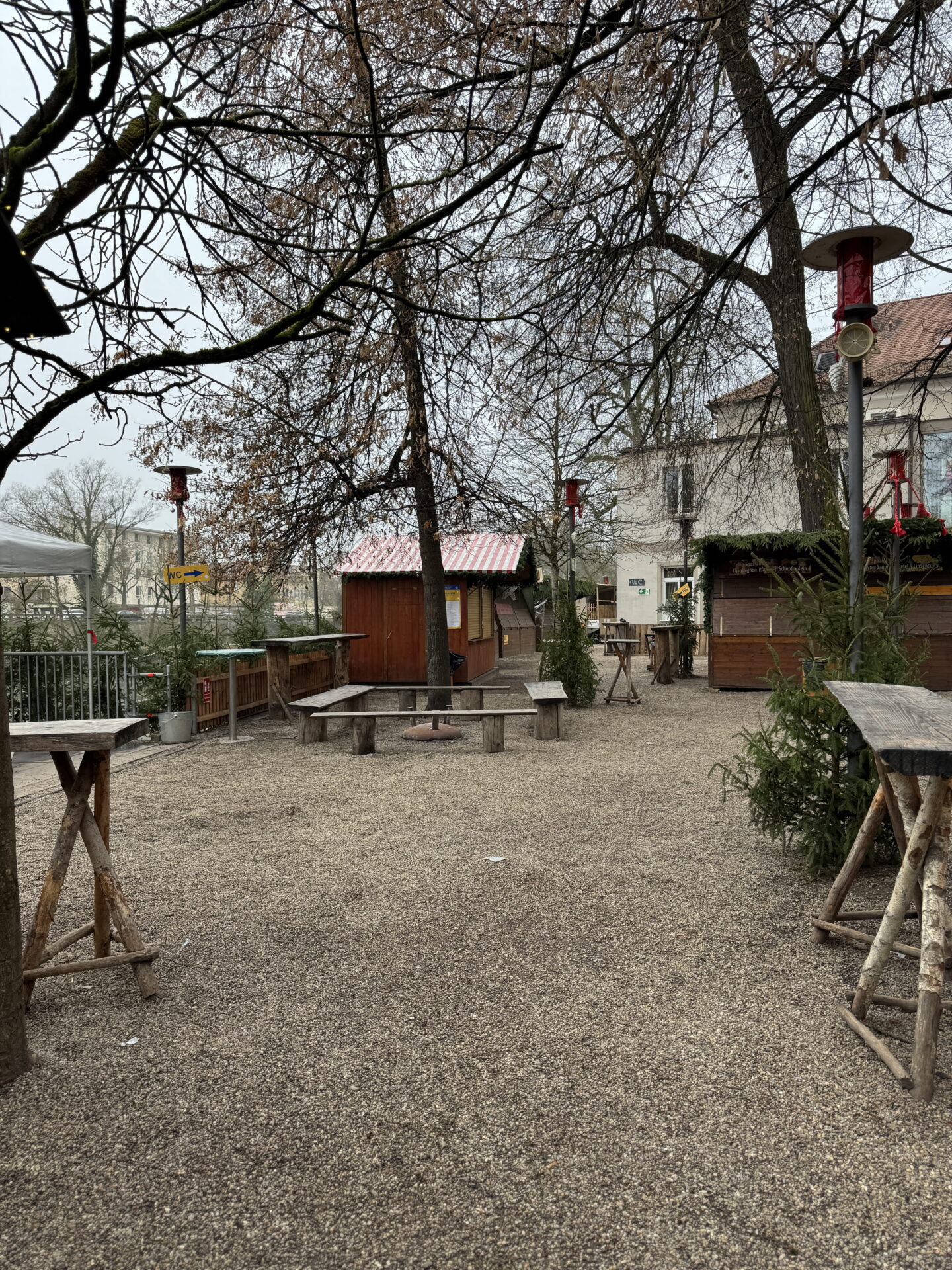
As we visited Regensburg in December, we also wandered towards St. Katharinenplatz, where there’s a small Advent market. Unfortunately, we arrived before it opened, having completely overlooked the opening times!
Stadtamhof is one of the places I’d recommend if you’re wondering what to see in Regensburg beyond the main historic centre.
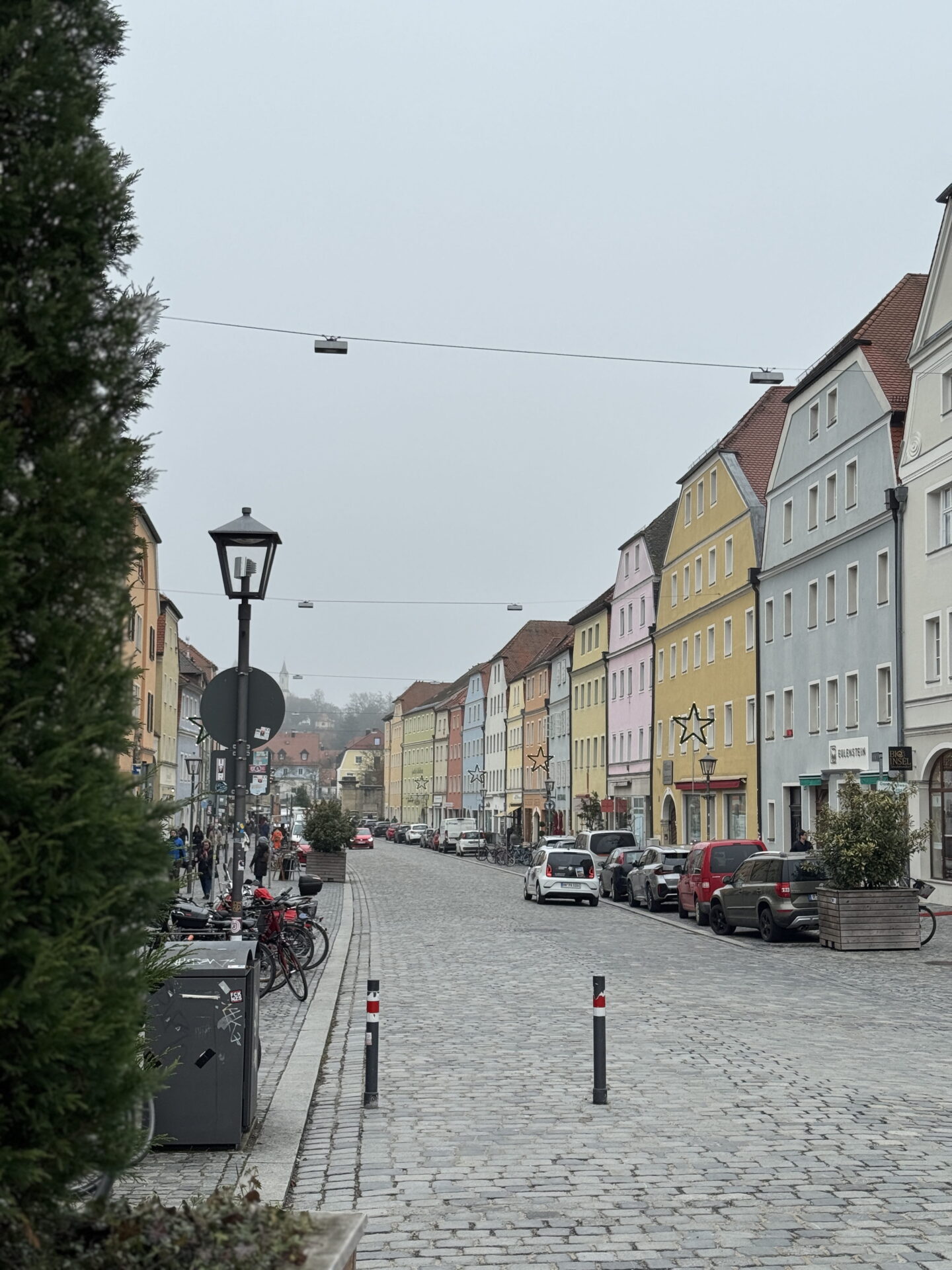
3. Admire the mural on Goliath House
Goliath House, or Goliathhaus, is one of the most unusual buildings in Regensburg.
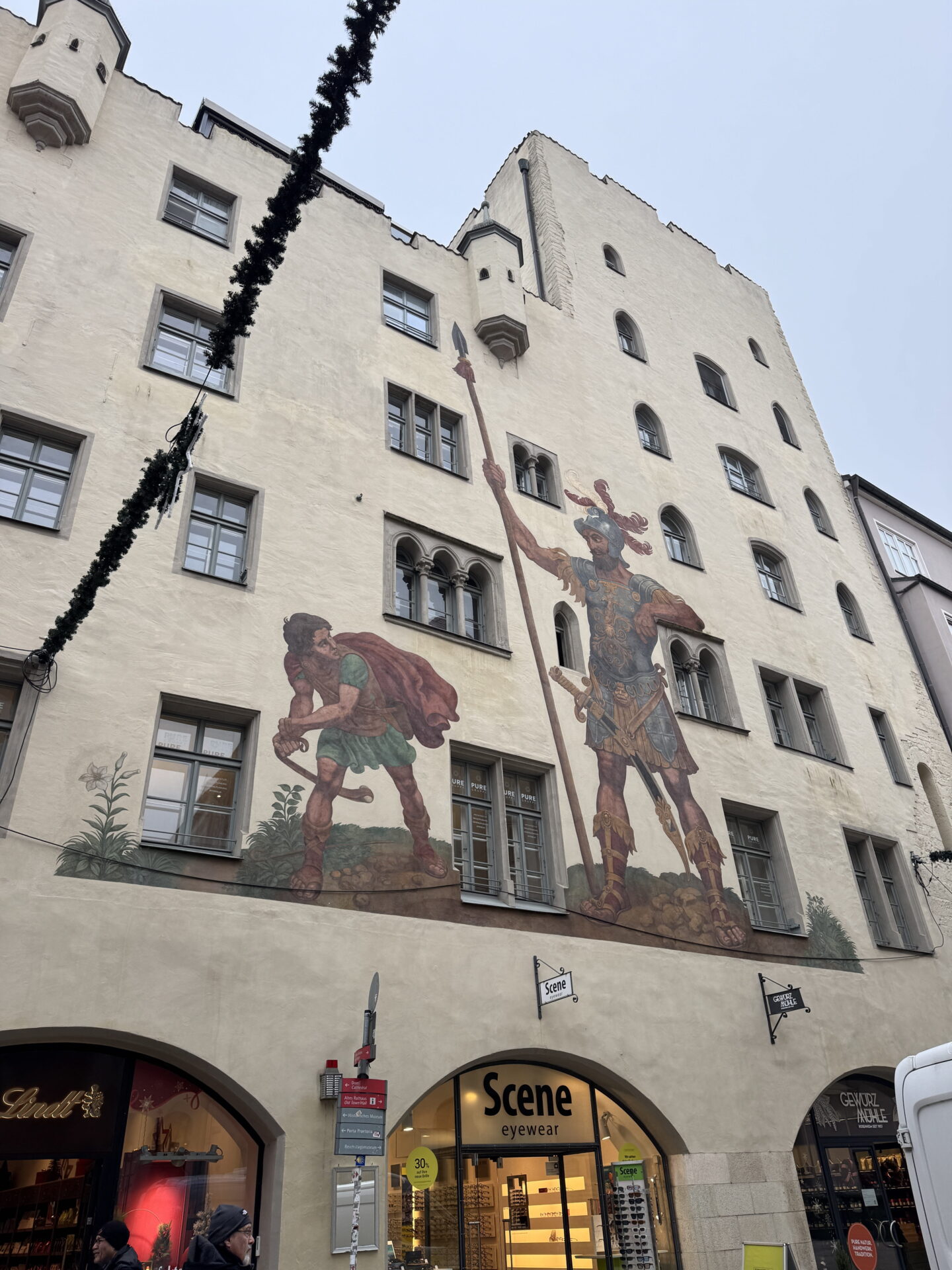
Its enormous façade features a painting of David and Goliath, which is impossible to miss as you walk through the Old Town.
We stopped here after exploring Stadtamhof, and I remember being amazed by the scale of the mural. I genuinely couldn’t imagine how long it must have taken to paint something so detailed on the side of a building.
It’s not an attraction that requires much time, but it’s absolutely worth seeing.
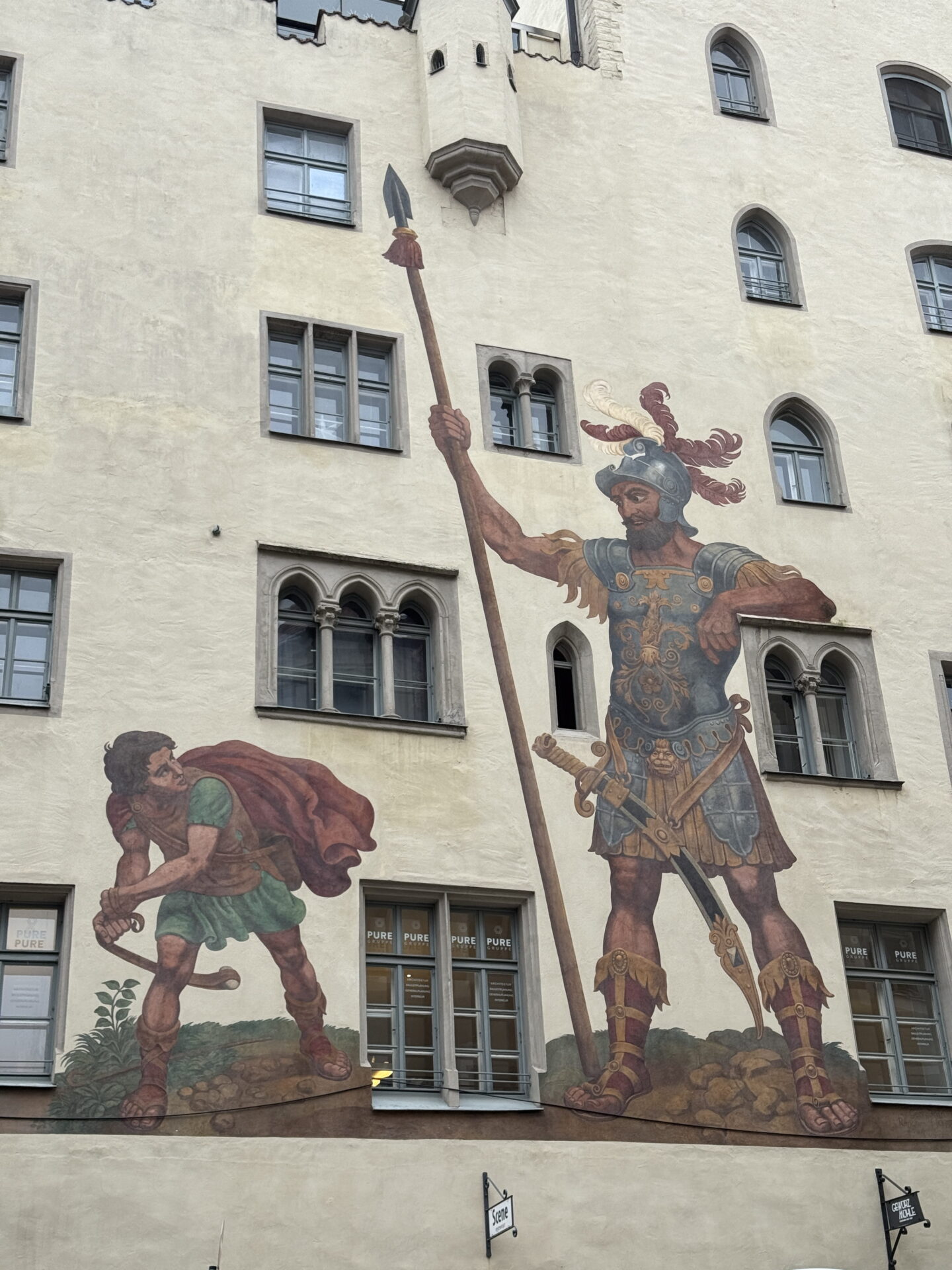
The surrounding streets are lovely too, so I’d include Goliath House as part of a longer walk through the Old Town rather than making a separate trip.
4. Wander around Regensburg’s medieval Old Town
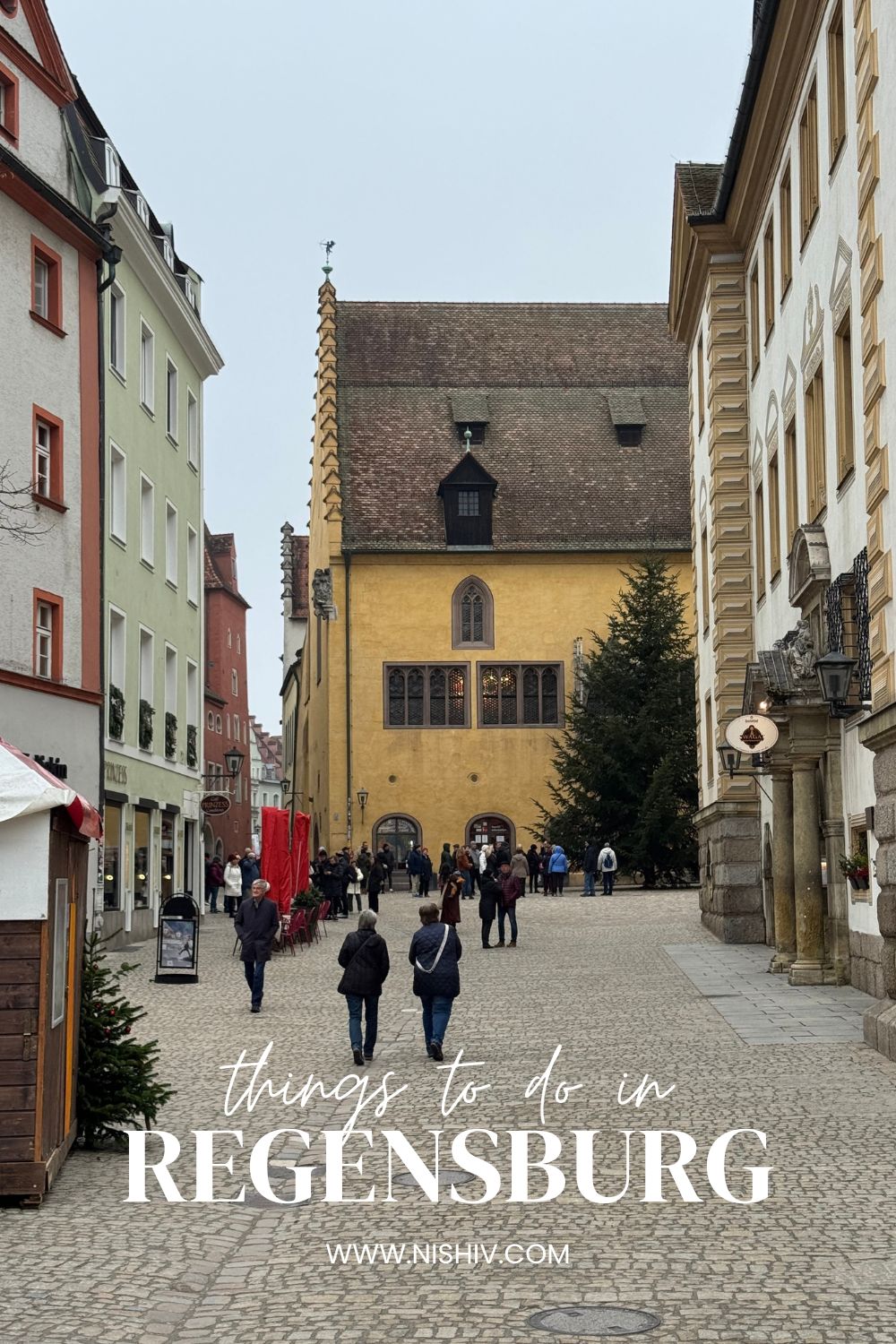
One of my favourite things to do in Regensburg was simply wandering around the Old Town.
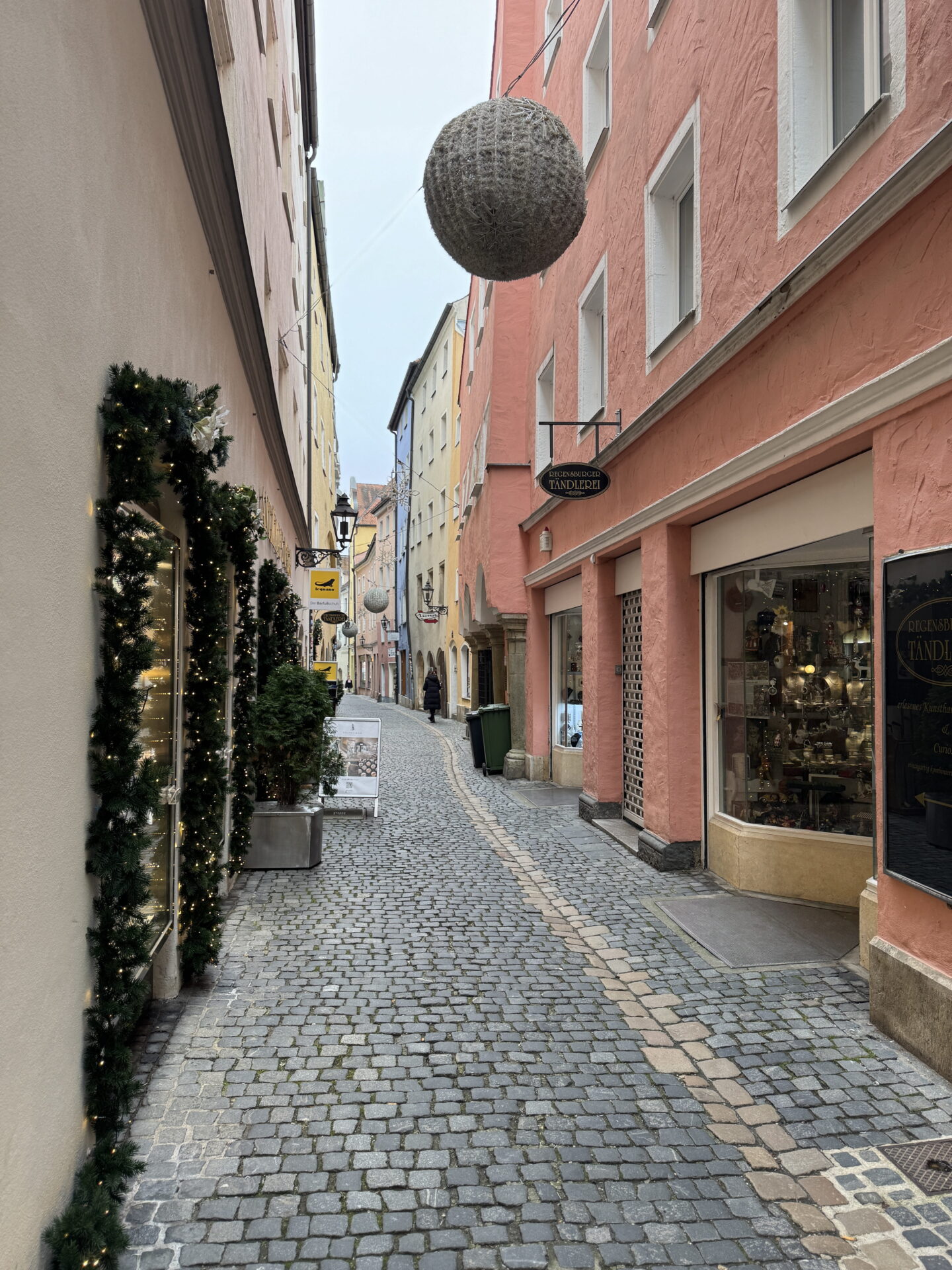
Regensburg’s historic centre is part of a UNESCO World Heritage Site, and it’s easy to see why. There are narrow cobbled streets, medieval buildings, colourful façades and little squares everywhere you look.
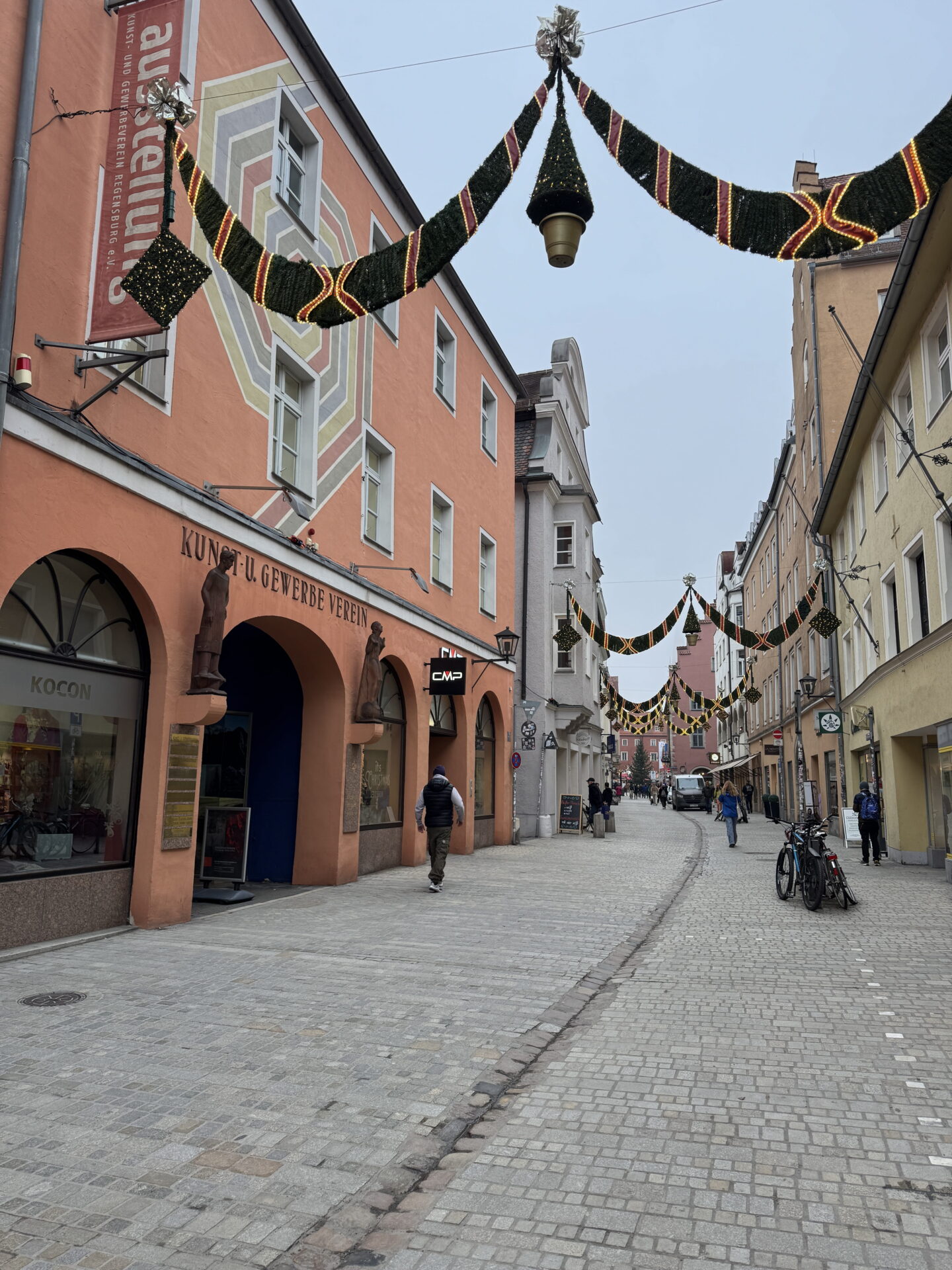
In December, so many of the shops and streets were decorated for Christmas, which made everything feel even prettier.
I particularly loved the maze of little alleyways. We’d walk down one street, turn a corner and discover another lovely building or independent shop.
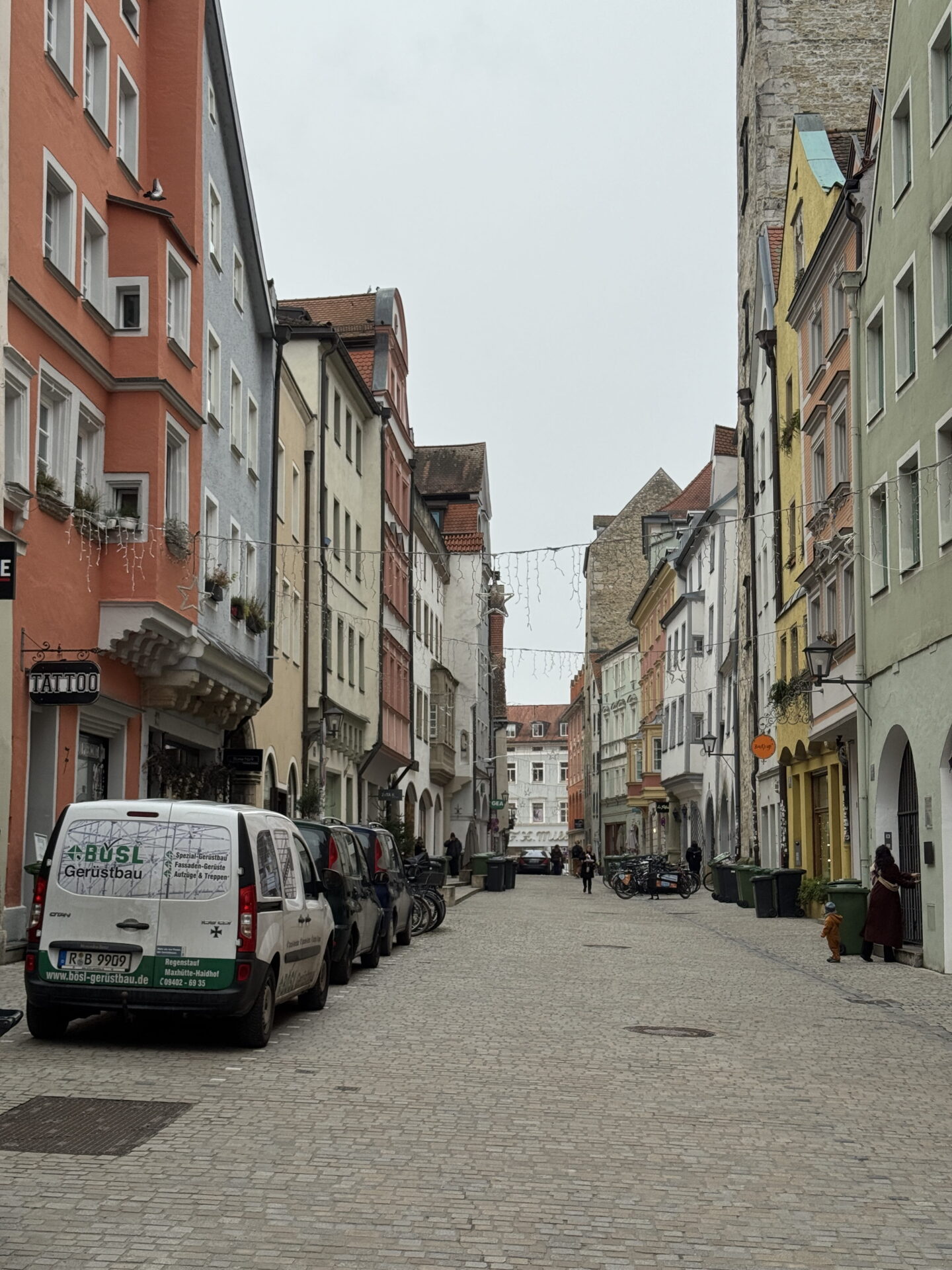
The best part was that everything felt so close together. At one point, we’d barely walked a few minutes before reaching the next attraction on our list.
I’d leave some time to explore without a strict itinerary because the streets themselves are a huge part of Regensburg’s appeal.
5. Visit Regensburg Cathedral
Regensburg Cathedral, also known as St Peter’s Cathedral or Dom St. Peter, is one of the city’s most impressive landmarks.
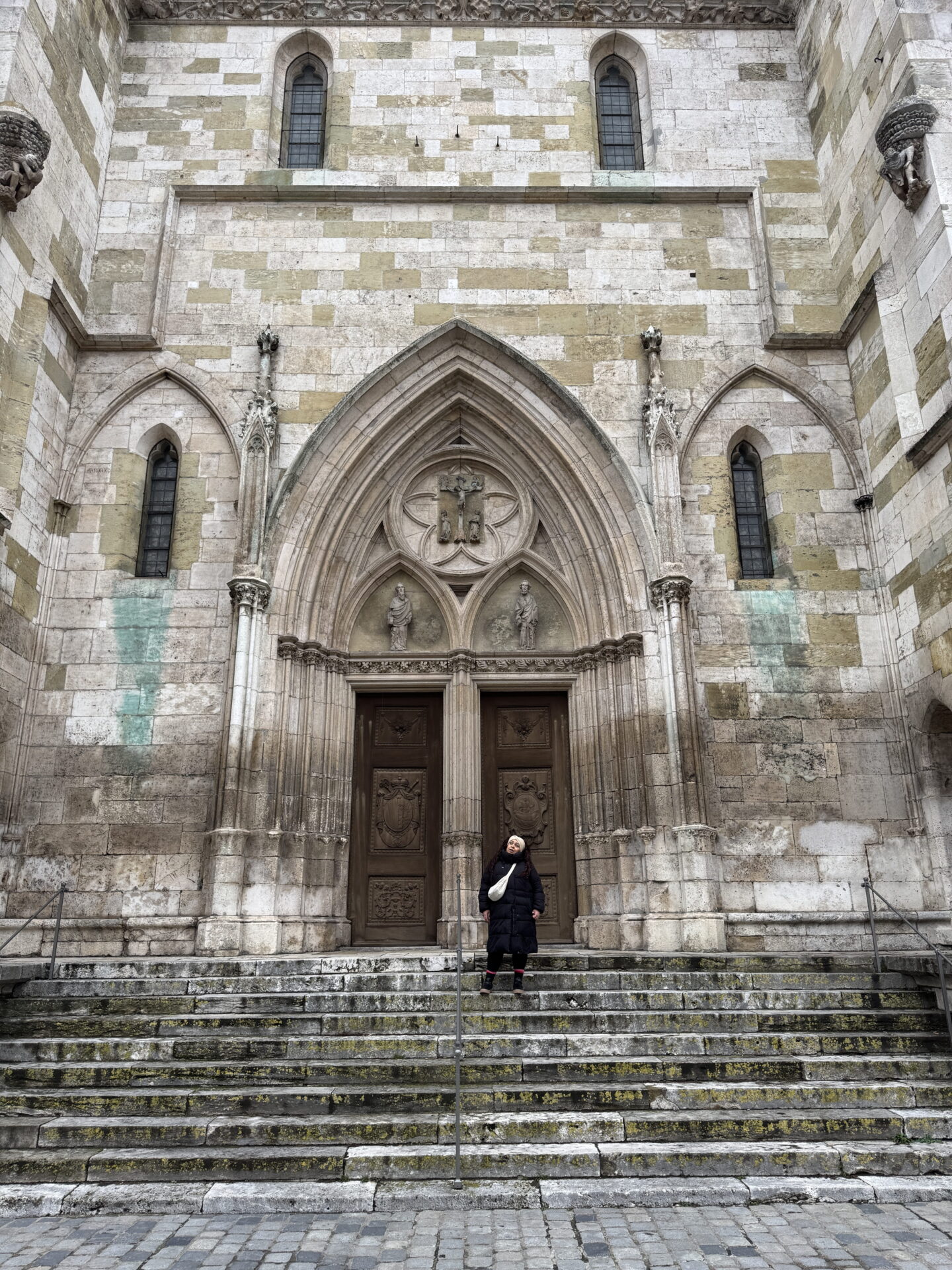
The Gothic cathedral dominates the skyline with its two enormous towers, and it’s one of the first buildings you’ll notice when approaching the historic centre.
Inside, you’ll find soaring ceilings, beautiful stained-glass windows and intricate architectural details.
One detail worth looking out for is the medieval stained glass, some of which dates back to the 13th and 14th centuries. It’s one of the cathedral’s most distinctive features, particularly when sunlight filters through the windows and brings the colours to life.
Even if churches aren’t usually your thing, the cathedral’s sheer scale makes it an impressive stop, especially after wandering through the narrow medieval streets surrounding it.
I’d recommend checking whether the cathedral is open to visitors when you’re nearby, as access can be affected by religious services.
6. Visit the Basilica of the Nativity of Our Lady
The Basilica of the Nativity of Our Lady, commonly known as Alte Kapelle or the Old Chapel, is another church worth visiting.
While Regensburg Cathedral is famous for its Gothic architecture, Alte Kapelle is particularly known for its lavish Rococo interior.
From the outside, it doesn’t necessarily give you an idea of how elaborate the decoration is inside.
Inside, expect ornate ceiling frescoes, decorative plasterwork and gilded details that make the church feel almost theatrical. It’s a striking contrast to the Gothic grandeur of Regensburg Cathedral, which is why I’d recommend seeing both if you have time.
7. See the Old Town Hall
Regensburg’s Old Town Hall, or Altes Rathaus, is one of the city’s most historically significant buildings.
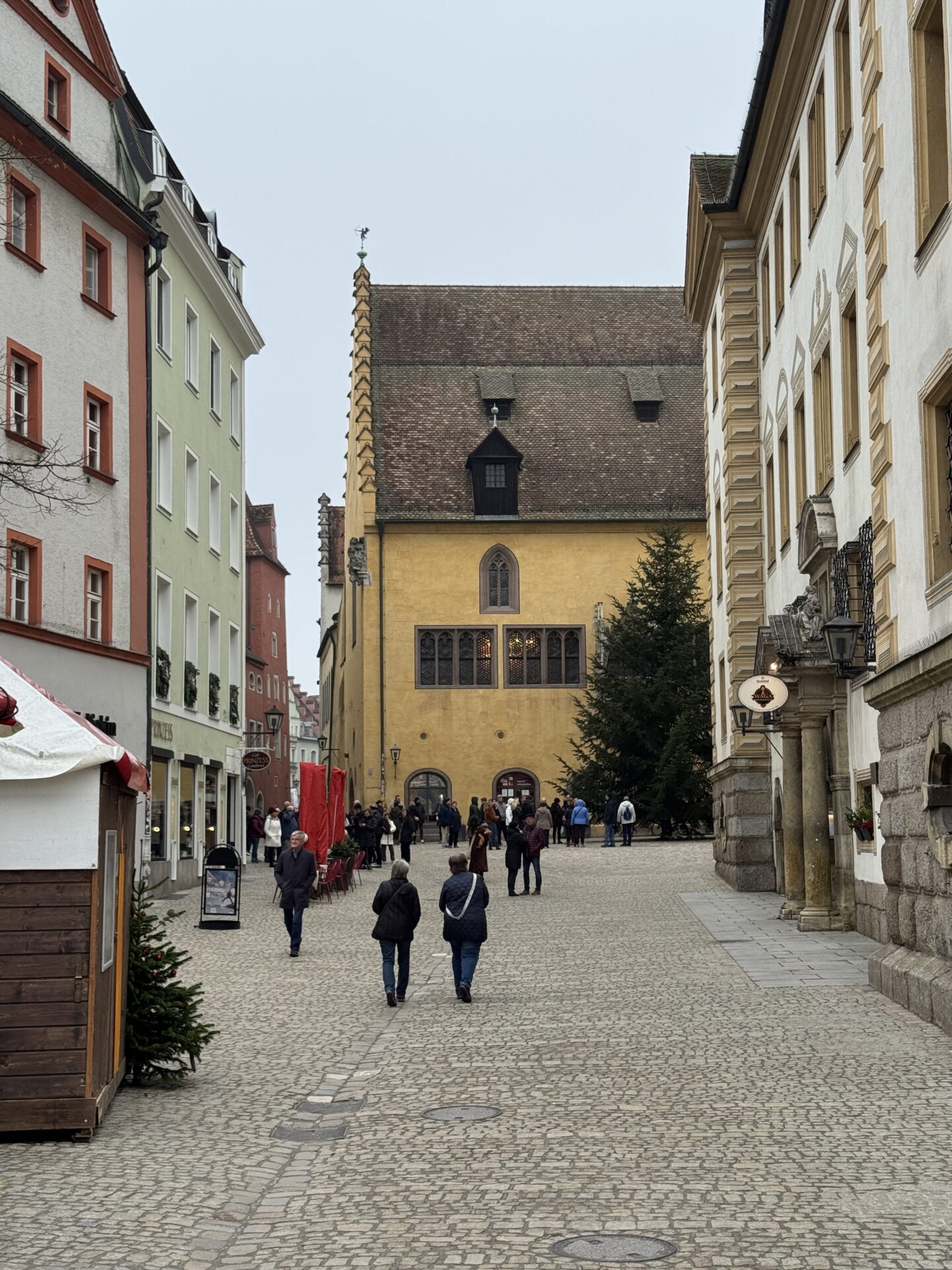
It was associated with the Imperial Diet of the Holy Roman Empire, and the historic rooms can be explored on guided tours.
The building itself is worth seeing from outside, with its distinctive tower and medieval architecture.
If you’re interested in European history, I’d recommend considering a guided visit rather than simply walking past.
This is also a good stop to combine with Haidplatz and the surrounding Old Town streets.
If you’d like to learn more about Regensburg’s history, a guided walking tour of the Old Town is a good way to discover the stories behind its medieval buildings and historic squares.
8. Explore Haidplatz
Haidplatz is one of Regensburg’s prettiest historic squares.
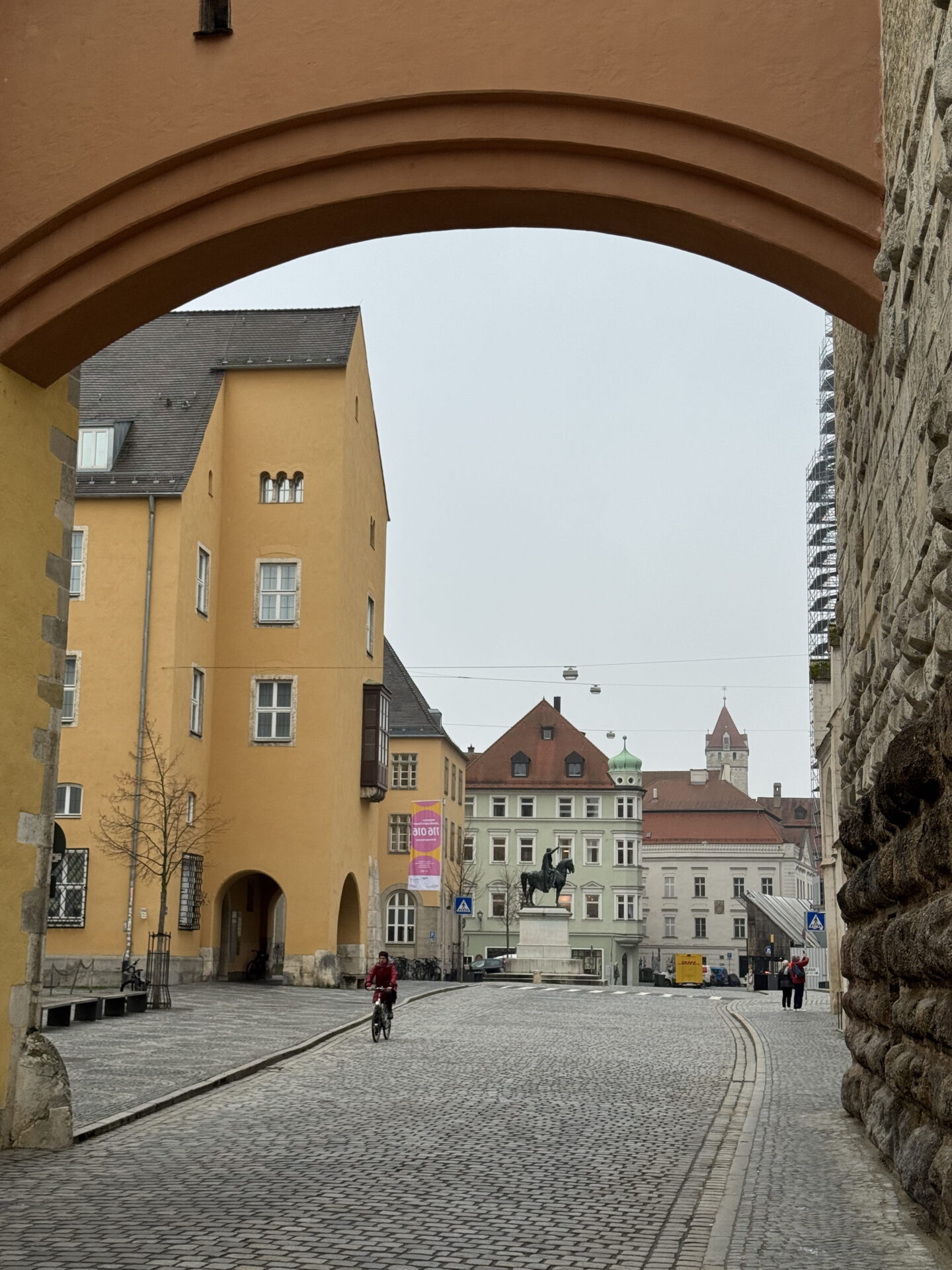
It’s surrounded by colourful buildings and has a lovely atmosphere, particularly if you enjoy finding quieter places to stop while sightseeing.
During December, part of the square is occupied by the Lucrezia Christmas market.
I really liked the stalls here because the products seemed more individual than some of the things we’d seen at the larger Christmas markets in Nuremberg.
There were interesting gifts, handmade-looking decorations and food stalls, including someone making chimney cakes.
I also discovered an independent clothing shop nearby that sold some gorgeous colourful jumpers. I tried one on, decided not to buy it and then spent the rest of the day regretting my decision!
I liked it so much that I actually went back on our final morning to buy it.
It’s a lovely square to explore even when the Christmas markets aren’t running.
9. See the Golden Tower
The Golden Tower, or Goldener Turm, is one of the most distinctive surviving medieval towers in Regensburg.
During the Middle Ages, wealthy families built tall residential towers as symbols of their status, and the Golden Tower is a particularly impressive example.
It’s located in the Old Town, so it’s easy to see while exploring the surrounding streets.
You don’t need to plan a long visit here. The main attraction is admiring the tower from outside and imagining how different the city would have looked when these towers were being built.
Make a habit of looking up as you wander through Regensburg. Some of the city’s most interesting architectural details are hidden above street level.
10. Discover the Porta Praetoria
Regensburg isn’t just a medieval city. Its history stretches all the way back to Roman times.
The Porta Praetoria is a surviving gateway from the Roman military camp that once stood here.
It’s one of the city’s oldest historic landmarks and an interesting contrast to the Gothic churches and medieval buildings nearby.
You can see the surviving stonework while exploring the area around the cathedral.
What makes it especially fascinating is that the Roman gateway has been incorporated into later buildings. It’s easy to walk past without realising just how old the stonework is, so take a moment to look closely at how the ancient remains sit alongside the surrounding architecture.
I’d particularly recommend stopping here if you’re interested in Roman history, although it’s worth seeing even if you only have a passing interest in the subject.
11. Visit the Basilica of St. Emmeram
The Basilica of St. Emmeram is another important religious building in Regensburg.
It formed part of the historic St. Emmeram monastery complex and is known for its elaborate interior and centuries of religious history.
One of the most interesting things about the basilica is the contrast between its Romanesque origins and the elaborate Baroque decoration added later. Look out for the richly decorated ceilings and the historic tombs, which reflect the church’s importance over many centuries.
It’s especially convenient to visit if you’re also exploring St. Emmeram’s Palace, as the two are closely connected.
If you enjoy architecture, this is another church I’d consider adding to your itinerary after the cathedral and Alte Kapelle. Just check visiting arrangements before you go, particularly around services and special events.
12. Explore St. Emmeram’s Palace
St. Emmeram’s Palace, also known as Thurn und Taxis Palace or Schloss St. Emmeram, is one of Regensburg’s grandest attractions.
The former monastery complex became the residence of the princely Thurn und Taxis family, and parts of the palace can be explored on guided tours.
We visited the grounds during the Romantic Christmas Market, and I was amazed by how beautiful the setting was.
As we approached, we could hear carol singers, and once we entered, the illuminated palace provided a spectacular backdrop to the market.
I could even see through some of the windows as we walked around, which made me curious about what the rooms looked like inside.
If you’re visiting outside the Christmas market season, a palace tour is worth considering. I’d check the official tour timetable in advance, as access isn’t the same as visiting a museum where you can simply walk in whenever you like.
13. Visit Neupfarrplatz
Neupfarrplatz is one of Regensburg’s central squares and a useful stop while exploring the Old Town.
The square has an interesting history, including its connection to Regensburg’s former Jewish quarter.
Today, it’s home to Neupfarrkirche and is surrounded by shops and historic buildings.
When we visited in December, it was also the location of one of Regensburg’s main Christmas markets.
This was noticeably larger than the little markets we’d explored earlier in the day, with stalls selling jewellery, artwork, miniature German houses and plenty of festive food.
There was also a carousel for children.
Even outside December, Neupfarrplatz is worth visiting as part of a walking route through the centre.
14. Explore the Document Neupfarrplatz archaeological site
Beneath Neupfarrplatz, an underground archaeological site preserves traces of Regensburg’s medieval Jewish quarter, including remains of buildings that once stood in the square.
It’s a fascinating reminder of the city’s layered history, particularly because the square above feels like an ordinary part of modern Regensburg.
Unlike many of the outdoor landmarks in this guide, this is somewhere you’ll need to check access arrangements before visiting.
I’d recommend looking into guided tours if you’re interested in seeing the excavations.
15. Visit Niedermünster Church and its archaeological excavations
Niedermünster is another fascinating stop for anyone interested in Regensburg’s history.
The church has a long history, and the archaeological site beneath it reveals layers of earlier buildings and structures.
What makes the excavations unusual is the opportunity to see how different periods of Regensburg’s history overlap beneath a single building. The remains help illustrate how the site developed from Roman times through the medieval period, making it especially interesting if you’ve already spotted the Porta Praetoria elsewhere in the city.
This is more of a specialist attraction than the cathedral or Stone Bridge, so I’d prioritise it if you particularly enjoy archaeology.
Check whether guided visits are available during your stay, as access to the excavations is controlled.
16. See the Scots Monastery
The Scots Monastery, or Schottenkirche St. Jakob, is a Romanesque church best known for its unusual entrance.
The richly carved doorway, known as the Schottenportal, features an extraordinary collection of figures and decorative details.
It’s quite different from the Gothic architecture of Regensburg Cathedral, which makes it worth including if you enjoy visiting historic churches.
I’d allow a little time to study the carvings rather than simply taking a quick photograph.
It’s another attraction that can easily be combined with a walk through the western part of the Old Town.
17. Climb the Trinity Church tower
Trinity Church, or Dreieinigkeitskirche, is worth considering if you’d like to see Regensburg from above.
The church tower offers views across the Old Town and its rooftops when visitor access is available.
We actually walked over hoping to climb the tower, but it was closed when we arrived.
It was a shame because I would have loved to see the city from a different perspective after spending so much time exploring the streets below.
If this is high on your list, check the tower’s current opening arrangements before visiting. Access can be seasonal or restricted, so I wouldn’t leave it to chance.
18. Explore Bismarckplatz and Theater Regensburg
Bismarckplatz is a historic square in the western part of Regensburg’s Old Town.
It’s also home to Theater Regensburg, making it a good place to visit if you’re interested in the city’s cultural attractions.
We walked through Bismarckplatz while exploring the Christmas markets, although we initially thought there might be a larger market here than there actually was.
There was very little happening when we arrived, but the square itself is still worth seeing.
If you’re spending an evening in Regensburg outside the Christmas market season, checking the theatre programme could be a lovely alternative to another evening of sightseeing.
Performances vary throughout the year, so it’s worth looking at what’s on during your visit.
19. Visit the House of Bavarian History
The House of Bavarian History, or Haus der Bayerischen Geschichte, is one of Regensburg’s major museums.
Its exhibitions explore Bavaria’s more recent history, culture and identity, making it a good option if you want to learn more about the region beyond its medieval past.
It’s particularly useful if you’re travelling around Bavaria and visiting other cities such as Nuremberg and Munich.
We didn’t have time for museums during our short stay, but this would be one of my first choices if I returned in colder or rainy weather.
I’d allow at least a couple of hours if you enjoy reading exhibitions properly.
20. Explore the Regensburg Historical Museum
Regensburg’s Historical Museum, or Historisches Museum, is another option for anyone interested in the city’s past.
It covers different periods of local history, including archaeology, art and the development of Regensburg over time.
The museum is housed in a former Minorite monastery, so the building itself is part of the experience. Its collections include objects from Regensburg’s Roman past and medieval history, making it a useful place to put the landmarks around the Old Town into context.
If you only have time for one museum, I’d choose based on your interests: the Historical Museum for Regensburg’s local history, or the House of Bavarian History for a broader look at Bavaria.
21. Visit the Danube Shipping Museum
The Danube Shipping Museum, or Donau-Schiffahrts-Museum, offers something different from Regensburg’s churches and historic buildings.
The museum focuses on the history of shipping and navigation along the Danube, with exhibitions aboard historic vessels.
It’s an interesting option if you’re travelling with children or have a particular interest in boats and transport history.
Because it’s a more specialised attraction, I’d check opening times before making a dedicated trip.
It also fits naturally into a day exploring the riverside and Stone Bridge.
22. Walk along the River Danube
You don’t need to book a tour to enjoy one of Regensburg’s prettiest areas.
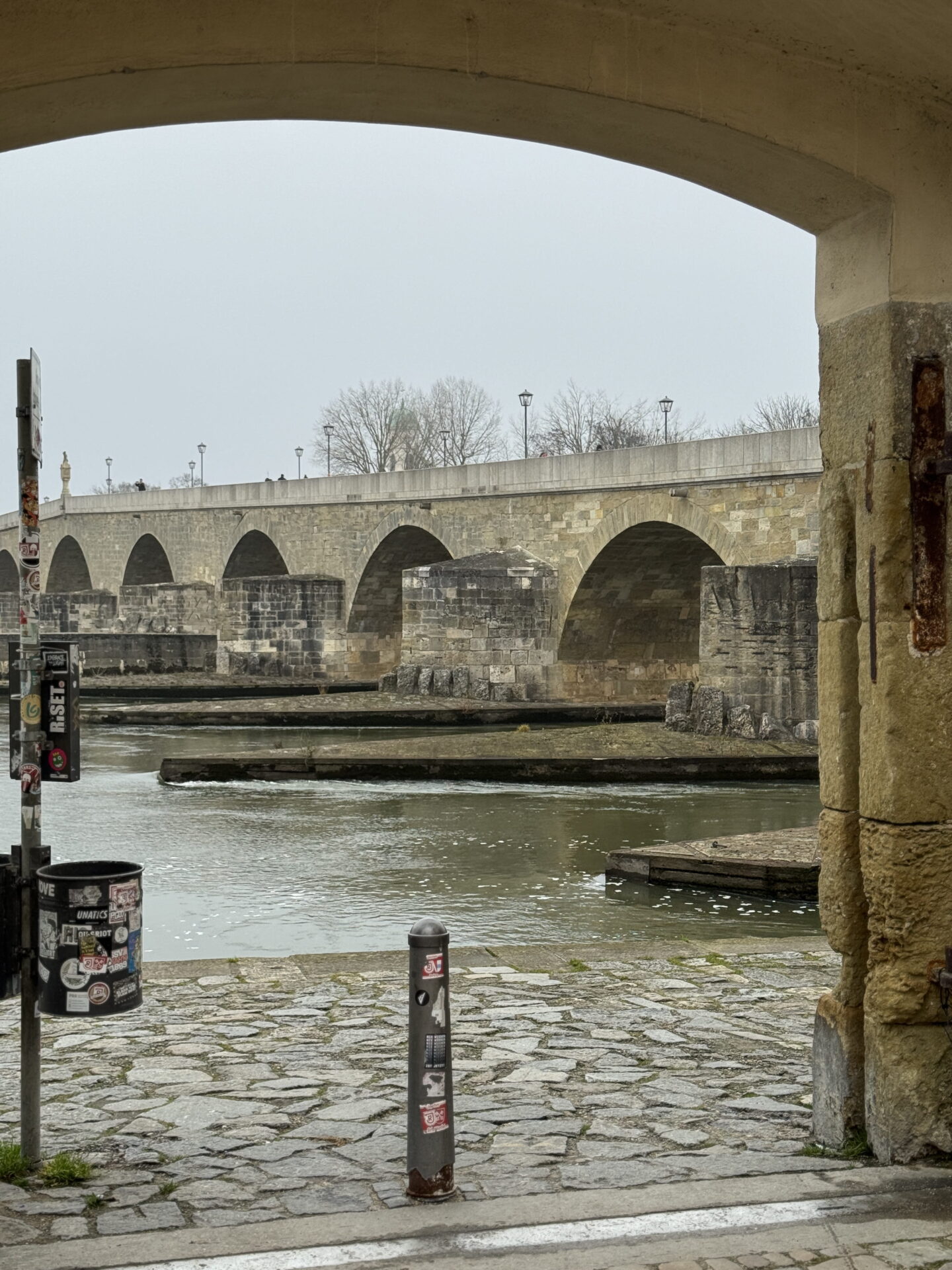
Walking along the Danube gives you lovely views of the Stone Bridge, the Old Town and the historic buildings lining the river.
We spent some time here on our December visit, and although the weather was grey and cold, I still really enjoyed it.
I’d recommend combining a riverside walk with the Stone Bridge and Stadtamhof, rather than treating them as completely separate outings.
In spring or summer, I’d allow extra time here to enjoy the riverside at a slower pace, particularly if the weather is good.
23. Take a Danube sightseeing cruise
If you’re visiting Regensburg during the warmer months, a sunset sightseeing cruise on the Danube is a lovely way to admire the historic riverside buildings and bridges from the water.
Some routes focus on the city itself, while others travel further along the river.
This isn’t something we did during our December visit, but I’d definitely consider it on a future trip in better weather.
Check the route and operating season before booking, as not every cruise runs year-round.
24. Visit the Walhalla Memorial
Walhalla is one of the most impressive attractions near Regensburg, although it’s outside the historic city centre.
The enormous neoclassical memorial sits on a hill overlooking the Danube and was built to honour notable figures from German-speaking history.
Its design resembles an ancient Greek temple, which makes it quite different from anything you’ll see in Regensburg’s Old Town.
The views over the river and surrounding countryside are another reason to visit.
Walhalla is around 10 kilometres east of Regensburg, so you’ll need to allow extra time to explore. You can get there by car or public bus, but travelling along the Danube by boat is a particularly scenic option during the operating season.
If you’d prefer to travel by boat, this Danube boat trip includes a stop at the Walhalla landing stage. According to traveller reviews, it’s possible to get off the boat, spend around two hours exploring Walhalla and then catch a later boat back to Regensburg.
Bear in mind that there’s an uphill walk from the landing stage to the memorial. I’d also recommend checking the return sailing times before booking, as you’ll need to make sure there’s enough time to explore and catch the boat back.
25. Visit Regensburg’s Christmas markets
If you’re visiting between late November and December, Regensburg’s Christmas markets are one of the biggest highlights.
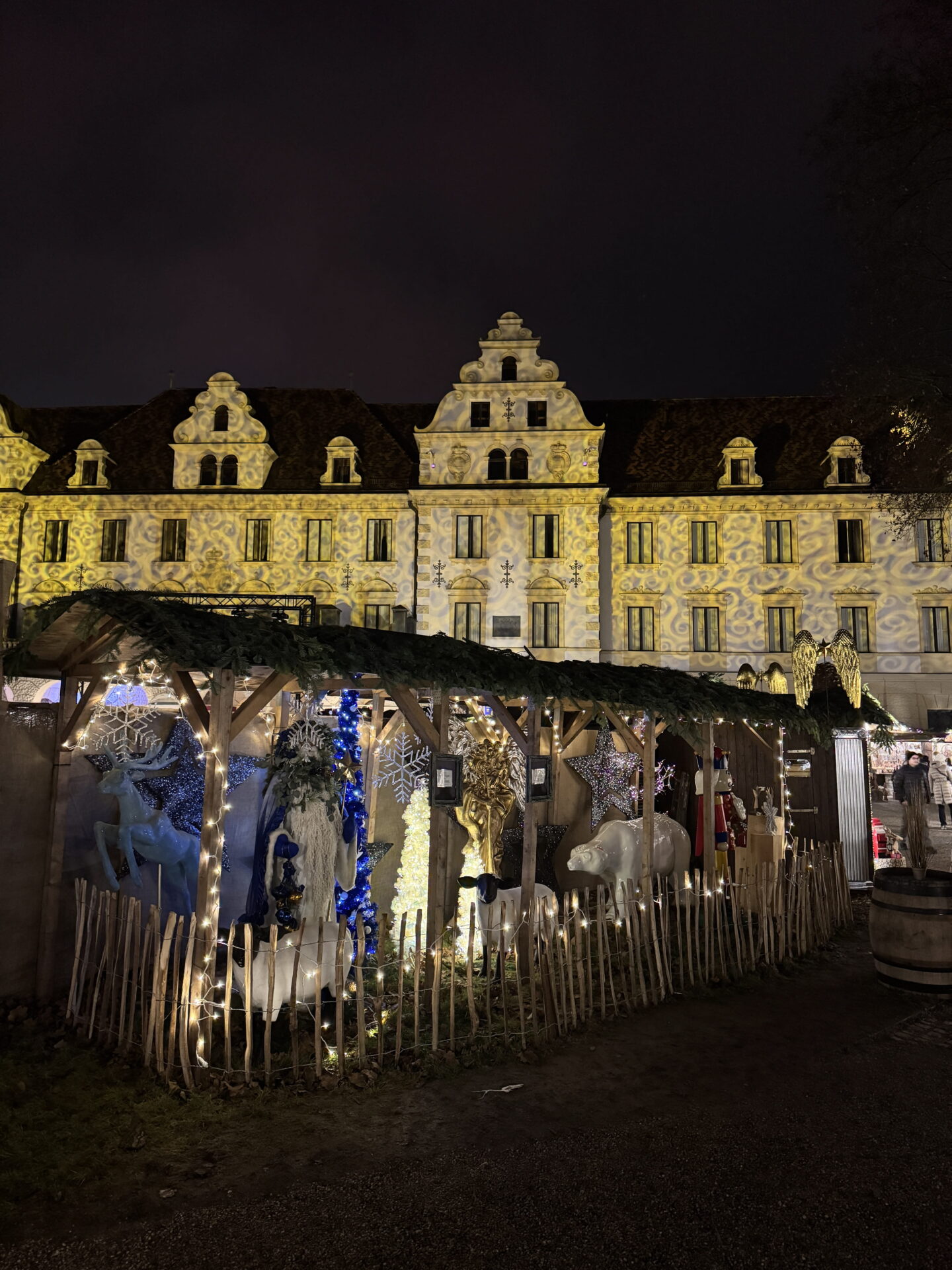
We explored several different markets during our stay, and I actually preferred the smaller ones here to some of the larger markets we’d visited in Nuremberg.
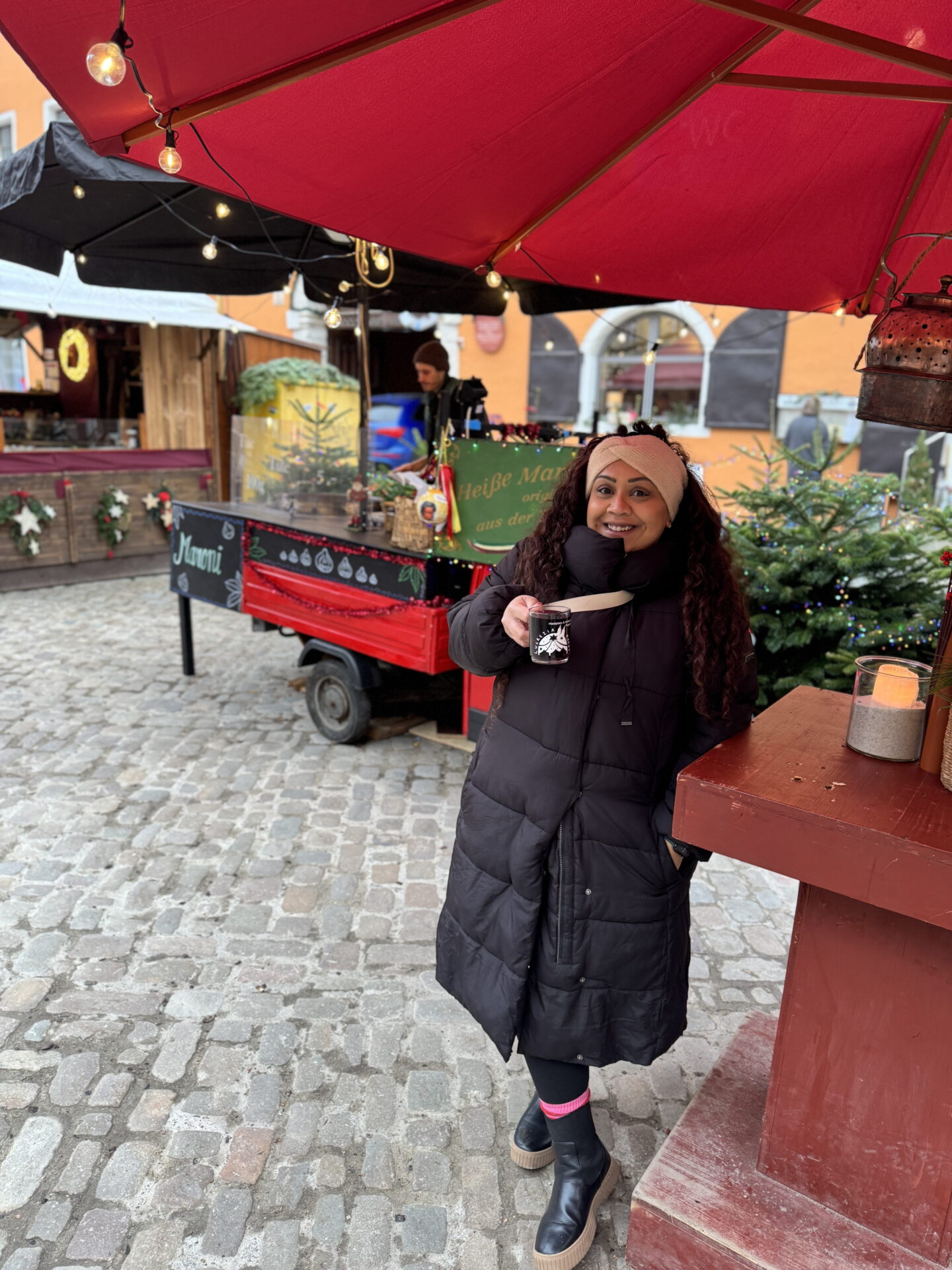
The Lucrezia-Markt at Kohlenmarkt and Haidplatz was particularly good for browsing gifts, while the market at Neupfarrplatz had a wider variety of stalls.
My favourite was the Romantic Christmas Market at Thurn und Taxis Palace.
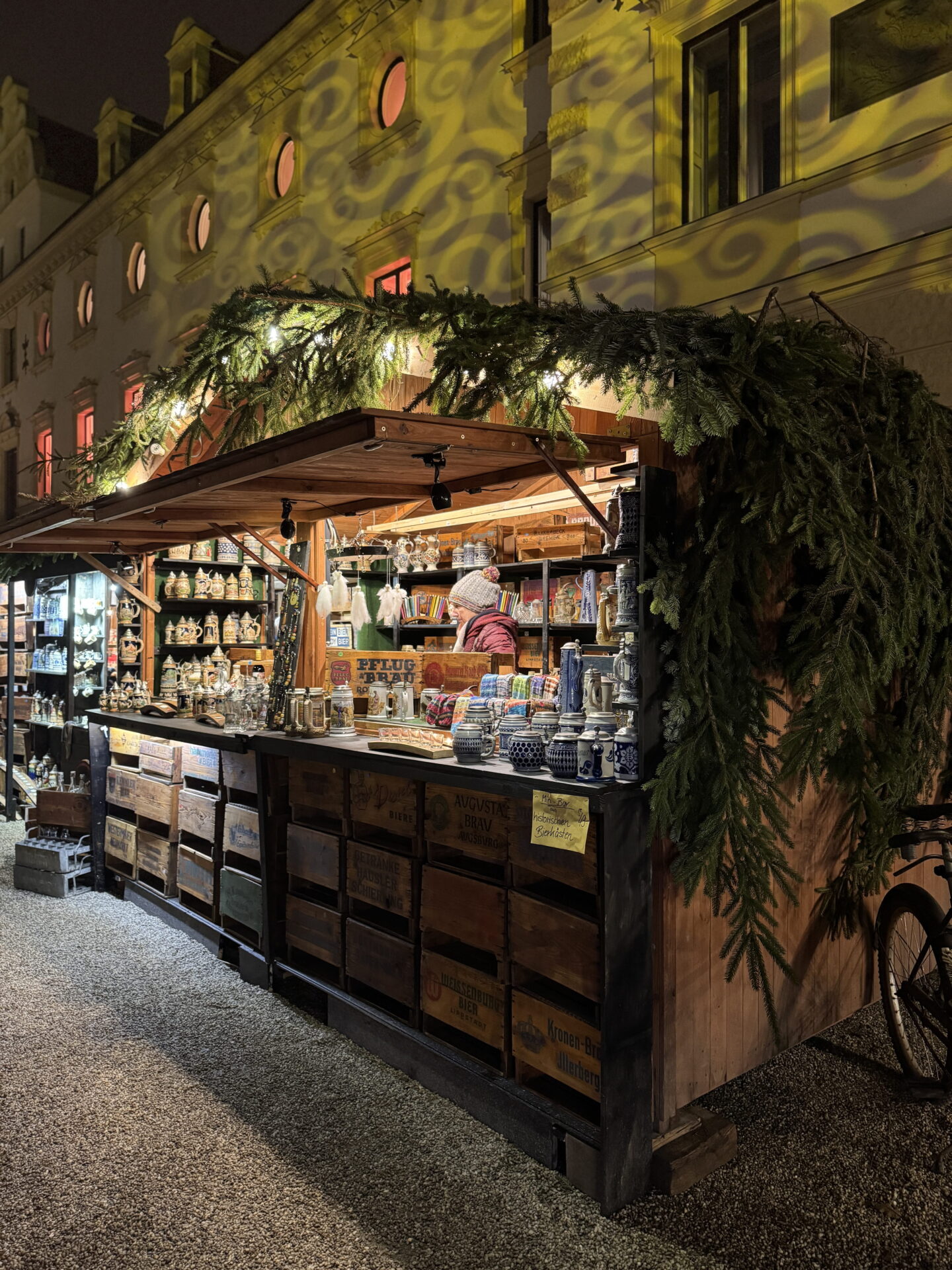
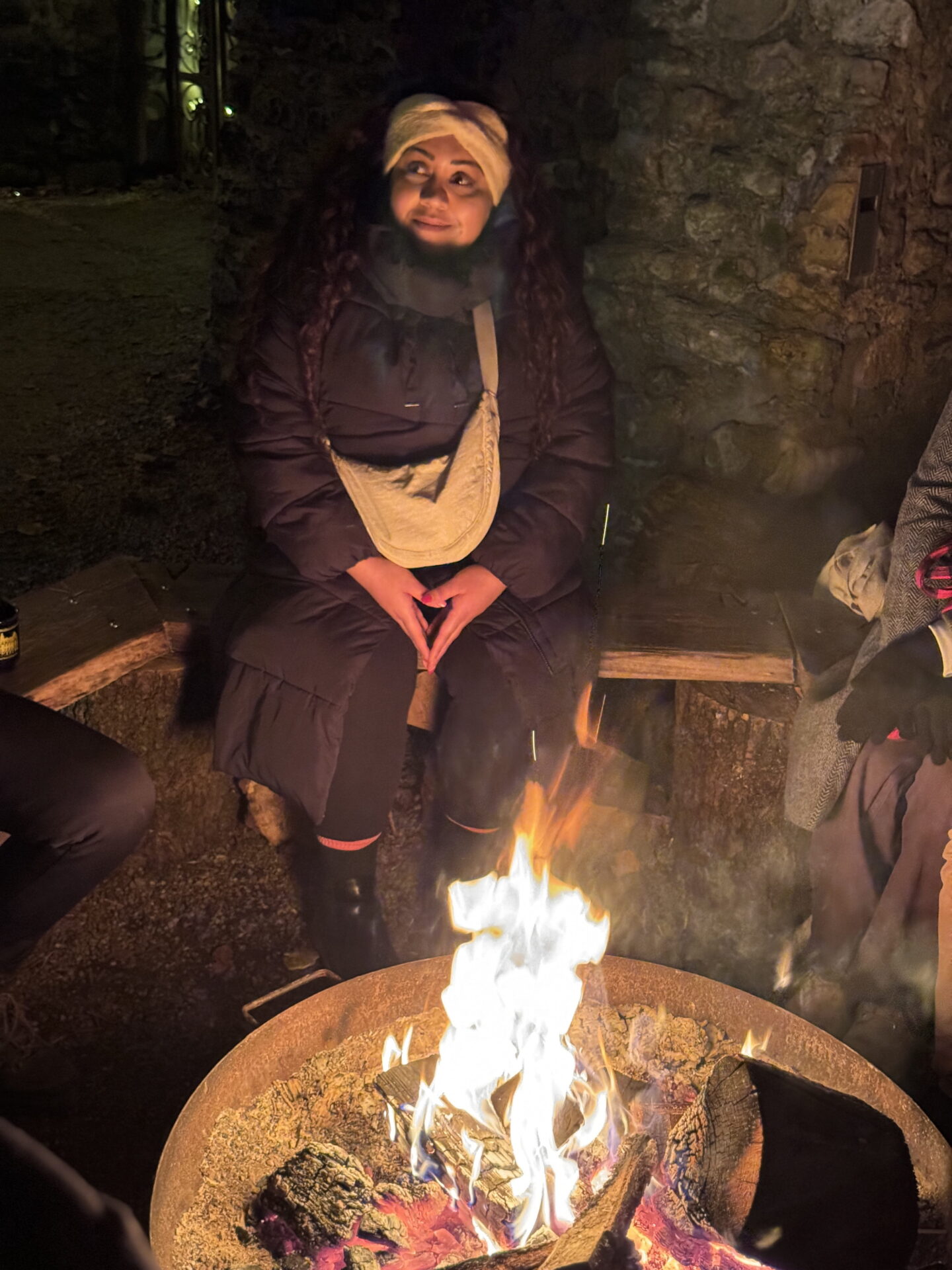
When we visited, we paid €9.50 each to enter, and I could immediately see why people loved it. The illuminated palace, carol singers and beautifully arranged stalls made it feel incredibly special.
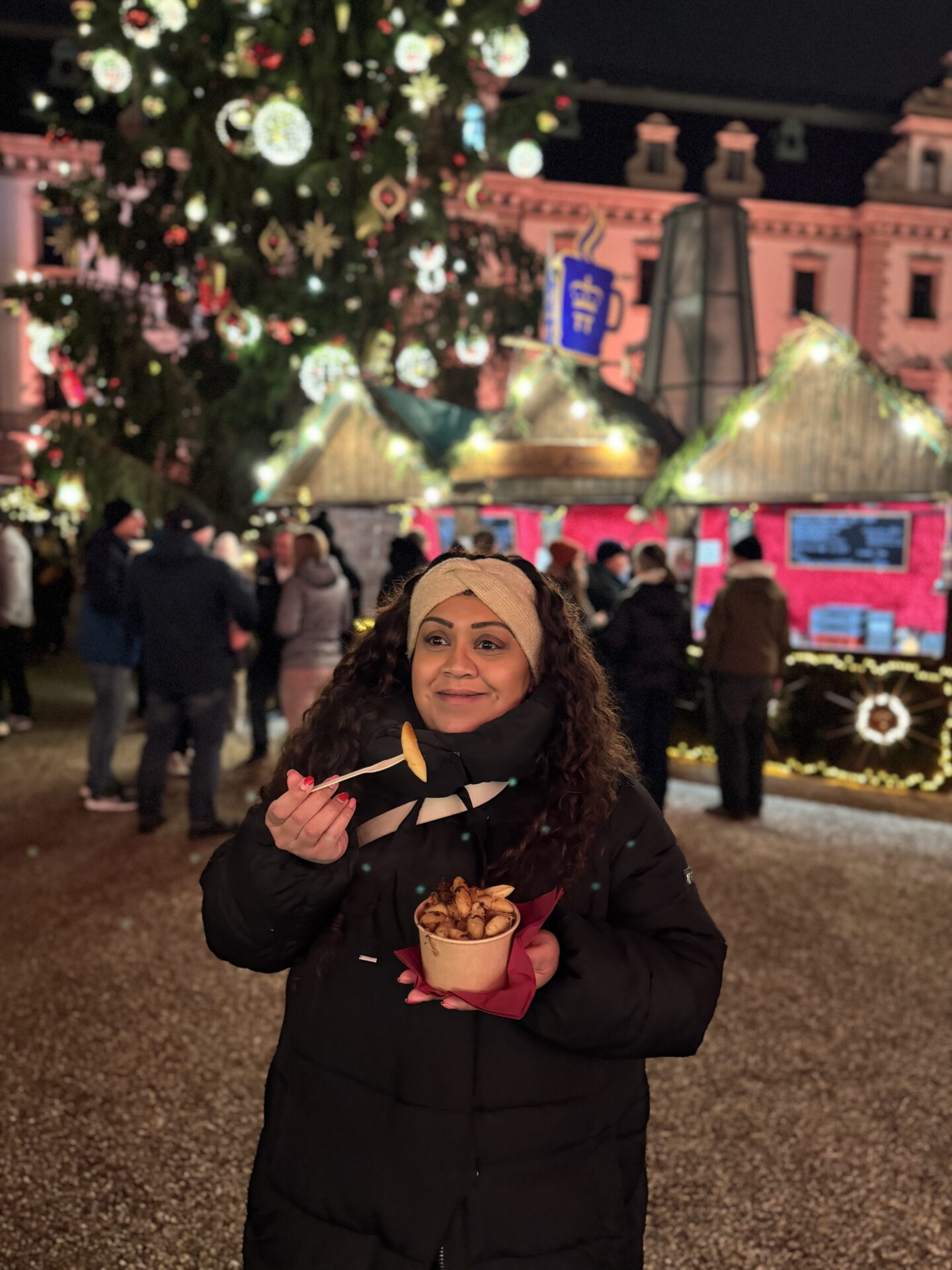
I also tried Schupfnudeln, traditional potato noodles served with cabbage, while Jass bought churros.
I’ve written a separate guide to the Christmas markets in Regensburg, covering the different markets, food and drinks, and which ones I enjoyed most.
If you’re visiting in December, I’d explore the historic sights during daylight and save the palace market for the evening.
Where to eat in Regensburg
We found some excellent places to eat in Regensburg, particularly for vegetarian and vegan food.
On our first evening, we went to Guacamole, a Mexican restaurant with plenty of plant-based options. I ordered two vegan tacos, and the Beyond Meat one was my favourite.

For breakfast, I really enjoyed Café Mitanand, where I ordered their popular honey butter waffles. The mushrooms were full of flavour, and the Korean cucumber salad was a lovely addition, although I’d ask for the maple syrup on the side next time.

We also visited Ananda Vegan Indochine Tapas & Sushi Bar, where the lotus tempura and vegan teriyaki chicken bao were easily the highlights of our meal.

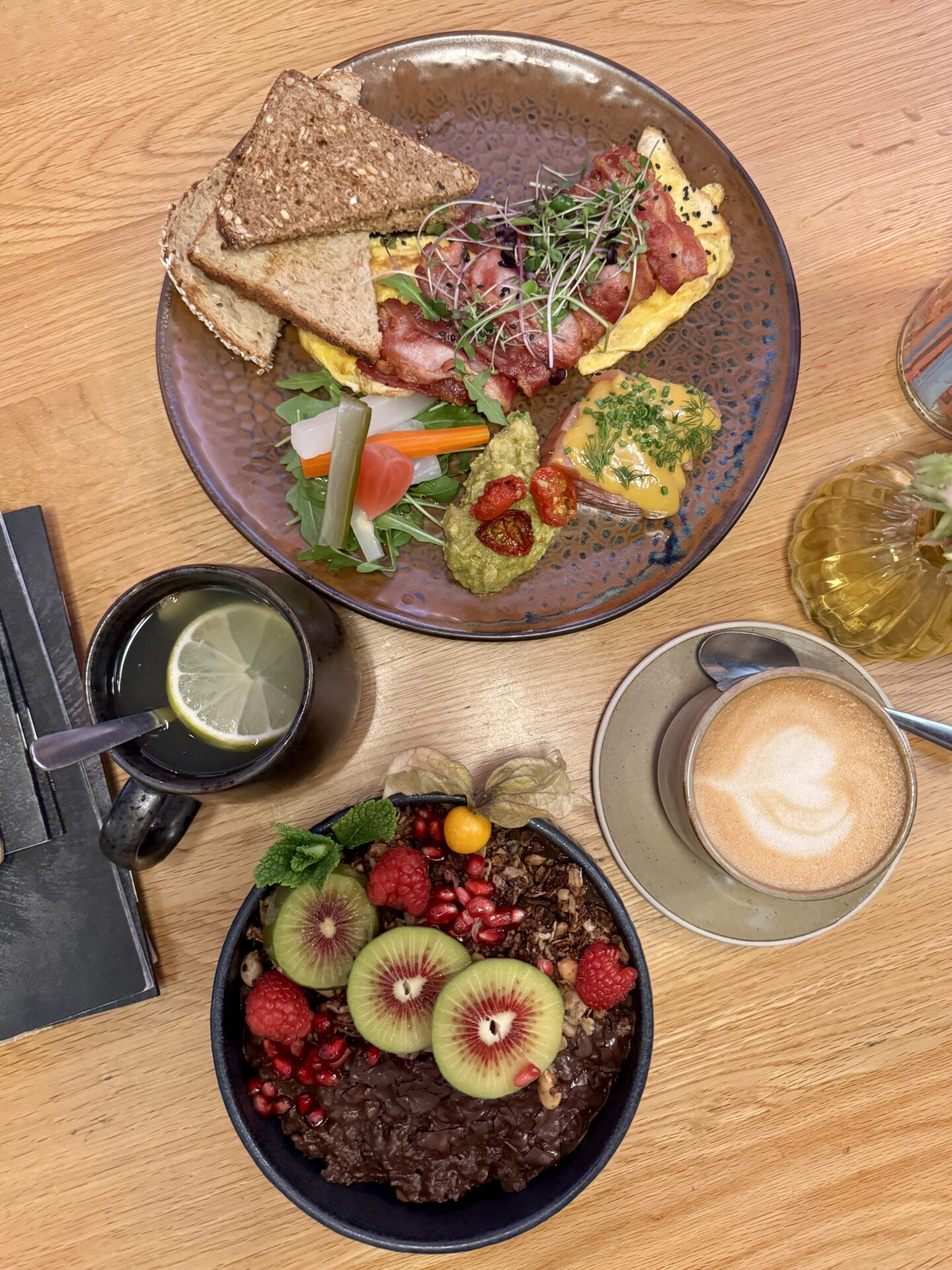
On our final morning, we had breakfast at Malefiz. I ordered their vegan chocolate porridge, which was a little too rich and filling for my taste, although the fruit and granola were delicious.
Another famous place to eat is the historic Wurstkuchl near the Stone Bridge, which is known for its traditional Bavarian sausages.
Best time to visit Regensburg
Regensburg is worth visiting throughout the year, although the experience will be quite different depending on when you go.
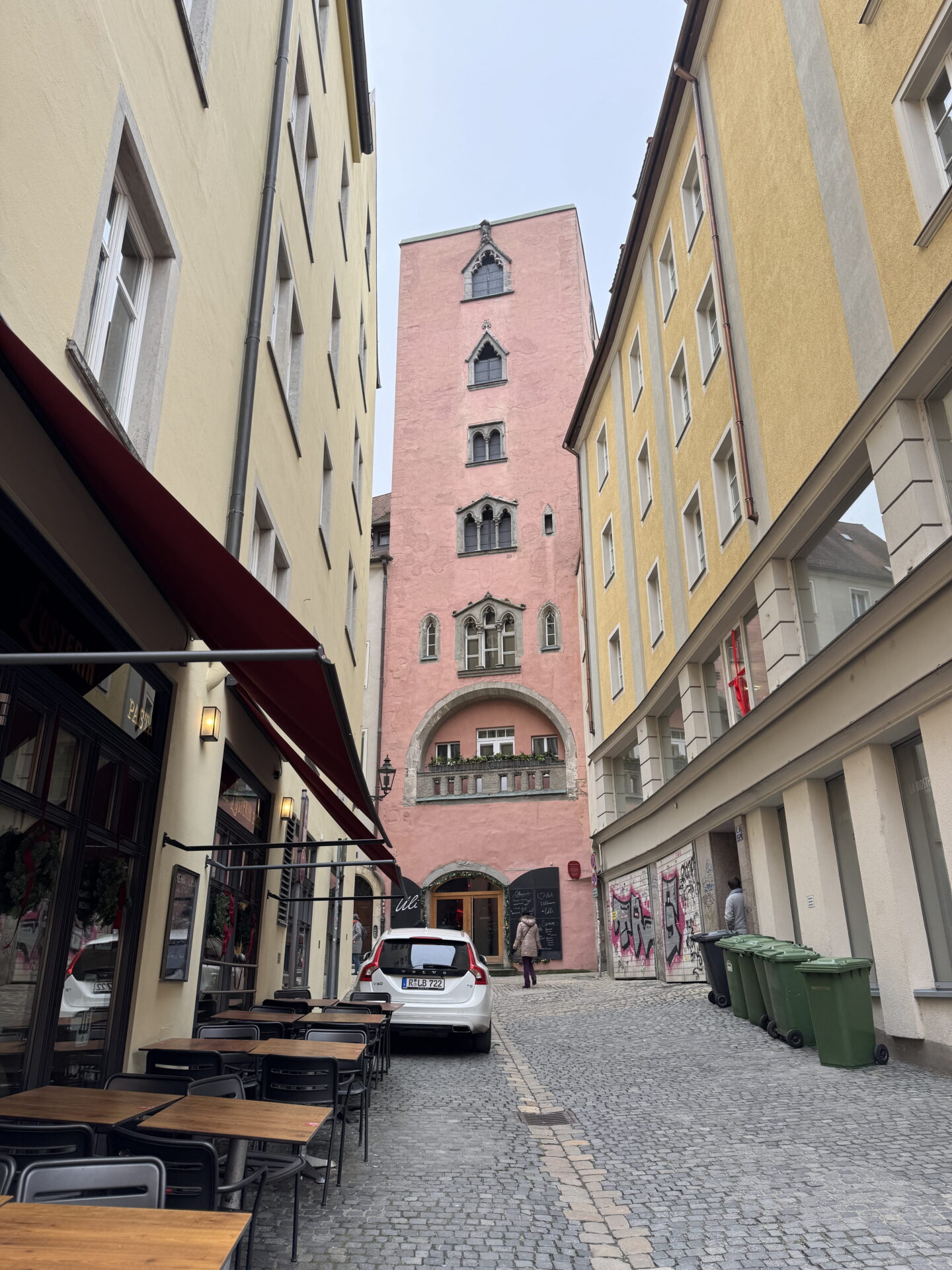
Spring: April to May
Spring is a lovely time to explore Regensburg if you want milder weather without the busiest summer crowds.
It’s a good season for walking around the Old Town, visiting churches and spending time along the Danube.
You’ll also have longer daylight hours than in winter, which makes it easier to fit more sightseeing into one day.
Summer: June to August
Summer is a good choice if you want to spend plenty of time outdoors.
The warmer weather is ideal for riverside walks, outdoor cafés and boat trips along the Danube.
It’s also a good time to consider visiting Walhalla or spending longer exploring Stadtamhof.
The main downside is that popular attractions and central streets can be busier, particularly during weekends and holiday periods.
Autumn: September to October
Early autumn is another good time to visit, particularly if you enjoy sightseeing on foot.
The weather is generally cooler than in summer, and the city can be lovely for exploring without the intense heat.
I’d consider September or early October if your priority is seeing Regensburg’s historic sights rather than visiting the Christmas markets.
Winter: November to December
We visited in December, and I loved how festive the city felt.
The Christmas decorations made the Old Town particularly pretty, and the markets gave us something to look forward to after a full day of sightseeing.
It was very cold during our visit, though, and the gloomy weather meant we didn’t always get the views I’d imagined from photographs.
December also brings shorter daylight hours, so I’d recommend exploring the main outdoor sights earlier in the day.
Some attractions may have reduced winter opening times, so check ahead if there’s somewhere you particularly want to visit.
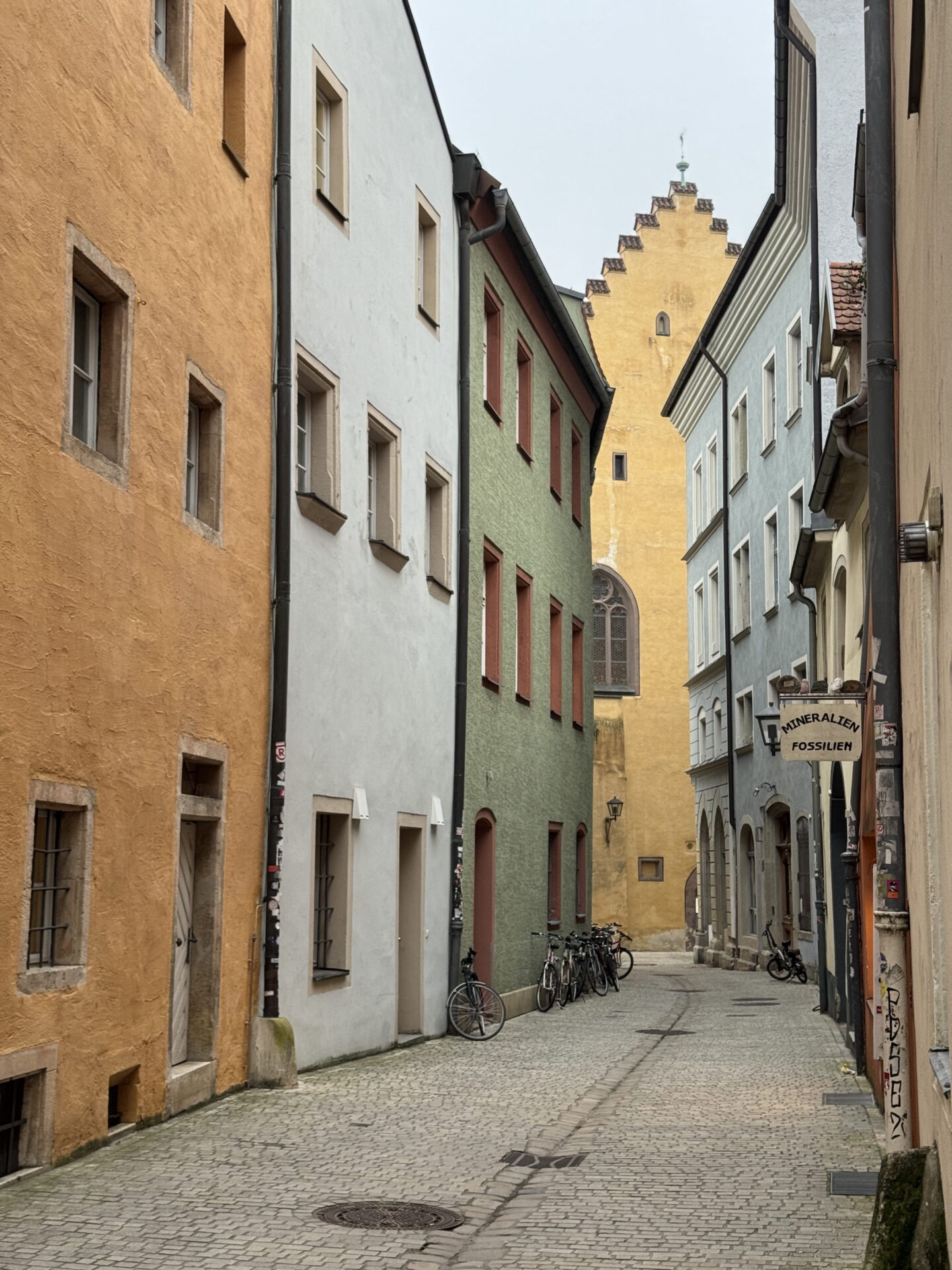
Personally, I’d recommend May, June or September for sightseeing, or December if you’re visiting specifically for the Christmas markets.
How many days do you need in Regensburg?
I’d recommend one full day to explore Regensburg’s main attractions, or two full days if you want to visit museums, take a guided tour or explore further afield.
We stayed for two nights but only had one full day to explore.
That was enough time to walk around the Old Town, cross the Stone Bridge, explore Stadtamhof, see Goliath House and visit several Christmas markets.
We didn’t have time to go inside the museums or take any guided tours, though.
If you only have one day for Regensburg sightseeing, I’d prioritise the Old Town, Cathedral, Goliath House, Stone Bridge and Stadtamhof. These are all close together and give you a lovely introduction to the city. With a second day, you can add museums, a palace tour or an excursion to Walhalla.
Is Regensburg walkable?
Yes, Regensburg is incredibly walkable.
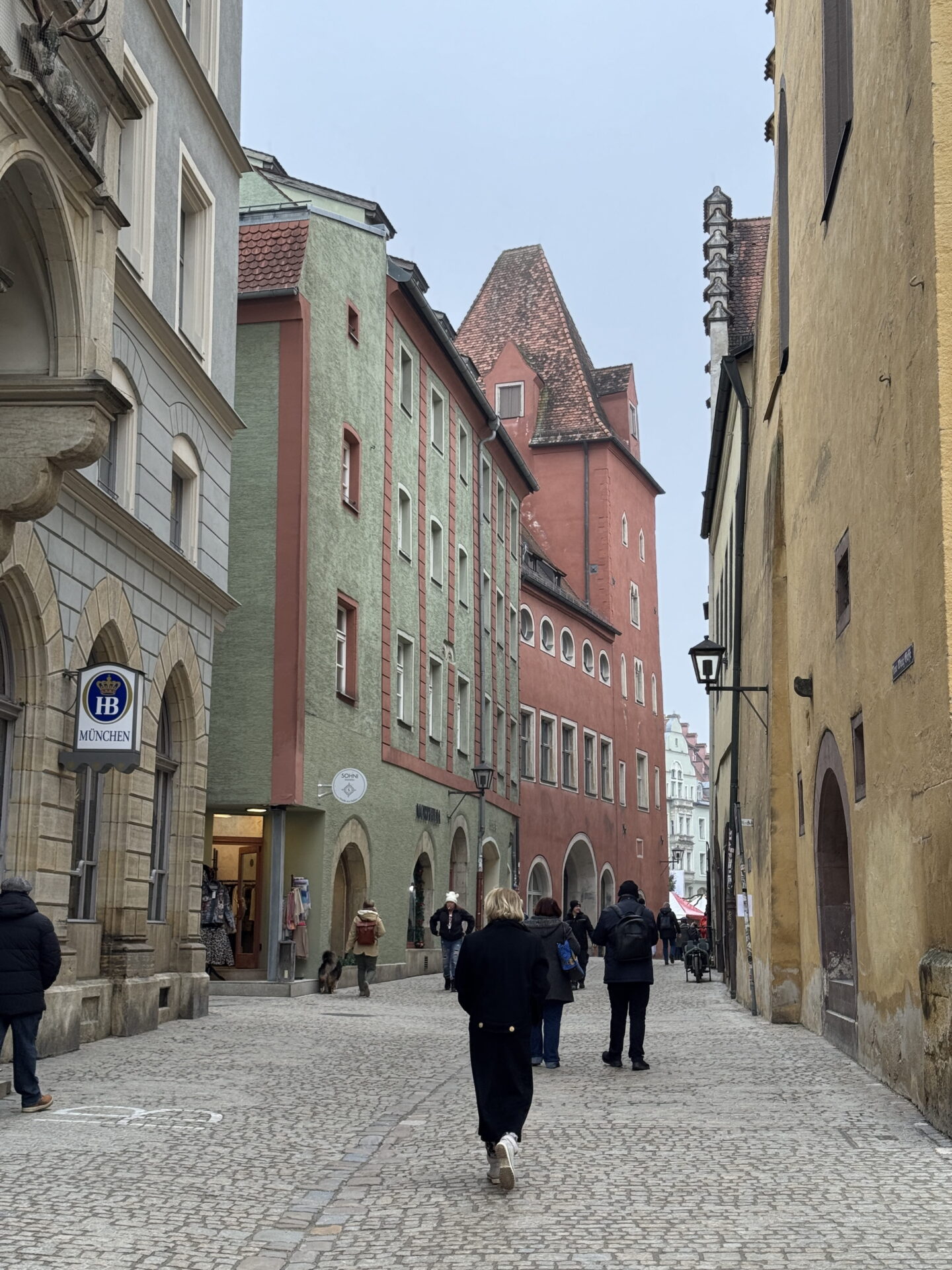
We explored almost everything on foot and found that many of the main attractions were only a few minutes apart.
I loved how easy it was to move between the historic squares, churches and little streets without needing public transport.
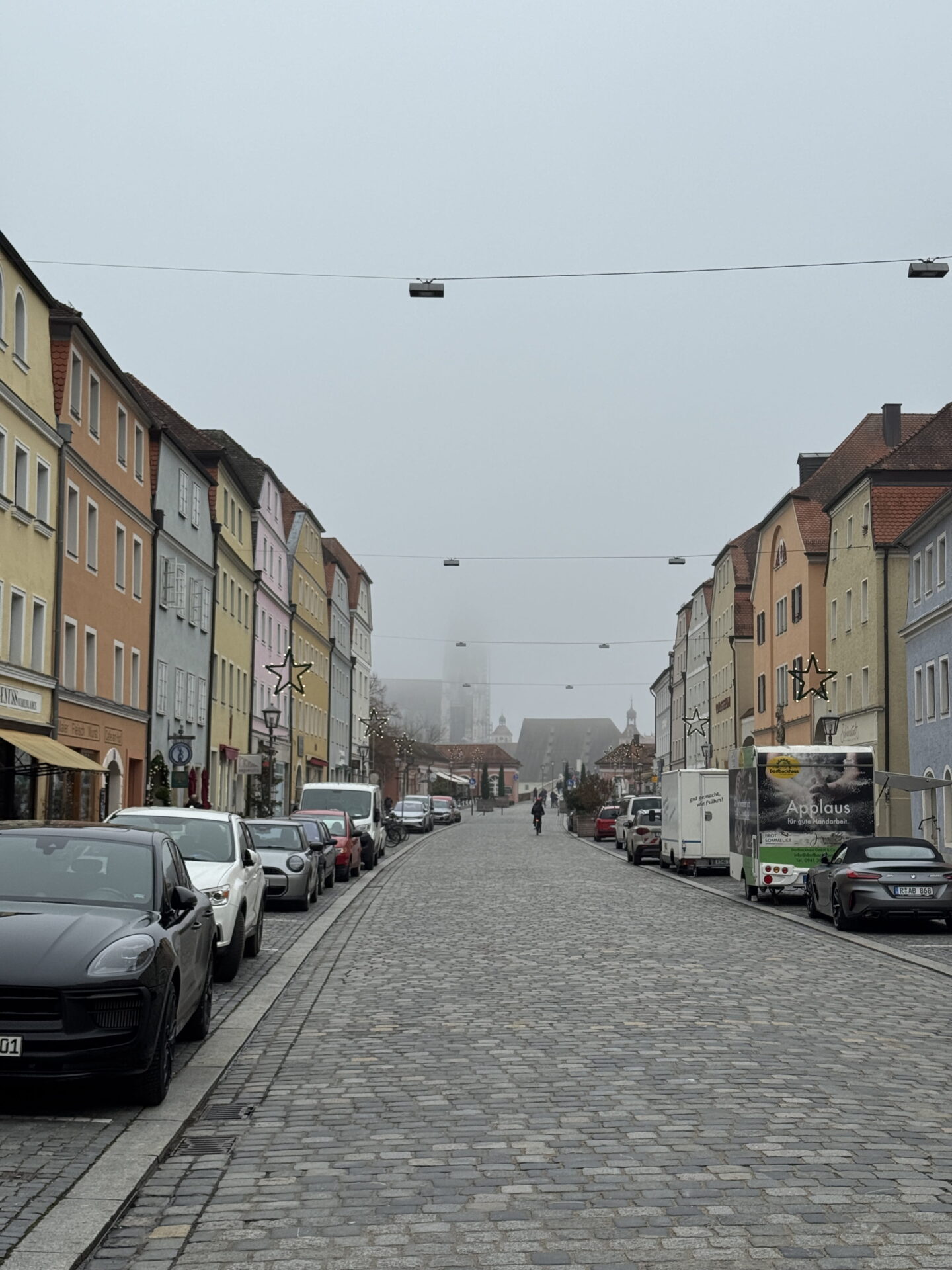
You can also walk across the Stone Bridge to Stadtamhof, so there’s no need to arrange transport for that part of the city.
I’d recommend comfortable shoes, particularly if you’re planning a full day of sightseeing.
For attractions outside the centre, such as Walhalla, you’ll need to plan additional transport.
How do you get to Regensburg?
We travelled to Regensburg by train from Nuremberg as part of our Bavarian Christmas market itinerary.
We’d booked our tickets in advance through Omio but hadn’t reserved seats.
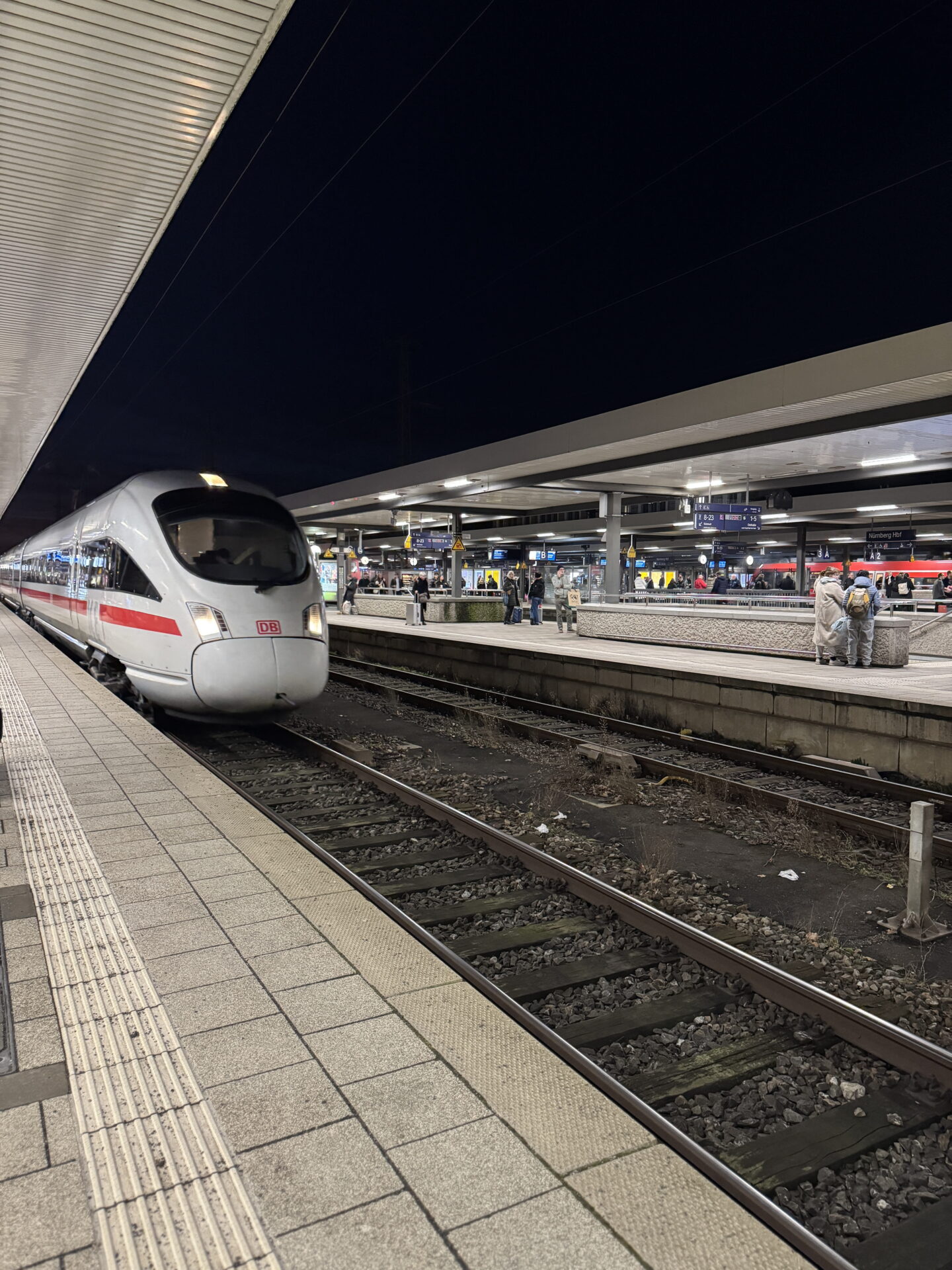
One thing that confused us at the station was discovering that not every carriage was travelling to Regensburg.
We had to check the departure information carefully to make sure we boarded the correct section of the train.
Thankfully, we worked it out before getting on!
If you’re travelling by train in Germany, I’d recommend checking the destination and carriage information displayed at the station, particularly if your service splits along the route.
After Regensburg, we continued to Munich by train.
I’ve shared our full route in my 7-day German Christmas market itinerary.
If you’re visiting Nuremberg as well, my guide to things to do in Nuremberg in December covers the historic sights worth exploring beyond its Christmas markets.
Where to stay in Regensburg
We stayed at Eurostars Park Hotel Maximilian for two nights.
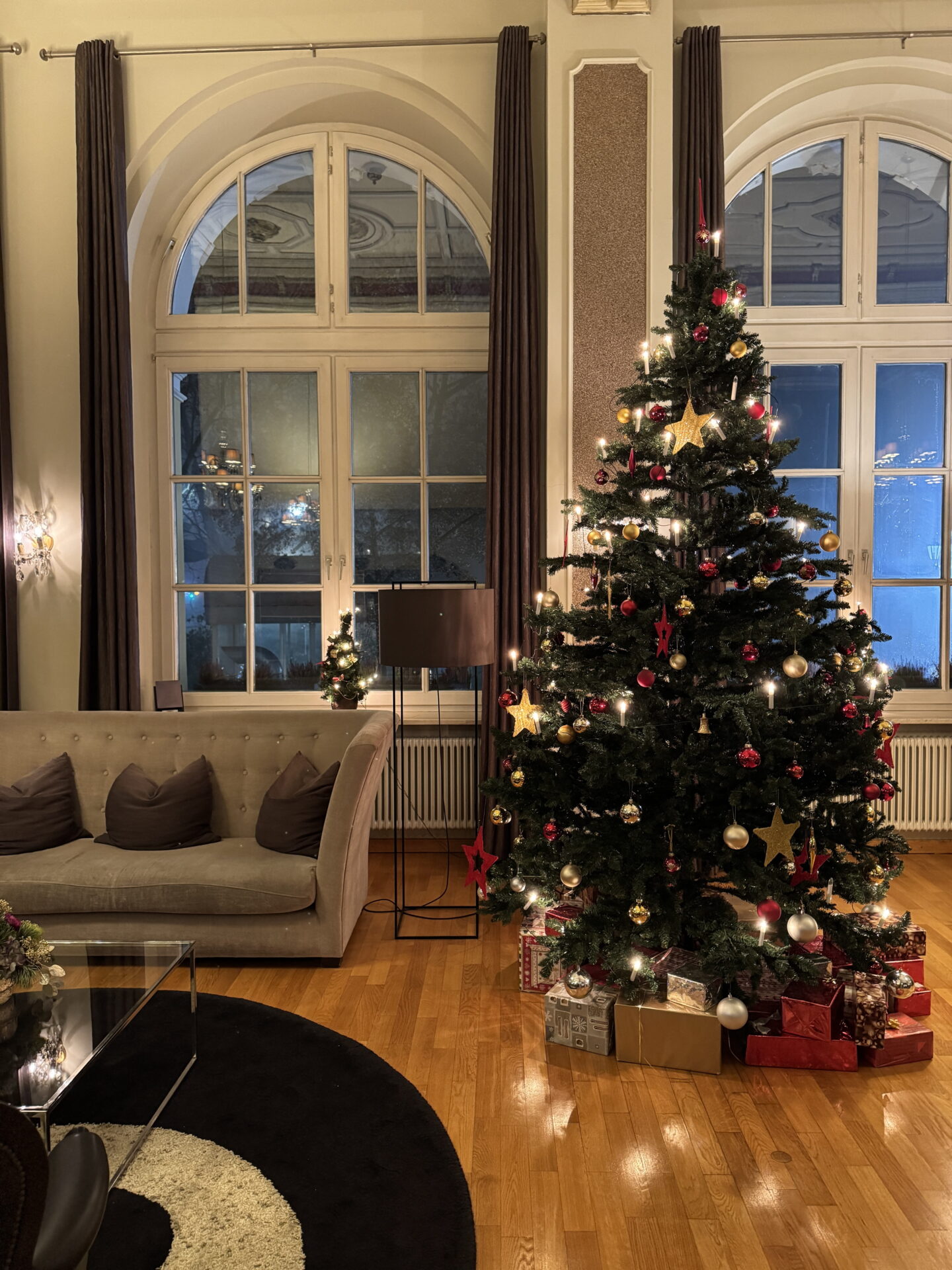
The hotel is housed in a grand, traditional building, and I was surprised by how spacious everything was when we arrived.
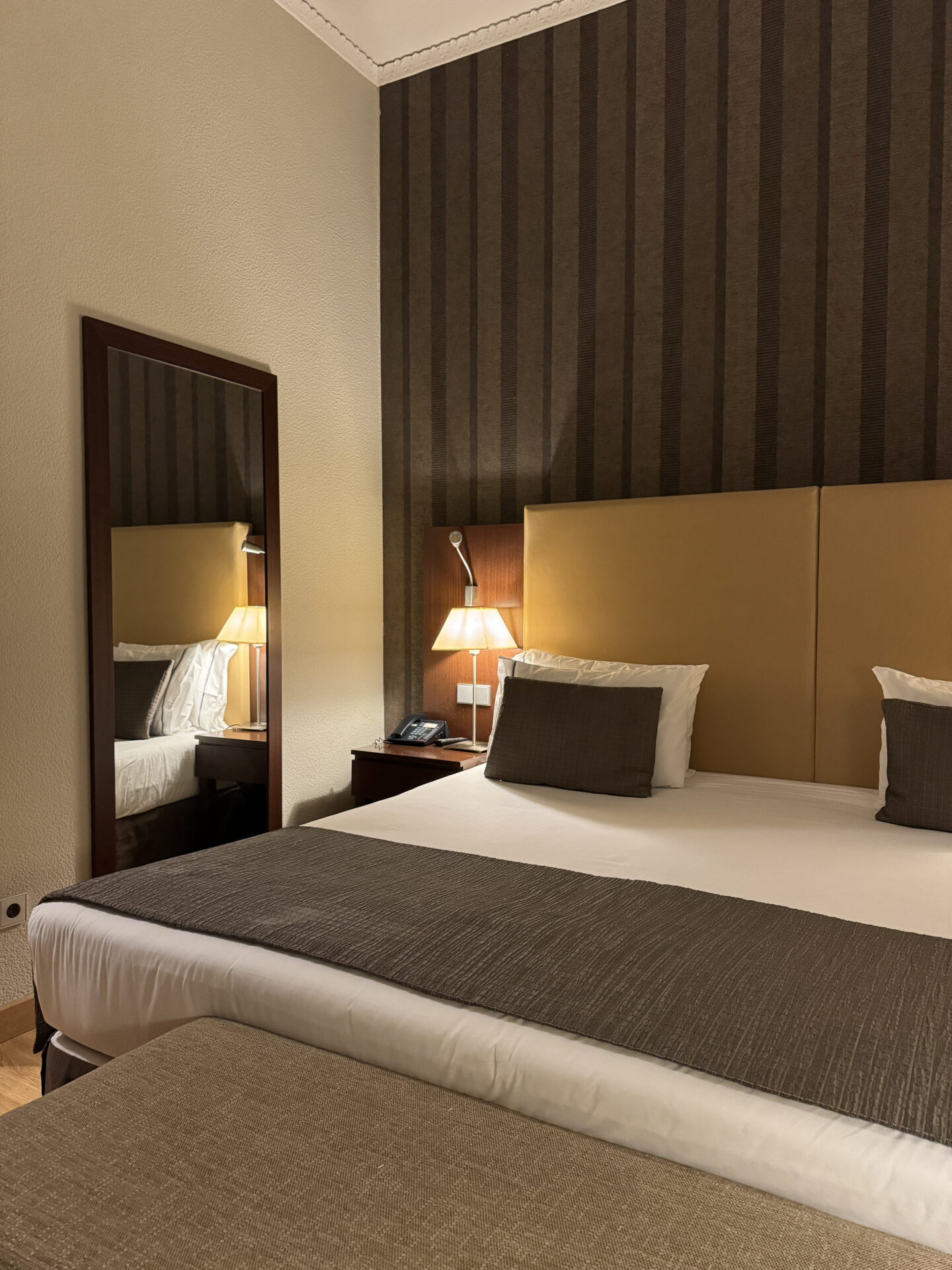
Our room was enormous, with a huge bed, although the decor still felt quite old-fashioned despite us booking one of the more modern rooms.
The location, however, worked really well for us.
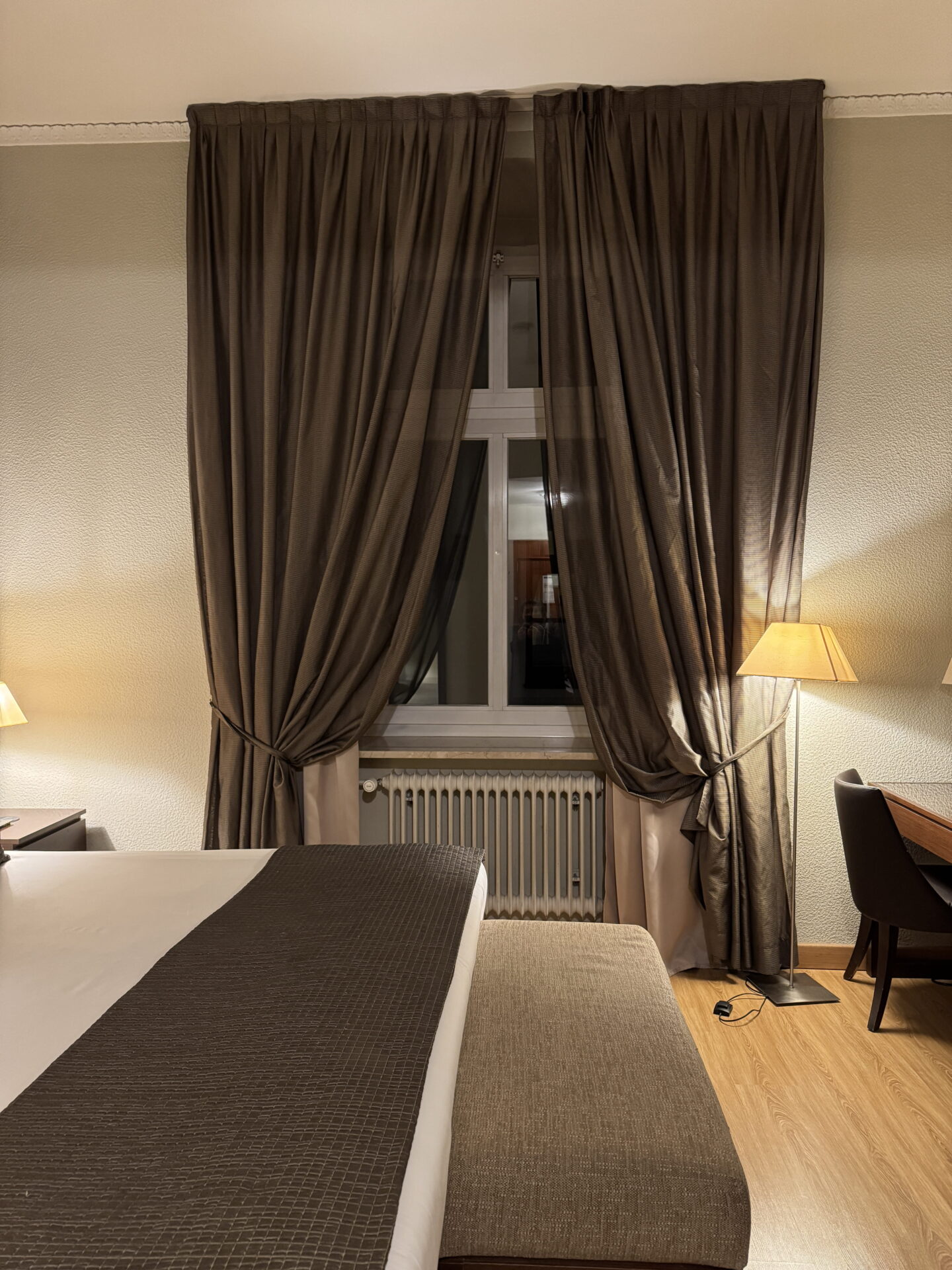
We could walk into the Old Town to explore the sights and Christmas markets, and the train station was only a short walk away.
That made arriving from Nuremberg and continuing on to Munich incredibly straightforward.
There was also a complimentary hot drinks station in the hotel lobby, which made getting my morning caffeine fix incredibly convenient.
I’d recommend this hotel if you’re travelling around Bavaria by train and want somewhere convenient for both the station and the historic centre.
Is Regensburg worth visiting?
Absolutely. Regensburg was one of the biggest surprises of our Bavaria trip, and I’m really glad we included it in our itinerary.
Although we originally visited for the Christmas markets, I enjoyed exploring the Old Town just as much.
The colourful buildings, medieval streets and independent shops made it a lovely city to wander around, and I particularly liked how easy it was to reach everything on foot.
It also felt different from Nuremberg. I loved Nuremberg’s traditional festive atmosphere, but Regensburg had a more relaxed feel, especially around the smaller squares.
If you’re planning a trip to Bavaria, I’d definitely recommend spending at least a day here.
For more festive inspiration, my Nuremberg Christmas market guide is a good place to start when planning your festive itinerary.
I’ve also shared my favourite markets in my Munich Christmas market guide if you’re continuing your journey south.
Found this guide on things to do in Regensburg helpful? PIN IT!
Read more about planning a trip to Germany:
- The Best Vegan Restaurants In Berlin
- Vegan Breakfast In Berlin: 3 Of The Best Frühstücken Spots
- 7 Day German Christmas Market Itinerary by Train in Bavaria
- Nuremberg Christmas Market Guide: Which Markets Are Worth Visiting?
- Christmas Markets in Regensburg: Which Ones Are Worth Visiting?
- Best Munich Christmas Markets: Which Are Worth Visiting?
- 15 Best Things to Do in Nuremberg in December
- 25 Things to Do in Regensburg That Make It Worth Visiting
Need help planning your trip from start to finish?
Check out these helpful links:
- 👉🏼 Find cheap flights
- 👉🏼 Savings on accommodation from boutique hotels to affordable resorts
- 👉🏼 The most comprehensive resource to help plan excursions on your next trip
- 👉🏼 This pass gives you free lounge access to over 1500 airport lounges
- 👉🏼 Affordable car rental options
- 👉🏼 Book land and water transport for travelling around South East Asia
- 👉🏼 Use code: NISHI9255 to get £2.50 off your first eSIM before you travel
- 👉🏼 Pay anywhere in the world, in any currency, using your debit card without fees
- 👉🏼 Travel insurance with essential medical & travel coverage at low premiums
