
15 Best Things to Do in Nuremberg in December

This post may contain affiliate links which means that I may earn a small commission, at no extra cost to you, for qualifying purchases. For more information, read our disclaimer.
We spent two days in Nuremberg during our Christmas market trip around Bavaria, and although the famous Christkindlesmarkt was one of the main reasons we visited, we ended up spending just as much time exploring the city itself.
From climbing up to the Imperial Castle for views over the rooftops to wandering through streets lined with half-timbered houses, there was plenty to see beyond the festive stalls. We even stumbled across a free organ concert inside the Frauenkirche!
One of the things I liked most was how walkable the historic centre was. We could explore the main sights during the day and return to the Christmas markets once the lights came on.
If you’re planning a trip, here are 15 things to do in Nuremberg in December, including the places we visited and a few others worth considering if you have more time.
Is Nuremberg worth visiting in December?
Yes, I think Nuremberg is well worth visiting in December, especially if you enjoy historic European cities.
The Old Town is full of beautiful buildings, medieval streets and interesting places to explore. Add the Christmas decorations and festive atmosphere, and it’s a lovely time to visit.
However, December isn’t necessarily the best time to see absolutely everything. The days are short, the weather can be cold and some attractions have reduced opening hours over the Christmas period.
We spent two days in Nuremberg and found that was enough time to visit several of the main sights while still enjoying the Christmas markets.
My advice would be to do most of your sightseeing during daylight hours and save the markets for later in the afternoon or evening, when the lights make everything feel more festive.
Best things to do in Nuremberg in December
These are the places we explored during our visit, followed by a few additional attractions I’d consider if you’re staying longer.
If you’re short on time, I’d prioritise the Imperial Castle, Weißgerbergasse, St. Lawrence Church and Hauptmarkt. They’re all within walking distance of one another and give you a good introduction to Nuremberg beyond its Christmas markets.

1. Explore Nuremberg Imperial Castle
One of the most impressive places to visit in Nuremberg is the Imperial Castle, or Kaiserburg.
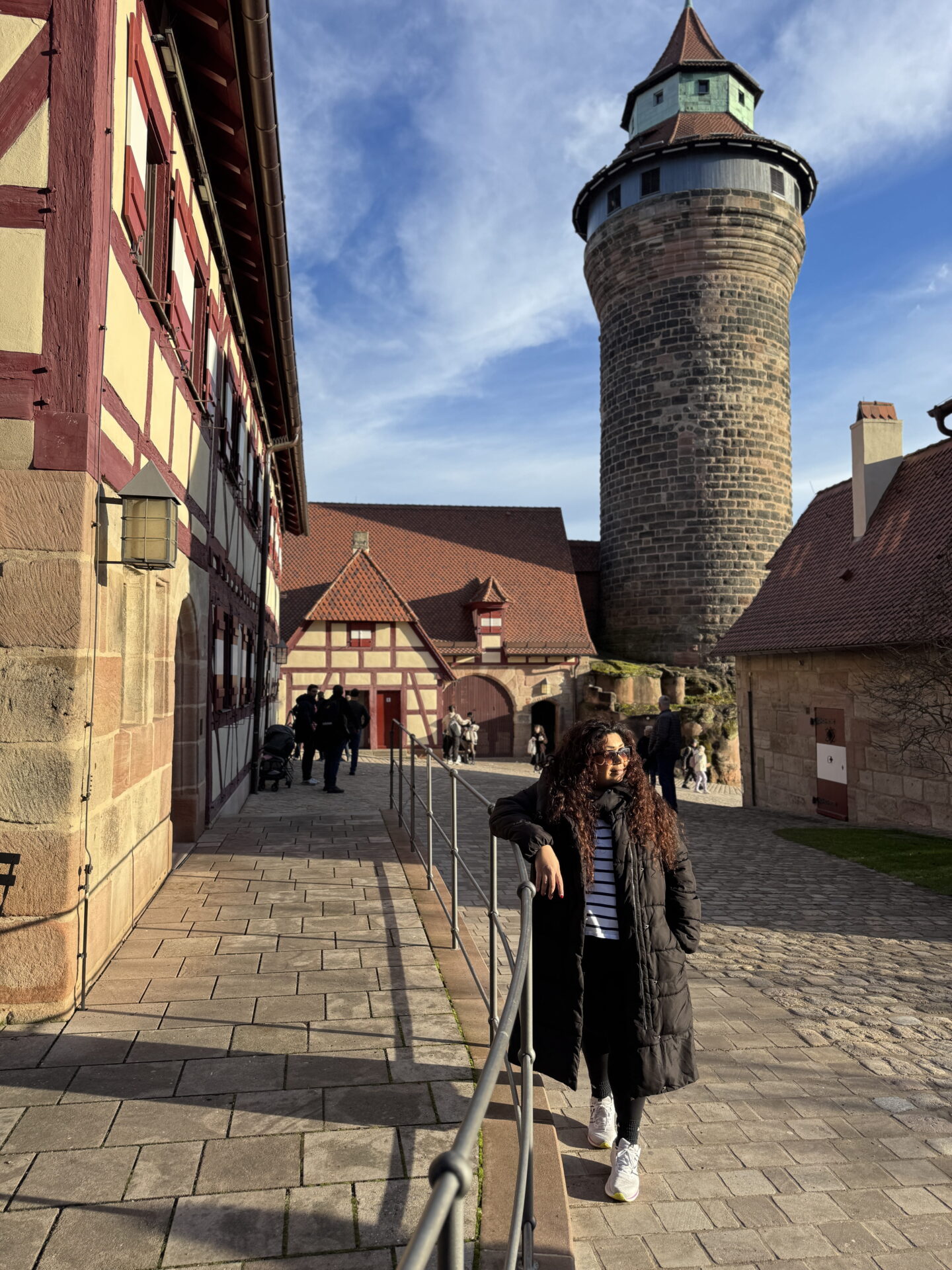
Sitting above the Old Town, the castle is one of the city’s most recognisable landmarks and an important part of its medieval history.
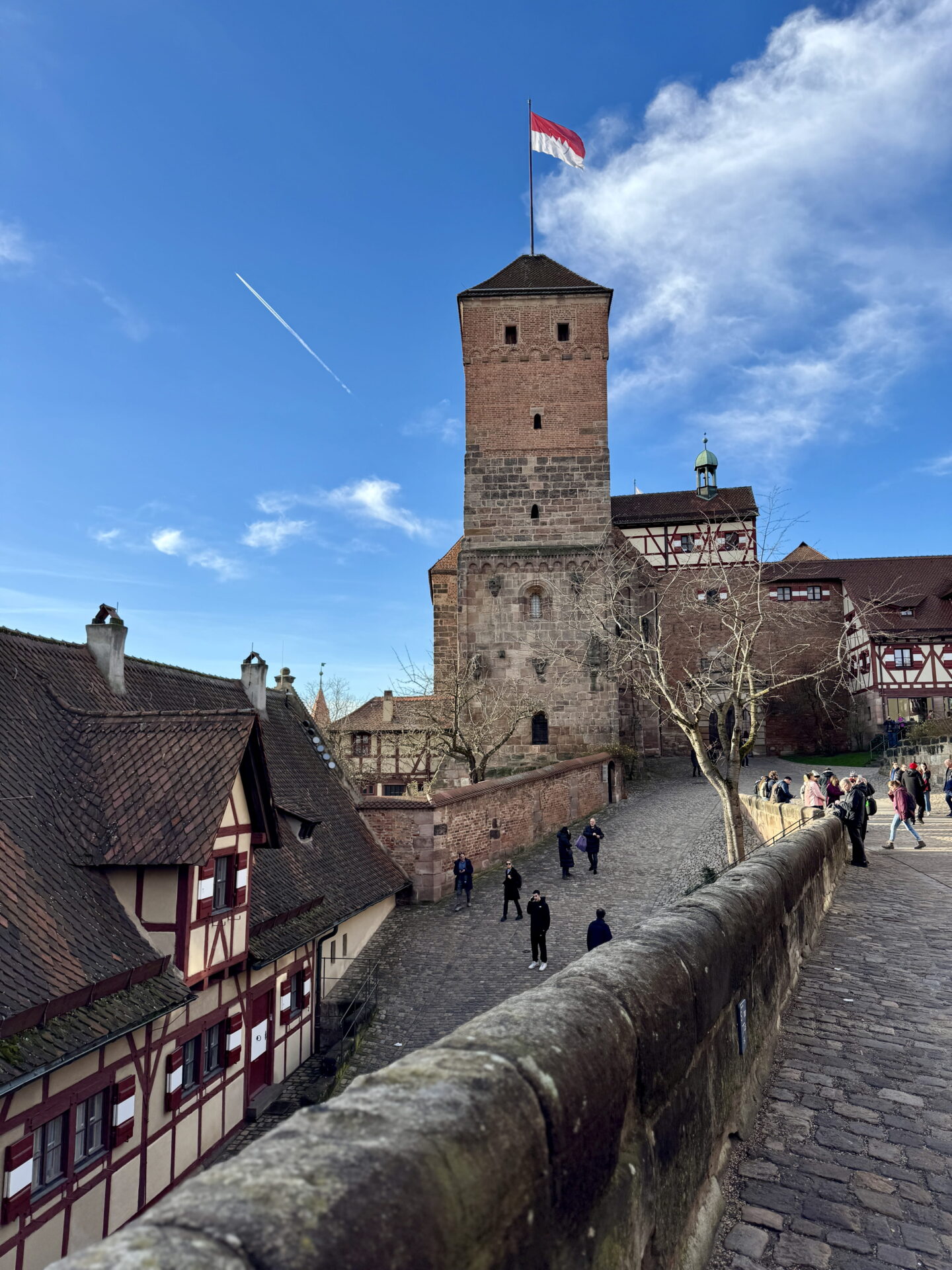
It’s also somewhere I’d recommend making time for even if you’re only visiting Nuremberg for a day.
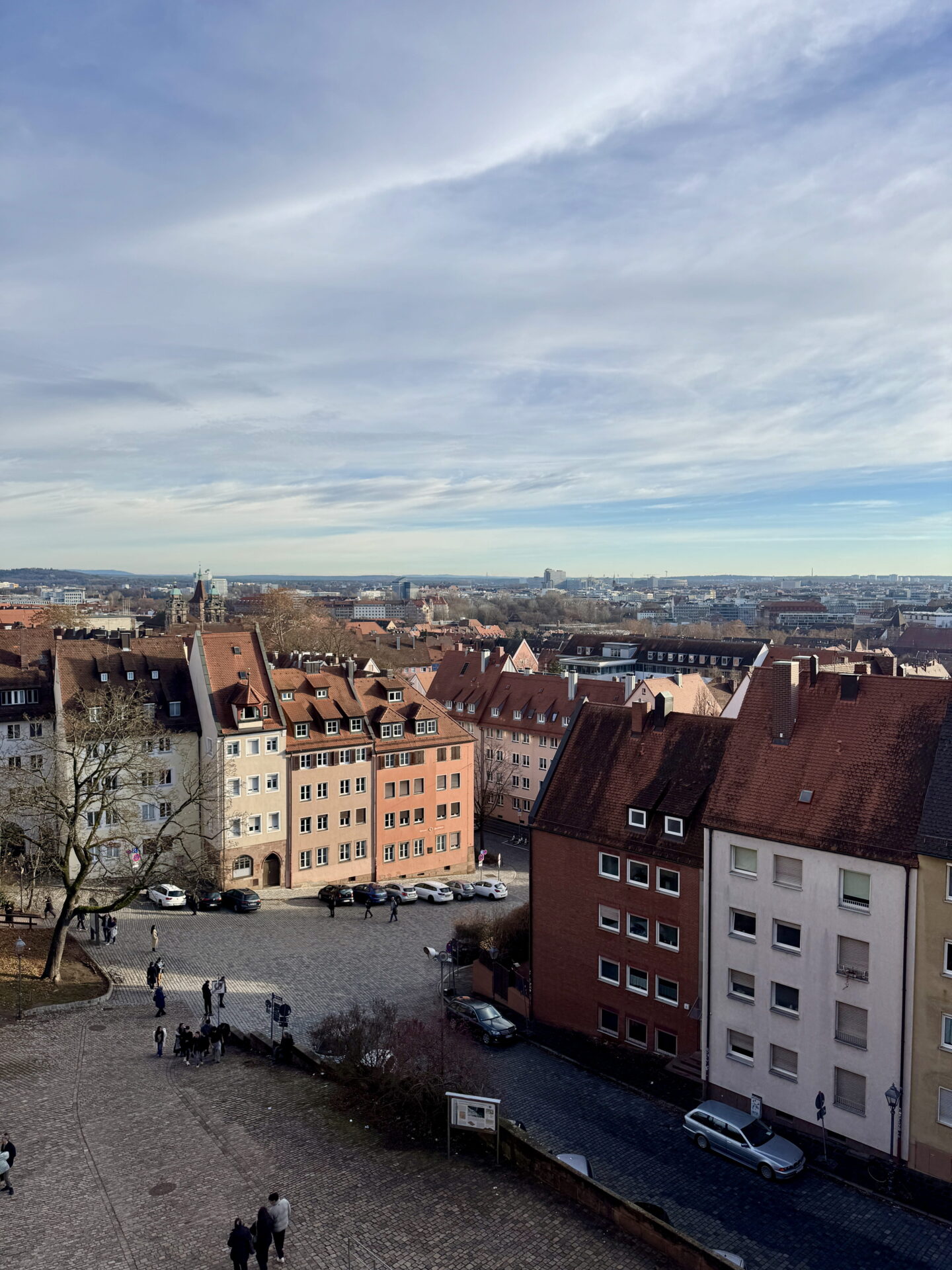
Unfortunately, the castle wasn’t open when we visited, but the steep climb up was still worth it for the views across Nuremberg’s rooftops.
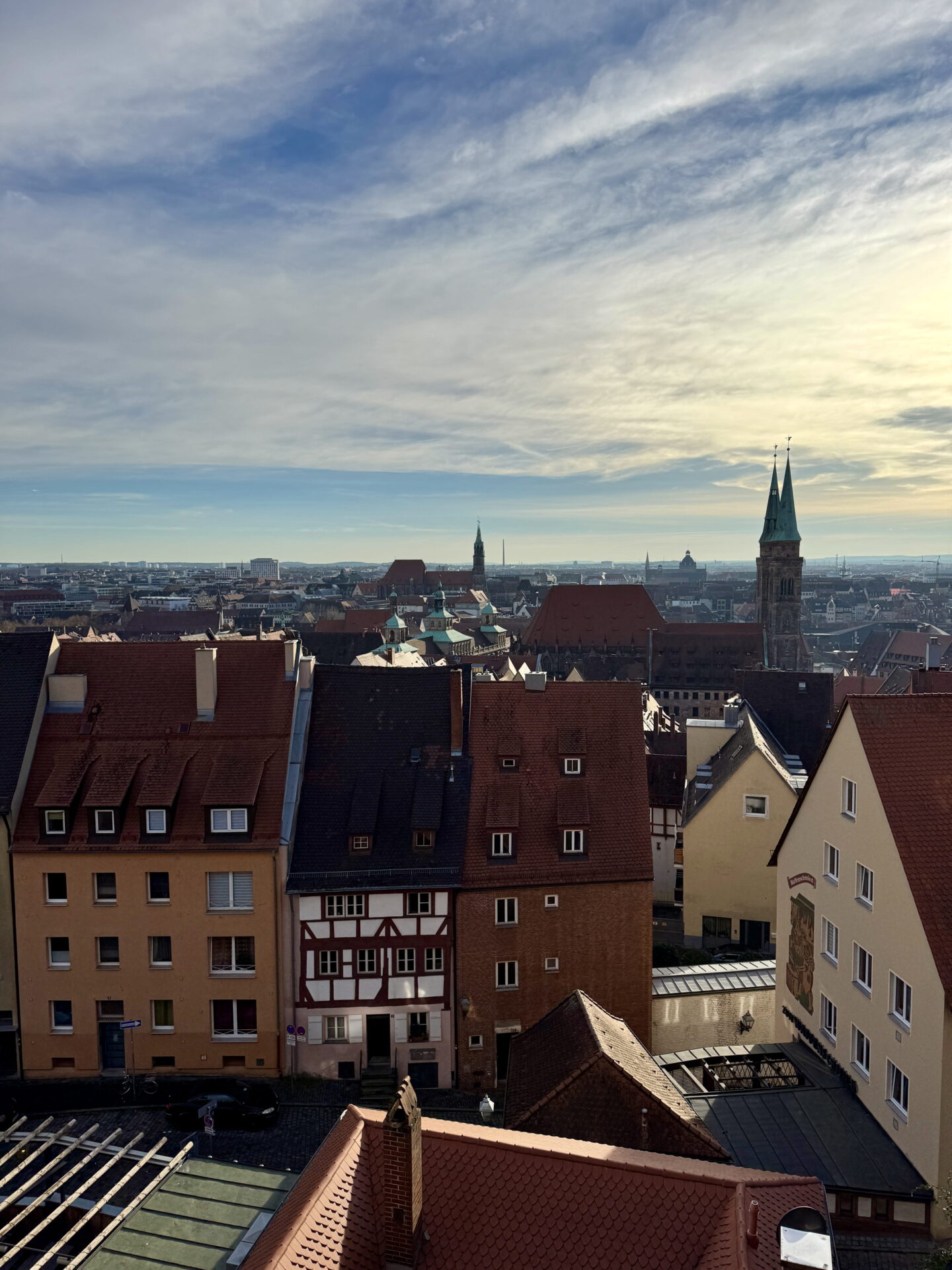
If you’re interested in learning more about the castle’s history, it’s worth booking a guided tour of the castle and surrounding Old Town.
The castle complex includes historic buildings, courtyards and exhibitions exploring its role in the Holy Roman Empire. Depending on your ticket and what’s open during your visit, you may also be able to explore the Imperial Castle Museum, the Deep Well and the Sinwell Tower.

If you’re visiting in December, I’d recommend coming earlier in the day rather than leaving it until late afternoon. There’s more to explore here than you might expect, and you don’t want to feel rushed as daylight starts to fade.
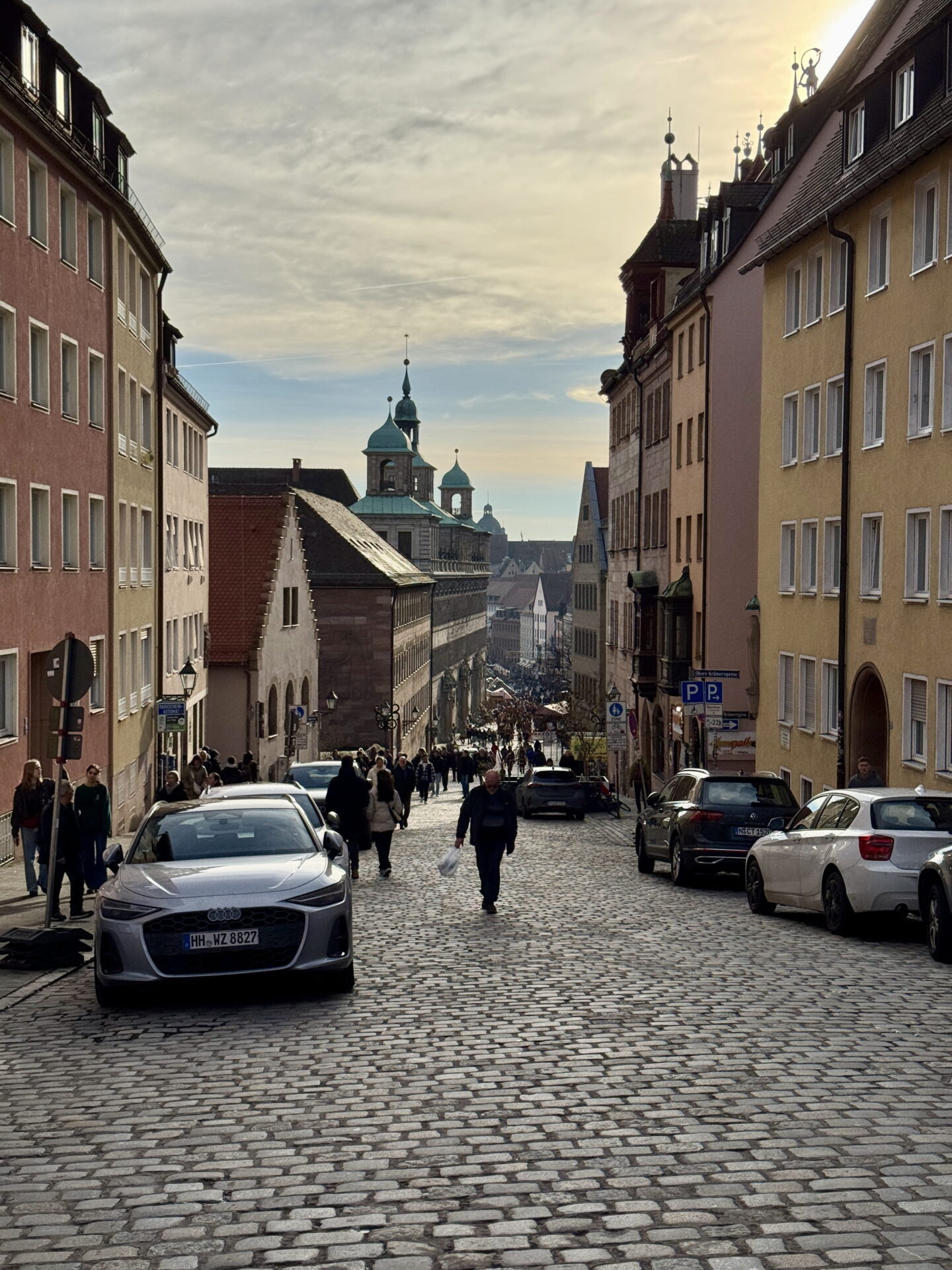
You’ll also need to walk uphill to reach the castle, so wear comfortable shoes, particularly if the ground is wet or icy.
If you’re planning to explore the castle interiors, allow at least an hour and check the official opening hours beforehand, as winter access can differ from summer.
2. Walk along Weißgerbergasse
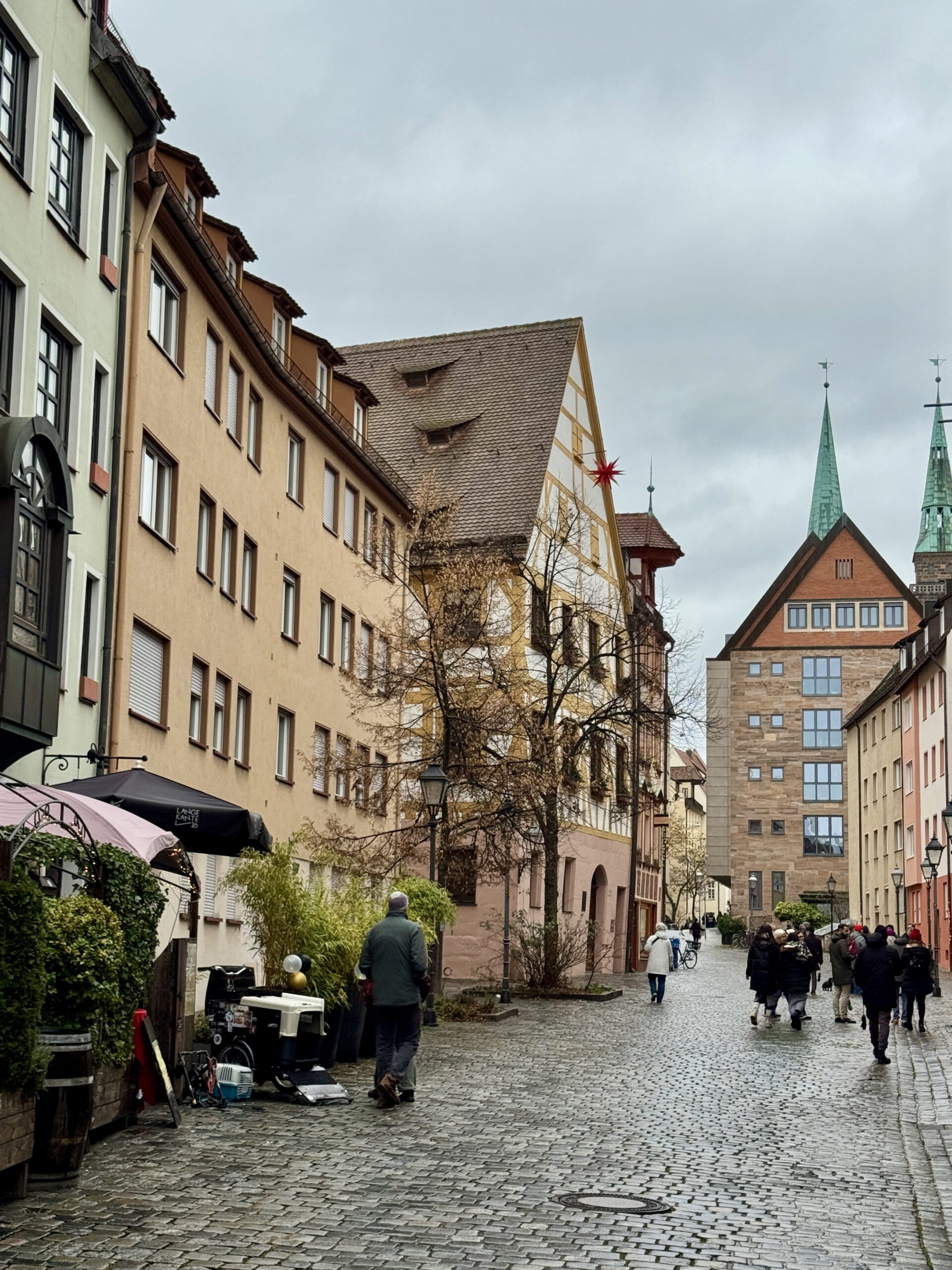
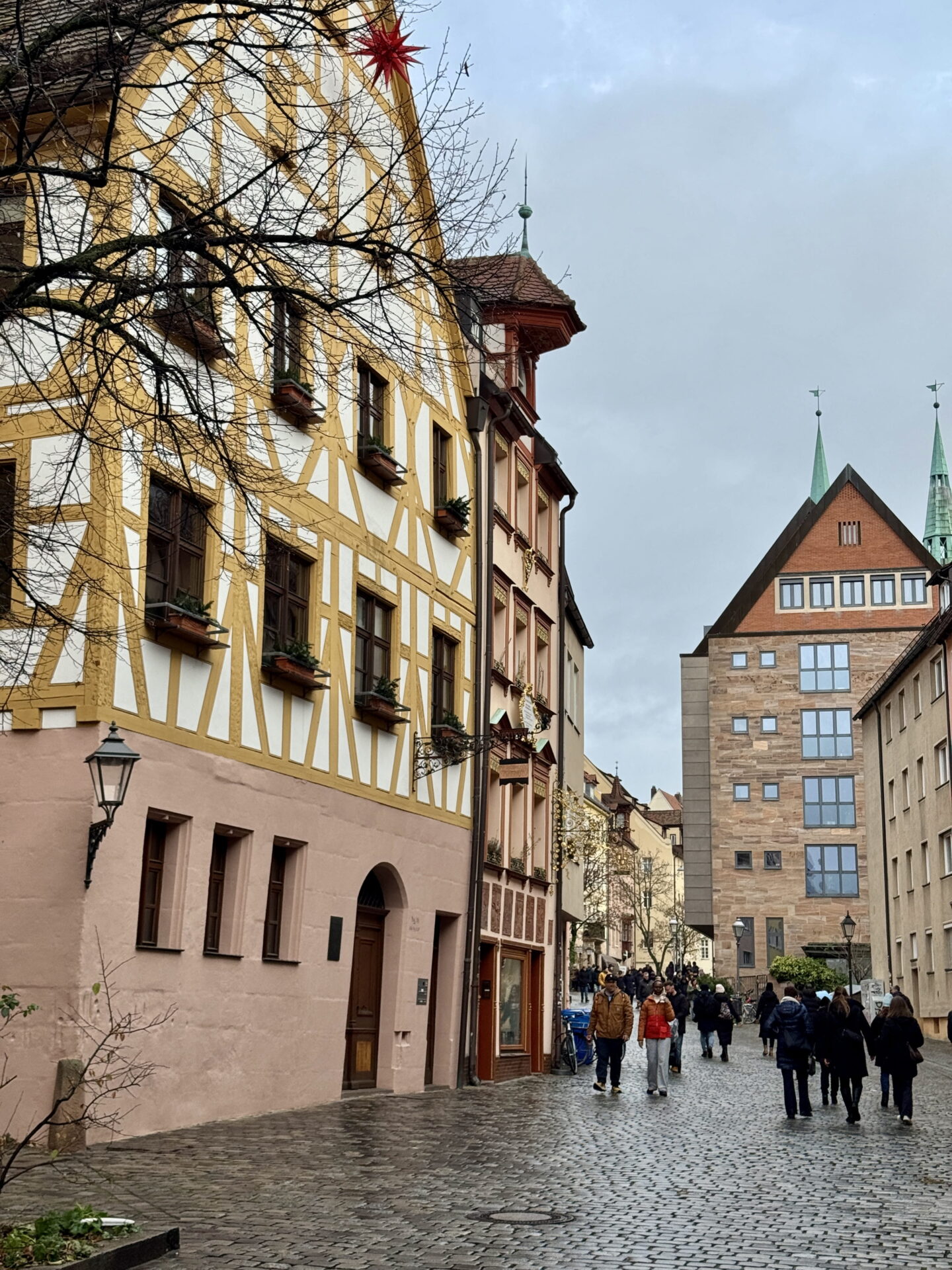
If you love picturesque European streets, Weißgerbergasse should be on your list.
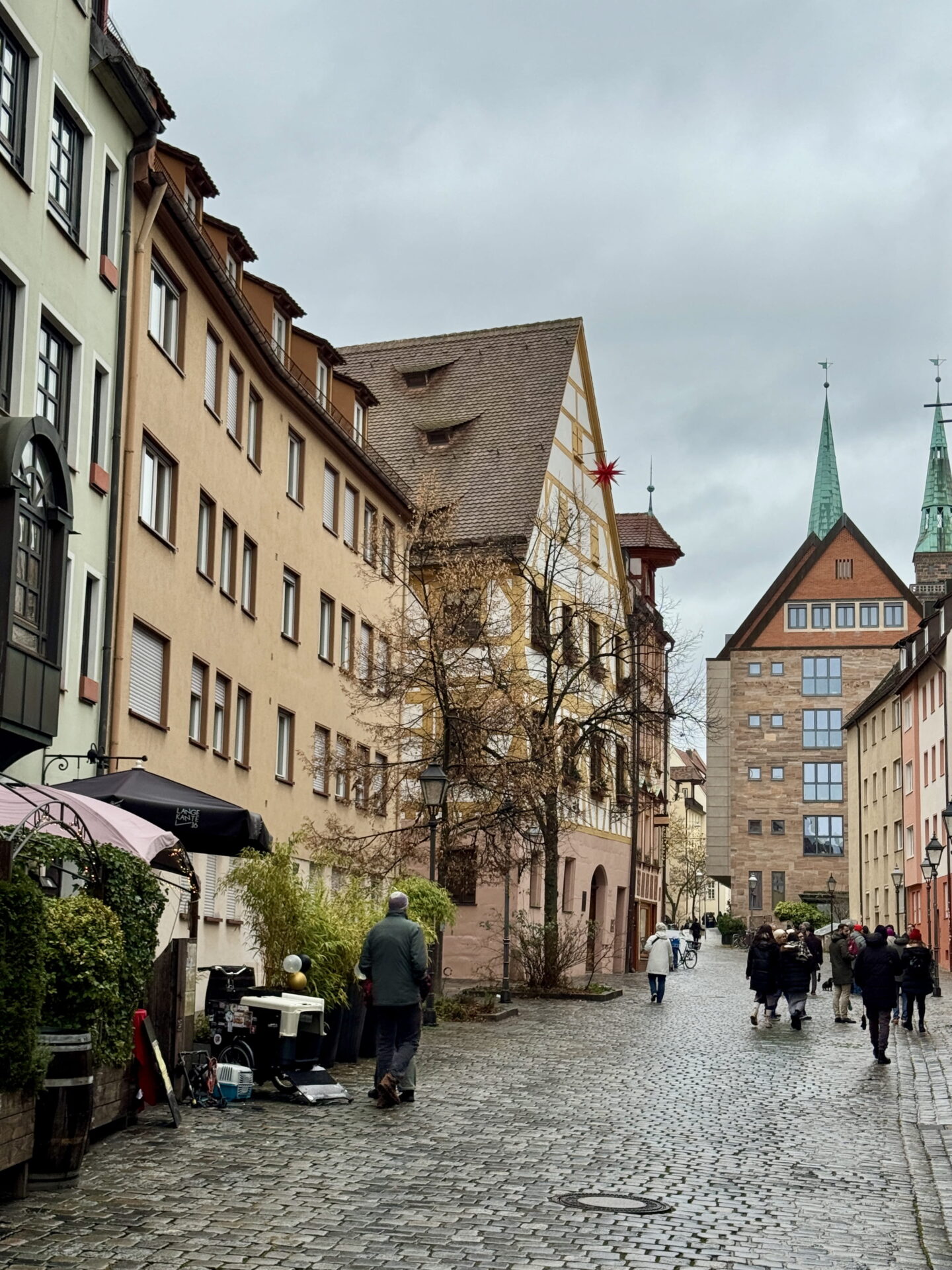
This historic street is famous for its colourful half-timbered houses, many of which date back to Nuremberg’s medieval and early modern periods.
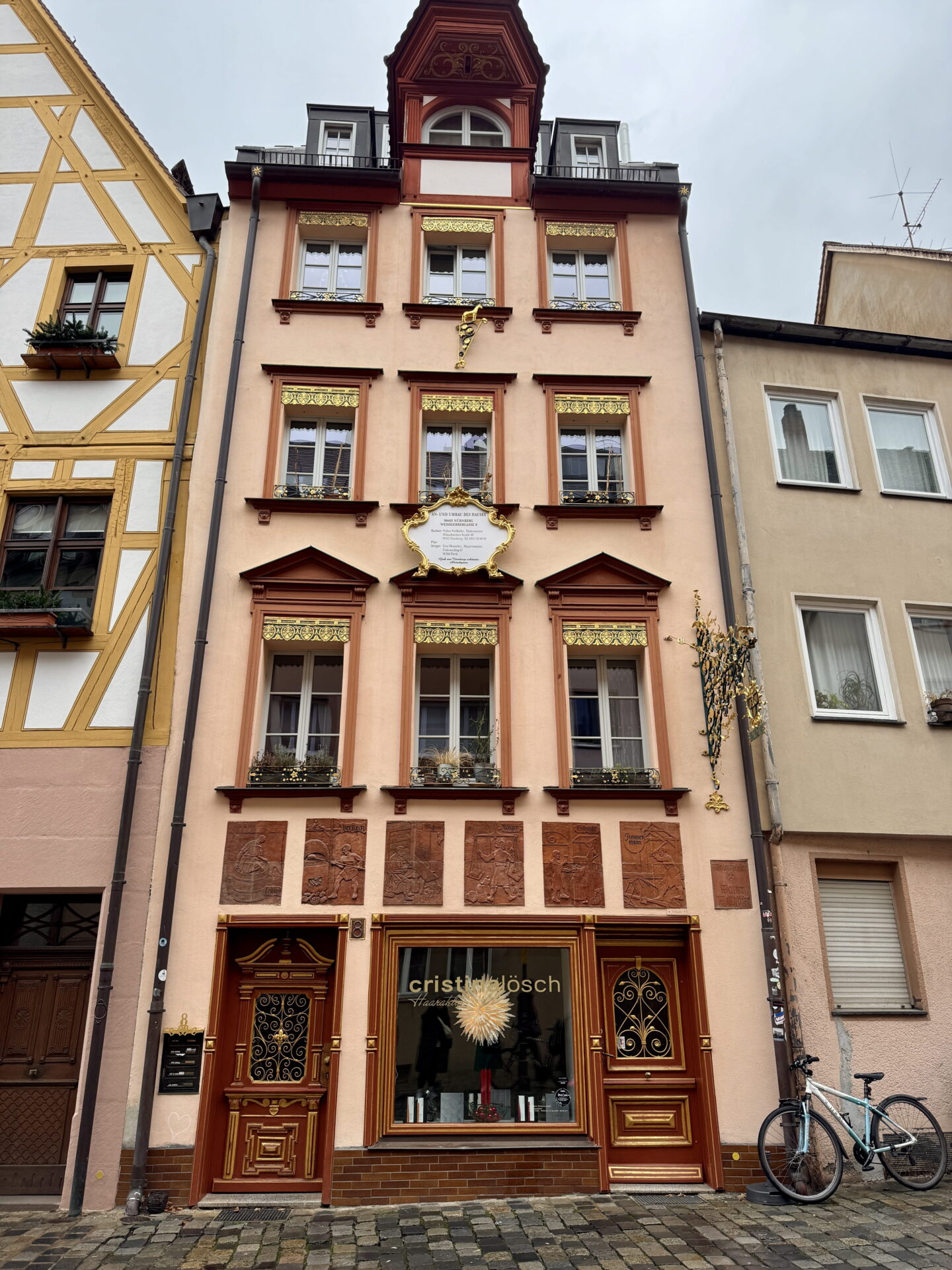
It’s one of those places where the buildings themselves are the attraction.
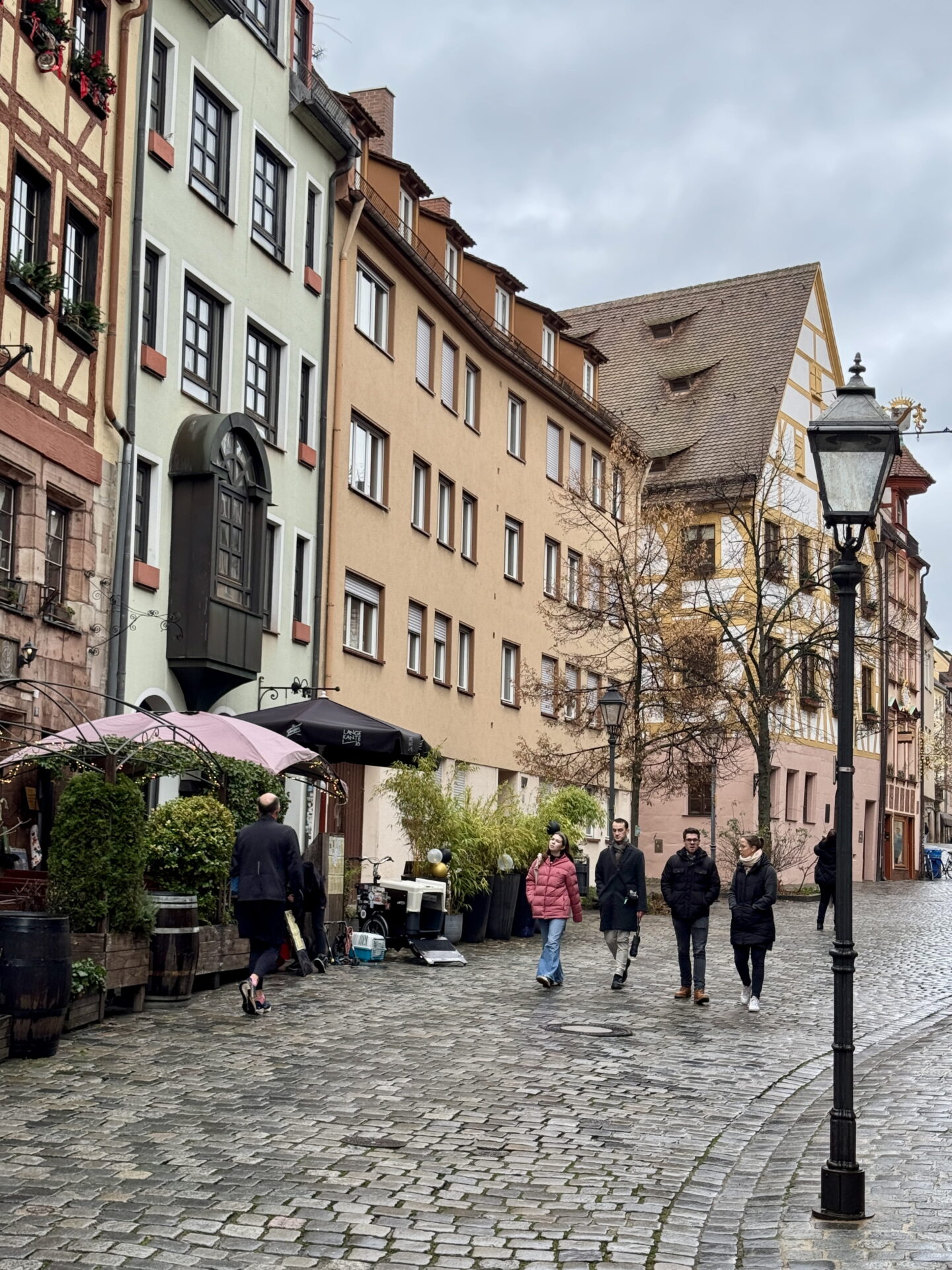
We walked along Weißgerbergasse while exploring the Old Town, and it’s an easy place to include in your sightseeing without needing to set aside much time.
It was noticeably quieter than Hauptmarkt, which made a lovely change from the busy Christmas markets. The colourful half-timbered houses were just as impressive in person as I’d hoped, and I’m glad we made the detour to see them.
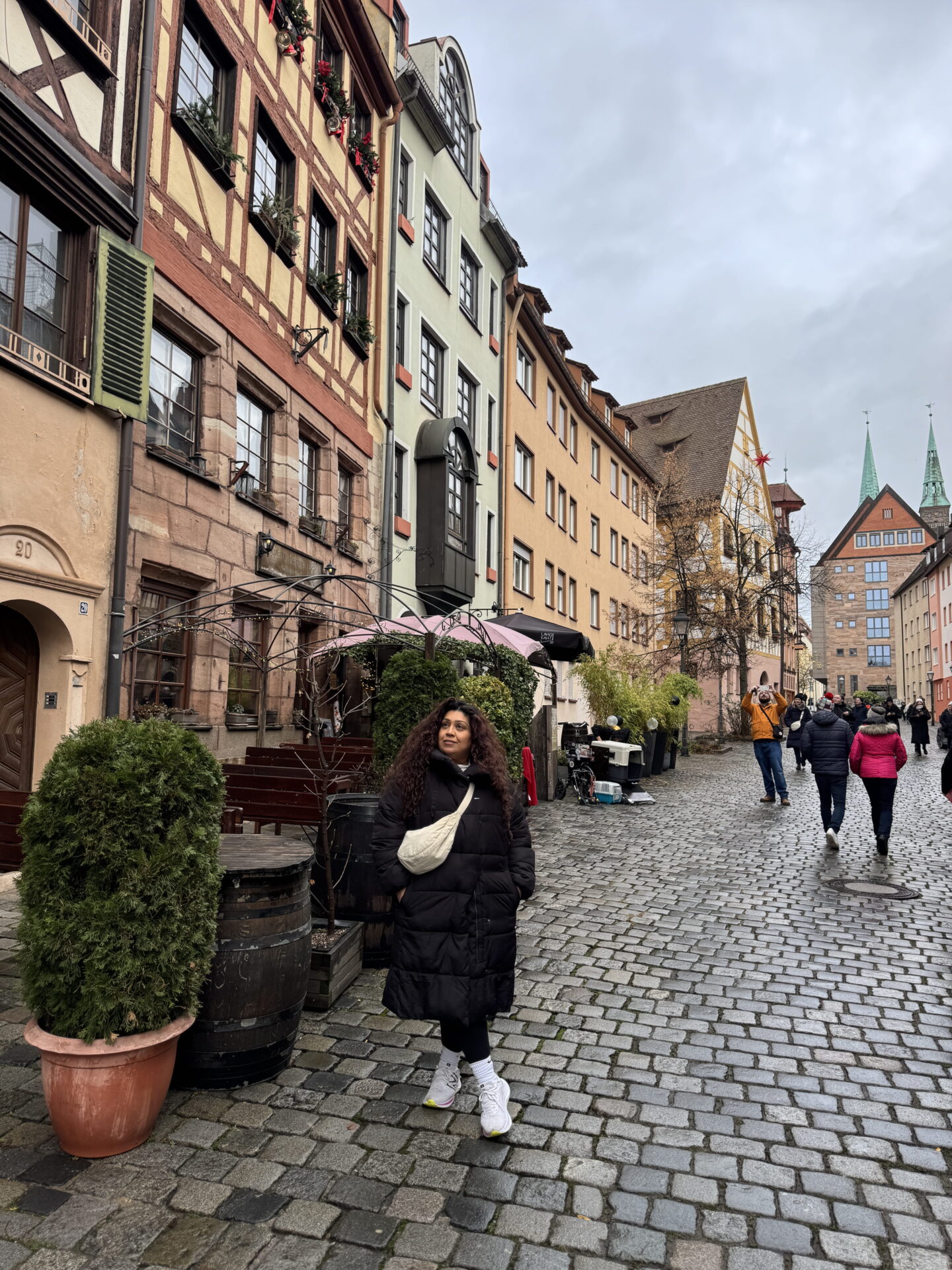
The street is relatively short, so you don’t need to plan an entire morning around it. Instead, I’d recommend combining it with nearby sights such as Hangman’s Bridge.
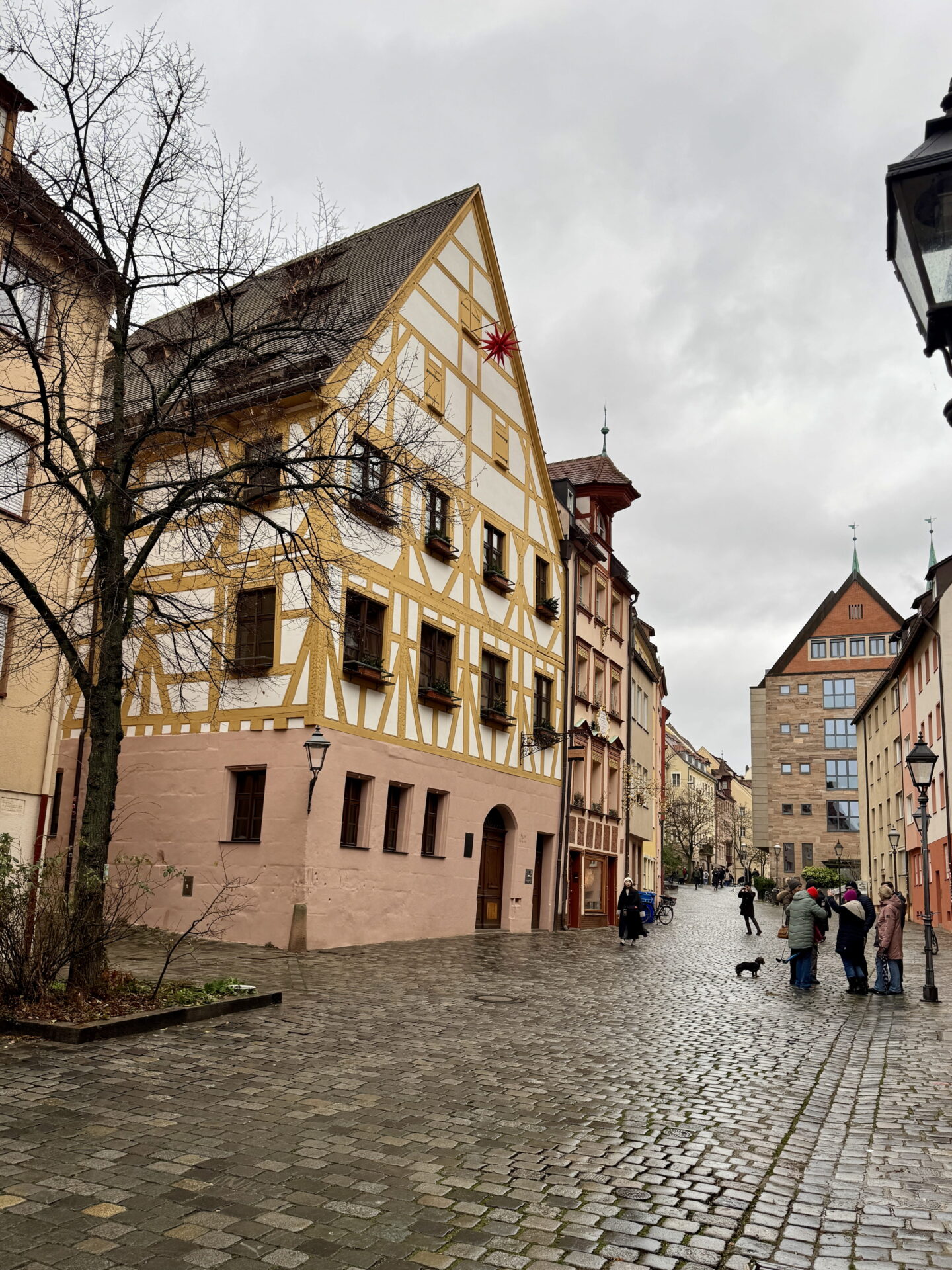
Visit during daylight hours if you want to appreciate the details of the buildings. It’s a residential and commercial street rather than a dedicated tourist attraction, so be considerate of the people who live and work there.
3. See Hangman’s Bridge
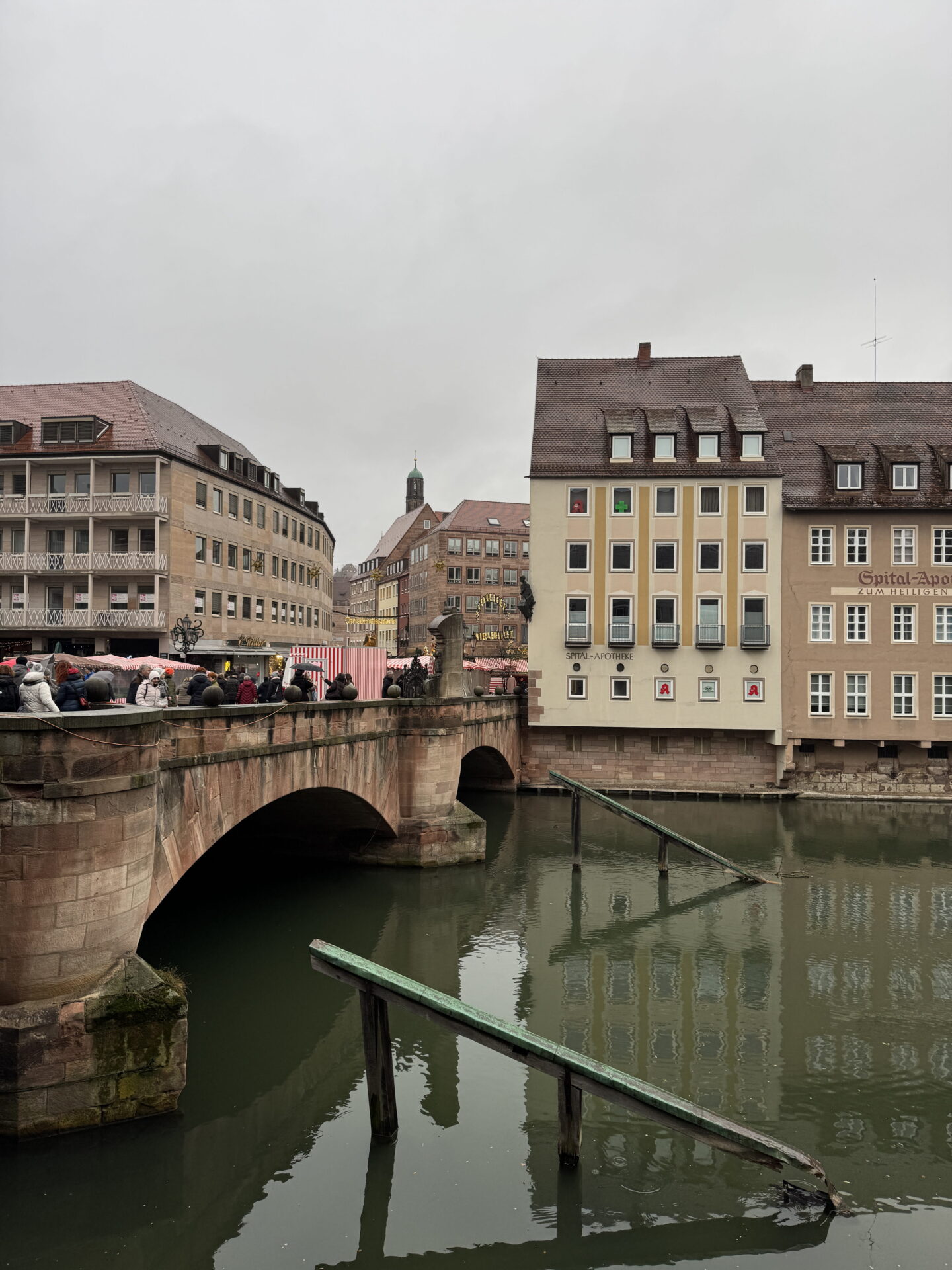
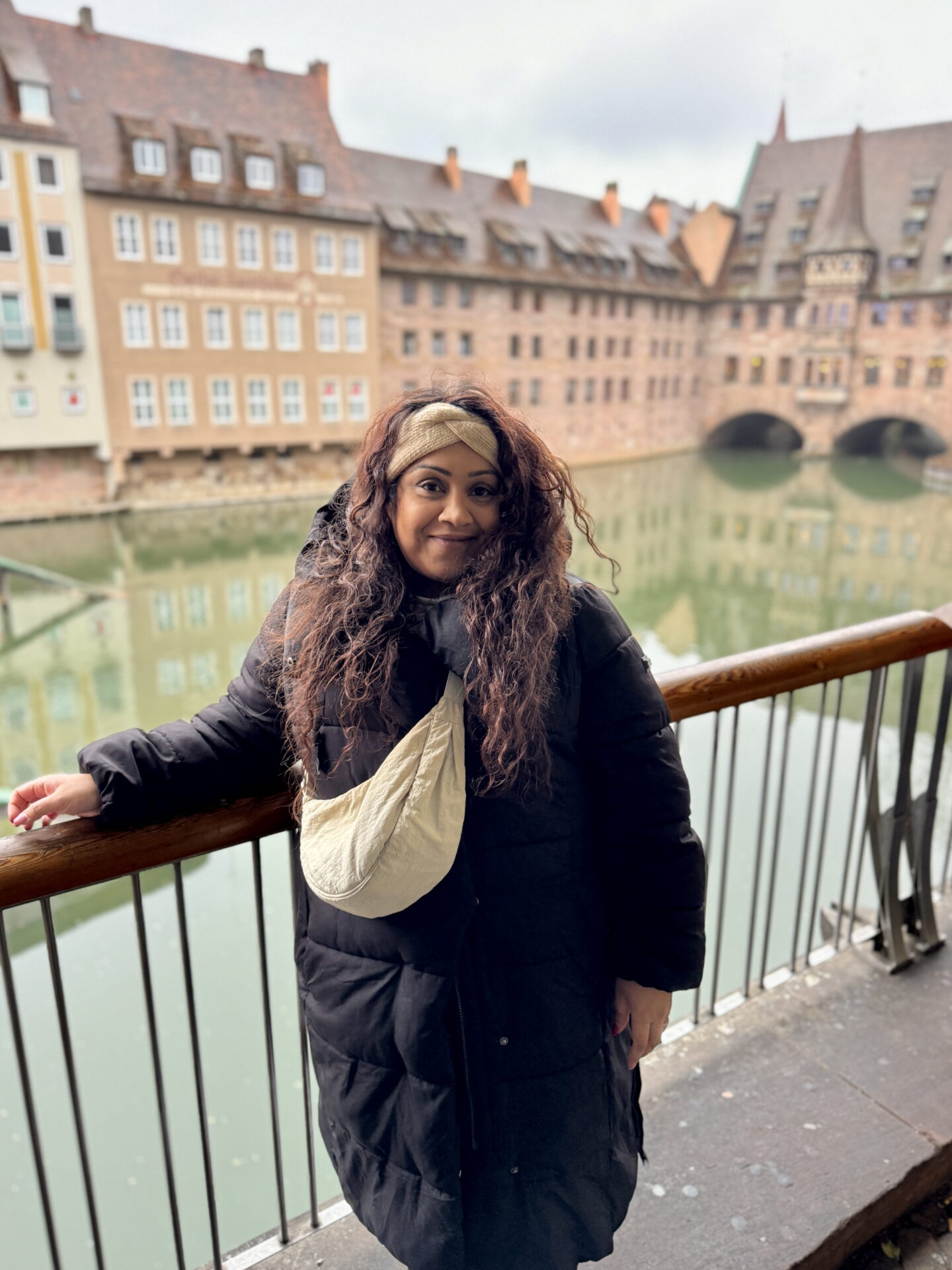
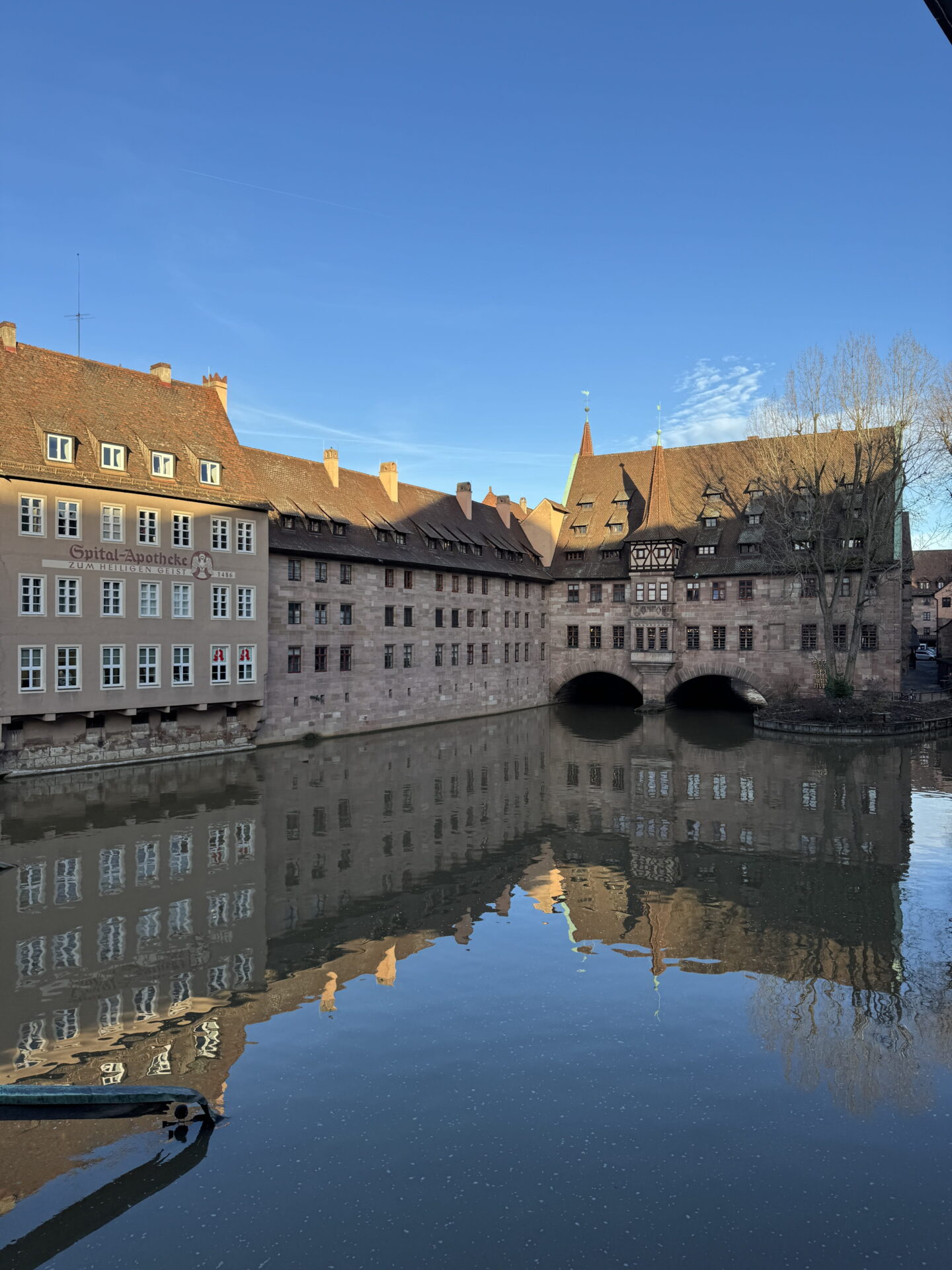
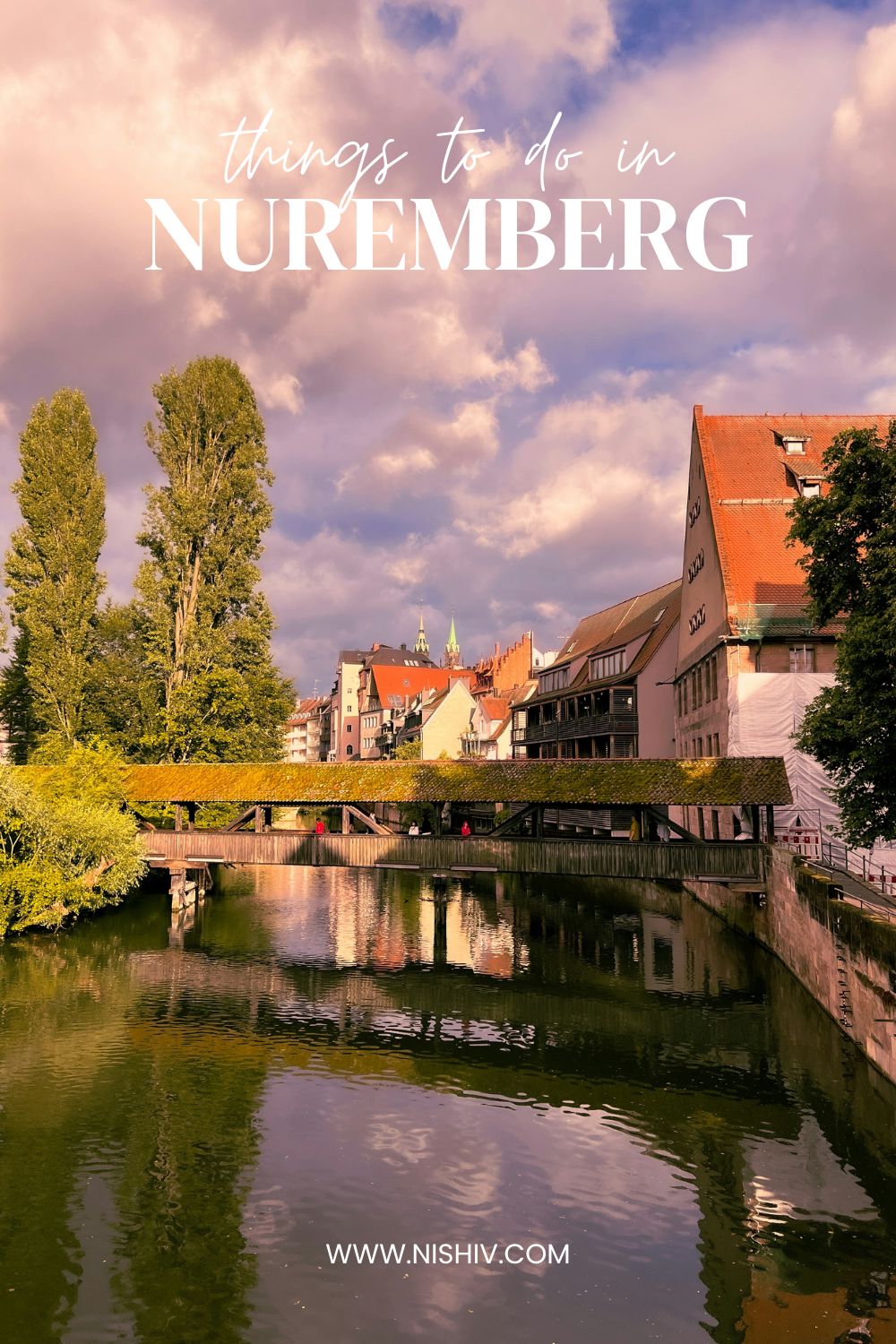
Hangman’s Bridge, known locally as Henkersteg, is another lovely spot in Nuremberg’s Old Town.
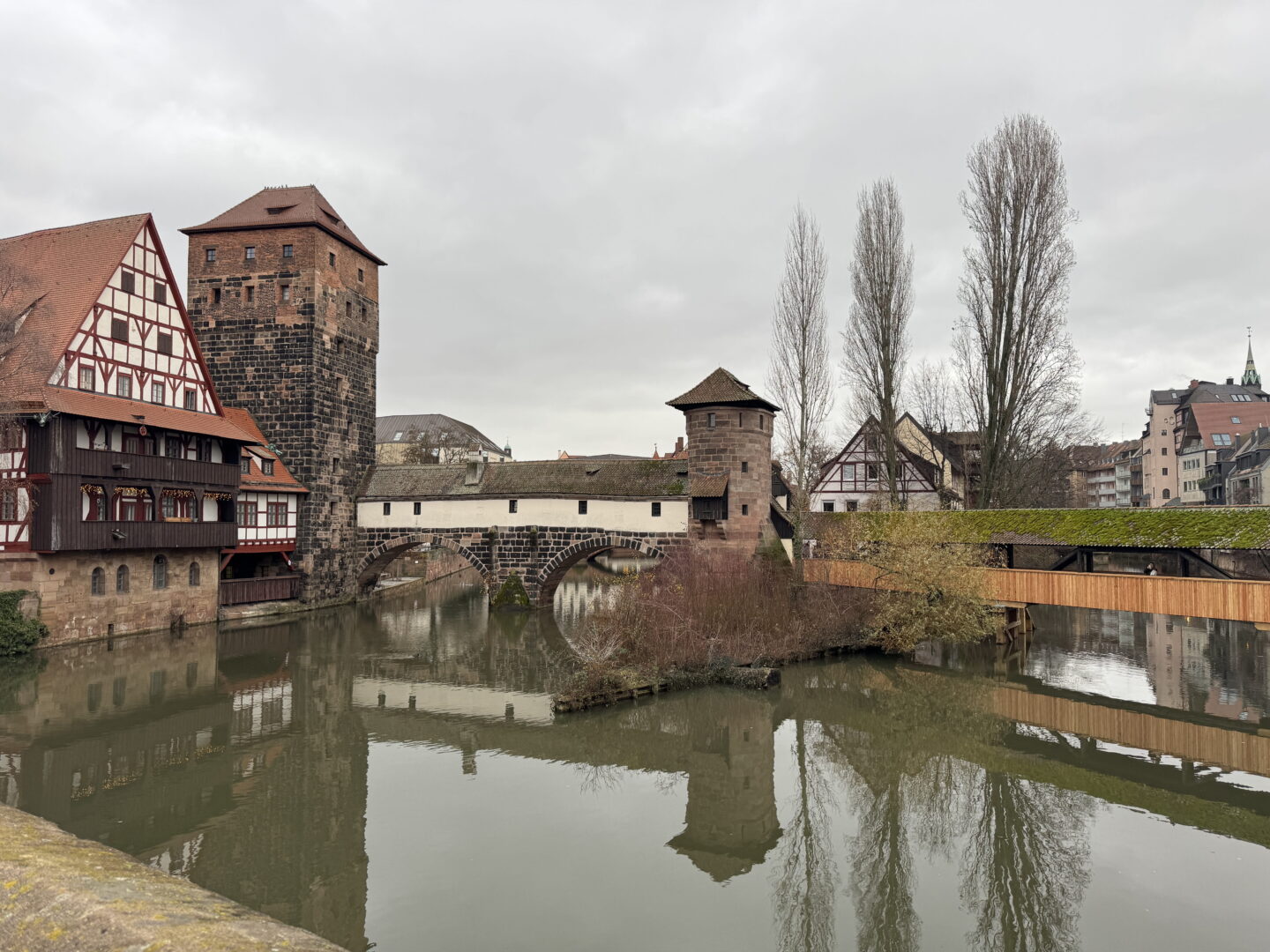
The covered wooden bridge crosses the Pegnitz River and connects parts of the historic city near the former hangman’s residence.
Its name comes from the city’s executioner, who historically lived in this area.
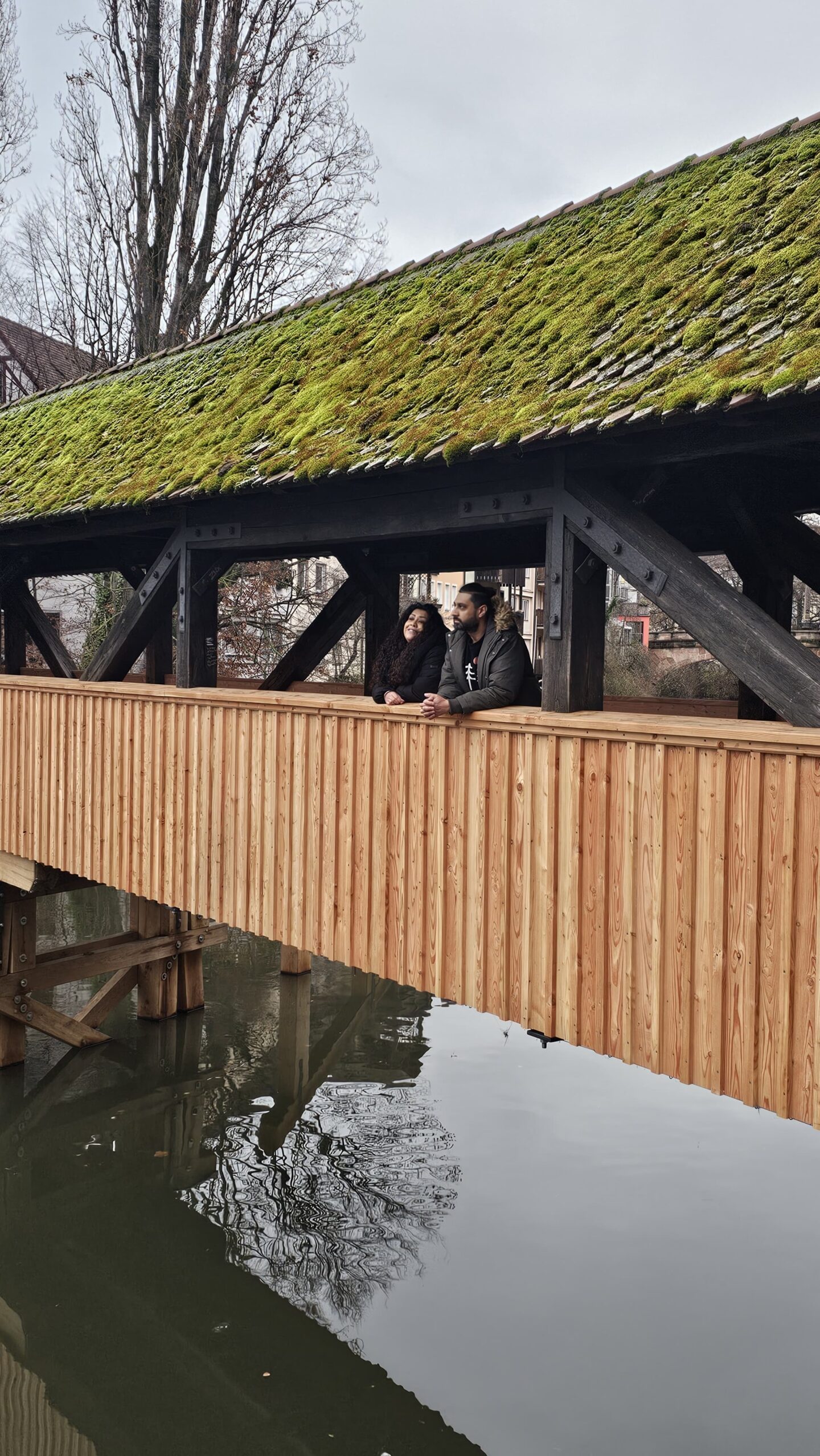
Despite the rather grim history, it’s now one of Nuremberg’s most picturesque corners.

We visited while walking around the Old Town, and it’s a particularly good stop to combine with Weißgerbergasse.
The bridge itself doesn’t take long to see, but the surrounding river views and historic buildings make this part of Nuremberg worth exploring.
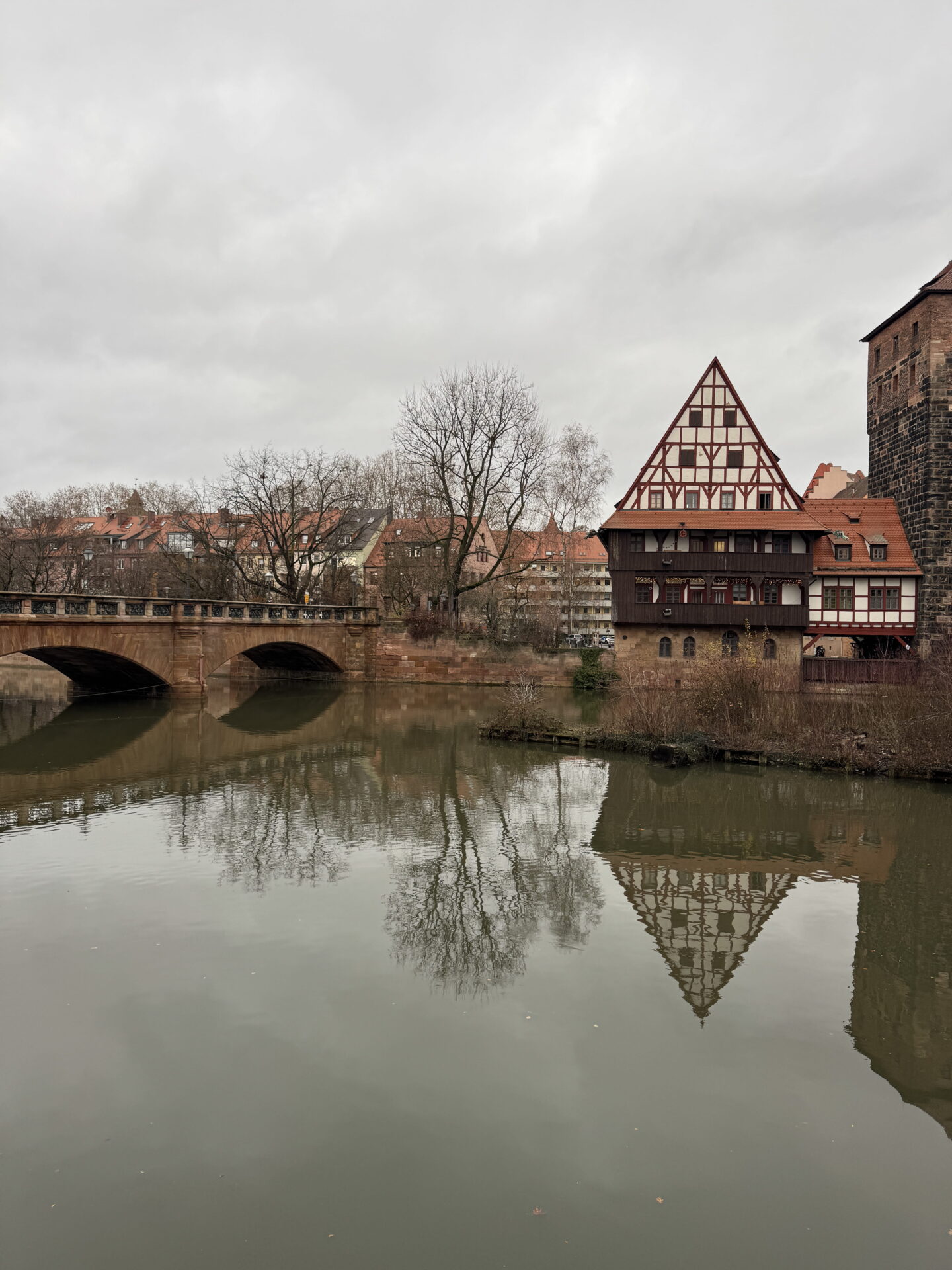
I’d recommend taking your time here rather than simply walking across and moving on. It makes for a great photo op.
4. Visit St. Lawrence Church
St. Lawrence Church, or Lorenzkirche, is one of Nuremberg’s most impressive Gothic churches.
Its twin towers and detailed stone façade make it a striking landmark, but I’d recommend going inside as well.
We visited the interior during our trip, and it’s worth allowing some time to look around rather than treating it as a quick photo stop.
I was particularly impressed by how grand the church felt inside, especially the soaring ceilings and intricate details that were easy to miss at first glance.
The church is also known for its stained-glass windows and important medieval artworks, including Veit Stoss’s Angelic Salutation.
It’s also a welcome break from the cold if you’ve spent the morning exploring the Old Town.
As it’s an active church, opening hours and visitor access can change around services, concerts and religious celebrations.
Check whether there are any Advent services or concerts taking place during your visit. Even if you aren’t attending one, they can affect when sightseeing visitors are allowed inside.
5. Explore Hauptmarkt
Hauptmarkt is Nuremberg’s main market square and one of the places you’ll almost certainly visit in December.
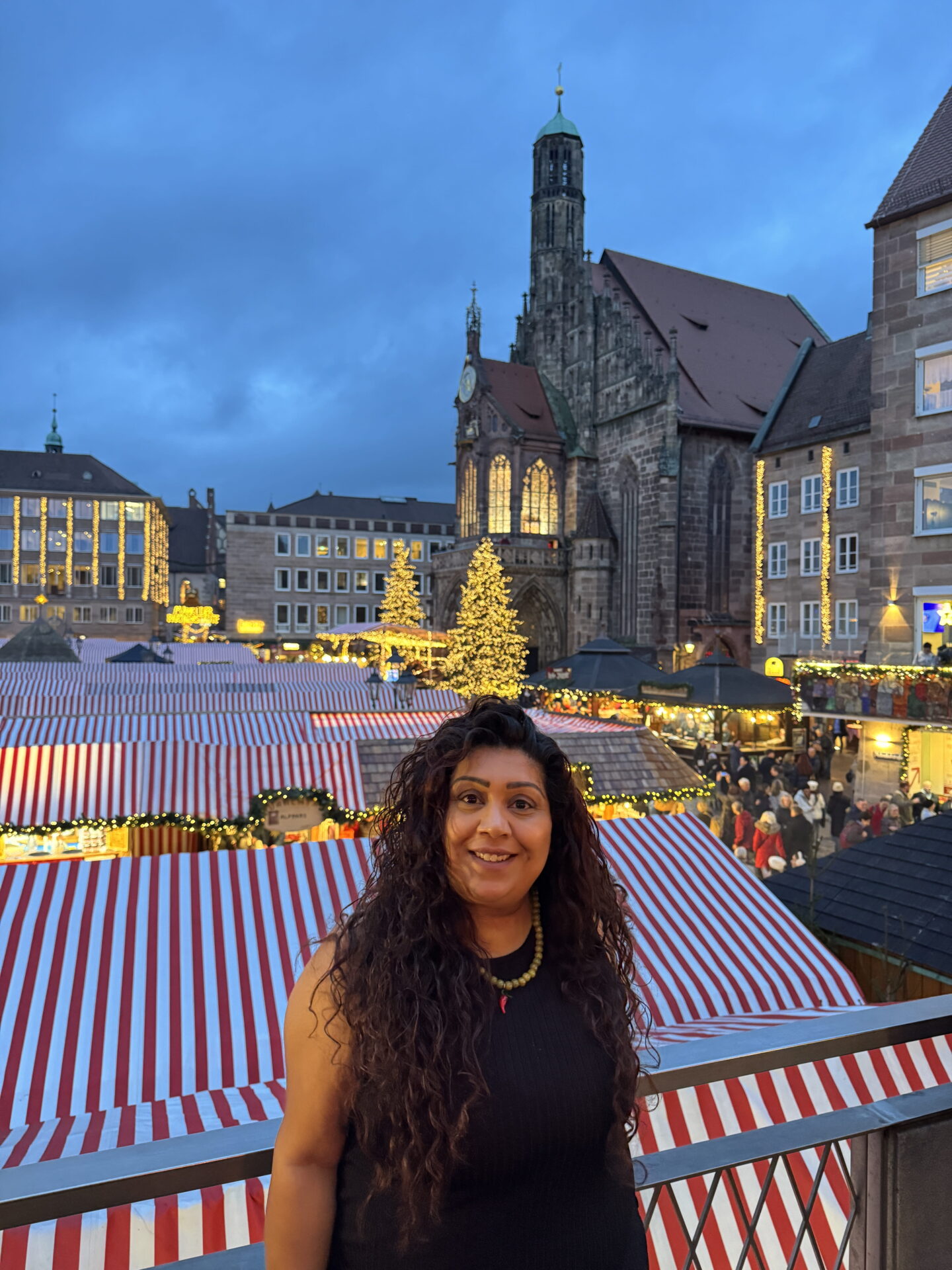
It’s home to the famous Nuremberg Christkindlesmarkt, so the square becomes one of the busiest and most festive parts of the city during Advent.
We spent time here during our visit, both exploring the square and enjoying the Christmas market atmosphere.
However, Hauptmarkt is worth paying attention to for more than just its stalls.
It’s surrounded by historic buildings and is home to two of Nuremberg’s best-known landmarks: the Frauenkirche and Schöner Brunnen.
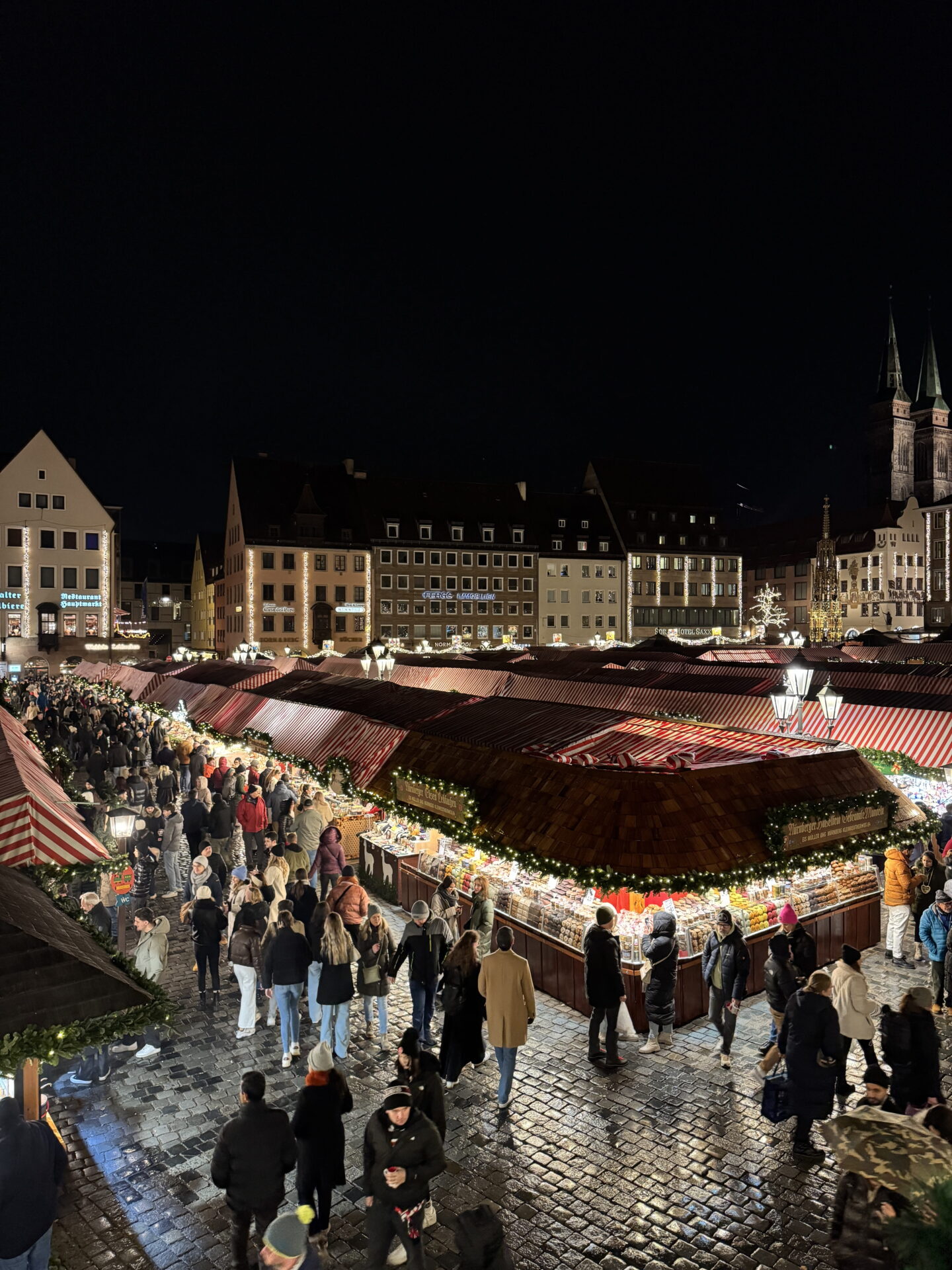
Because the Christmas market occupies much of the square in December, it can be difficult to appreciate the space in quite the same way you would at another time of year.
That’s not necessarily a bad thing, though. The festive atmosphere is one of the best reasons to visit Nuremberg in winter.
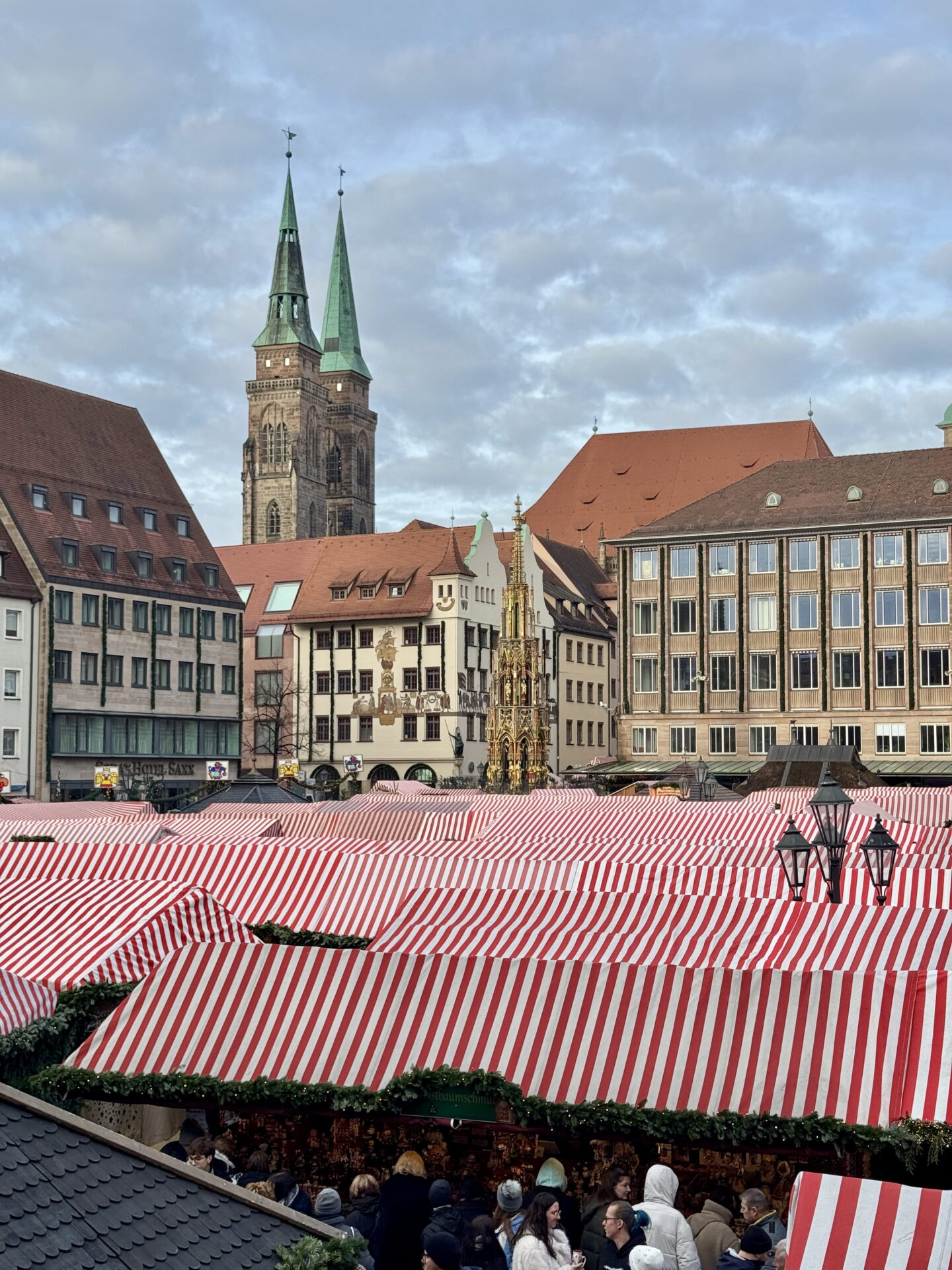
My tip would be to visit Hauptmarkt at least twice if you can: once during daylight hours to appreciate the surrounding architecture and again after dark to enjoy the Christmas lights.
6. Admire Schöner Brunnen
Schöner Brunnen, meaning Beautiful Fountain, is one of the most recognisable landmarks in Hauptmarkt.
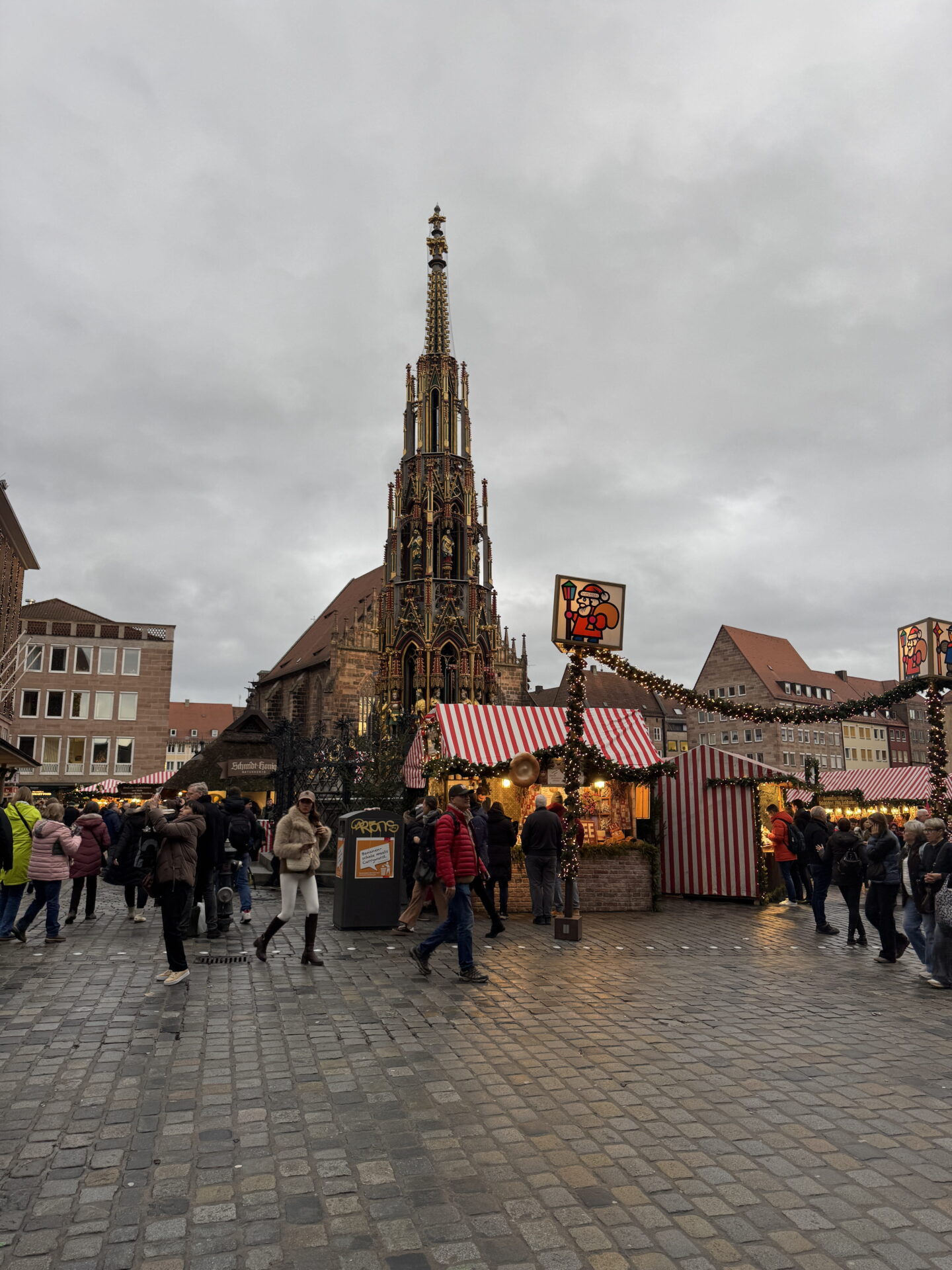
The ornate Gothic fountain stands approximately 19 metres tall and is decorated with colourful figures representing historical, religious and philosophical themes.
It’s easy to overlook some of the details when the Christmas market is busy, so I’d recommend stopping to take a proper look.
There’s also a local tradition of turning a brass ring set into the fountain’s railing while making a wish, which is said to bring good luck.
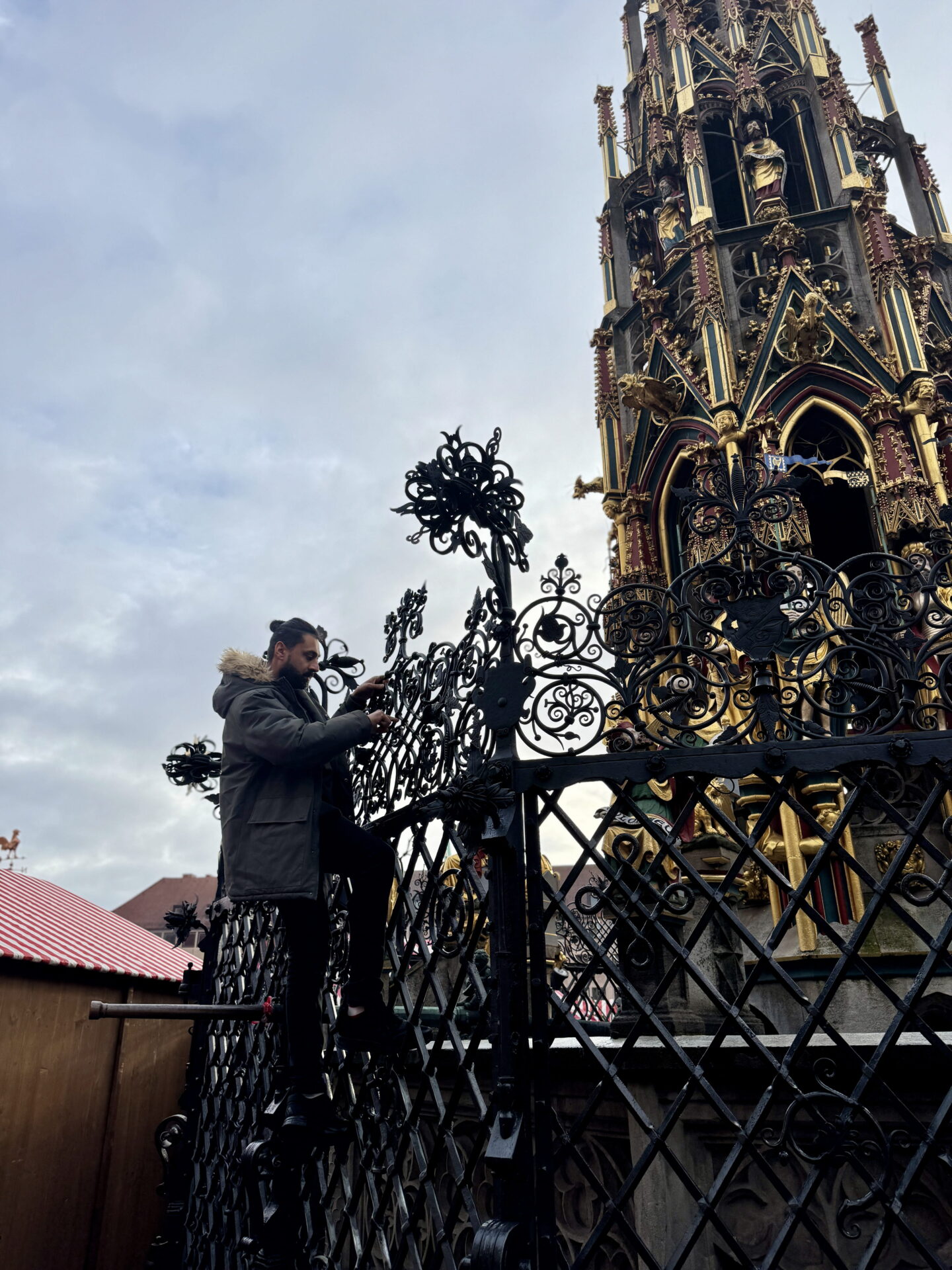
Naturally, we gave it a go.
Whether you believe in the tradition or not, it’s one of those little details that makes visiting a historic city more interesting.
We saw the fountain while exploring Hauptmarkt, so it didn’t require any extra travelling.
Combine this with the Frauenkirche and Hauptmarkt rather than treating it as a separate sightseeing stop.
7. Step inside Frauenkirche
The Frauenkirche, or Church of Our Lady, stands on the eastern side of Hauptmarkt.
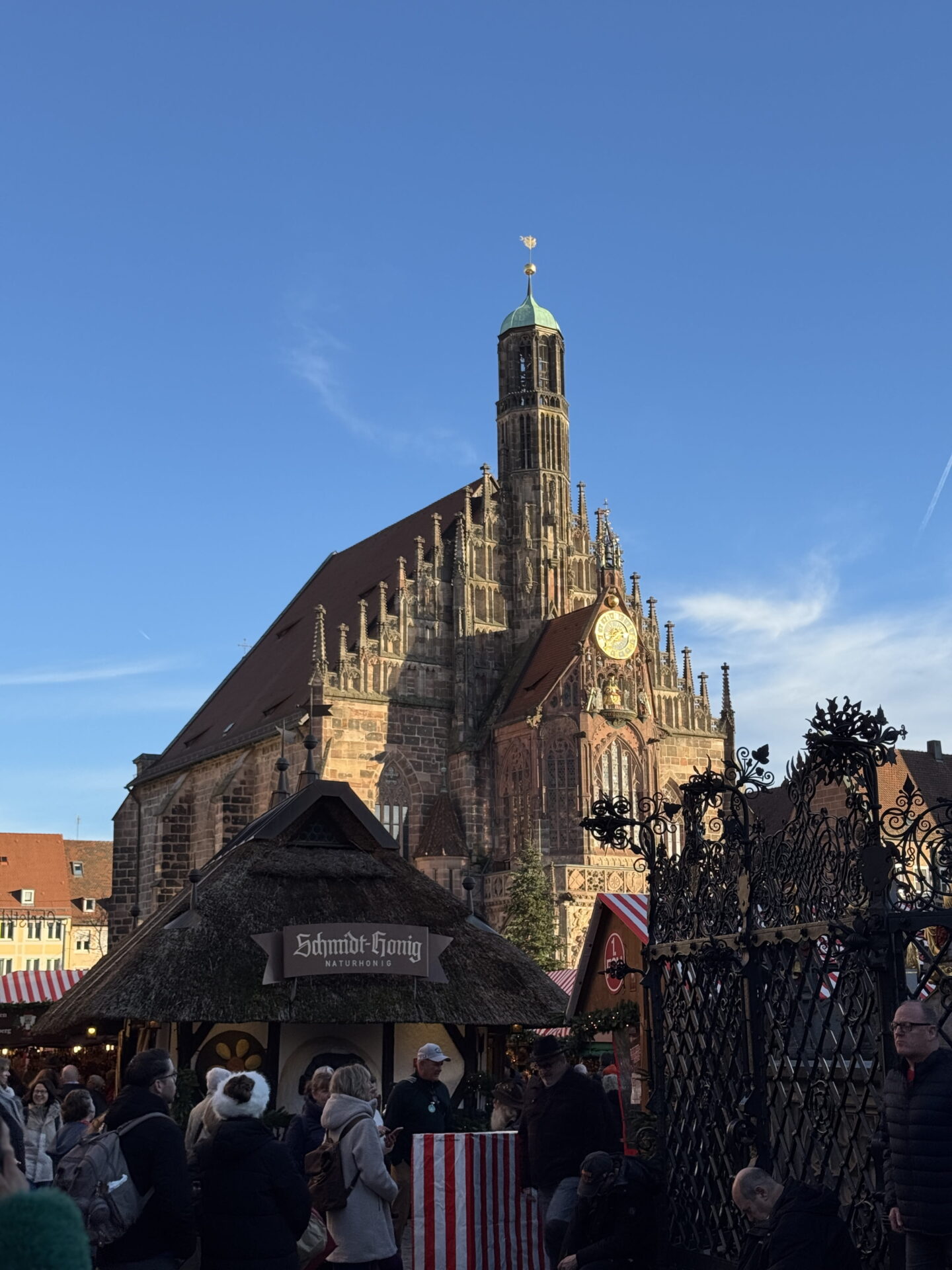
It’s one of the most distinctive buildings in the square, with its stunning Gothic façade and decorative clock.
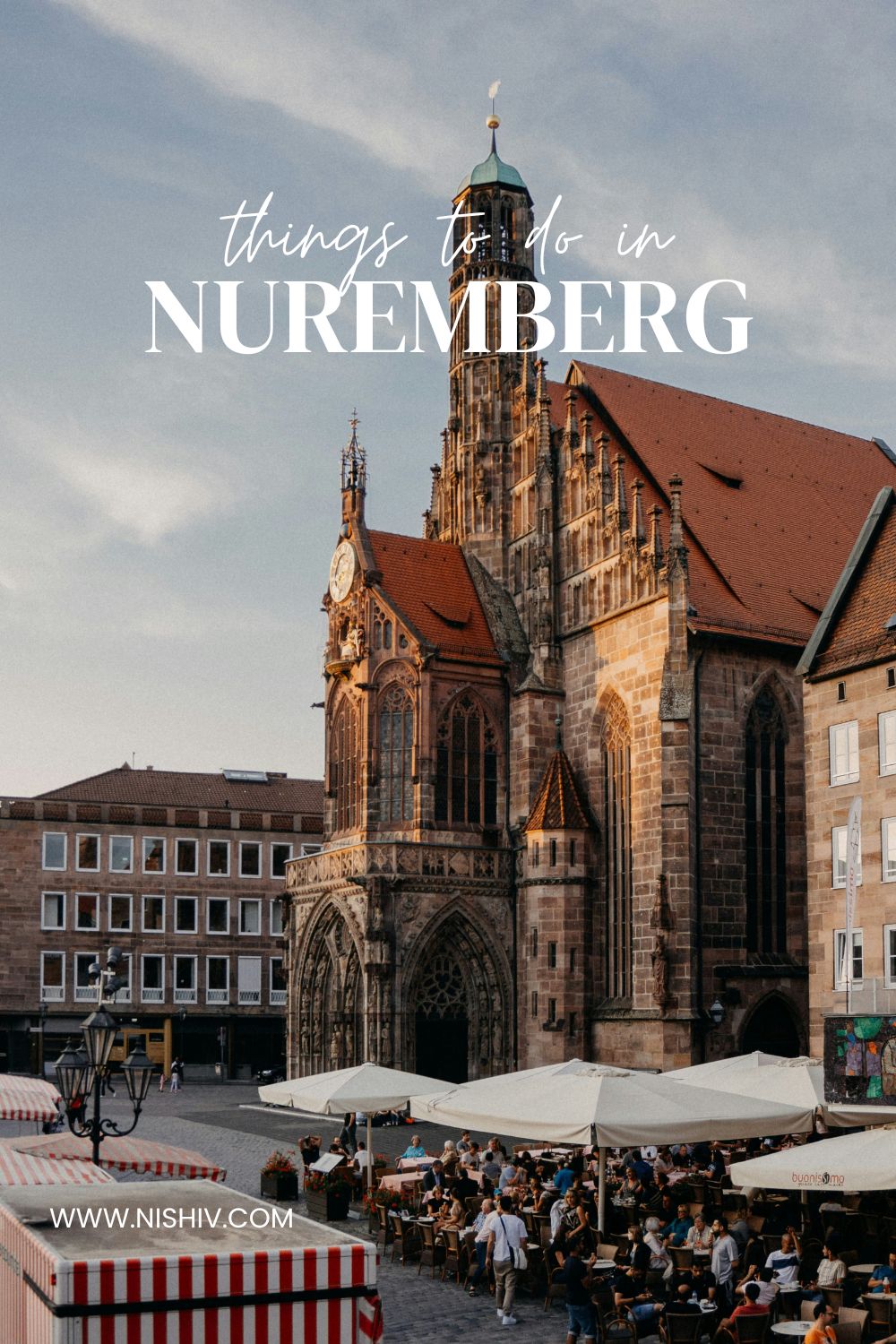
We went inside during our visit, and I’d recommend doing the same if it’s open. We’d accidentally timed our visit perfectly, arriving just as a free organ concert was about to begin. It was a lovely break from the busy Christmas market outside.
The church is much smaller than St. Lawrence Church, so you don’t need as much time to explore it.
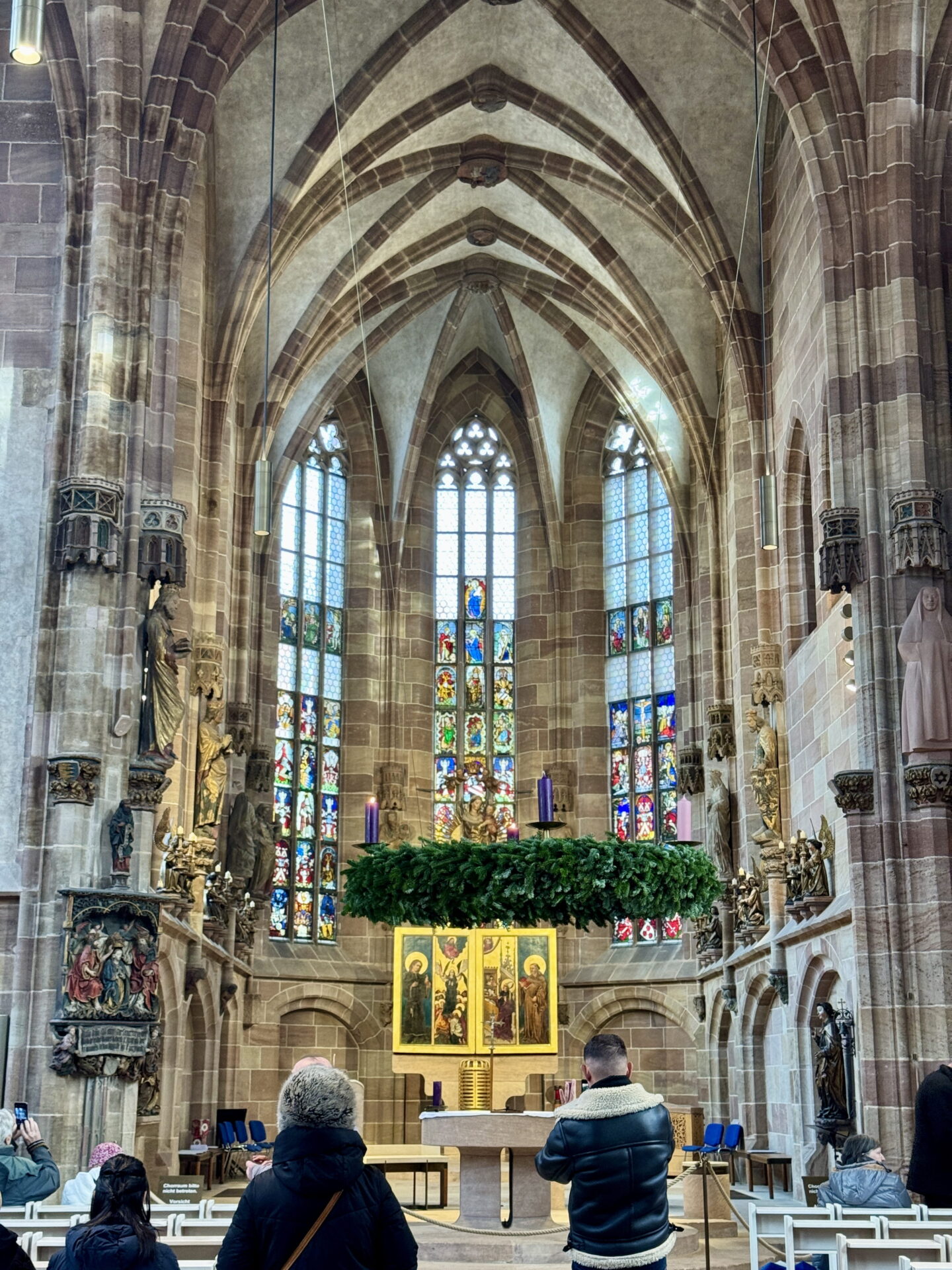
One of its best-known features is the Männleinlaufen, a mechanical clock display above the entrance. It traditionally operates at noon, with figures representing the prince-electors moving around Emperor Charles IV.
If seeing the clock in action is important to you, plan your visit around the display rather than assuming it runs throughout the day. Visit the church while you’re already at Hauptmarkt. It makes sense to see the Frauenkirche, Schöner Brunnen and the Christmas market together.
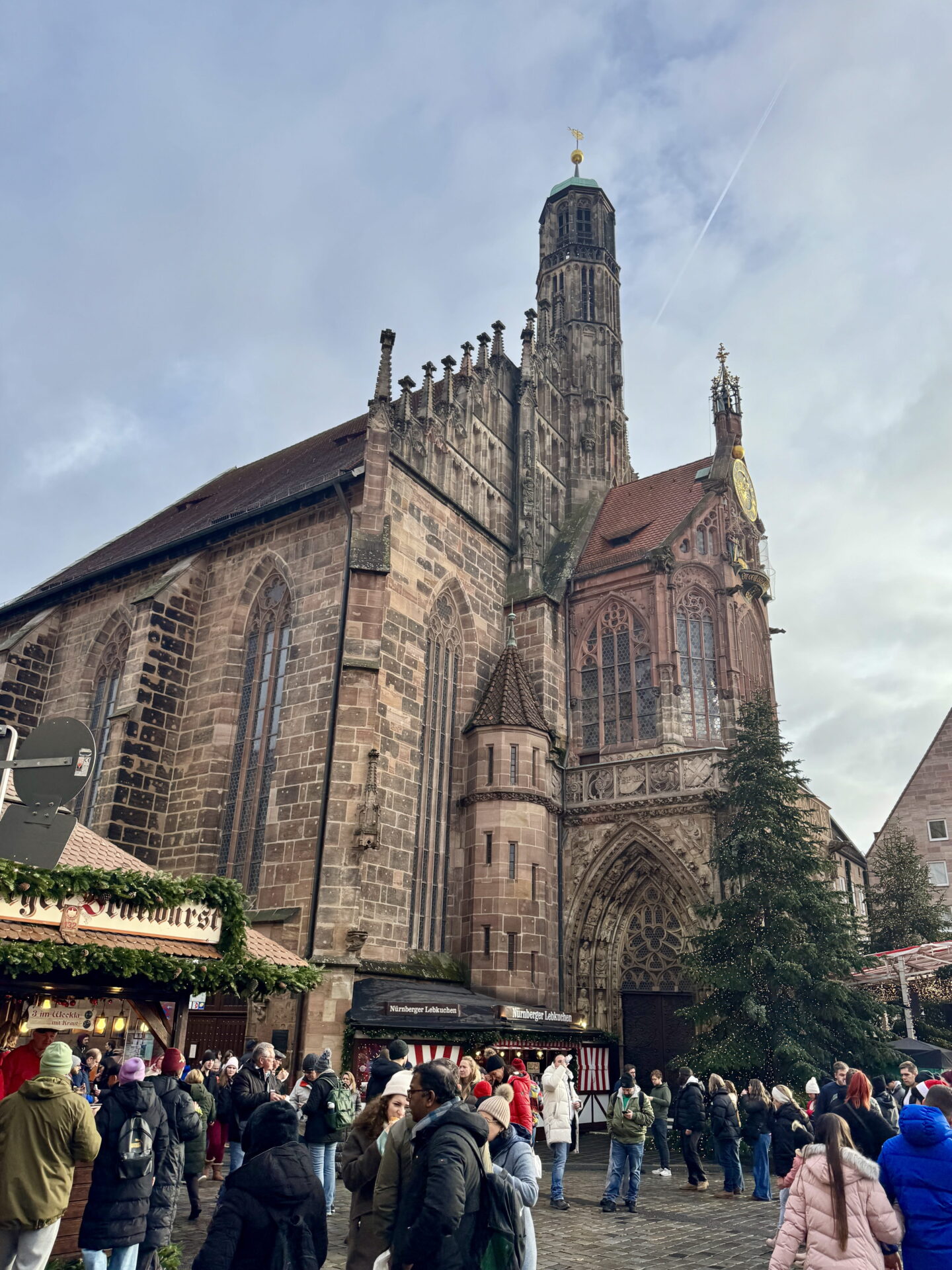
Because the Frauenkirche overlooks the Christmas market, it’s especially easy to include in a December visit.
8. Browse Handwerkerhof Nürnberg
Handwerkerhof is a small traditional craft courtyard near Nuremberg’s main railway station.
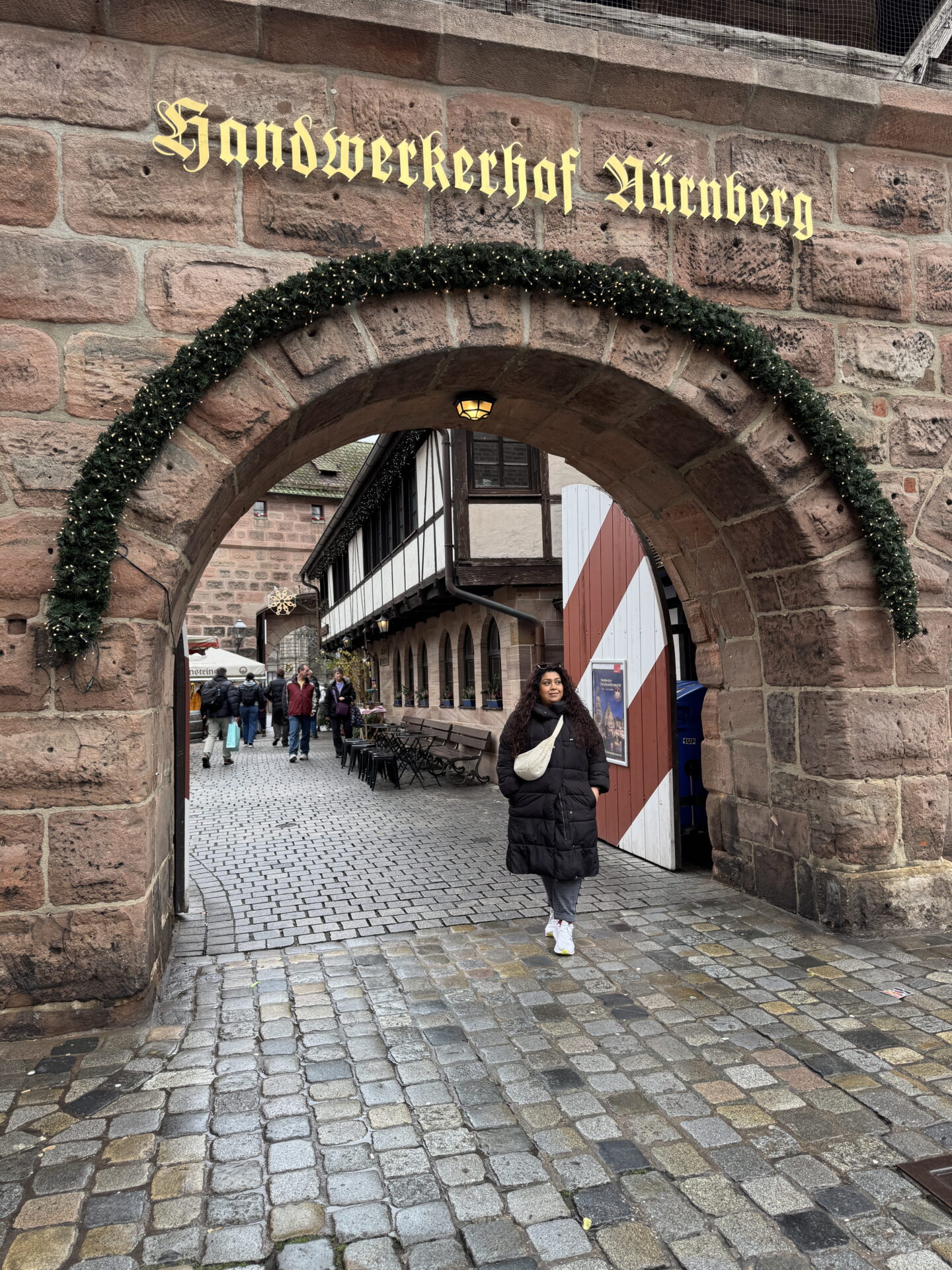
It’s designed to resemble a little medieval village, with timber-framed buildings, narrow walkways and shops selling traditional crafts and local products.
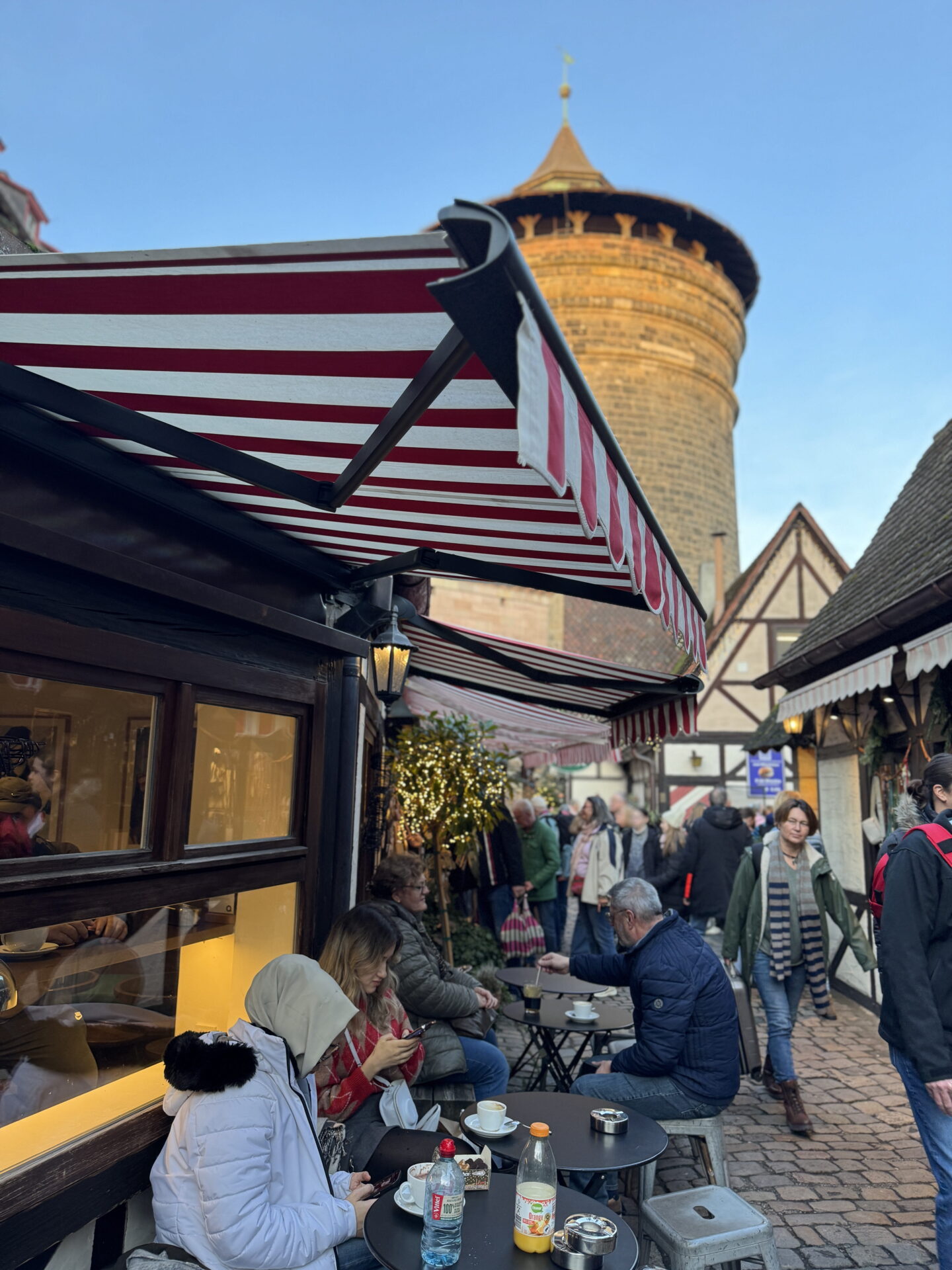
We walked through it numerous times while exploring Nuremberg as it was directly opposite our hotel and the quickest route into the Old Town. It’s a convenient stop if you’re arriving by train or walking between the station and the Old Town.
It’s quite different from the city’s larger sightseeing attractions. Rather than spending hours here, it’s somewhere to wander around, browse the shops and enjoy the atmosphere.
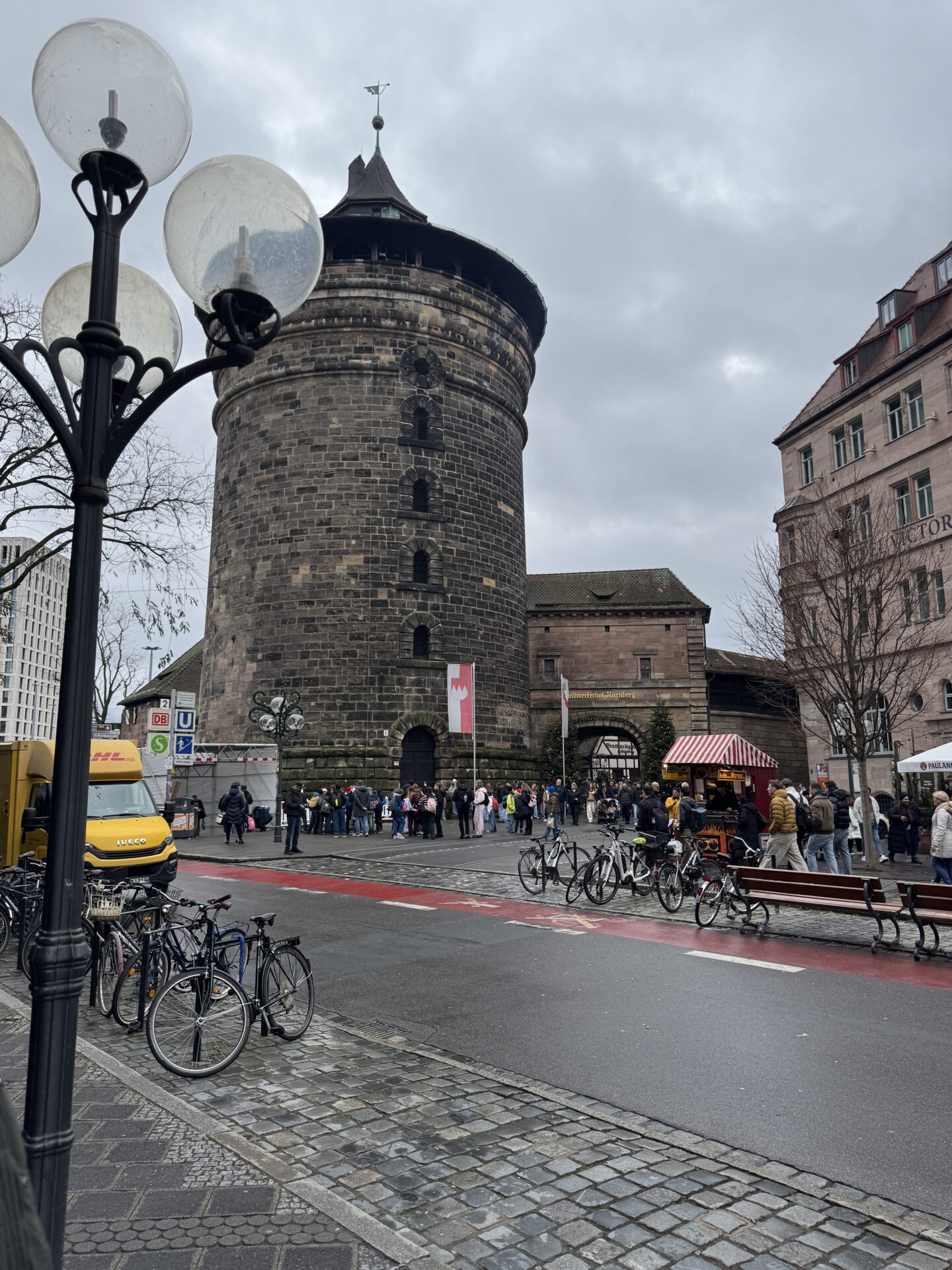
You’ll find crafts and souvenirs associated with the region, although individual shops and opening hours can vary.
It’s also worth remembering that Handwerkerhof is a visitor attraction rather than an untouched medieval neighbourhood. If you’re travelling through Nuremberg Hauptbahnhof, this is an easy place to visit at the beginning or end of your sightseeing day.
9. Experience the Nuremberg Christmas markets
You can’t write about things to do in Nuremberg in December without mentioning the Christmas markets!
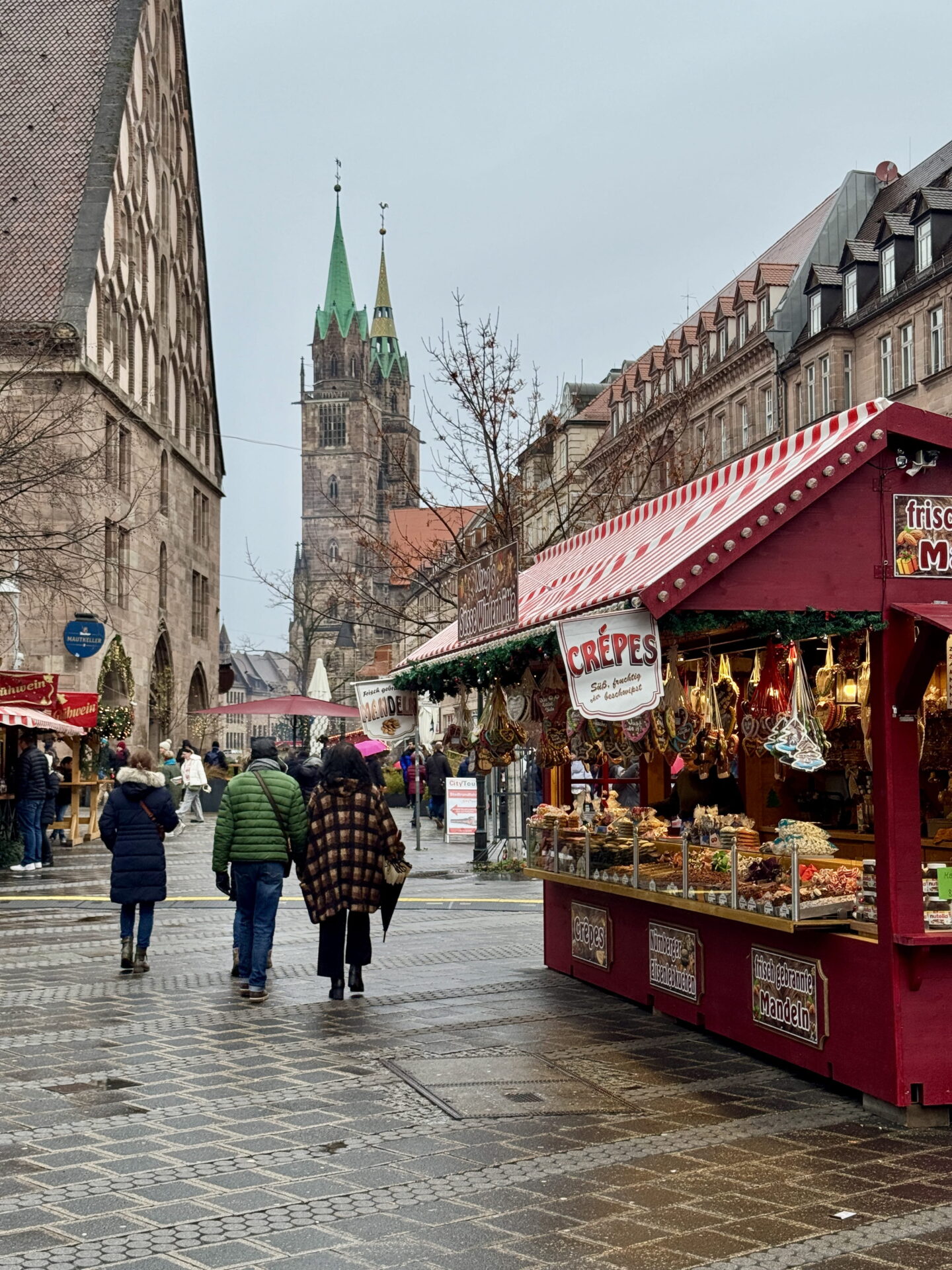
Nuremberg is famous for its Christkindlesmarkt, one of Germany’s best-known traditional Christmas markets.
The main market takes place in Hauptmarkt, with rows of wooden stalls selling decorations, gifts, festive food and hot drinks.
There are also other festive market areas to explore, including the Children’s Christmas Market and the Market of Sister Cities.
We visited Nuremberg as part of a longer Christmas market trip around Bavaria, and the markets were a major reason we chose to stop here.
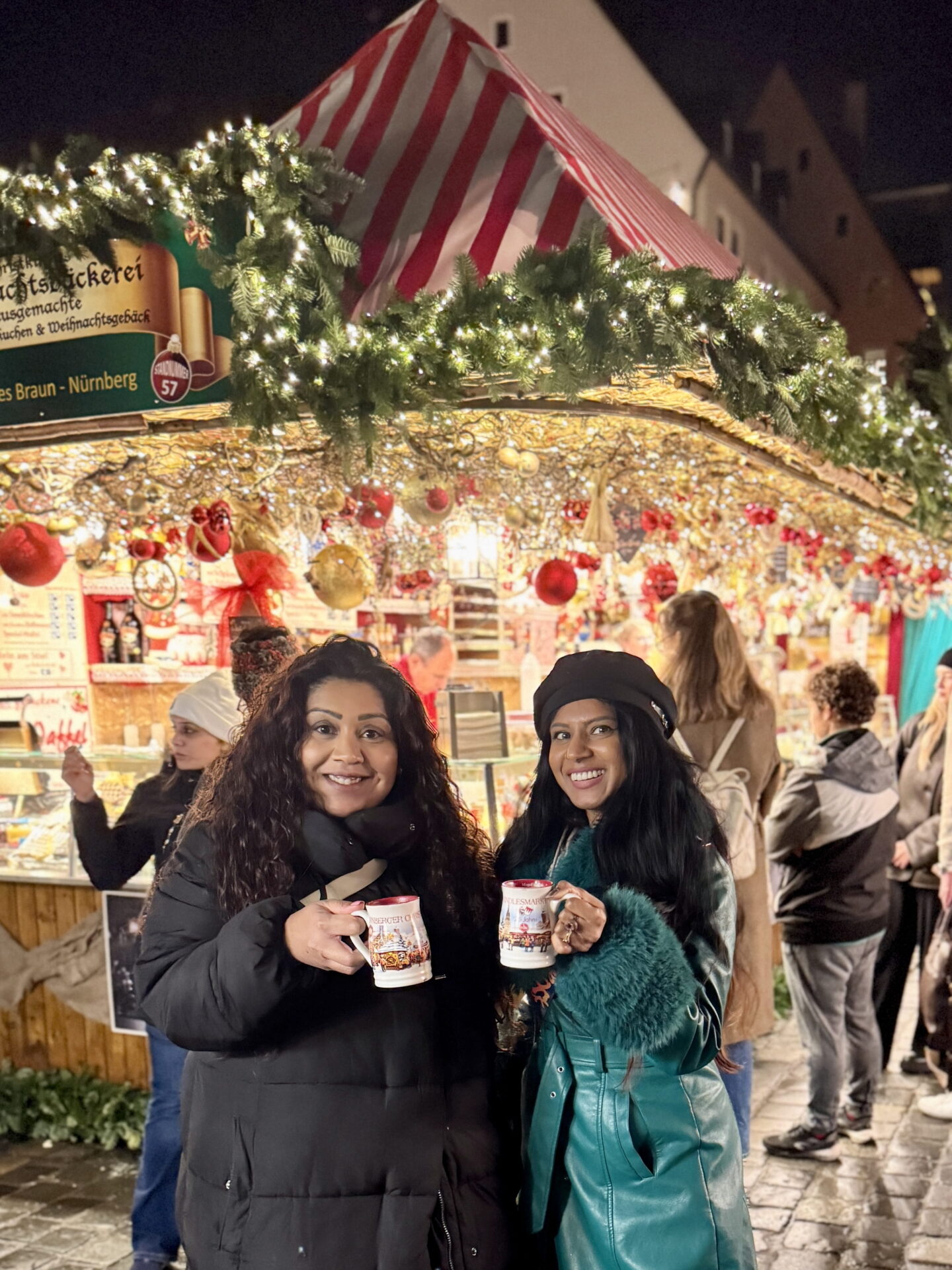
However, I’d avoid spending every waking hour browsing stalls.
There’s so much history and architecture to enjoy in Nuremberg that it would be a shame to miss the city itself.
I’ve written a separate Nuremberg Christmas market guide covering what to expect, what to eat and my tips for visiting, so I won’t repeat everything here.
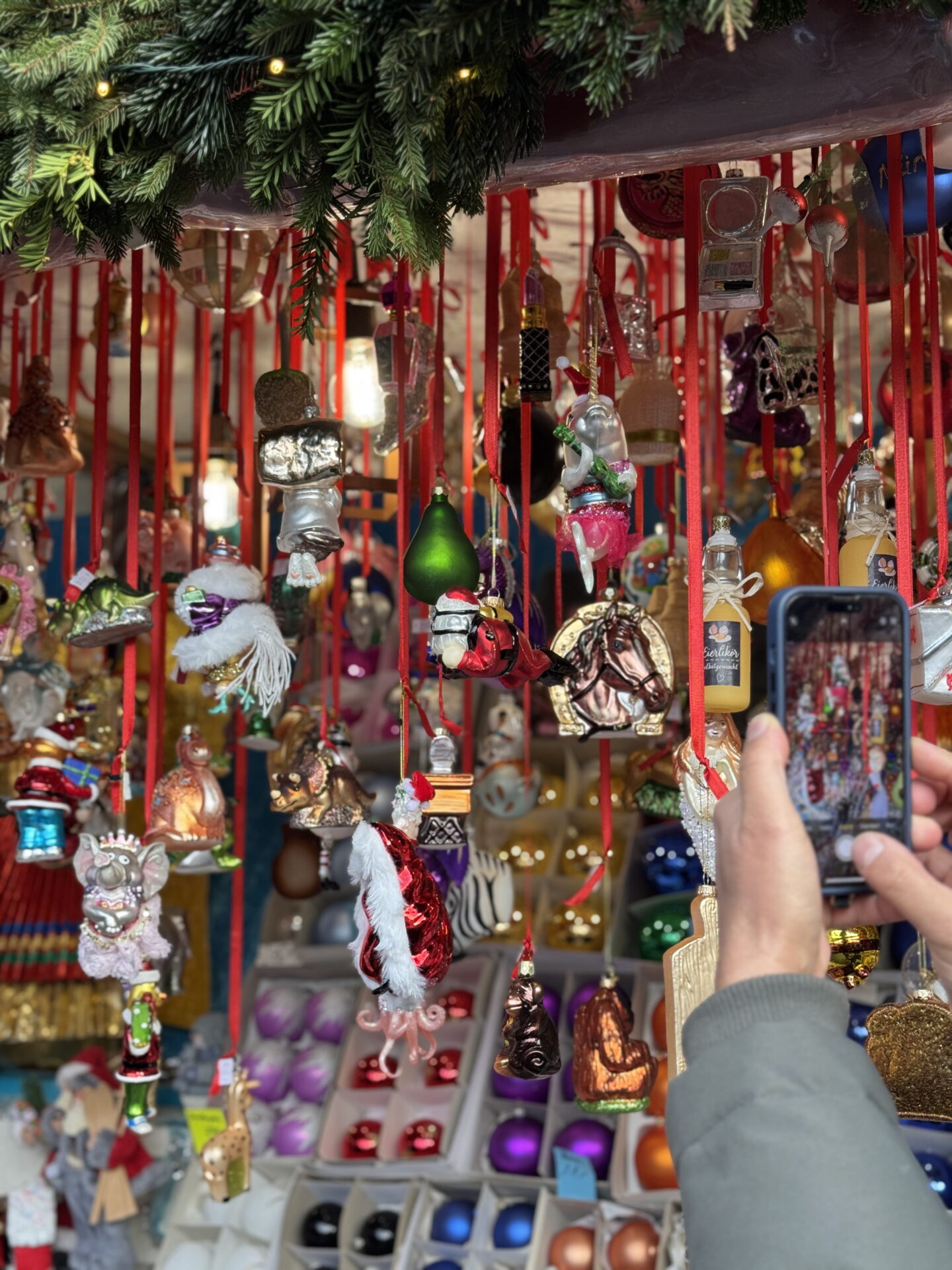
My tip: Save the Christmas markets for late afternoon and evening, and use the daylight hours for sightseeing.
If you’re exploring more of Bavaria’s Christmas markets, I’d also recommend reading my Regensburg Christmas market guide, as it’s another lovely city to include in a festive trip.
Other things to do in Nuremberg in December
Although we managed to see plenty during our two days in Nuremberg, there are several other attractions worth considering if you have more time.
These are particularly useful if you’re staying longer, travelling with children or looking for indoor activities when the weather isn’t great.
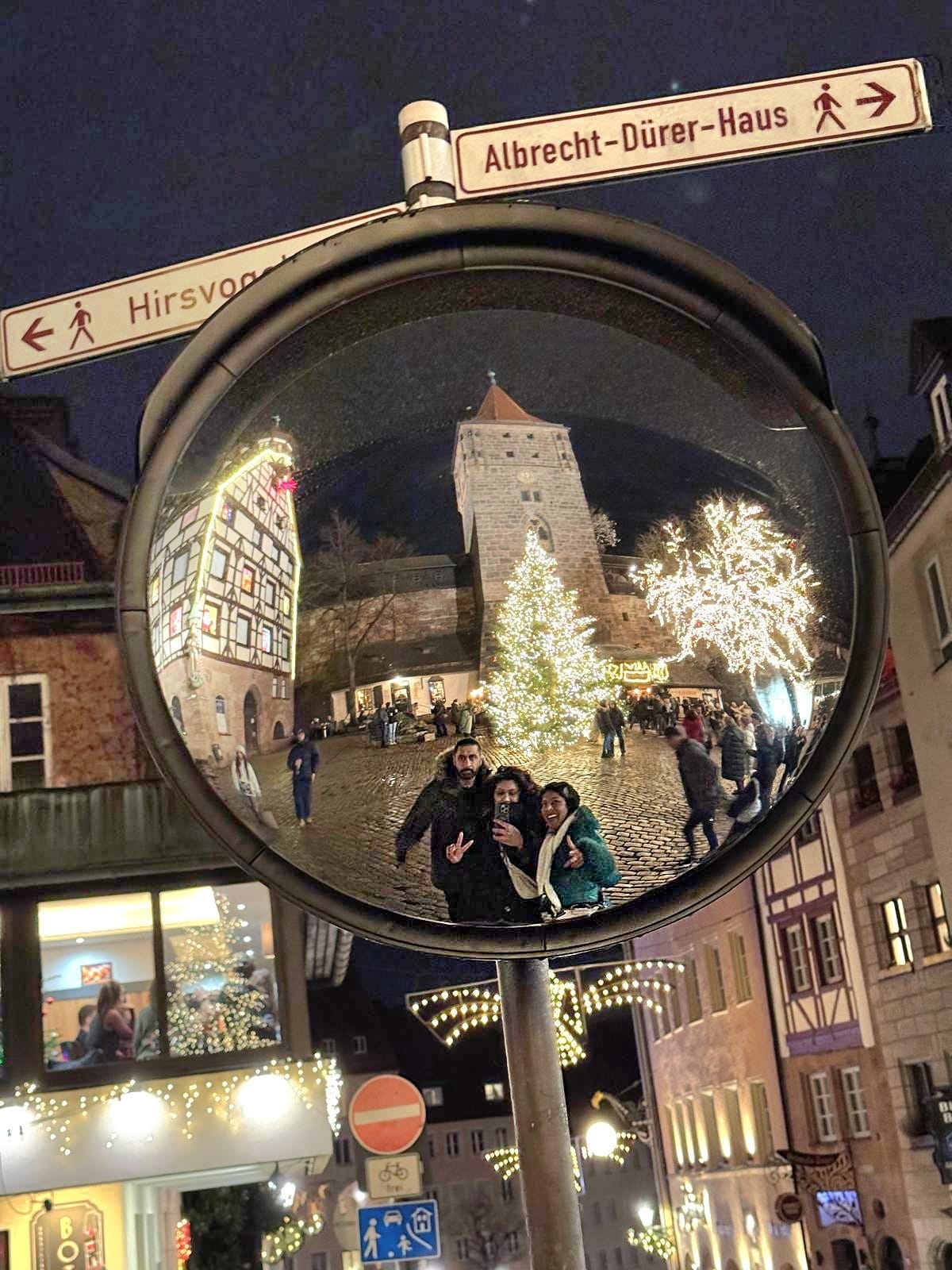
10. Visit Albrecht Dürer’s House
Albrecht Dürer’s House is a historic museum dedicated to one of Germany’s most famous Renaissance artists.
The half-timbered building stands near the Imperial Castle and was once the artist’s home.
Today, visitors can learn about Dürer’s life, work and the city in which he lived.
I’d recommend this particularly if you’re interested in Renaissance art or enjoy exploring historic houses. It’s also conveniently located near the Imperial Castle, so you could easily visit both while exploring this part of the Old Town.
11. Explore the Germanisches Nationalmuseum
If you’re looking for something to do indoors in Nuremberg in December, the Germanisches Nationalmuseum is a good option.
It’s one of Germany’s major museums of cultural history, with collections covering art, everyday life, historical objects and European cultural traditions.
There’s far more to see here than you could comfortably cover in a quick visit.
This is probably a better choice if you want to spend a few hours exploring a museum rather than making a quick sightseeing stop. It would also be a good option for a particularly cold or rainy December afternoon.
12. Learn about Nuremberg’s Second World War history
Nuremberg has an important and difficult place in twentieth-century history.
The city was closely associated with Nazi Party rallies, and it later became the location of the Nuremberg Trials.
Two significant places to learn more about this history are the Documentation Center Nazi Party Rally Grounds and the Memorium Nuremberg Trials.
A walking tour around the Documentation Center examines the Nazi Party’s use of Nuremberg for propaganda and mass rallies, while the Memorium explores the trials of leading Nazi officials after the Second World War.
We didn’t visit either during our trip, but they’re important attractions for anyone interested in understanding this part of the city’s history.
They’re also very different experiences from wandering around the Old Town, so I’d recommend allowing proper time rather than squeezing them into an already packed sightseeing day.
13. Admire Pilatushaus (Pilatus House)
Pilatushaus is one of Nuremberg’s most beautiful historic half-timbered buildings, located on Tiergärtnertorplatz near the Imperial Castle.
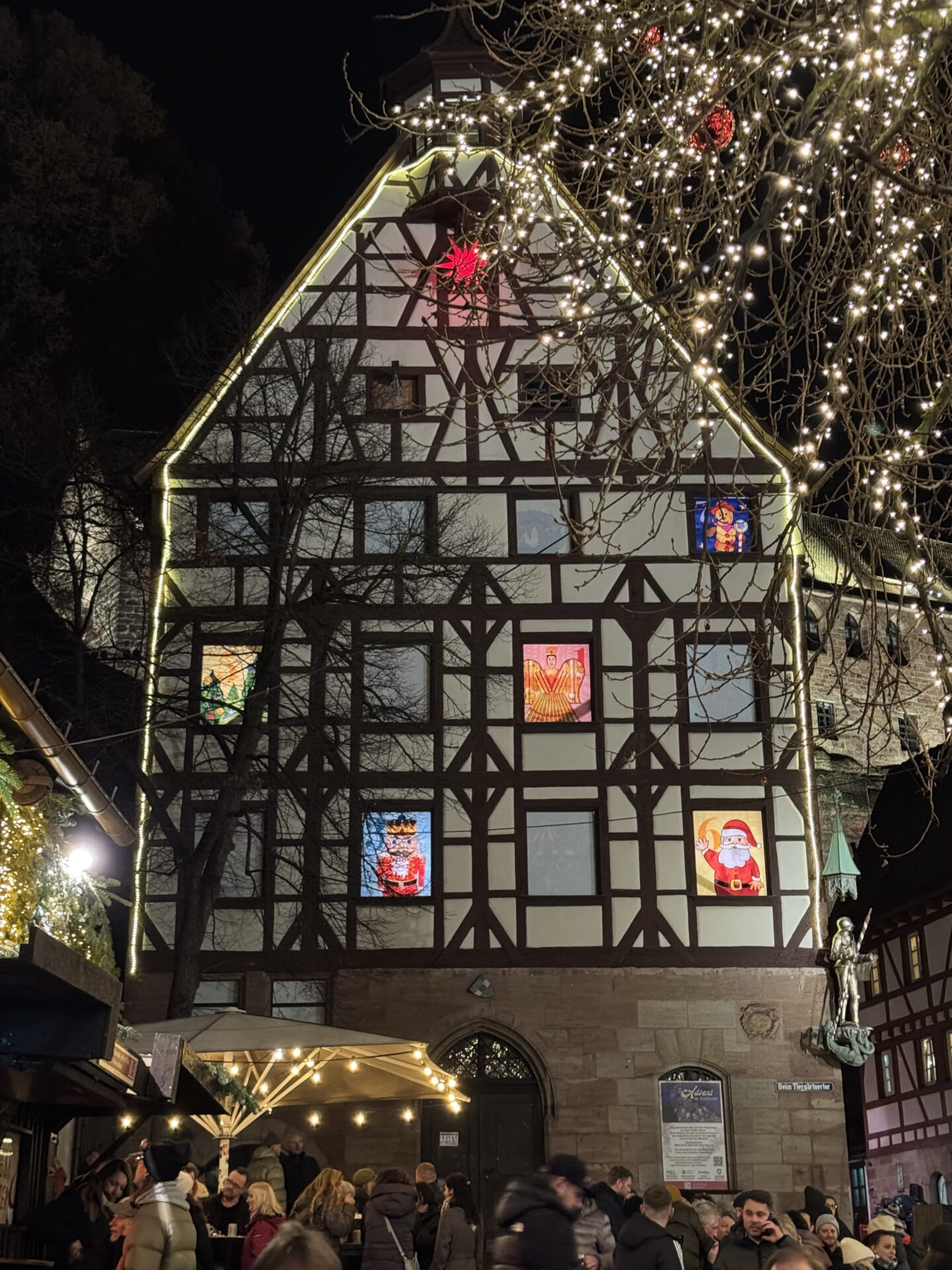
Dating back to the late 15th century, the building is known for its distinctive timber-framed upper floors, projecting windows and the figure of St. George on its corner.
We spotted Pilatushaus while exploring the area around the Imperial Castle, and its distinctive half-timbered exterior makes it worth stopping to admire.
You don’t need to set aside much time to see it, as the main attraction is the building’s exterior and its setting on the picturesque square.
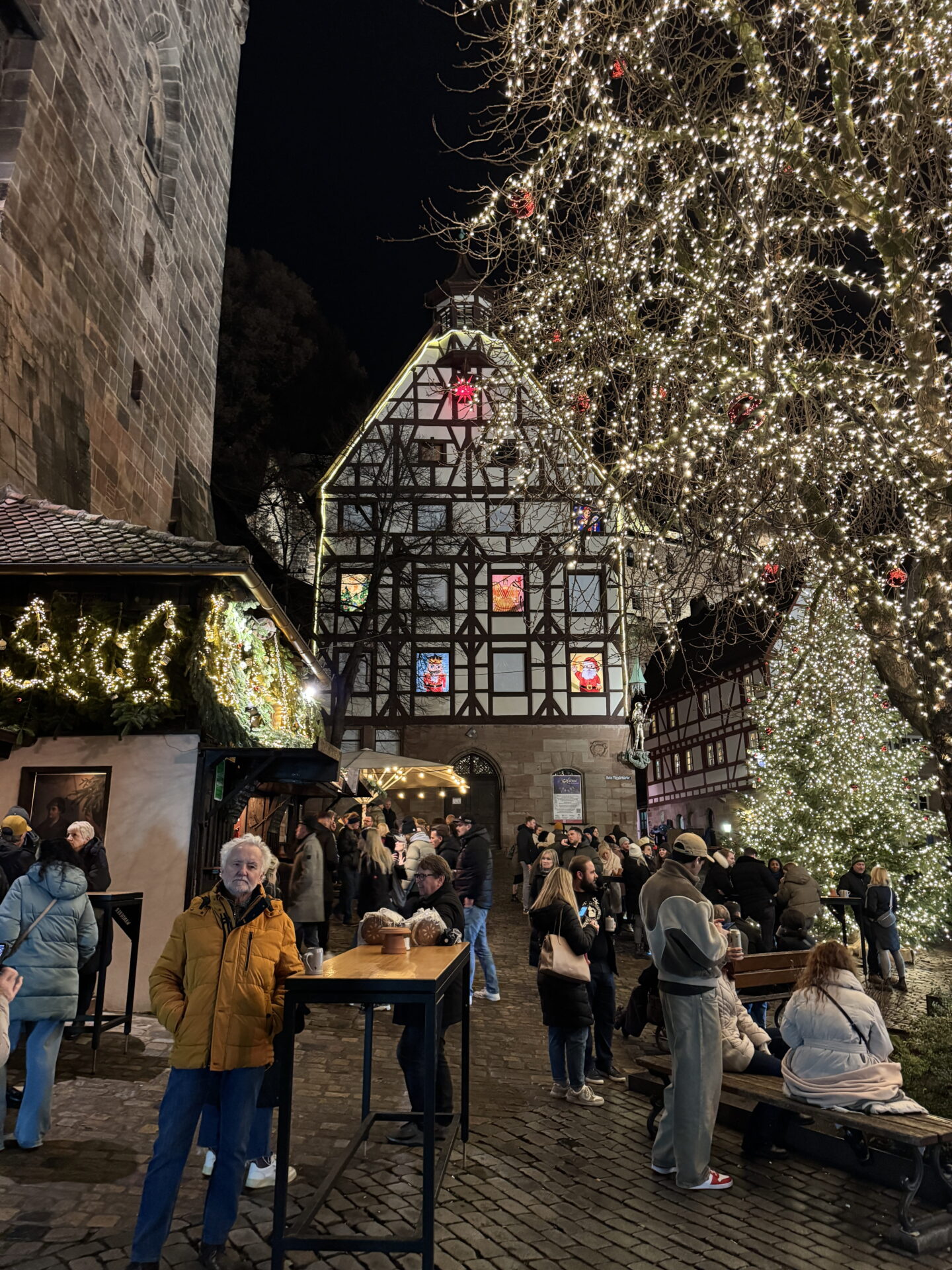
My tip: Combine Pilatushaus with the Imperial Castle and nearby Albrecht Dürer’s House. They’re all within a short walk of one another, making this an easy addition to your sightseeing route.
14. See St. Sebaldus Church
St. Sebaldus Church is another of Nuremberg’s important medieval churches.
Located in the northern part of the Old Town, it’s known for its Gothic architecture and the elaborate shrine of St. Sebaldus.
We visited St. Lawrence Church and the Frauenkirche, but St. Sebaldus is another worthwhile stop if you enjoy historic churches.
However, if you’re short on time and have already visited St. Lawrence Church and the Frauenkirche, I’d prioritise exploring some of Nuremberg’s other attractions instead.
As with the other churches, check access around Advent services and concerts.
15. Explore Nuremberg’s Historic Rock-Cut Cellars
Beneath Nuremberg’s Old Town lies a fascinating network of underground tunnels and cellars carved into the sandstone.
Known as the Historische Felsengänge, these historic rock-cut cellars were originally used for storing beer, thanks to their naturally cool temperatures. Parts of the underground network were also used as air-raid shelters during the Second World War.
You can explore these underground passages on a guided tour, offering a chance to discover another side of Nuremberg’s history beneath the Old Town.
Practical tips for visiting Nuremberg in December
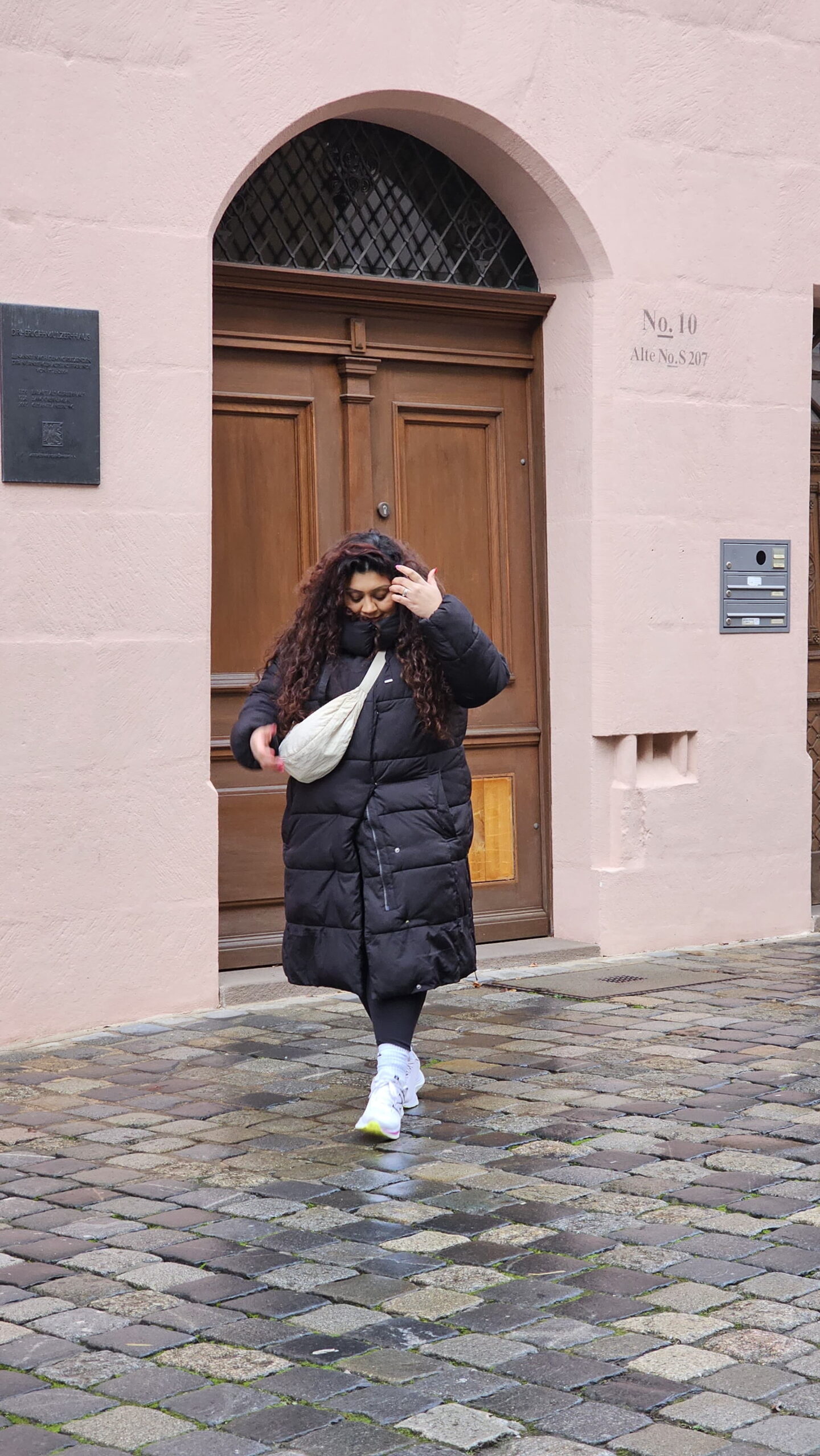
What is the weather like in Nuremberg in December?
Nuremberg is cold in December, with daytime temperatures often only a few degrees above freezing.
Evenings can be colder, and rain, frost or snow are all possible.
I’d recommend packing warm layers, a proper winter coat, gloves and comfortable waterproof shoes.
You’ll probably spend a lot of time walking around the Old Town, so keeping your feet warm and dry makes a big difference.
How busy is Nuremberg in December?
Nuremberg is an incredibly popular Christmas market destination, so expect crowds, especially around Hauptmarkt.
Weekends and evenings during Advent are generally the busiest times.
If you want to explore the Old Town without constantly navigating crowds, I’d recommend doing your sightseeing earlier in the day.
That also gives you more flexibility to enjoy the Christmas markets later.

Are attractions open in Nuremberg in December?
Many of Nuremberg’s main attractions remain open during December, but winter opening hours can be shorter.
Churches may also restrict tourist visits during religious services, while museums and other attractions can have special closures over Christmas and New Year.
I’d recommend checking official websites before visiting, especially if you’re travelling close to 24–26 December.
Christmas markets also have their own seasonal dates, and not every market stays open until the end of the month.
How do you get around Nuremberg?
One of the best things about sightseeing in Nuremberg is that many of its main attractions are within walking distance of one another.
We explored much of the historic centre on foot, including the castle, churches, Hauptmarkt, Weißgerbergasse and Hangman’s Bridge.
If you’d prefer to explore with a local guide, an Old Town walking tour could be a good way to discover Nuremberg’s history while visiting some of its main landmarks.
If you’re staying outside the Old Town or visiting attractions farther away, Nuremberg also has a public transport network with U-Bahn, tram and bus services.
For most visitors focusing on the central sights, though, walking is a practical way to get around.
Just remember that some streets are cobbled and the walk up to the castle involves a hill.
How many days do you need in Nuremberg in December?
I’d recommend two days in Nuremberg if you want to explore the main sights and enjoy the Christmas markets without rushing.
That’s how long we spent in the city, and it gave us time to visit the Imperial Castle, explore the Old Town, go inside several churches and enjoy the festive atmosphere.
If you only have one day, I’d prioritise the castle, Hauptmarkt, Frauenkirche, St. Lawrence Church and the Christmas market.
With three days, you could explore more museums, visit the Second World War history sites or simply spend longer enjoying the city.
I wouldn’t try to visit every attraction on this list in two days. Choose the ones that interest you most and leave yourself time to wander.
Would I visit Nuremberg in December again?
I’m glad we gave ourselves two days in Nuremberg rather than visiting solely for the Christmas market.
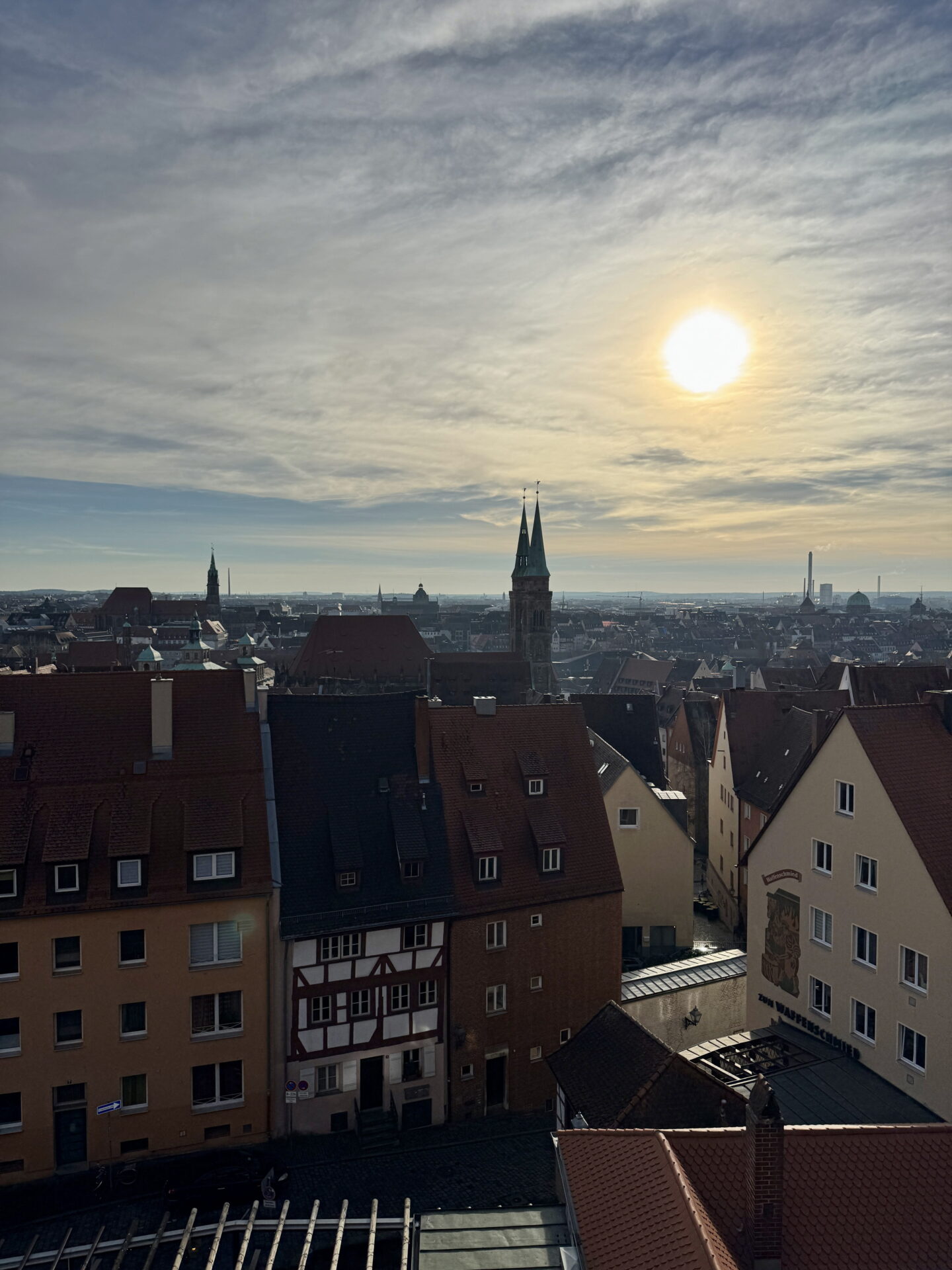
The festive atmosphere was a big part of the experience, but exploring the Imperial Castle, wandering through the Old Town and visiting the churches made the trip much more interesting.
For me, that’s what makes Nuremberg such a good December city break. There’s plenty to explore beyond the Christmas markets.
If you’re planning a longer trip around Bavaria, you can also read my seven-day German Christmas market itinerary, which covers how we combined Nuremberg with other festive destinations.
You can also read my Munich Christmas markets guide if you’re planning to spend time in the Bavarian capital during your trip.
If you’re planning your own visit, I’d recommend choosing a handful of sightseeing attractions for the daytime and leaving the evenings free for the Christmas markets.
That way, you get to experience both sides of Nuremberg without feeling as though you’re constantly rushing from one place to the next.
And if you have more time, there are plenty of museums and historical attractions to explore beyond the places we managed to visit.
Found this guide on things to do in Nuremberg helpful? PIN IT
Read more about planning a trip to Germany:
- The Best Vegan Restaurants In Berlin
- Vegan Breakfast In Berlin: 3 Of The Best Frühstücken Spots
- 7 Day German Christmas Market Itinerary by Train in Bavaria
- Nuremberg Christmas Market Guide: Which Markets Are Worth Visiting?
- Christmas Markets in Regensburg: Which Ones Are Worth Visiting?
- Best Munich Christmas Markets: Which Are Worth Visiting?
- 15 Best Things to Do in Nuremberg in December
Need help planning your trip from start to finish?
Check out these helpful links:
- 👉🏼 Find cheap flights
- 👉🏼 Savings on accommodation from boutique hotels to affordable resorts
- 👉🏼 The most comprehensive resource to help plan excursions on your next trip
- 👉🏼 This pass gives you free lounge access to over 1500 airport lounges
- 👉🏼 Affordable car rental options
- 👉🏼 Book land and water transport for travelling around South East Asia
- 👉🏼 Use code: NISHI9255 to get £2.50 off your first eSIM before you travel
- 👉🏼 Pay anywhere in the world, in any currency, using your debit card without fees
- 👉🏼 Travel insurance with essential medical & travel coverage at low premiums
