
5 Days in Sapporo: A First-Timer’s Sapporo Itinerary

I’ve always liked exploring places that don’t get quite as much attention, so when planning our first trip to Japan, I knew I wanted to visit somewhere beyond Tokyo.
Don’t get me wrong. I loved Tokyo. But everybody goes there.
And after five days of sightseeing in 39°C heat, averaging around 20,000 steps a day, I was more than ready for a change of pace.
So we flew north to Hokkaido.
We spent four nights in Sapporo, enjoying a much more manageable 26°C, exploring the city, taking a day trip to Otaru and accidentally arriving during the Sapporo Summer Festival.
That last part turned out to be one of the highlights of our trip.
If you’re planning 5 days in Sapporo, this itinerary combines the places we visited with a few I’d prioritise next time. Most importantly, it gives you enough breathing room to enjoy the city without turning your holiday into another endurance event.
This post may contain affiliate links which means that I may earn a small commission, at no extra cost to you, for qualifying purchases. For more information, read our disclaimer.
5 Days in Sapporo itinerary at a glance
Here’s how I’d spend five days in Sapporo on a first visit:
Day 1: Odori Park, Sapporo TV Tower, Clock Tower, Tanukikoji and Susukino
Day 2: Sapporo Beer Museum, Sapporo Factory, okonomiyaki and soup curry
Day 3: Day trip to Otaru, including the canal, Sakaimachi Street and LeTAO
Day 4: Hokkaido Shrine, Maruyama Park and Mount Moiwa
Day 5: Sapporo Summer Festival, Jozankei Onsen or another day exploring the city
This isn’t the precise order of our trip. We stayed for four nights rather than five full days, and there are a few places we never got around to visiting.
But after experiencing Sapporo myself, this is how I’d plan five days for someone visiting for the first time.
If you’d rather choose your own attractions, I’ve also written a guide to 22 things to do in Sapporo, including what I’d recommend and what I wouldn’t bother prioritising.
This itinerary assumes you have five full days to explore. If you’re arriving in Sapporo later on Day 1, I’d skip the morning sightseeing and head straight to Tanukikoji Shopping Arcade and Susukino for a more relaxed first evening. You could fit Odori Park, Sapporo TV Tower and the Clock Tower into the morning of Day 5 if you’re staying in the city.
Day 1: Explore central Sapporo
I’d spend your first day getting familiar with the city centre.
One of the things that surprised me about Sapporo was how easy it was to explore on foot. We stayed very centrally at Sapporo Grand Hotel and could reach many of the places we wanted to visit without having to work out another train route.
After Tokyo, where seemingly every journey involved disappearing underground and hoping to emerge in the correct neighbourhood, this was very welcome.
Morning: Odori Park and Sapporo TV Tower
Start at Odori Park.
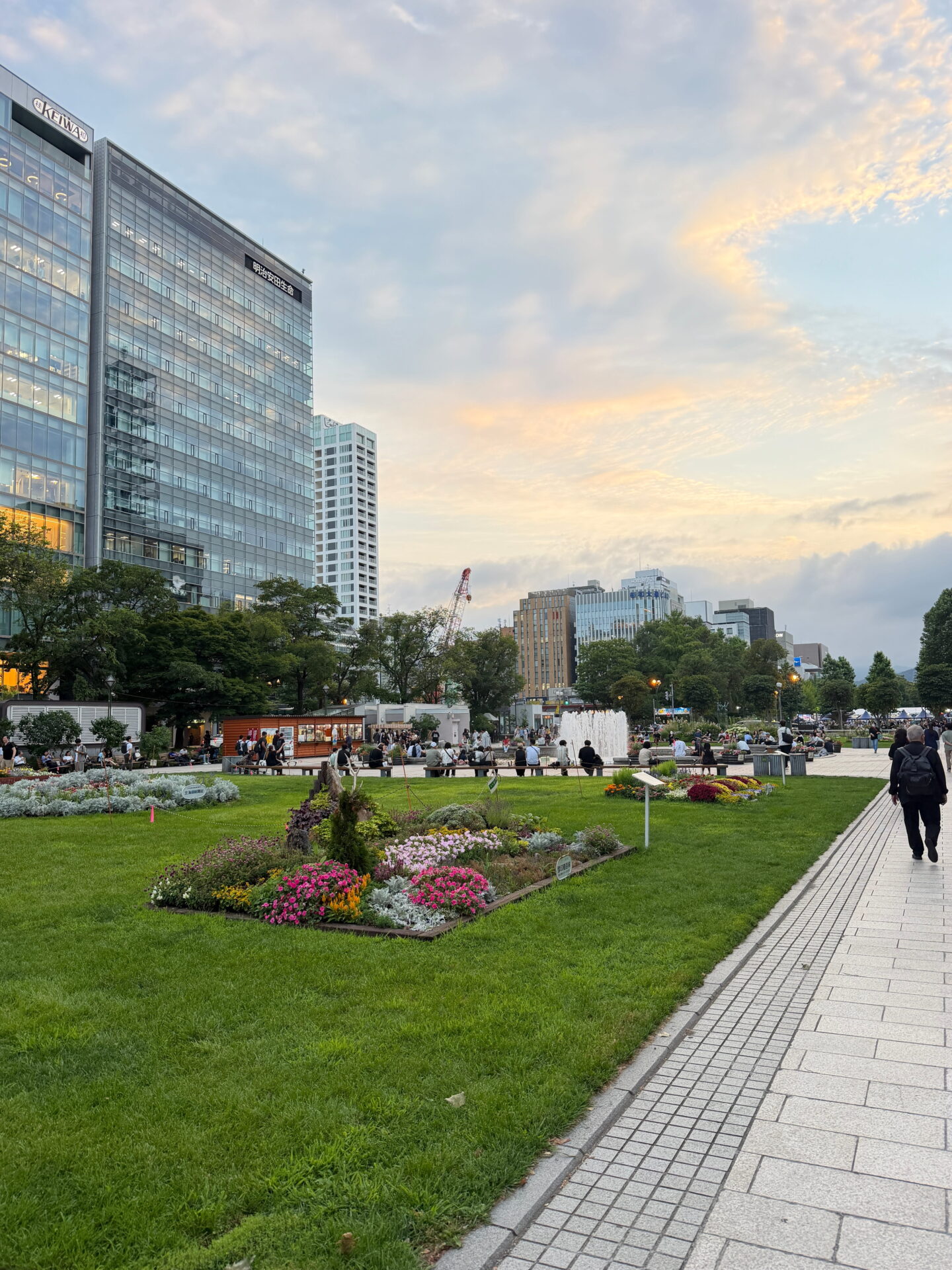
It’s a long green space running through central Sapporo, and it’s a useful starting point because several other attractions are nearby.
I’d spend some time walking through the park rather than rushing straight towards the next landmark.
We visited during summer, when people were sitting outside, relaxing around the fountains and generally enjoying the weather.

It instantly felt noticeably calmer than the Tokyo we’d just left behind.
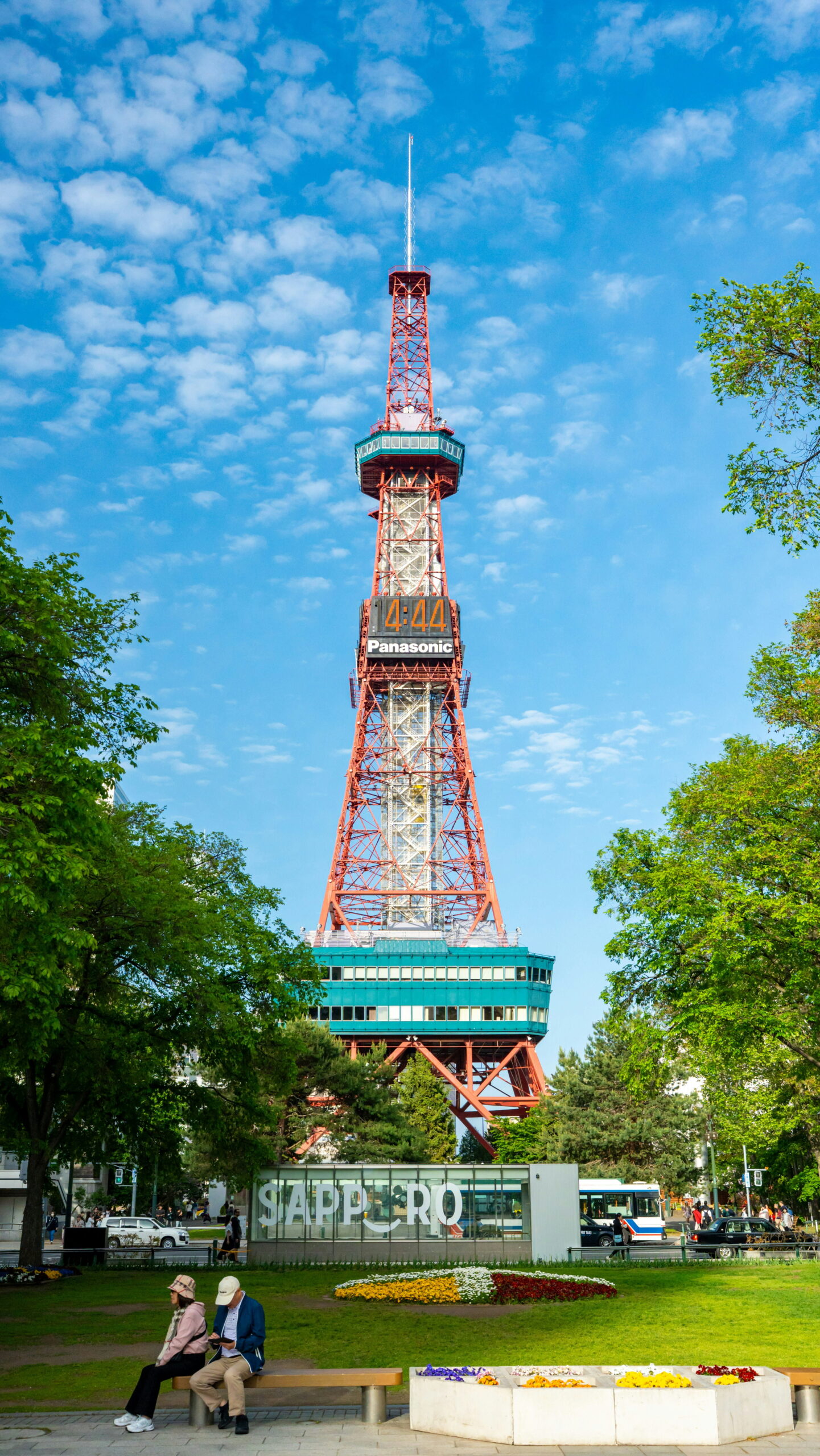
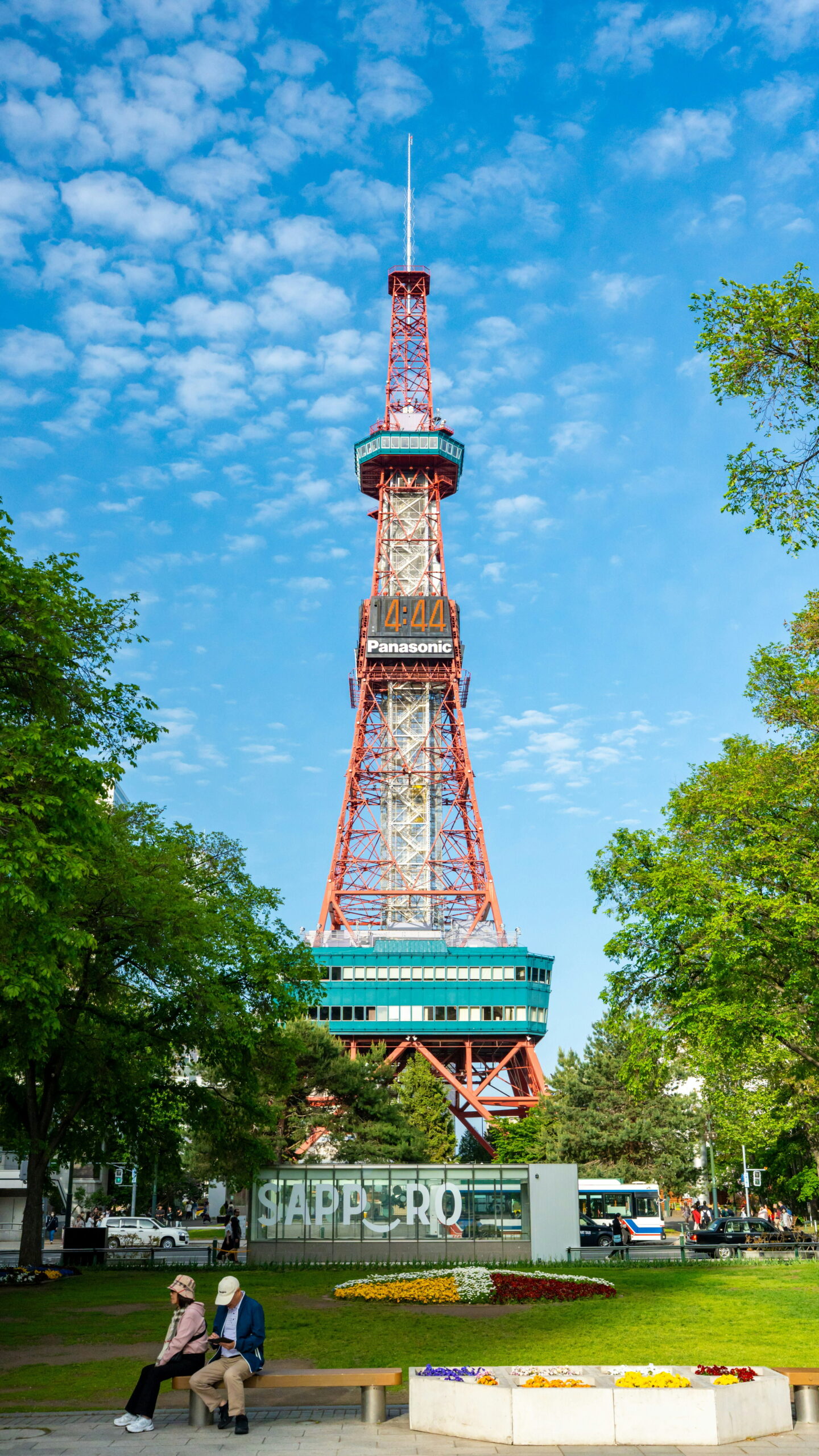
At the eastern end of the park is Sapporo TV Tower.
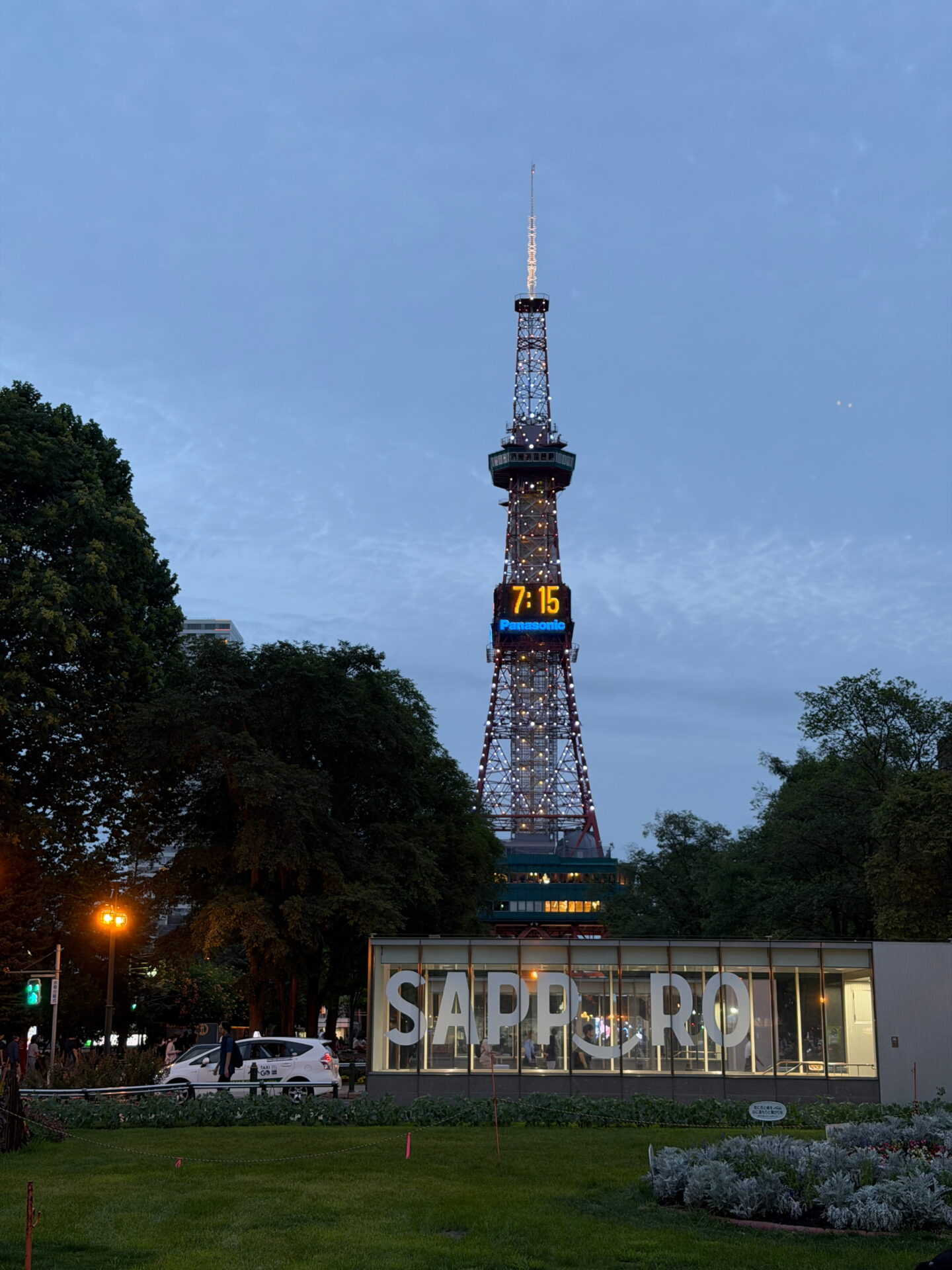
You can visit the observation deck for views along Odori Park, although I wouldn’t necessarily pay to go up if you’re also planning to visit Mount Moiwa later in the itinerary.
We were happy just seeing the tower from the ground.
Continue towards Sapporo Clock Tower, which is only a short walk away.
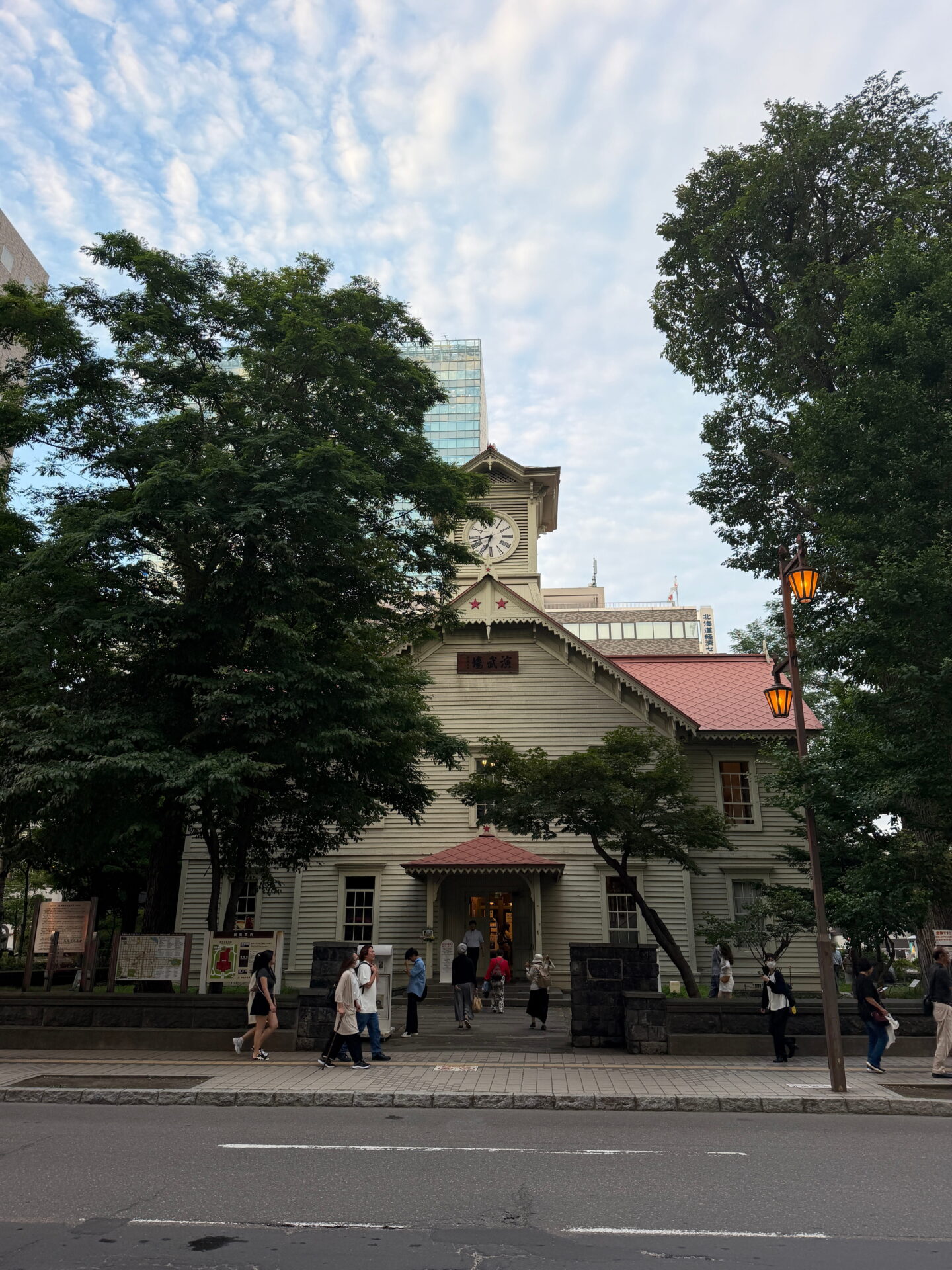
It’s an important historic landmark, but I’ll admit I expected something a little more impressive.
The building is rather small compared with everything surrounding it.
I’d still include it because it’s so conveniently located, but I wouldn’t rearrange your day around it.
We actually visited the Clock Tower in the evening, but I’d recommend seeing it during the day if you’re following this Sapporo itinerary. It’s an easy stop while you’re exploring the surrounding area.
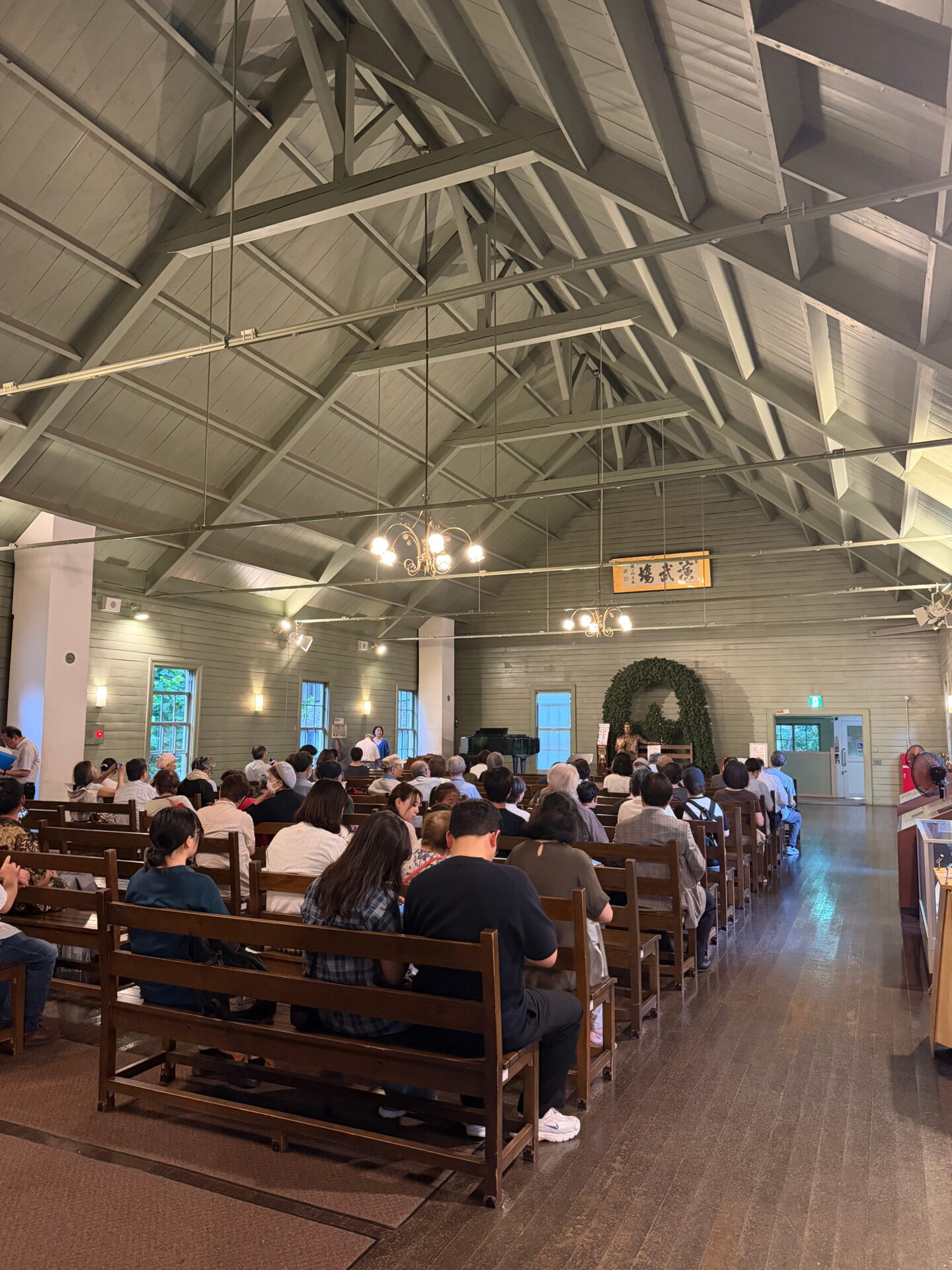
There happened to be a private concert taking place while we were there. We were warmly welcomed inside, which was lovely, but we couldn’t quite shake the feeling that we’d accidentally wandered into someone else’s event. So, after a quick look around, we made a polite exit!
Afternoon: Tanukikoji Shopping Arcade
After lunch, make your way towards Tanukikoji Shopping Arcade.
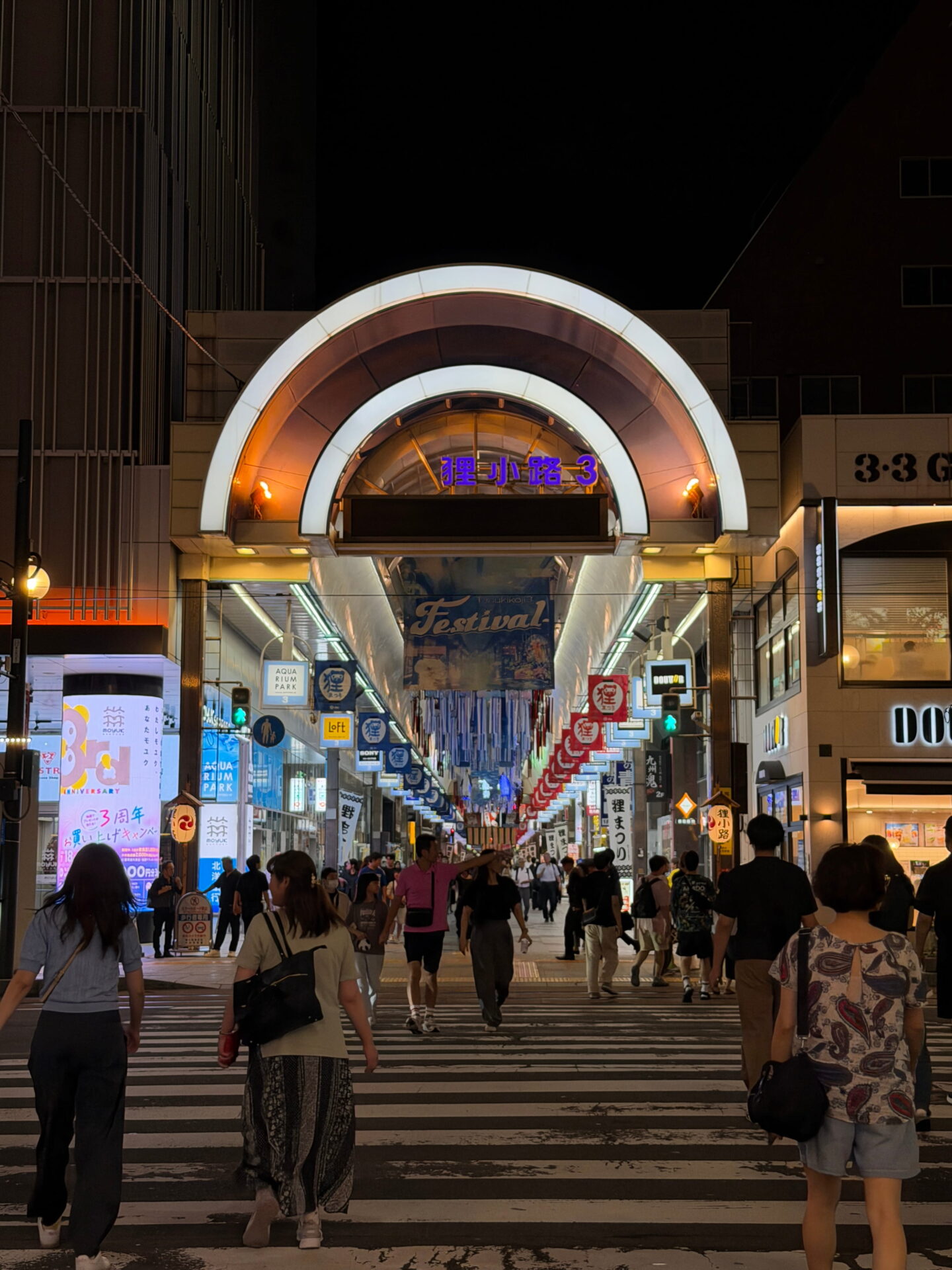
This is where I’d deliberately leave some time unplanned.
The covered arcade runs through seven blocks of central Sapporo, with shops, cafés, restaurants and all sorts of things you probably don’t need but may suddenly feel compelled to buy.
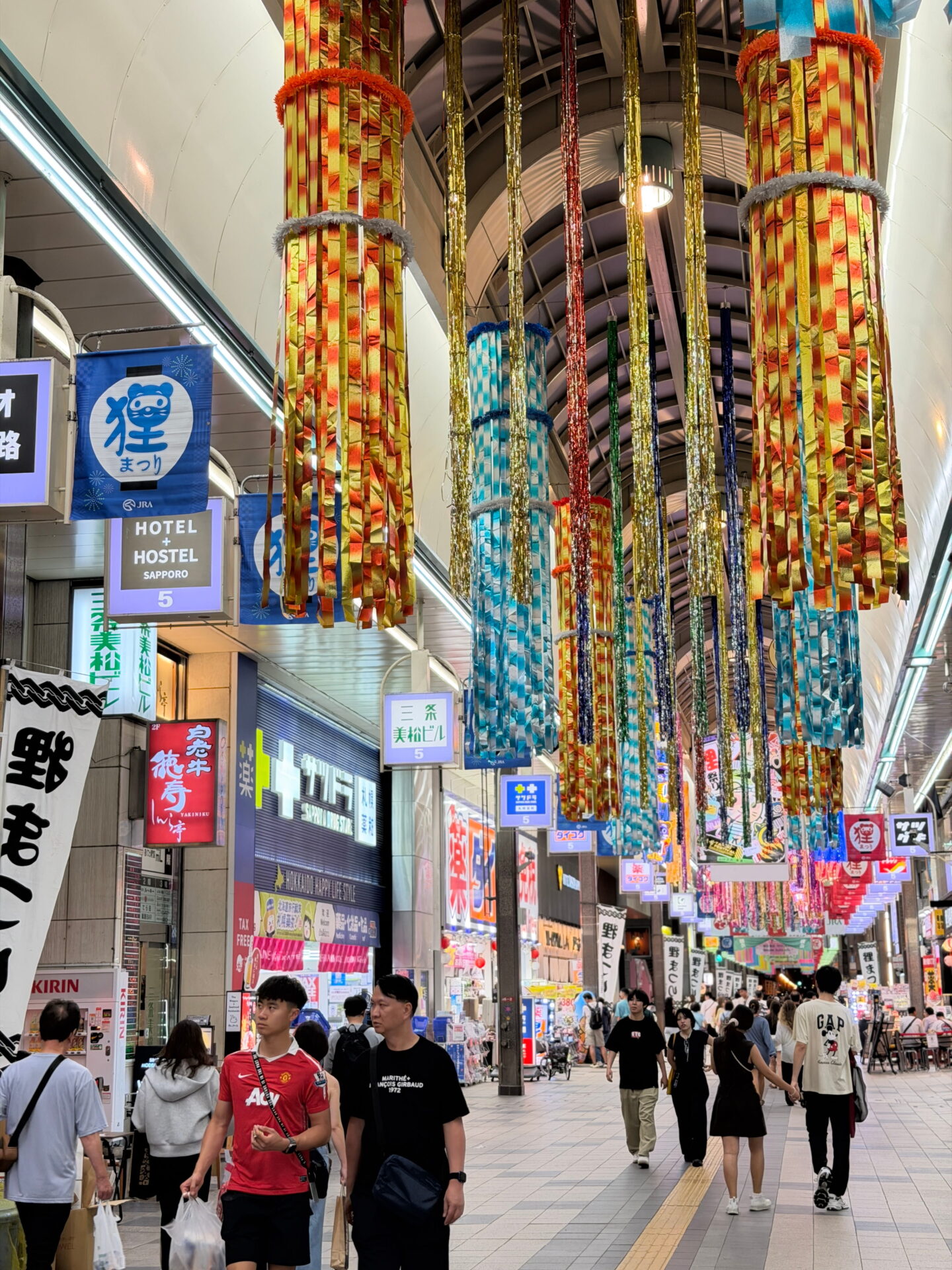
We visited more than once, partly because it was close to our hotel and partly because we enjoyed wandering around without much purpose.
The covered arcade also makes a handy escape from the rain, although we didn’t need to worry about that during our July visit.
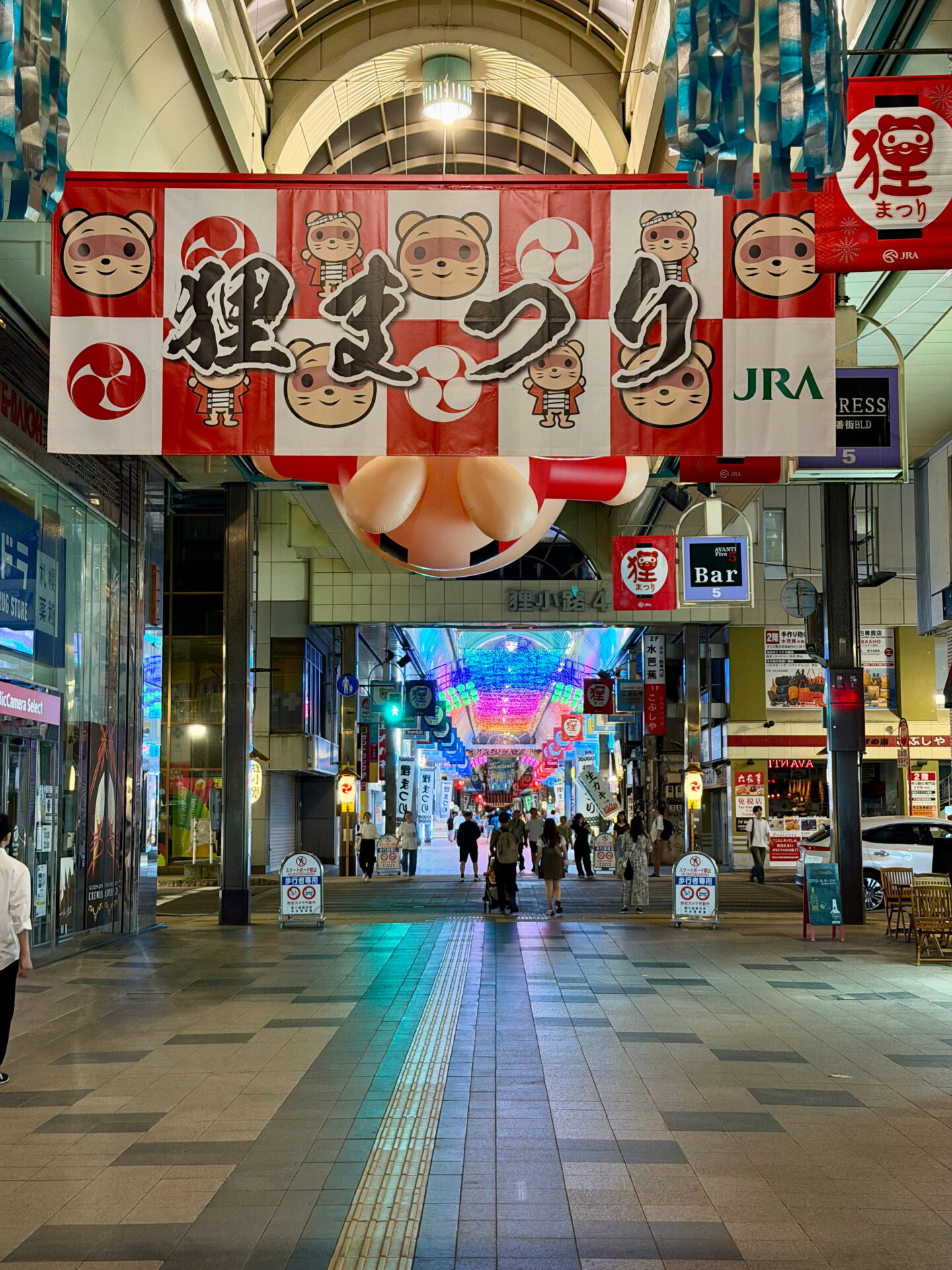
You could spend an hour here or considerably longer, depending on how much shopping you enjoy.
We stumbled across a great little izakaya called Viva Mexico, just around the corner from Tanukikoji Shopping Arcade. It was lovely sitting among the locals gathered around the bar, chatting away and having their drinks topped up, while we tucked into burritos. Not quite the Japanese meal we’d expected, but I loved getting a glimpse of the local atmosphere.
Evening: Susukino
As it gets dark, walk to Susukino.
This is Sapporo’s main nightlife and entertainment area, so it’s a good place to finish your first day.
The streets become much brighter after sunset, with illuminated signs, restaurants and bars.
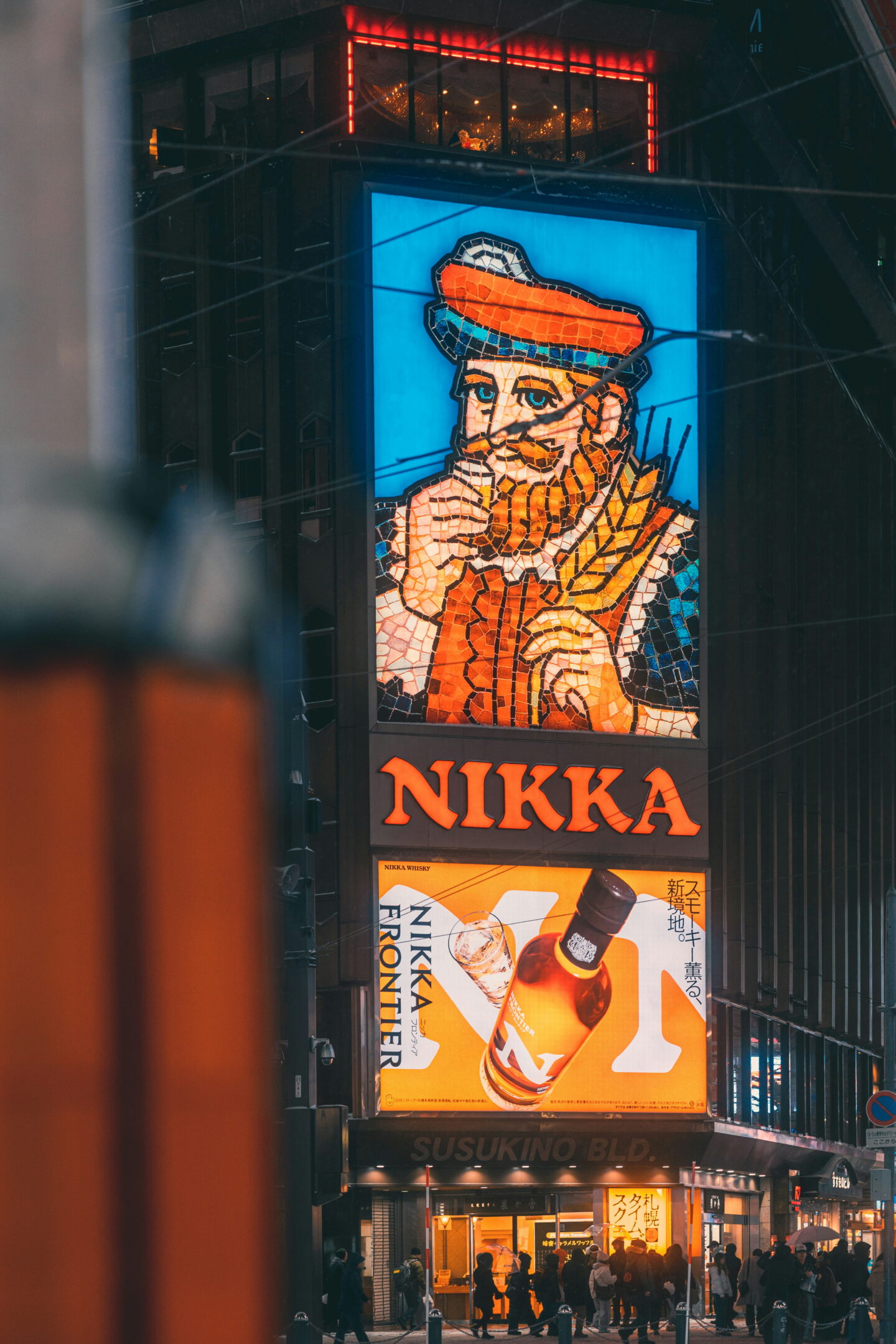
Look out for the famous Nikka whisky sign, which is one of the area’s most recognisable sights.
I’d have dinner somewhere around Susukino before walking back towards your hotel.
The advantage of staying centrally is that you can enjoy the evening without having to make a complicated journey back afterwards.
A very underrated holiday luxury.
Day 2: Sapporo Beer Museum, Sapporo Factory and local food
Day 2 is about exploring a different part of the city and trying some of the food Sapporo is known for.
I’d group the Beer Museum and Sapporo Factory together because they’re close enough to make sense on the same outing.
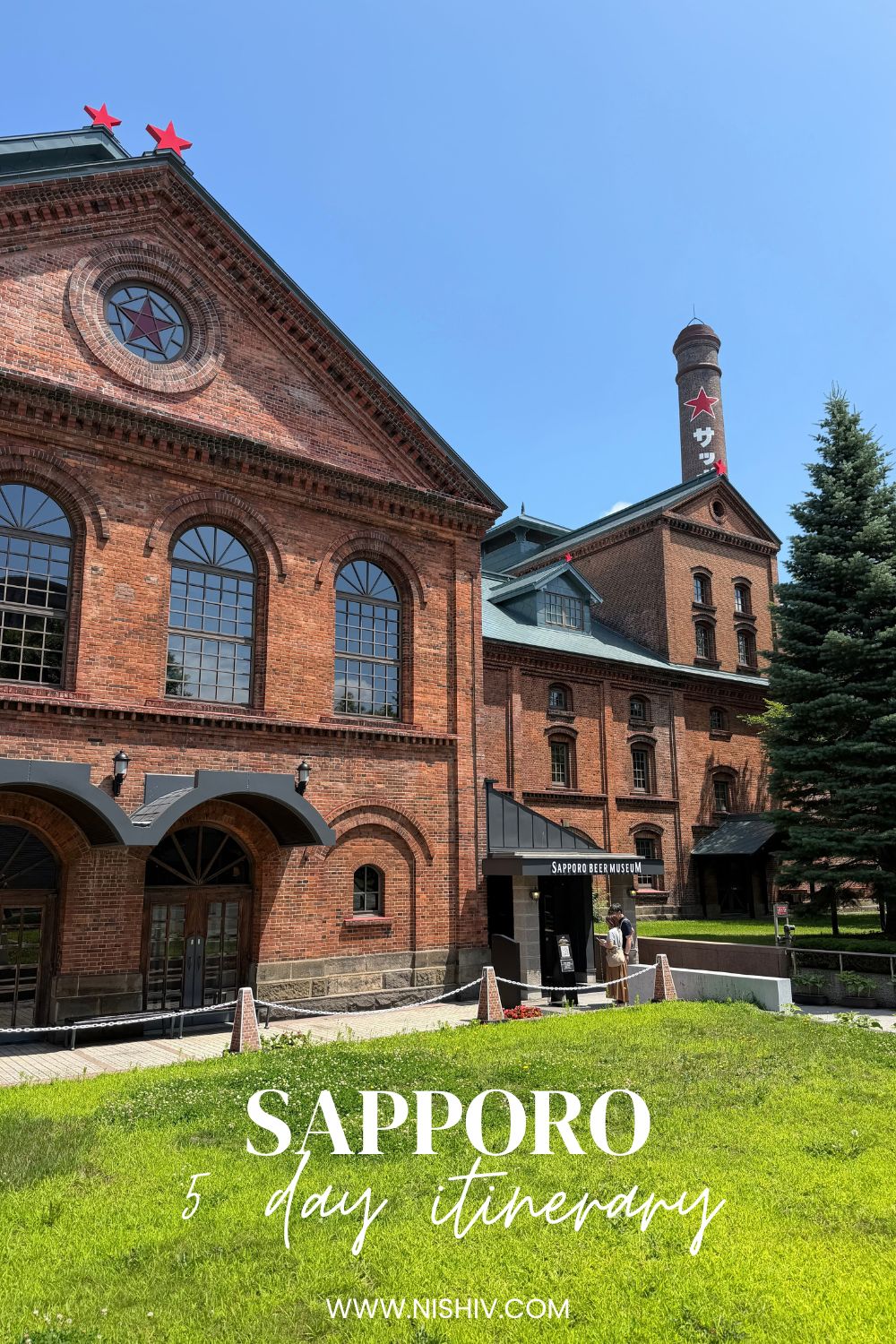
Morning: Sapporo Beer Museum
Start at the Sapporo Beer Museum.
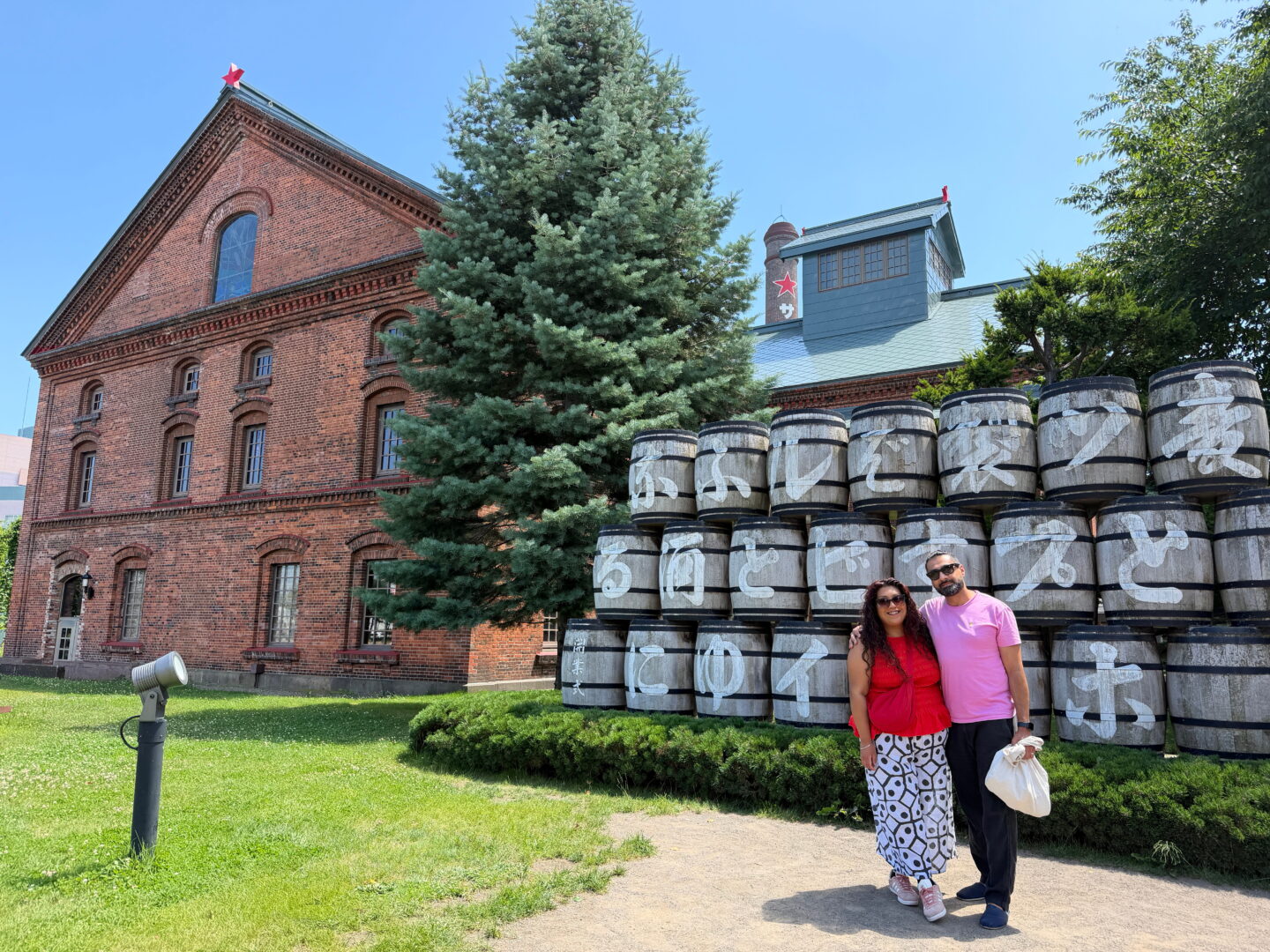
Sapporo is one of Japan’s most recognisable beer brands, and the museum explains how the brewing industry developed in Hokkaido.
You can learn about the company’s history and sample beer during your visit.
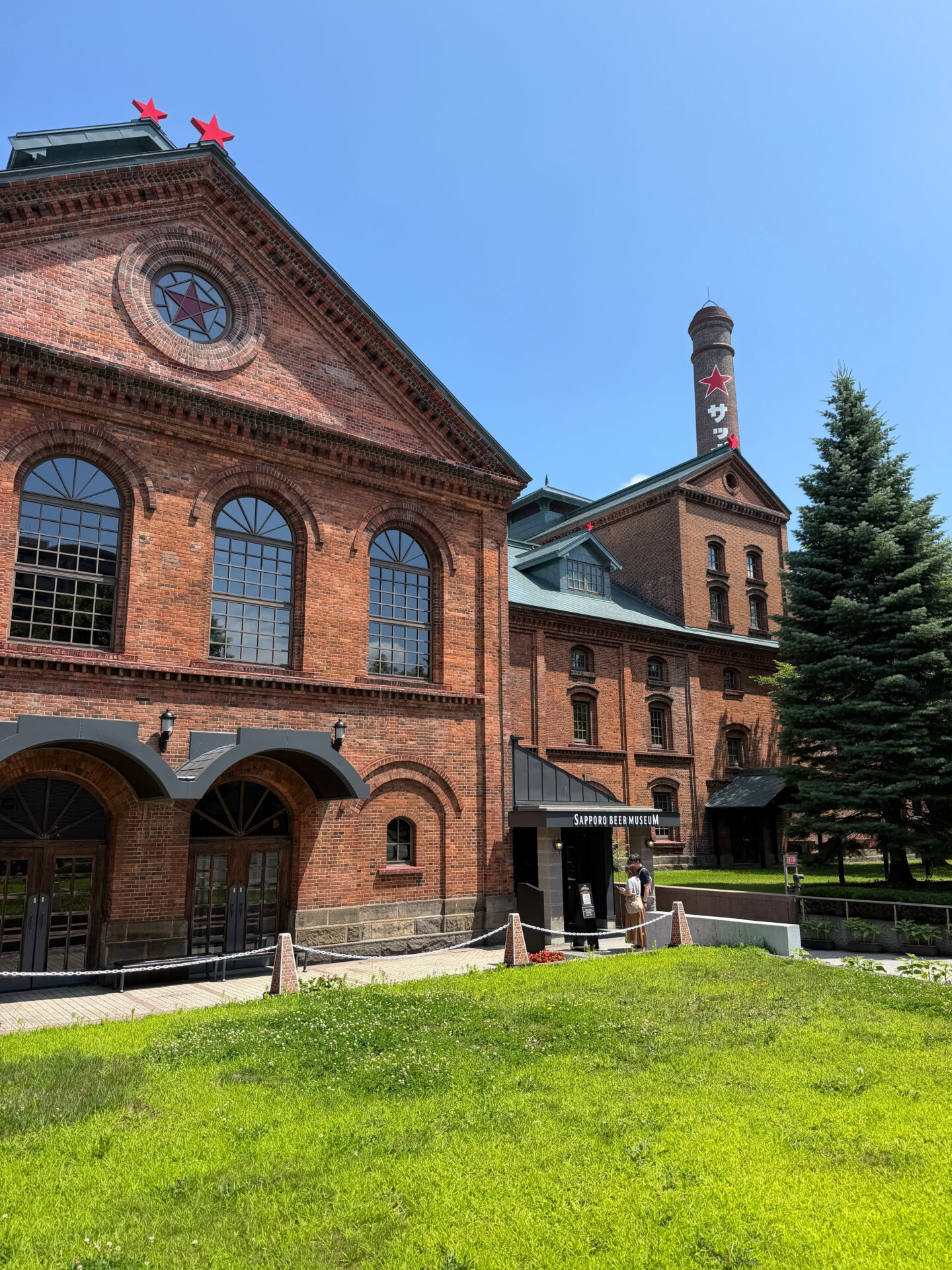
The museum is worth seeing, but don’t expect it to occupy your entire morning.
We’d previously visited the Guinness Storehouse in Dublin, which is a much larger experience, so I was slightly surprised by how quickly we got through this one. It doesn’t really compare.
Still, it was interesting to see a different side of Hokkaido’s history.
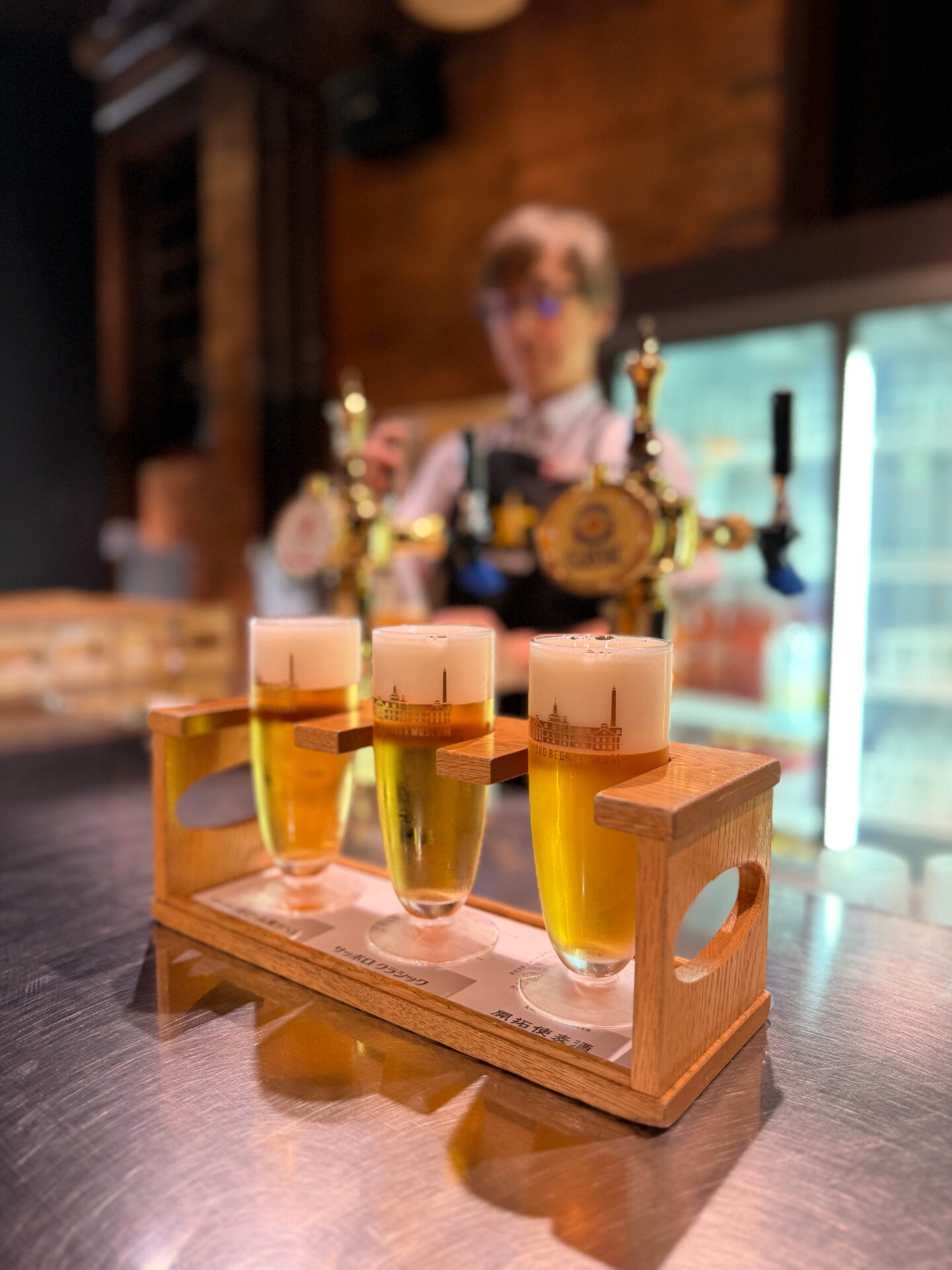
And if you enjoy beer, the tasting opportunity will probably make it more appealing.
I should probably admit that I prefer Asahi.
Not particularly helpful to Sapporo Beer’s marketing department, I realise.
Afternoon: Sapporo Factory and lunch at Fugetsu
From the Beer Museum, continue to Sapporo Factory.
The two are close enough to combine on the same day, and I’d walk between them if the weather is decent. It’s roughly a 15–20-minute walk, depending on your route, and an easy way to visit both without needing public transport.
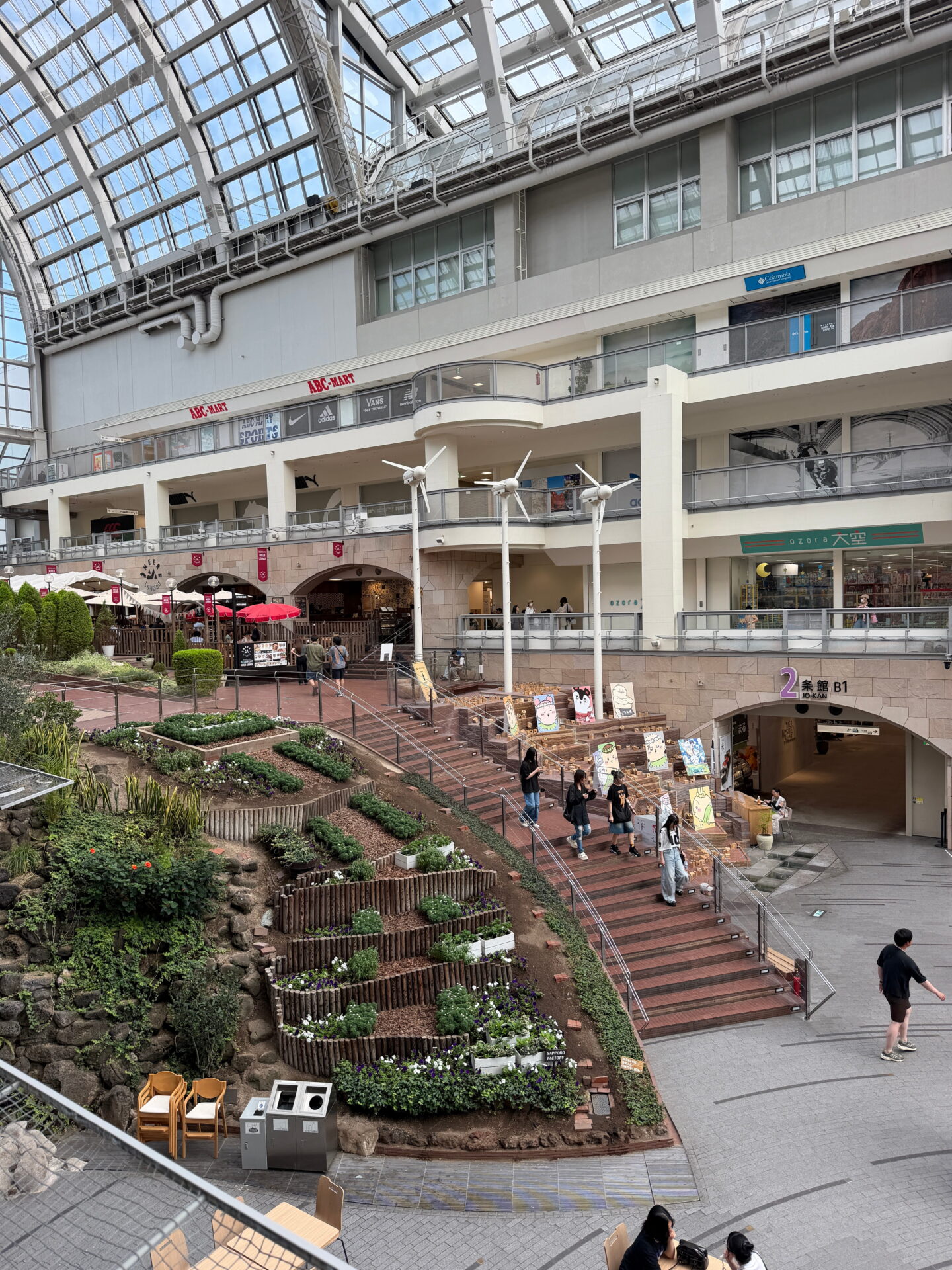
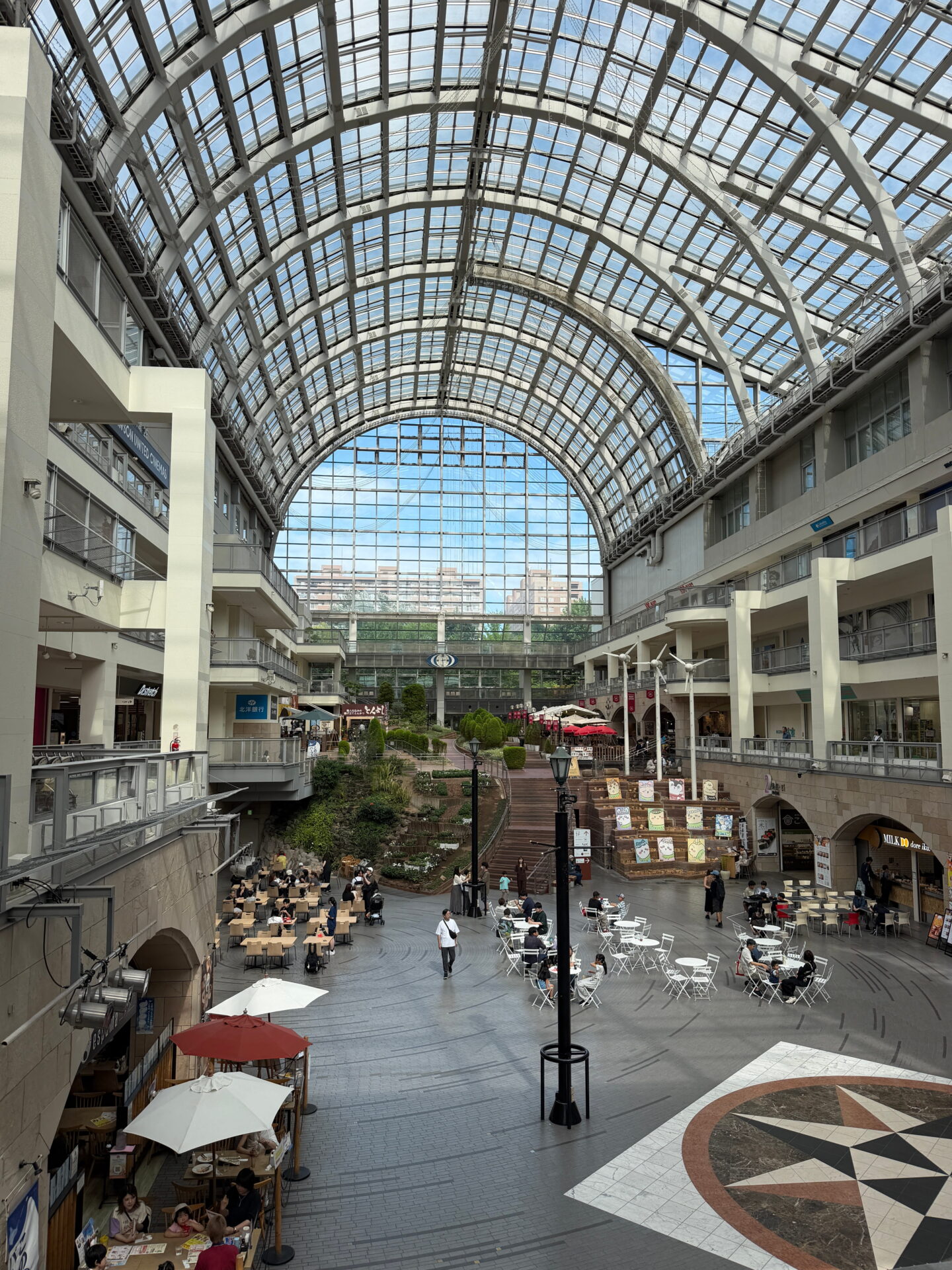
This is a shopping and entertainment complex with connections to Sapporo’s brewing history.
I’d seen it recommended before our trip, but the shopping centre itself didn’t particularly excite me.
It’s very much geared towards locals, with dental practices, opticians, various medical clinics, a cinema, a few shops and eateries.
The lunch we found there, however, was another matter.
We ate at Fugetsu, where you can prepare okonomiyaki at your table using a built-in hotplate.
Okonomiyaki is a savoury pancake made with cabbage and other ingredients, and cooking it yourself makes lunch considerably more entertaining.
I had to work out when to turn it over without making an enormous mess, but thankfully, the finished result was delicious.
I’d recommend this experience if you enjoy trying Japanese food, particularly because it gives you something to do rather than simply sitting down and ordering.
After lunch, you can browse the shops or return to central Sapporo.
I wouldn’t dedicate the entire afternoon to Sapporo Factory unless there’s something specific you want to visit.
Evening: Try Sapporo soup curry
For dinner, I’d suggest trying one of Sapporo’s signature dishes: soup curry.
It’s different from the thicker Japanese curries you might have eaten elsewhere, with a more liquid, spiced broth and a variety of vegetables or other ingredients.
We visited Curry Shop S on our final evening in Sapporo.
As a vegetarian, I was pleased to find a mushroom option, and I added cheese to mine.
Because apparently that’s a thing. So who was I to argue?
I enjoyed trying something associated with Sapporo, although it wasn’t my favourite Japanese meal.
I’d still recommend giving soup curry a go at least once.
You might like it considerably more than I did.
Maybe skip the cheese. I wasn’t a fan.
Day 3: Take a day trip from Sapporo to Otaru
I know this is supposed to be a Sapporo itinerary and I’m now telling you to leave the city.
But I’d absolutely include a day trip to Otaru.
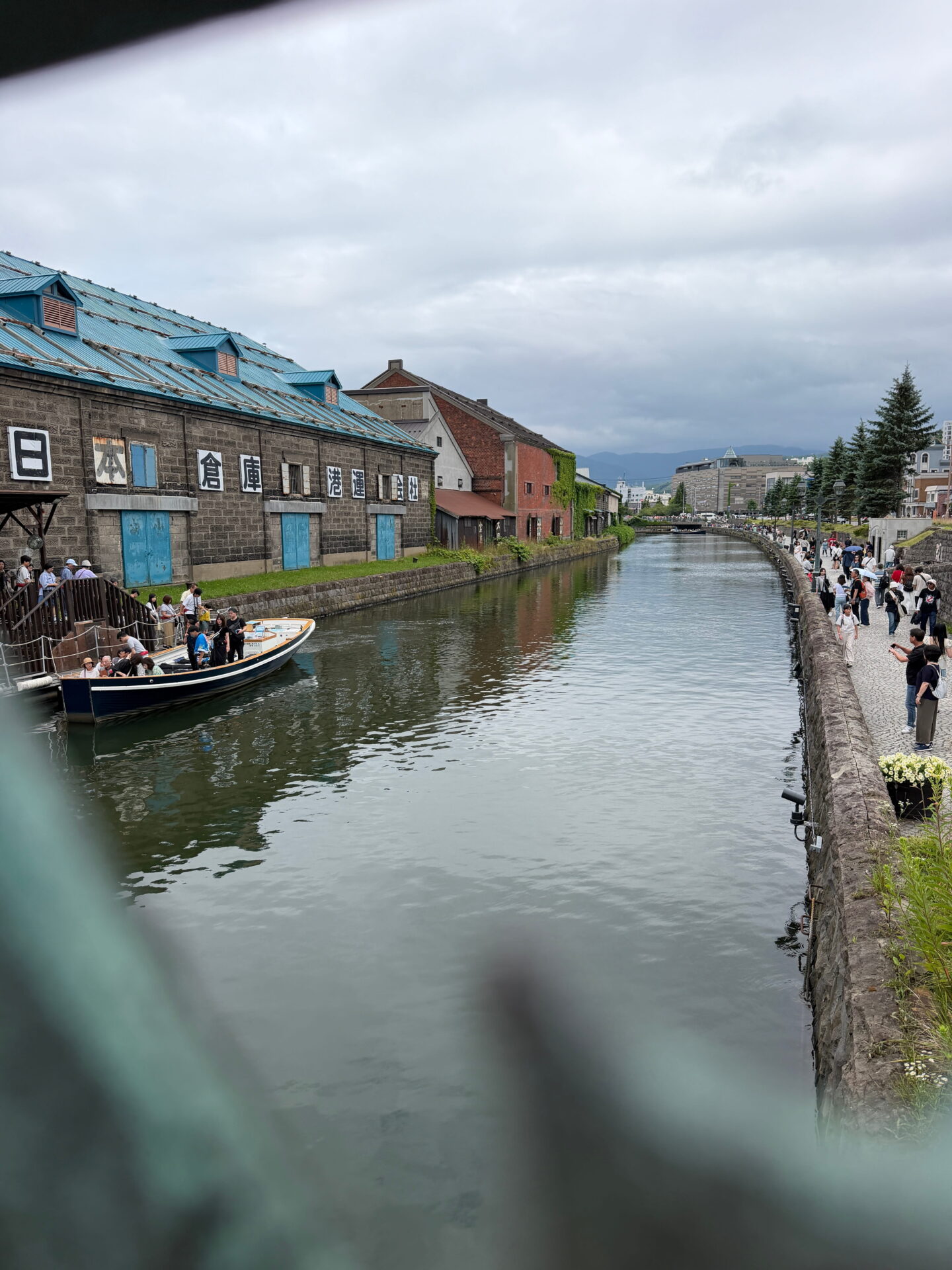
It’s around 40 minutes from Sapporo by train, making it an easy day trip without needing to change accommodation.
We spent a day here during our Hokkaido visit, and I was glad we’d made the effort.
Otaru feels quite different from Sapporo, with older buildings, a historic canal and streets filled with small shops.
It’s particularly enjoyable if you like browsing rather than racing between attractions.
Morning: Take the train to Otaru and visit the canal
I’d aim to leave Sapporo in the morning so you have plenty of time in Otaru.
The train journey is straightforward on the JR Hakodate Main Line, and once you arrive at Otaru Station, you can explore much of the town on foot.
The canal is roughly a 10-minute walk from the station, and from there you can continue towards Sakaimachi Street, where you’ll find the glass shops, Music Box Museum and LeTAO.
We found it easy to spend the day wandering between these places without needing public transport.
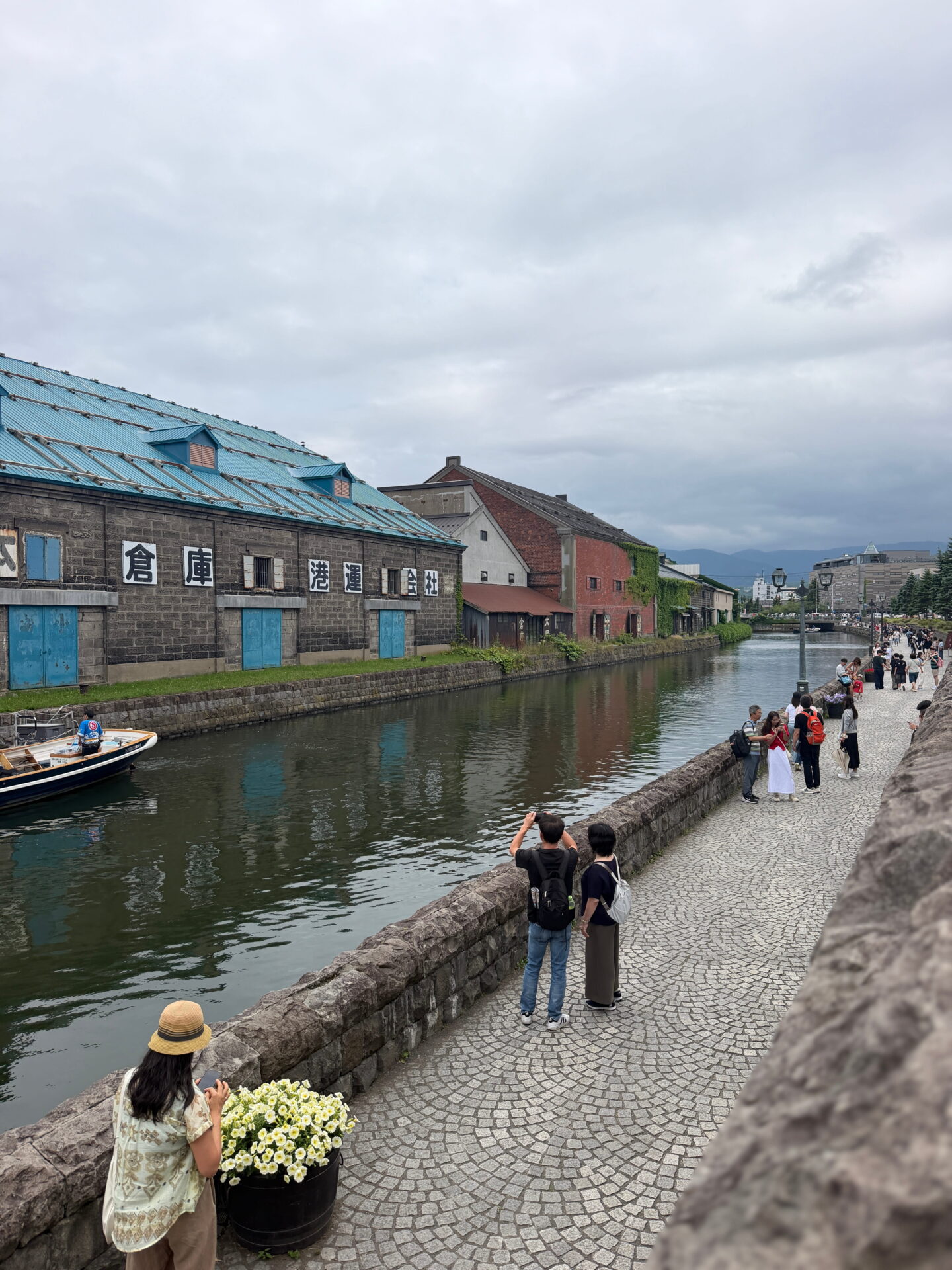
Otaru Canal is one of the city’s most famous sights.
Old warehouses line the water, reflecting the city’s history as a port and trading centre.
It’s worth stopping for a look and walking along the canal, but I wouldn’t spend too long here before moving on.
We stumbled across Otaru Soko No.1 Brewery, a microbrewery that has a small museum exhibition upstairs, so naturally, we stopped for a drink. Sitting in what felt like a traditional German beer hall, watching people order British pub classics such as fish and chips, was slightly surreal. Especially considering we were in Japan!
For us, much of Otaru’s appeal was in the surrounding streets of the canal.
Afternoon: Sakaimachi Street, glass shops and music boxes
Sakaimachi Street is where I’d spend most of your afternoon.
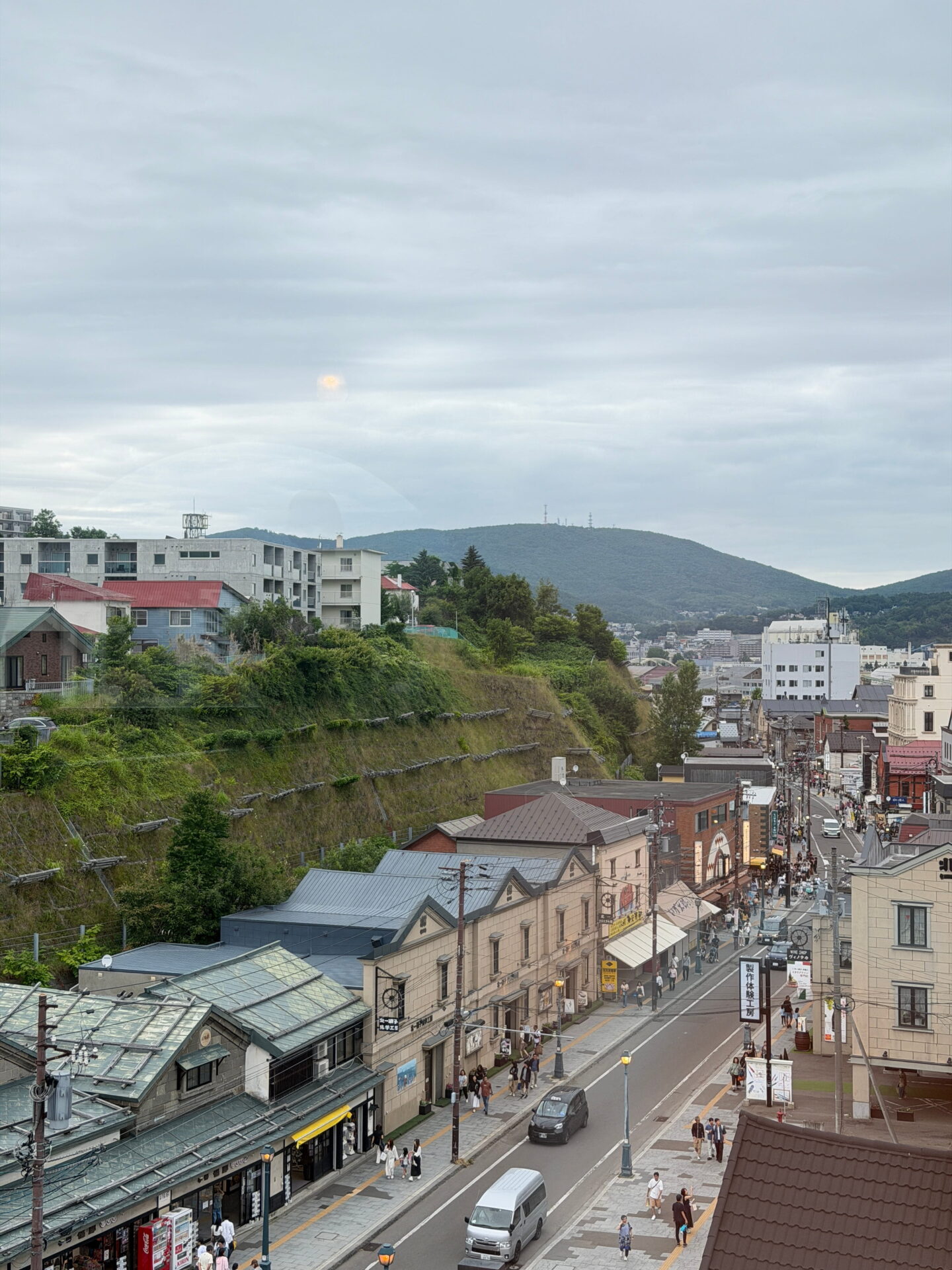
The area has a mixture of souvenir shops, cafés, historic-looking buildings and places selling locally made products.
Otaru is particularly associated with glassmaking, so I’d recommend visiting Kitaichi Glass.
We enjoyed browsing the glassware, although buying anything delicate comes with the obvious problem of having to get it home in one piece.
I had the most delicious red bean dorayaki at SNOOPY Village here. Totally unexpected.

You’ll also find the Otaru Music Box Museum nearby.
It’s an interesting stop even if you’re not planning to buy a music box, and it’s another example of how different Otaru feels from central Sapporo.
Afternoon treat: Cheesecake at LeTAO
At some point, make time for LeTAO.
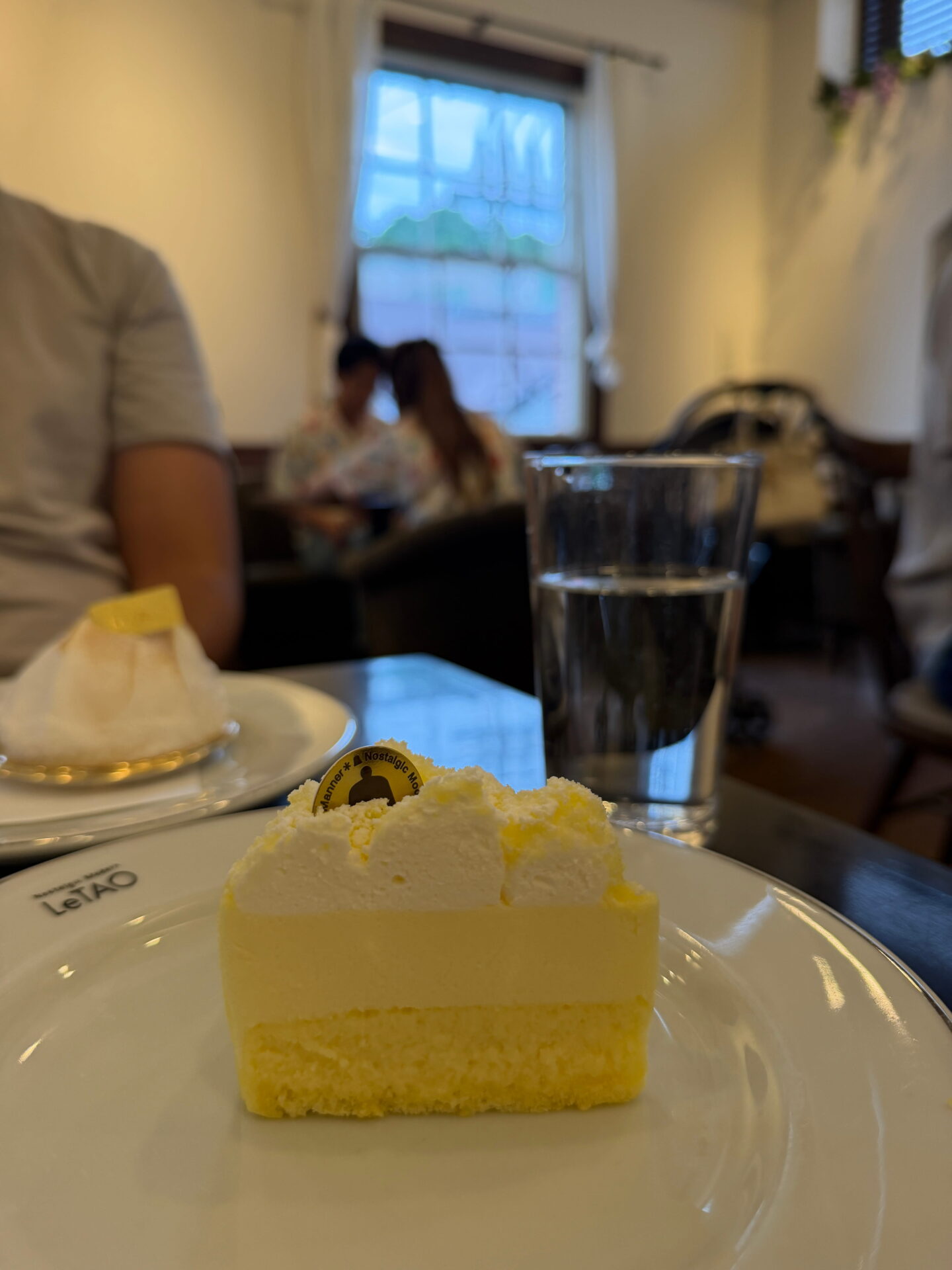
Otaru is home to the brand’s flagship store, and we stopped for cheesecake during our visit.
It was excellent.
Rich, creamy and absolutely worth interrupting the sightseeing for.
There’s also an observation area upstairs, so you can get a different view of the surrounding streets.
I would genuinely prioritise this stop if you have a sweet tooth.
Not every important travel experience has to involve a temple.
Late afternoon: Tenguyama or more time in Otaru
If you still have time and the weather is clear, you could consider heading to Tenguyama for views over Otaru and the coastline.
I’d treat this as an optional addition rather than an essential part of the day.
If you’ve been enjoying the shops and cafés, there’s no reason to cut that short simply to fit in another viewpoint.
We found plenty to occupy us around the centre.
Evening: Return to Sapporo
Take the train back to Sapporo when you’re ready.
I’d keep the evening relatively quiet, particularly if you’ve spent most of the day walking.
You could have dinner around Sapporo Station or return to Susukino if you’re feeling energetic.
Personally, I’d be quite happy heading back to the hotel.
You have another two days to go.
Day 4: Hokkaido Shrine, Maruyama Park and Mount Moiwa
For Day 4, I’d explore somewhere away from the busiest streets before heading to one of Sapporo’s best-known viewpoints.
This is also where the itinerary becomes more of a recommendation than a record of our trip.
We didn’t manage to visit Hokkaido Shrine or Maruyama Park, and we abandoned our plans for Mount Moiwa because we were tired.
If I had another day in Sapporo, though, this is how I’d use it.
Morning: Hokkaido Shrine and Maruyama Park
Start at Hokkaido Shrine, which sits beside Maruyama Park.
I’d visit them together rather than treating them as separate trips.
The shrine is surrounded by trees, and the park offers a chance to spend some time somewhere greener than the commercial centre.
It looks particularly appealing as a quieter morning after several days of sightseeing.
Afternoon: Lunch and a relaxed afternoon
I’d use the afternoon for lunch and anything you haven’t managed to fit into your first few days.
You could explore more of the Maruyama area or head back towards the city centre.
If you’re interested in seafood, Nijo Market is another option, although I’d visit earlier rather than relying on stalls still being open late in the day.
We skipped Nijo Market because I’m vegetarian.
A market full of seafood is probably more exciting when you actually want to eat seafood.

Alternatively, you could visit JR Tower Observatory T38 near Sapporo Station if you particularly enjoy city views.
Personally, I wouldn’t try to do both JR Tower and Mount Moiwa unless observation decks are one of your favourite things.
Evening: Mount Moiwa at sunset
I’d save Mount Moiwa for the evening.
The mountain overlooks Sapporo, and the ropeway takes visitors towards an observation area with wide views over the city.
If the weather is clear, I’d aim to get there before sunset.
I’d allow plenty of time to reach the ropeway station and make your way up the mountain, rather than arriving just as the sun is setting. You’ll need to factor in the journey from central Sapporo, and there may be queues for the ropeway, particularly around sunset. I’d check the sunset time and ropeway operating hours before setting off.
That way you can enjoy the view while it’s still light and stay to watch Sapporo illuminate below you.
At least, that’s what we intended to do.
In reality, we’d reached the point where another excursion sounded like quite a lot of effort.
We’d been on a Hakone day trip from Tokyo a couple of days earlier, so the idea of another ropeway didn’t seem as appealing.
So we went shopping instead.
I don’t think every abandoned plan is a travel disaster, but Mount Moiwa is somewhere I’d make more of an effort to see next time.
I’d also keep an eye on the weather before committing to this evening. There’s little point travelling up a mountain for panoramic views if you can’t actually see anything.
Day 5: The Sapporo Summer Festival or a trip to Jozankei Onsen
I’d keep your final day flexible.
There are several ways you could spend Day 5, but I’d choose one main activity rather than attempting to do everything.
Option 1: Spend the day enjoying the Sapporo Summer Festival
If your visit coincides with the Sapporo Summer Festival, this would be my first choice.
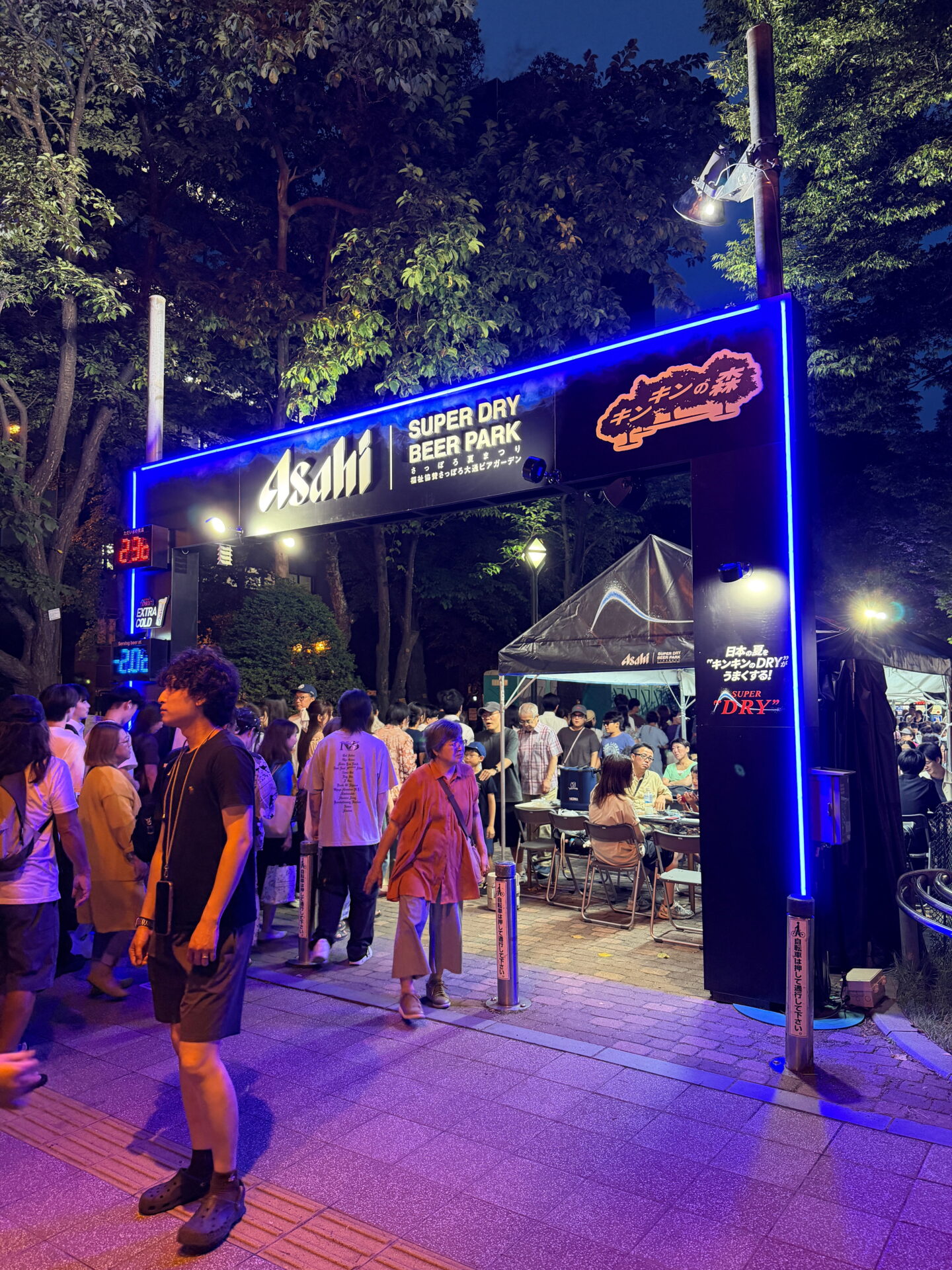
We arrived on the festival’s opening day without even knowing it was taking place.
Not my finest research moment.
But it worked out rather well.
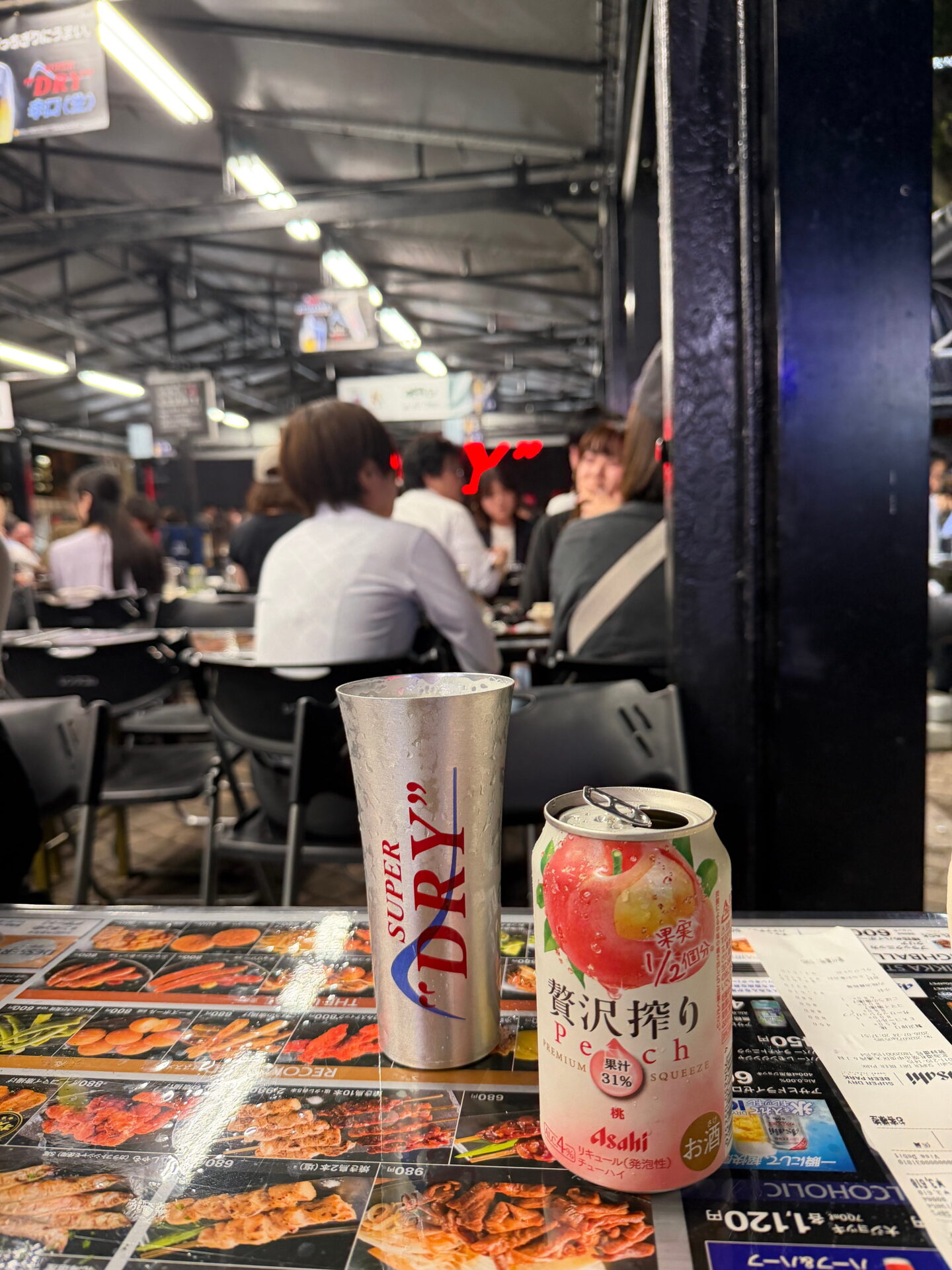
During the festival, parts of Odori Park become enormous outdoor beer gardens, with communal seating, food stalls and a wonderfully sociable atmosphere.
We ended up spending much longer there than we’d anticipated.
What I particularly enjoyed was how easy it was to get chatting to people.
We didn’t speak Japanese, and the people we met didn’t speak much English, but that didn’t seem to stop anyone.
There was a lot of smiling, gesturing and attempting to communicate.
Somehow, it worked.
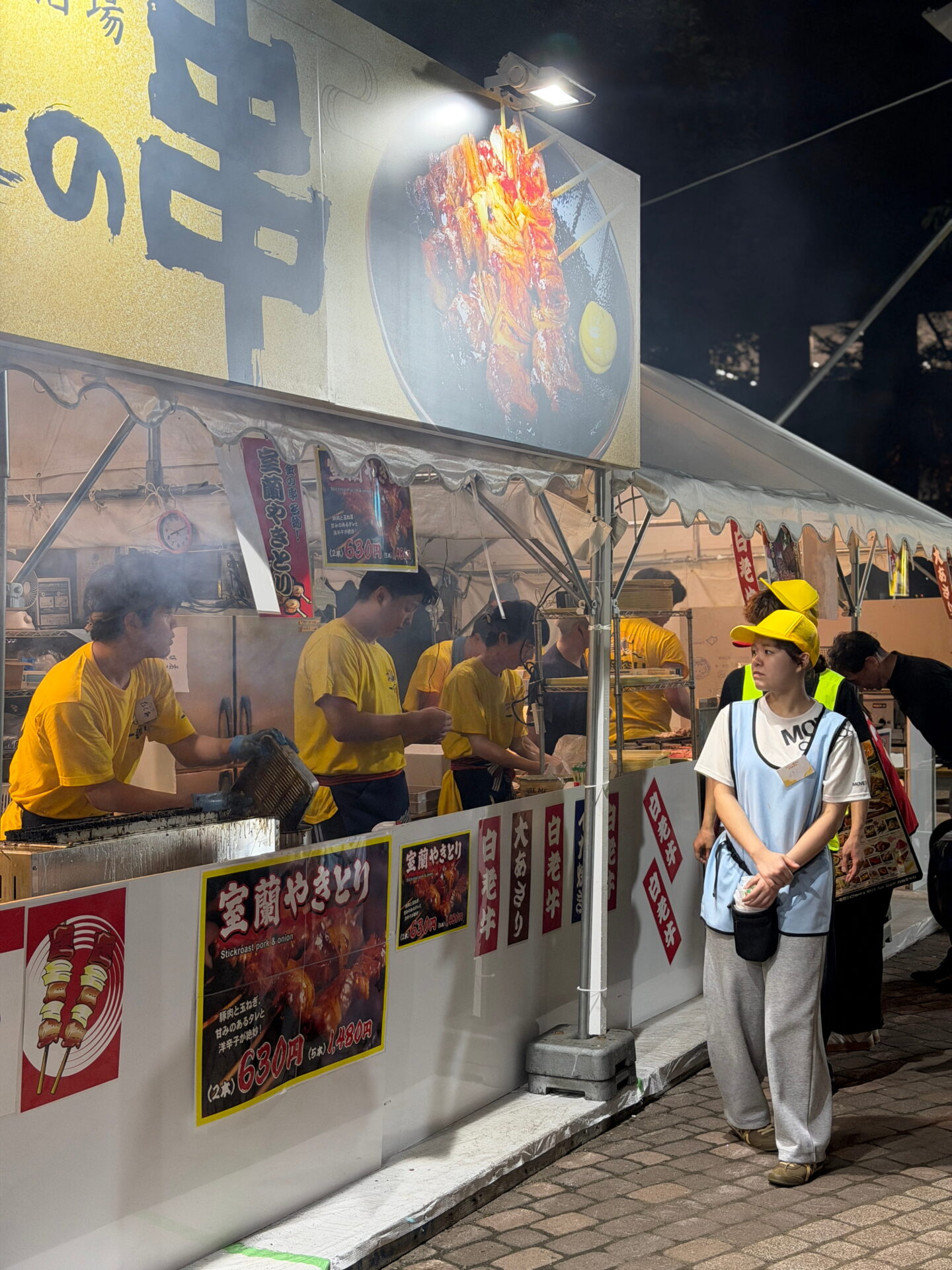
The food was another pleasant surprise.
As a vegetarian, I didn’t have the same selection as people eating meat and seafood, but I found grilled corn, potatoes and other things I could eat.
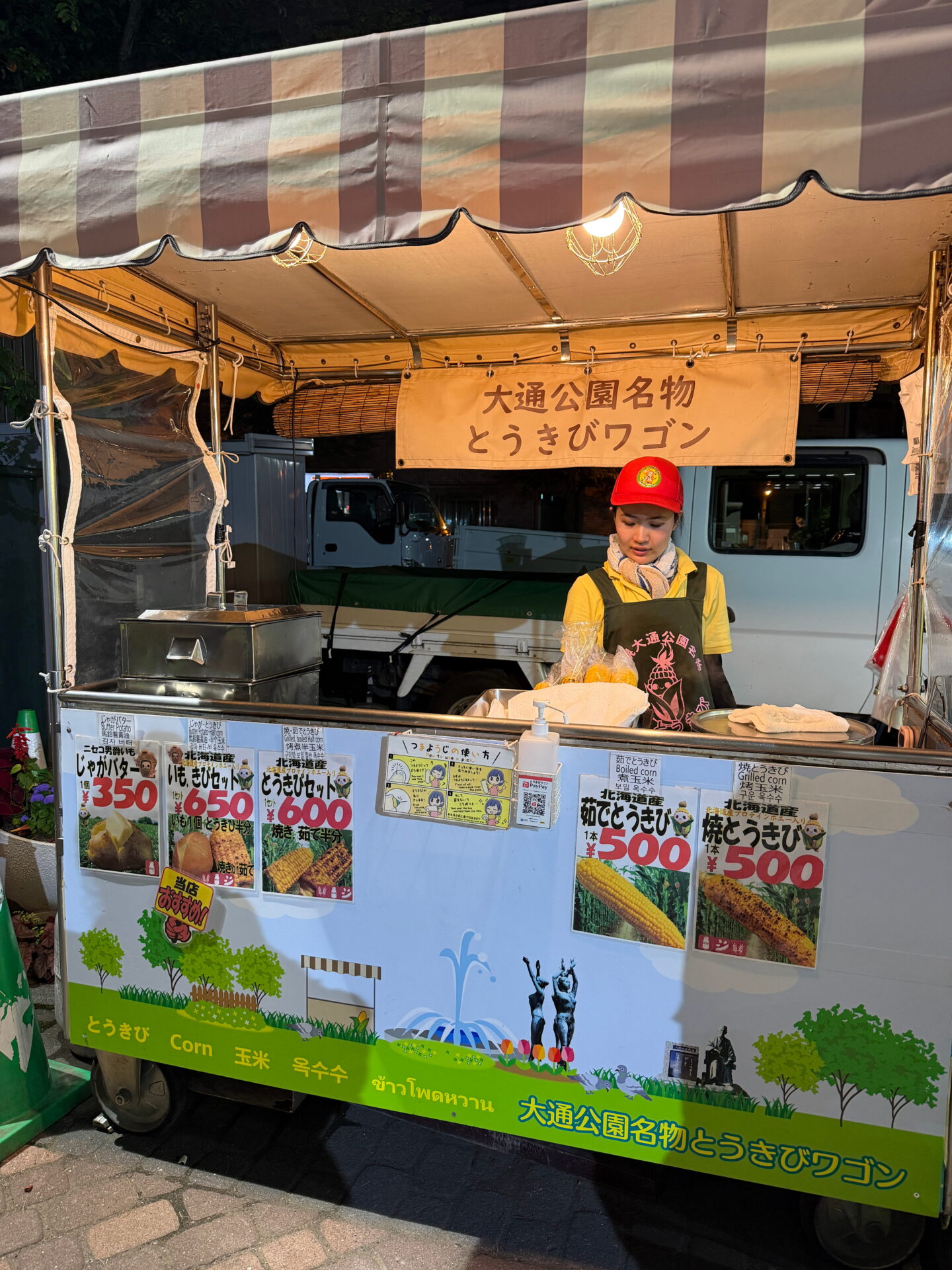
The ordering system was also impressively efficient, with staff wearing different coloured caps to distinguish between taking orders and delivering food.
It’s a small detail, but it made navigating a busy event much easier.
I’d check the festival dates before travelling because this experience is seasonal.
If it’s happening during your visit, I’d be very tempted to organise the rest of your itinerary around it.
Option 2: Take a trip to Jozankei Onsen
If the Summer Festival isn’t happening, or you’d rather get out of the city, consider Jozankei Onsen.
Jozankei is a hot spring town in the mountains outside Sapporo, known for its natural surroundings and onsen facilities.
We didn’t visit, but it’s one of the places I’d consider for a longer Hokkaido trip.
Unlike the attractions around central Sapporo, Jozankei requires a little more planning. You can get there by bus from Sapporo, but I’d check the current timetable and return journey before setting off, particularly if you’re hoping to visit for just half a day.
I’d also check which onsen facilities welcome day visitors, as you don’t necessarily need to stay overnight to enjoy one.
I’d allow at least half a day, and potentially most of the day if you’re planning to spend time enjoying an onsen.
If you’d rather not work out the buses yourself, a guided day tour to Jozankei could be a more convenient option.
Unlike Otaru, this is less about visiting lots of individual attractions and more about enjoying a different environment.
It’s also an alternative to travelling all the way to Noboribetsu.
We considered Noboribetsu during our trip, but eventually decided another lengthy excursion wasn’t what we wanted.
Instead, we stayed in Sapporo and enjoyed the festival.
For us, that was a much better use of the day.
Option 3: Stay in Sapporo and explore somewhere different
If neither the festival nor an onsen appeals, you could use Day 5 for something else.
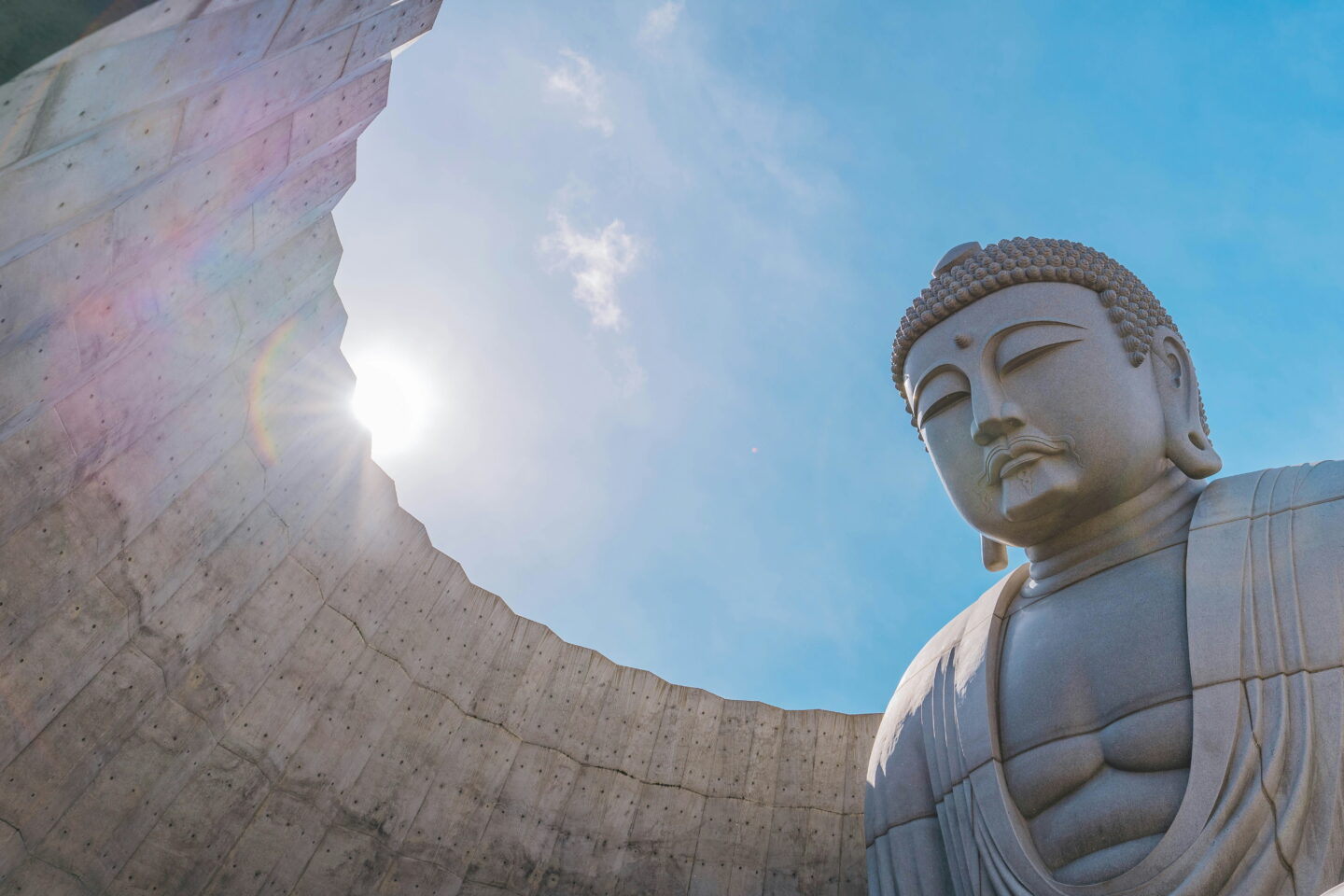
The Hill of the Buddha is one place I wish I’d researched before our trip. The statue is incorporated into an unusual landscaped setting, and the surrounding lavender makes it particularly interesting during summer.
Shiroi Koibito Park is another possibility, especially if you’re travelling with children or enjoy sweet treats.
Or you could visit the Historical Village of Hokkaido if you’re particularly interested in the region’s past.
We didn’t visit any of these, so I’d choose based on your own interests rather than trying to squeeze them all into one day.
And if you’ve already seen everything you wanted to see?
Go for a coffee. Browse some shops. Find somewhere interesting for lunch.
We discovered a tiny Eritrean café, Manahaim Cafe, during our stay and ended up chatting to a coffee shop owner about our various travels.
Neither experience had been on my itinerary.
Both were lovely.
Is 5 days in Sapporo enough?
Yes, and I think it’s a particularly good amount of time if you want to include at least one day trip.
You could see the main attractions around central Sapporo in considerably less time.
But five days in Sapporo allows you to explore at a more comfortable pace and experience somewhere beyond the city.
Otaru would be my first choice.
I’d then decide whether to spend another day exploring Sapporo or travel to Jozankei, depending on how much you enjoy hot springs and outdoor scenery.
If you only have three days, I’d concentrate on central Sapporo and Otaru.
If you have five, you can be more selective about what you do without feeling like you’re missing out.
And that’s a much nicer way to travel.
How to get around Sapporo
Getting around Sapporo was considerably easier than I’d expected.
We stayed in the city centre, so we could walk to many of the attractions we wanted to visit.
That included Odori Park, Tanukikoji, the Clock Tower and Susukino.
For places further away, Sapporo has a subway network, local trains and other public transport.

Sapporo also has an extensive network of underground walkways and shopping areas, which are particularly handy during winter when it’s freezing cold or snowing outside. You’ll find shops, cafés, restaurants and other businesses underground, so it’s not just a way to get from A to B. Look out for the entrances from street level, which can resemble subway entrances, and you can explore parts of central Sapporo without having to brave the weather.
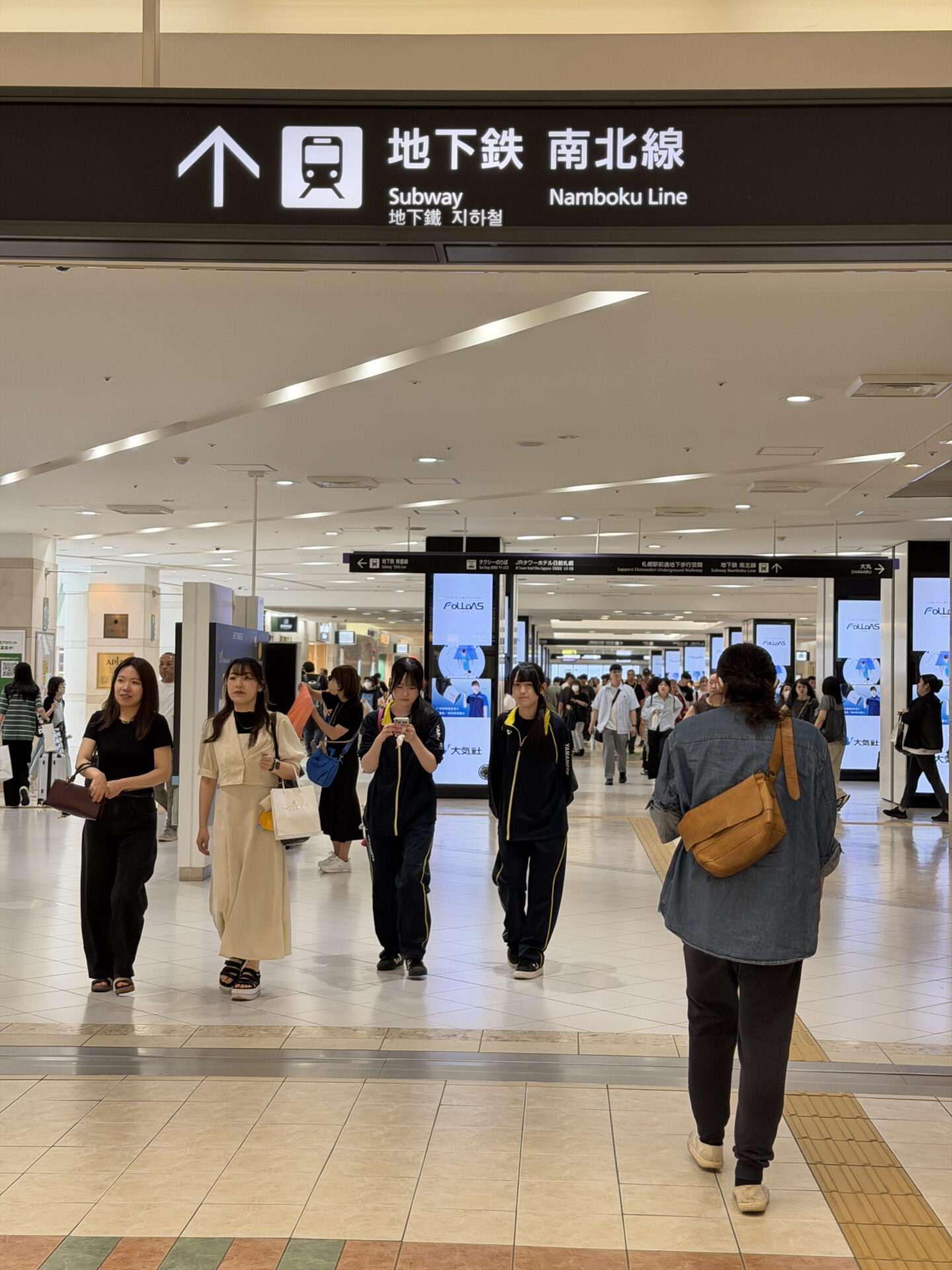
I’d use Google Maps to work out the best route rather than assuming everything is within walking distance.
For our day trip to Otaru, we took the train from Sapporo Station, which was less than a 10-minute walk away from our hotel.
The journey took around 40 minutes and was straightforward enough that we didn’t need to make elaborate transport plans.
If you’re heading to somewhere like Jozankei or Mount Moiwa, I’d check the transport options and journey times before setting off.
Those trips require a little more organisation than wandering around the centre.
My biggest recommendation is to stay somewhere with convenient access to Sapporo Station and Odori.
It makes the whole itinerary easier.
Where to stay in Sapporo
We stayed at the Sapporo Grand Hotel for four nights.
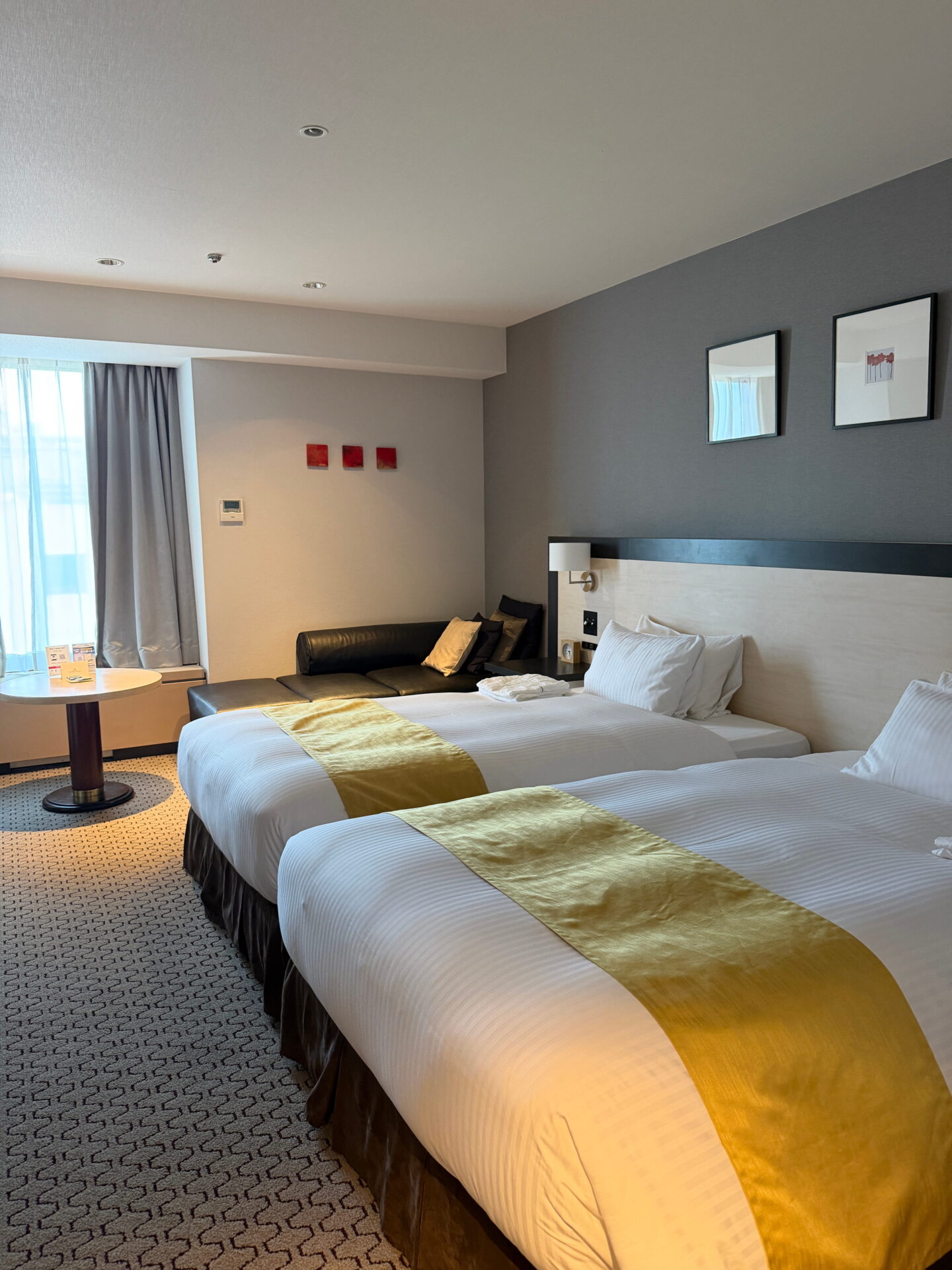
For us, it was an excellent base.
The location meant we could walk to many of the attractions in this itinerary, and being close to Sapporo Station made our Otaru day trip straightforward.
The rooms were also much larger than we’d expected in Japan.
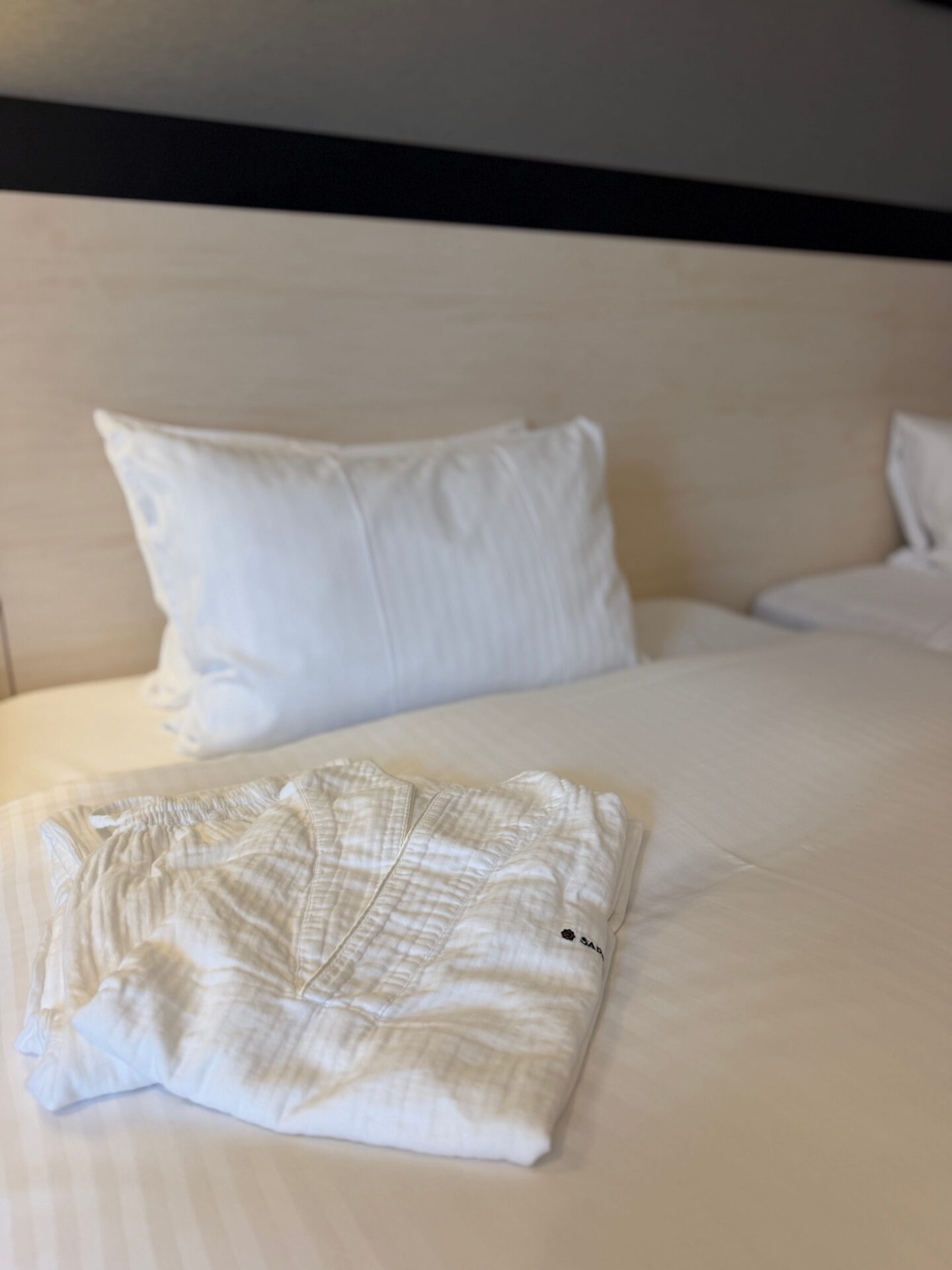
As we’d booked our trip pretty last minute and without realising it had coincided with the start of the summer festival, rooms were selling out very fast and many hotels had no availability.
We were happy to settle on a twin room in this fabulous hotel, instead of the double or king we’d usually book.
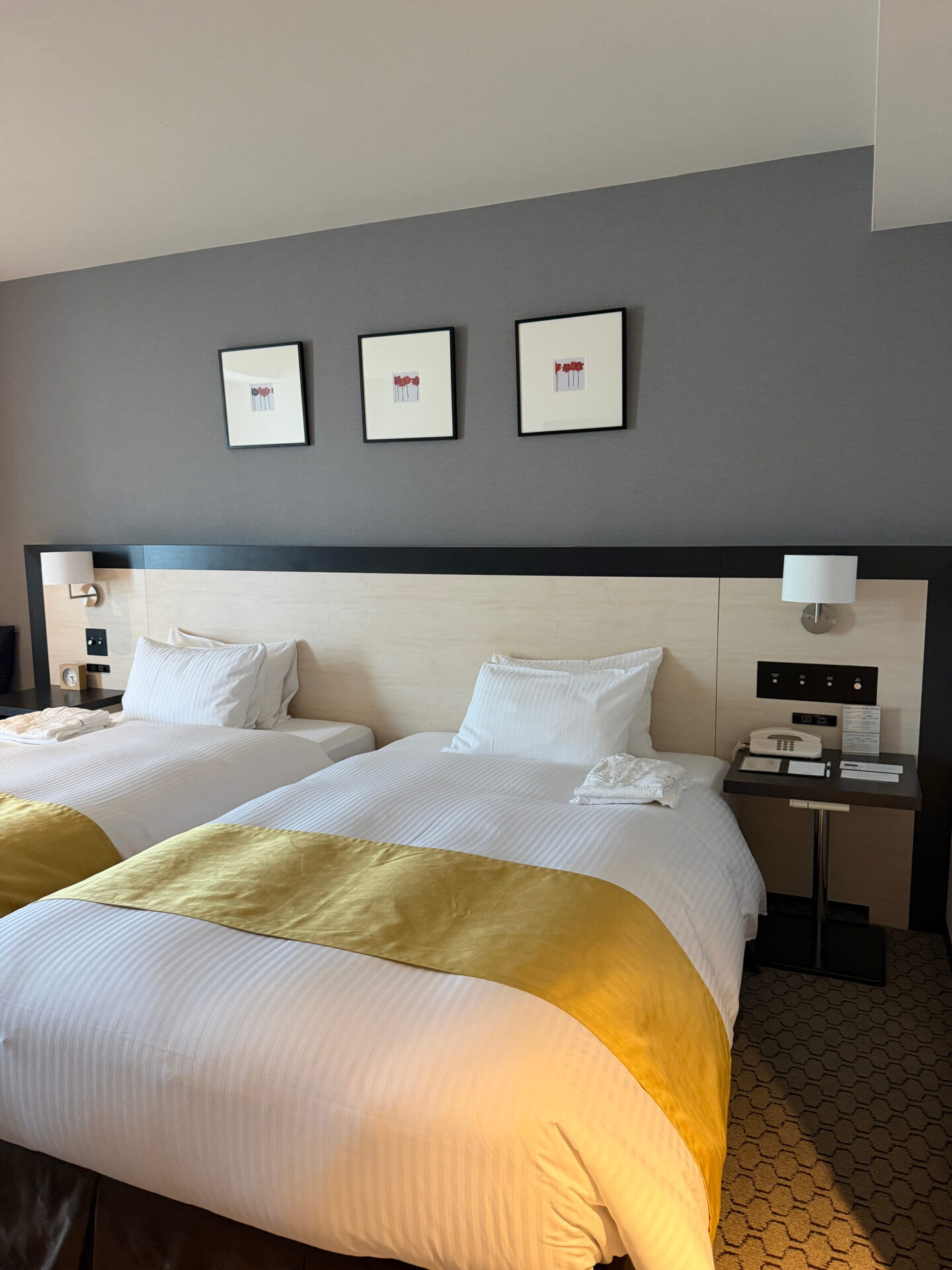
It’s nice to be able to unpack without having to negotiate an obstacle course of suitcases every time you want to cross the room.
We didn’t have breakfast included as part of our stay, but there is a Starbucks in the lobby, along with a dessert shop, which made sourcing my morning caffeine fix a breeze.
If I were visiting Sapporo again, I’d definitely stay here.
Check prices and availability at Sapporo Grand Hotel.
What to know about visiting Sapporo in summer
We visited Sapporo in July, and the weather was one of the reasons we enjoyed it so much.
We’d come from Tokyo, where the intense heat had made sightseeing exhausting.
Sapporo felt much more comfortable.
I could walk around without constantly thinking about where the nearest air-conditioned building was.
I could even wear make-up without immediately regretting the decision.
It’s worth remembering, though, that Sapporo is also a major winter destination.
The surrounding region is well known for skiing and snowboarding, so a winter trip would be a completely different experience.
For a Sapporo summer itinerary, I’d prioritise outdoor activities, parks and seasonal events.
Check whether the Summer Festival overlaps with your dates, and don’t assume the weather will be identical to ours.
We were fortunate to experience pleasant temperatures, but you should still be prepared for warm days and changing conditions.
I’d also keep one part of your itinerary flexible.
That’s what allowed us to enjoy the festival rather than spending the day travelling to an attraction we’d only included because it seemed like something we ought to do.
Is Sapporo worth visiting for five days?
I think so, especially if you’re visiting Japan for the first time and want to experience somewhere beyond the usual Tokyo, Kyoto and Osaka route.
Sapporo has enough to keep you entertained without feeling overwhelming.
And it’s a practical base for exploring Hokkaido.
I particularly enjoyed having the freedom to change our plans.
That’s probably the biggest difference between how I’d plan Sapporo and how I’d plan Tokyo.
In Tokyo, grouping attractions geographically was essential because the city is enormous.
In Sapporo, I’d still organise each day sensibly, but I’d be much less concerned about filling every available hour.
If I were planning another trip to Hokkaido, I’d happily spend five days in Sapporo.
I’d return to Otaru, make another attempt to visit Mount Moiwa and finally explore Hokkaido Shrine and Maruyama Park.
I’d probably also make time for a few more restaurants.
There are only so many meals you can fit into four nights, unfortunately.
But the thing I’d most want to recreate is how relaxed the trip felt.
Sapporo wasn’t the destination I’d spent months obsessively planning.
Tokyo had taken most of that attention.
Yet Sapporo ended up being one of the places I enjoyed most.
So use this itinerary to organise your days, but don’t be afraid to change your plans when something interesting comes along.
We did.
And some of our best memories came from doing exactly that.
If you’re planning a wider Japan trip, read my 10 days in Japan in July itinerary to see how we combined Tokyo, Sapporo and Otaru on our first visit.
If you found this Sapporo itinerary helpful, PIN IT!

Read more about planning a trip to Japan:
- 10 Days in Japan in July for First-Time Visitors
- 5 Days in Tokyo: A First-Timer’s Tokyo Itinerary
- Where to Stay in Tokyo for the Best First Time Experience
- Park Hotel Tokyo Review: Is This Art Hotel Worth Staying At?
- 40 Things to Do in Tokyo on Your First Trip
- My Asakusa Sumo Experience: Is It Worth Booking?
- Street Kart Tokyo Bay: Is It Worth Doing?
- Hakone Day Trip From Tokyo: Route, Tips & Mistakes to Avoid
- Renting a Grandma in Tokyo: What Happened When We Tried It
- Things to Do in Sapporo: 22 Places to Visit on Your First Trip
- 5 Days in Sapporo: A First-Timer’s Sapporo Itinerary
Need help planning your trip from start to finish?
Check out these helpful links:
- 👉🏼 Find cheap flights
- 👉🏼 Savings on accommodation from boutique hotels to affordable resorts
- 👉🏼 The most comprehensive resource to help plan excursions on your next trip
- 👉🏼 This pass gives you free lounge access to over 1500 airport lounges
- 👉🏼 Affordable car rental options
- 👉🏼 Book land and water transport for travelling around South East Asia
- 👉🏼 Use an eSIM to prepare your phone for international travel before leaving
- 👉🏼 Pay anywhere in the world, in any currency, using your debit card without fees
- 👉🏼 Travel insurance with essential medical & travel coverage at low premiums
