
5 Days in Tokyo: A First-Timer’s Tokyo Itinerary

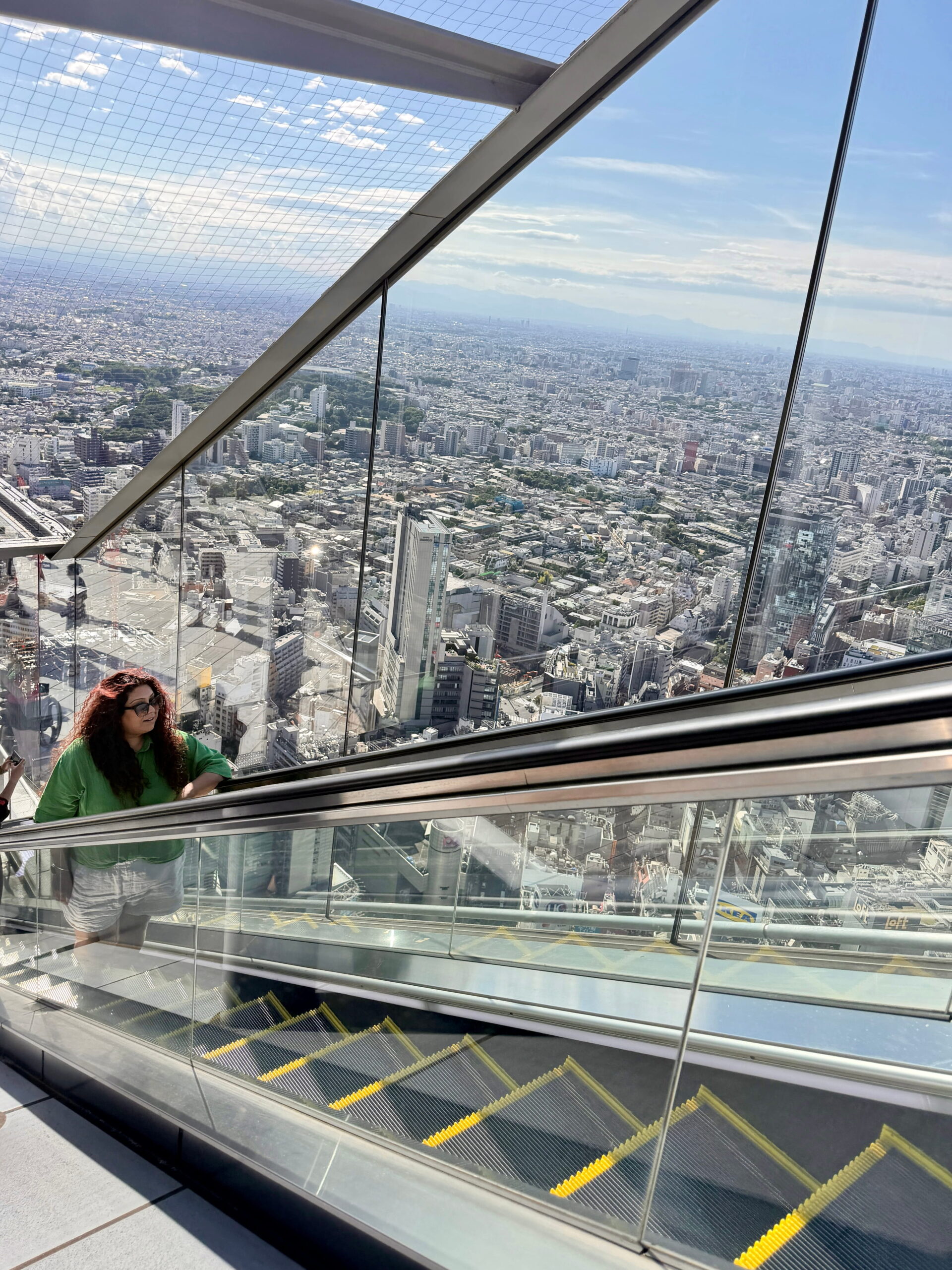
Tokyo is enormous.
This probably isn’t news to you, but I don’t think I fully appreciated just how enormous it was until I started planning my trip and realised that half the things I’d saved were nowhere near one another.
You can absolutely spend 5 days in Tokyo seeing plenty of the places on your list, but you will also spend a fairly alarming percentage of those five days underground changing trains and getting lost in the metro stations.
I hadn’t accounted for this when planning my own trip. After visiting Tokyo myself, the biggest thing I’d recommend to first-timers is grouping each day geographically.
Tokyo’s public transport is brilliant and easy to use once you get your head around it, but that doesn’t mean you should spend your entire holiday on it.
So that’s exactly what I’ve done with this five-day Tokyo itinerary.
You’ll spend one day exploring eastern Tokyo, another around Harajuku and Shinjuku, a day around Ginza and Tokyo Bay and a full day in Shibuya. I’ve also included a day trip to Hakone because, after several days surrounded by skyscrapers, crowds and flashing signs, escaping into the mountains is glorious.
I’ve also squeezed in some of my favourite experiences from my own trip, including sumo wrestling, street karting, teamLab Planets and renting a Japanese grandma to teach me how to make mochi.
The mochi did not go well.
But more on that later.
This post may contain affiliate links which means that I may earn a small commission, at no extra cost to you, for qualifying purchases. For more information, read our disclaimer.
5 Days in Tokyo itinerary at a glance
Here’s how I’d spend 5 days in Tokyo on a first visit:
Day 1: Asakusa, Ueno, Akihabara and Asakusa Sumo Club
Day 2: Meiji Jingu, Harajuku and Shinjuku
Day 3: Ginza, street karting, teamLab Planets and Toyosu
Day 4: Day trip from Tokyo to Hakone
Day 5: Rent a Japanese grandma, Shibuya Crossing and Shibuya Sky
I’ve deliberately organised this Tokyo itinerary so you’re mostly exploring one part of the city each day.
Day 1 stays in eastern Tokyo. Day 2 concentrates on the western side. Day 3 gradually moves from Ginza towards Tokyo Bay. Day 4 gets you out of Tokyo completely and Day 5 is almost entirely Shibuya.
There will obviously still be trains involved. This is Tokyo, not a small Tuscan village.
But you shouldn’t be unnecessarily crossing the city multiple times a day.
If something here isn’t for you, I’ve also put together 40 things to do in Tokyo so you can easily swap in something that suits you better.
Day 1: Asakusa, Ueno, Akihabara and Sumo Wrestling
Start your 5 days in Tokyo on the eastern side of the city.
Asakusa gives you a completely different introduction to Tokyo from the giant screens, skyscrapers and neon streets you might be picturing. You’ll get plenty of that later.
Morning: Explore Asakusa and Senso-ji Temple
Start at Senso-ji, one of Tokyo’s most famous temples.

Walk through Kaminarimon Gate and it will immediately be busy.
You can arrive earlier to avoid some of the crowds, but I wouldn’t get too obsessed with finding a peaceful Senso-ji experience that probably doesn’t exist unless you’re willing to get up at a deeply unreasonable hour.
Once you’re inside, have a go at drawing an omikuji, or paper fortune.
In exchange for a ¥100 coin, you can shake a metal container until a numbered stick appears, find the corresponding drawer and pull out a slip of paper with your fortune.


Apparently, Senso-ji is known for handing out a surprisingly high number of bad fortunes, but I got lucky.
Jass, on the other hand, wasn’t as fortunate. He drew a bad fortune twice before finally getting a good one just as he was about to give up. Third time lucky!
If you draw a bad fortune, you should tie the paper slip to one of the metal racks provided near the fortune stalls. The idea is that tying it there leaves the bad luck behind, with the fortunes later burned.
Once you leave the temple, spend some time exploring the surrounding streets rather than immediately moving on.

Nakamise Shopping Street leads towards the temple and is packed with little shops and food stalls. We essentially bought one of everything vegetarian we could find and shared it, which resulted in considerably more sweet food than I’d anticipated.
My totally random recommendation is the pickled cucumber.
I know. You’ve flown all the way to Japan and I’m telling you to eat a cucumber.
But the pickled cucumbers sold around Asakusa were unbelievably refreshing in Tokyo’s July heat and Japanese cucumbers are ridiculously crisp. Just try one and tell me you disagree.
Before leaving the area, go up to the observation deck inside the Asakusa Culture Tourist Information Center.
It’s on the eighth floor, it’s free and it gives you an elevated view towards Kaminarimon and Senso-ji. It can get very busy and a lot of the view is obstructed, but it’s decent for a free view.

If you’re visiting Tokyo in July, the building has air conditioning.
I cannot overstate how attractive air conditioning becomes when it’s 39°C outside!
Afternoon: Ueno and Akihabara
From Asakusa, continue towards Ueno.
You could spend a decent amount of time around Ueno Park, particularly if you want to visit the museums in the area.
We skipped it because it was brutally hot during our visit and the prospect of walking around a park with very little shade wasn’t remotely appealing. If you’re visiting during spring or autumn, I’d absolutely consider stopping here.
Otherwise, continue towards Akihabara.

Akihabara is unapologetically loud, bright and slightly ridiculous. It felt like a huge contrast to everywhere else we’d visited in Japan.
Even if you’re not particularly interested in anime, manga or gaming, I still think it’s worth seeing on your first visit.


I found the pachinko casinos fascinating, with rows of men transfixed by the games and many livestreaming to TikTok on multiple devices at the same time.
You can spend a couple of hours looking around the electronics shops, arcades and multi-storey stores before heading back towards Asakusa.
Evening: Asakusa Sumo Club
Finish where you started with an evening at Asakusa Sumo Club.

I’d definitely recommend booking the Asakusa sumo experience for the same day you’re already exploring Asakusa.
This isn’t a professional sumo tournament. It’s a highly entertaining experience created for visitors, combining an introduction to sumo traditions with demonstrations, comedy and actual wrestling.

There’s audience participation, a geisha performance and the opportunity to get into the ring yourself. Dinner is also included, which conveniently solves the question of where to eat afterwards – and it’s delicious.
I didn’t have particularly high expectations for dinner, but it was surprisingly good, with a traditional wrestler’s hotpot, chicken karaage, fries, inari, edamame and a cupcake.
If, like me, you don’t eat meat, you just have to let them know when you book and they will cater accordingly.
All of the food is bottomless too (minus the hotpot, if you don’t eat meat), which you can keep ordering via a QR code directly to your table.
Duration: 2 hours
Time: Various times throughout the day
Booking: Advance booking strongly recommended
Highlights: Learn the rules of sumo, eat a traditional wrestler’s hotpot dinner, watch live demonstrations, chance to get in the ring and try out the sport for yourself, meet a geisha
Rating: 4.7 stars (check 900+ reviews here)
Price: Check price here!
Service was great, the food was delicious and the atmosphere was brilliant.
I’m not going to lie, the comedy can get a little cringey in parts. But it is also very entertaining to watch.
I’d do it again.

Day 2: Meiji Jingu, Harajuku and Shinjuku
Day 2 is all about western Tokyo.
Start somewhere remarkably peaceful, gradually work your way towards increasingly chaotic Harajuku then finish surrounded by the neon of Shinjuku.
Morning: Meiji Jingu
Start at Meiji Jingu, the Shinto shrine surrounded by forest beside Harajuku.
One of the strangest things about Tokyo is how quickly it can change.
You can be surrounded by millions of people, giant advertising screens and trains one minute, then walking beneath enormous trees with very little indication that you’re still in one of the world’s biggest cities.
Give yourself time to walk through the grounds rather than treating the shrine as another thing to tick off your list.
You’ll have plenty of sensory overload later.
Afternoon: Harajuku
From Meiji Jingu, walk into Harajuku.
Naturally, you’ll probably end up on Takeshita Street.

It’s super crowded, colourful and packed with shops, cafés and sweet things that appear to have been designed primarily to contain as much sugar as physically possible.
I was pleasantly surprised to find multiple shops selling unique clothing that actually fitted Western women too. A handful of stores also stocked plus sizes, which was great.

Have a wander, but don’t limit yourself to Takeshita Street.
Explore some of the surrounding streets too before gradually making your way north towards Shinjuku.

We had a delicious lunch at Kyushu Jangara Ramen Harajuku, a plant-based restaurant with a great menu just a short walk from the station.
I wouldn’t over-plan this part of the day. Harajuku is much more fun to wander around than tackle with a strict attraction-by-attraction schedule.
You just have to accept the crowds. Harajuku is one of the busiest parts of Tokyo, alongside Shibuya.
Late Afternoon: Tokyo Metropolitan Government Building
Once you reach Shinjuku, head towards the Tokyo Metropolitan Government Building.
Tokyo has no shortage of observation decks, many of which you’ll pay a reasonable amount of money to visit.
This one is free.
I’d save the expensive viewpoint for Shibuya Sky later in the itinerary and use this as your first proper look across Tokyo from above.
Evening: Shinjuku
Stay in Shinjuku as it gets dark.
This is when the area really starts looking like the Tokyo you probably had in your head before arriving.

Find Godzilla Head looming above Kabukicho, see the enormous 3D cat billboard and wander through the streets around the entertainment district.
You can also walk through Omoide Yokocho, the narrow network of tiny restaurants and bars beside Shinjuku Station.


We found a vintage designer shop tucked away around here too. Unfortunately, vintage Chanel is still Chanel, so you’re not exactly walking out with a £20 bargain like social media may have you believe.
This is a much better place to finish Day 2 than somewhere on the other side of Tokyo. Once you’re done, get on the train (and try not to get lost in Shinjuku Station – but you probably will) and go back to your hotel.
Your feet will be grateful.
Day 3: Ginza, Street Karting and teamLab Planets
Day 3 gradually takes you from central Tokyo towards Tokyo Bay.
It’s also the day where things get slightly less traditional and more adventurous.
Morning: Explore Ginza
Start in Ginza.
It’s Tokyo’s luxury shopping district, so unless your holiday budget is substantially more impressive than mine, you’re probably doing more looking than buying.
That doesn’t mean it’s boring.

The flagship shops are enormous. Think 12 floors of Uniqlo alone. The architecture is interesting and it’s an easy area to wander around without needing a detailed plan.
I was on the hunt for the orange Onitsuka Tiger concept store I’d seen all over social media, or, more specifically, the retro trainers everyone seemed to be buying. We ended up buying three pairs between us.

More importantly, we each bought a UV- and heat-blocking umbrella from Uniqlo. They turned out to be two of the best purchases we made on the entire trip.
If you’re visiting Tokyo in the summer, buy one.
You won’t feel ridiculous walking around with an umbrella despite the complete absence of rain as you’ll notice it’s completely normal in Japan.
The temperature reached 39°C while we were there and that umbrella became one of the most useful things I bought in Japan.
Alternatively visit Tsukiji Outer Market
If you’re particularly interested in seafood, you could swap some of your Ginza time for Tsukiji Outer Market, which is nearby.
I visited and enjoyed the atmosphere, but as a vegetarian I found the food options extremely limited.
For a five-day trip, I wouldn’t prioritise it unless seafood is a major reason you’re visiting Tokyo. For plenty of people, it will be.
There is far too much to do in Tokyo to include something purely because every other itinerary tells you that you should.
Afternoon: Go Street Karting around Tokyo Bay
From Ginza, make your way towards Tokyo Bay for one of the most thrilling things I did in Japan.
You drive a tiny custom go-kart on actual Tokyo roads, optionally dressed in an equally ridiculous costume. Essentially, real-life Mario Kart.

You must book this activity in advance, and we booked our experience for 1pm.
We deliberately chose the Tokyo Bay route rather than Shibuya because I’d heard the Shibuya routes can involve a lot of sitting in traffic.

Our route took us across Rainbow Bridge, around Tokyo Tower and through the waterfront area around Odaiba.
It was brilliant.
If you’re considering doing this too, I’ve written a full review of our Street Kart Tokyo Bay experience, including what driving through actual Tokyo traffic was like.

The costume is optional, but we obviously dressed up.
This seemed like a questionable decision when the temperature hit 39°C and we were contemplating voluntarily putting on fleece onesies.
Oddly, they ended up helping.
They covered most of our skin while we were exposed to the sun and stopped us getting completely burnt during the drive.

We were absolutely soaked by the end of it.
Still worth it.
Duration: 2 hours (3 hours including safety briefing)
Time: Various times throughout the day
Booking: Advance booking strongly recommended
Highlights: Dressing up in costume, driving a go-kart on real public roads past many Tokyo landmarks and excellent views of Tokyo Bay.
Rating: 4.9 stars (check 5000+ reviews here)
Price: Check price here!
If you want to drive, make sure you sort out the correct International Driving Permit before travelling to Japan. This isn’t something you want to discover you’re missing when you arrive for the experience.
If you want to film your experience, you can bring a GoPro chest attachment or Meta glasses, as you can’t hold a phone or camera while driving.
There’s also the option to hire an Insta360 when you arrive. We had our own, but weren’t allowed to use our suction mount and couldn’t hire a mount separately. Hiring their camera and mount together was pretty pricey, considering we already had the camera, so we didn’t bother.
Evening: teamLab Planets
Once you’ve finished street karting, continue towards Toyosu for teamLab Planets.
We jumped in a taxi to save time, as the station was a pretty long walk from the Street Kart experience in the blazing sun.

This was one of my favourite attractions in Tokyo.
It’s technically an interactive art museum, but that description doesn’t really explain what happens inside.


You take your shoes off and physically move through enormous installations involving water, projections, mirrors, flowers and rooms that do slightly strange things to your perception of space.

At one point you’re wading through water with digital koi swimming around your legs. Somewhere else you’re surrounded by mirrored lights in the crystal universe. Then you’re underneath a rotating garden of flowers that made me feel slightly seasick.
It’s weird.
In a very good way.
Give yourself at least a couple of hours. We spent the entire evening here and still didn’t feel as though we’d exhausted it.
Duration: At least 2 hours
Time: Various timed-entry slots throughout the day
Booking: Advance booking strongly recommended, particularly for weekends
Highlights: Barefoot water exhibits, immersive digital art installations, interactive forests, gardens and enormous mirrored spaces
Rating: 4.7 stars (check 21,000+ reviews here)
Price: Varies depending on your chosen date and time. Check prices here!
You need to book a timed entry, so this is one of the activities I’d arrange before you arrive rather than hoping for the best on the day. We’d booked our tickets for 4.30pm, which gave us plenty of time to get there after street karting.
Dinner: Vegan Ramen UZU
I had failed to make any sensible dinner plans for this day, but thankfully there was Vegan Ramen UZU at teamLab Planets.
The ramen was genuinely excellent, whether you’re vegan or not.

I also had their oat milk ice cream and mochi, and while I wasn’t keen on the mochi (first time for everything), the ice cream was delish.


If you still have some energy afterwards, walk along the Toyosu waterfront before heading back to your hotel.
If you don’t, go to bed.
You’ve just driven a go-kart around Tokyo and wandered barefoot through an immersive art museum. You’ve done enough.
Day 4: Take a day trip from Tokyo to Hakone
I know this is technically a 5-day Tokyo itinerary and I’m now telling you to leave Tokyo.
But I’d still include a day trip to Hakone.
After three busy days in the city, getting out into the mountains gives you a completely different side of Japan without needing to change hotels.
I’ve written a separate Hakone day trip guide with our full route, transport tips and everything I’d do differently.
Hakone is known for its onsen, volcanic landscape, Lake Ashi and (hopefully) views of Mount Fuji.
Hopefully being the important word there.
Fuji will appear when Fuji feels like it.
Morning: Take the Romancecar from Shinjuku
We booked an early Odakyu Romancecar from Shinjuku to Hakone for 9.20am.
There’s a lot of advice online telling you to book the Romancecar’s observation seats at the front or rear of the train for panoramic views. If you’re hoping to see Mount Fuji on the journey from Shinjuku, the advice is to book seats C or D on the right-hand side.
We followed this advice and it didn’t exactly work out for us.
It wasn’t a clear day, so we didn’t glimpse Mount Fuji, but our train didn’t have the observation seats either, which was confusing given that we were sitting in the front carriage.
The journey itself, however, is pleasantly straightforward.
Finding the correct place inside Shinjuku Station is less so.
Shinjuku Station is immense and confusing, particularly when you’ve never used it before. We gave ourselves around 40 minutes before our departure and I was very glad we did.
Don’t arrive five minutes before your train and assume you’ll simply follow a sign.
We’d already booked our Romancecar tickets, then picked up our Hakone Freepass at Shinjuku Station before boarding.
The Freepass covers all of the transport (bar taxis) you’ll use while completing the Hakone Loop, which makes the day considerably easier once you’re there.
Follow the Hakone Loop
Once you reach Hakone-Yumoto, you can follow the well-known Hakone Loop connecting the area’s main sights.
We decided to do it in the opposite direction to the standard route because I thought this might help us avoid some crowds.
Did it?
Debatable.
But the route worked perfectly well.

Start in Gora
From Hakone-Yumoto Station, we crossed the platform and took the Hakone Tozan train to Gora. The train zig-zags its way up the mountain, which makes the journey interesting in itself.
Once in Gora, we found a small vegan café and stopped for shaved ice covered with strawberry syrup, red bean paste and vegan condensed milk.


We climbed an incredibly steep hill that would rival any treadmill’s incline capabilities to Gora Brewery and Grill for a cold beer (Jass) and the promise of a natural hot spring footbath (me).
The beer lived up to expectations. The footbath did not.
It was far too hot to stand next to, never mind dip your feet in.


If you’re having a later start and fancy lunch, this would be a great spot. We later discovered that the restaurant collaborates with Nobuyuki Matsuhisa, which explained the distinctly Nobu-style menu.

Back at Gora Station, take the Hakone Tozan Cable Car up to Sounzan Station, where you can transfer to the Hakone Ropeway.

Take the Hakone Ropeway to Owakudani
From Sounzan, take the ropeway towards Owakudani.
This is where Hakone starts looking considerably more volcanic.

Steam rises from the landscape and the smell of sulphur makes it fairly obvious that there is quite a lot happening beneath your feet.
There are some excellent viewpoints around the area, and you must also try one of Owakudani’s famous black eggs.

They’re ordinary hard-boiled eggs cooked using the area’s naturally hot volcanic water, which turns their shells black.
They’re said to add seven years to your life, so naturally, I ate one.
I’m not rejecting an extra seven years over an egg.
Once you’ve finished exploring Owakudani, get back on the ropeway and continue down towards Lake Ashi.

Take the Pirate Ship across Lake Ashi
At Togendai, board one of Hakone’s sightseeing boats across Lake Ashi.
For reasons I am still not entirely clear on, they’re designed to look like elaborate pirate ships.
Just go with it.


Your Hakone Freepass covers the regular seating, but you have the option to upgrade to first class for better views. I thought the views from the regular seats were good enough.
The boat ride itself is worthwhile, though, particularly if you’re lucky enough to have clear weather and views across the surrounding mountains.
Visit Hakone Shrine
After crossing Lake Ashi, make your way towards Hakone Shrine.
The shrine sits amongst the forest beside the lake, but its most famous feature is the red torii gate standing in the water.
Unfortunately, everyone would also quite like a photo of themselves standing beneath it. It’s a hugely popular Instagram spot and apparently somewhere quite a few people pop the question, judging by the number of messages I received from people telling me they’d got engaged there.

When we visited, the queue was around 40 minutes long.
I did not need the photo that badly.
We explored the area instead before beginning the journey back towards Hakone-Yumoto Station.
Don’t make the same dinner mistake we did
One thing we hadn’t accounted for was how early the restaurants we found in Hakone closed.
We’d assumed we’d simply find somewhere for dinner before catching the last train back to Tokyo.
We were wrong.
By the time we wanted a proper meal, everywhere we’d found had already closed and, having eaten breakfast at around 6am and very little since, we were approaching dangerous levels of hangry.
Dinner ended up coming from 7-Eleven near Hakone-Yumoto Station, which was fine, but finding a proper meal at any convenience store when you don’t eat meat or fish is considerably harder.

I somehow managed to find the last pack of vegetarian sushi, and it was one I hadn’t come across anywhere else either.
Not quite the elegant end to our Hakone day trip I’d imagined, but it was delicious!
Evening: Return to Tokyo
We got the Romancecar back to Shinjuku in the evening and didn’t reach Tokyo until around 9.30pm.
Shinjuku looked to be buzzing when we arrived, but we were shattered.
Do not make plans for afterwards.
Hakone is absolutely achievable as a day trip, but it is a full day trip.
You’ll want your bed.
Day 5: Rent a Japanese Grandma and explore Shibuya
For the final day, stay almost entirely around Shibuya.
I’ve deliberately made this day a little less structured because the timing of the grandma experience will depend on what you’re able to arrange.
It also gives you some space to do any shopping you’ve been putting off or revisit somewhere you loved earlier in the week.
Five days doesn’t need to mean scheduling every available minute.
Rent a Japanese Grandma in Tokyo
One of the more unusual things we squeezed into our five days in Tokyo was renting a Japanese grandma for two hours, making mochi together and somehow ending up with an impromptu chopstick lesson for Jass.

I discovered OK Obaachan, or OK Grandma, a Japanese service where older women can be hired for everything from household help and cooking to companionship and advice.
People use the service for all sorts of reasons, including wanting help learning a recipe or simply spending time with someone when they live far away from their families.
I wanted to learn how to make daifuku, a type of mochi typically filled with something sweet.
More specifically, I wanted someone competent to teach me how to make it.
Unfortunately, competence is not contagious.
We paid around £150 for two hours, which covered our grandma’s time, ingredients and the rental kitchen. Finding someone who could speak English initially proved tricky because we don’t speak Japanese and they didn’t have an English-speaking grandma available.
Eventually, they found someone slightly younger who spoke excellent English and met us at an apartment in Yoyogi.


The experience itself was incredibly wholesome.
The mochi was not.
Every single one was a complete disaster.
However, they tasted great!
I’d still recommend doing it.
For me, it was more about the experience than what we actually made, and the fact that it went so badly probably made it more memorable.
Afternoon: Explore Shibuya
Once you’ve finished, head to Shibuya.
You obviously need to cross Shibuya Crossing at least once.

Is walking across a road inherently exciting?
Not particularly.
But when several hundred people suddenly pour into the same intersection from every direction, it is quite a spectacle.
I actually think the crossing is better from above.

For a free elevated view, head into Shibuya Hikarie and go up to the Sky Lobby on the 11th floor.
It gives you a completely different perspective on the crossing without needing to pay for another observation deck.


You can also head to the Shibuya Mark City pedestrian walkway for a free view, but I wasn’t impressed with this. The windows were far too dirty to get a decent photo of the crossing.
Then wander around.
Shibuya is full of shops, restaurants and enough people to make you question whether the entire population of Tokyo has decided to meet in the same place.
I found it fun but chaotic to explore.
I did not particularly enjoy staying there.
There’s a difference.
Evening: Finish at Shibuya Sky
Save Shibuya Sky for the final evening.
This one needs advance planning.
I booked roughly a week before our visit and the availability was already pretty poor, so I’d reserve your preferred time as soon as you know your dates.

The observation deck gives you a 360-degree view over Tokyo from above Shibuya.

If you can, book a late-afternoon time so you can see the city in daylight then watch everything light up as the sun goes down.
We had spent most of our Japan trip attempting to see Mount Fuji and repeatedly finding clouds exactly where Fuji was supposed to be.

Then, from Shibuya Sky, there it was.
Finally.
Seeing it on our last full day in Tokyo made the whole thing considerably more satisfying.
And even if Fuji decides not to cooperate for you, this is still where I’d finish the itinerary.

Duration: Spend as long as you want inside
Time: Various times throughout the day
Booking: Advance booking strongly recommended
Highlights: 360-degree panoramic view of the Shibuya Crossing, the iconic outdoor escalator ride & distant views of Mount Fuji on clear days
Rating: 4.7 stars (check 45,000+ reviews here)
Price: Varies depending on the time of day. Check prices here!
After five days exploring Tokyo at street level, ending above the city gives you some perspective on just how ridiculously enormous it actually is.
Is 5 days in Tokyo enough?
Yes, for a first visit.
No, if by “enough” you mean seeing everything.
You could spend weeks exploring Tokyo and still have neighbourhoods you haven’t properly touched.
But I don’t think that’s the goal.
With 5 days in Tokyo, you have enough time to experience several completely different sides of the city, fit in some unusual activities and even escape to Hakone for a day without turning the entire trip into a race.
I’d rather do that than attempt to squeeze 25 famous attractions into five days purely because they’re famous.
That’s plenty.

Is Hakone worth visiting if you only have 5 days in Tokyo?
Absolutely.
If you only have two or three days in Tokyo, I wouldn’t sacrifice one of them for Hakone.
With five, I would.
Tokyo is incredible, but it’s intense. Spending Day 4 surrounded by mountains, volcanic scenery and Lake Ashi gives you a break from the city and adds something genuinely different to the itinerary.
That said, if you’re someone who has a huge Tokyo wishlist and couldn’t care less about Hakone, stay in the city.
You could use Day 4 for neighbourhoods such as Roppongi, Shimokitazawa or anything else you particularly want to see.
There isn’t one correct Tokyo itinerary.
Mine is based on the places and experiences I actually enjoyed and how I’d arrange them after doing the trip myself.
How to get around Tokyo
Tokyo’s public transport system is excellent, which is fortunate because the city is far too big to rely on walking.
The Tokyo Metro and train network will get you almost everywhere in this itinerary, and once you’ve figured out how the system works, it’s surprisingly easy to use. Google Maps was invaluable for telling us which train to take, where to change, which carriage to board and even which station exit to use.
That last bit matters more than you might think. Some Tokyo stations are enormous and emerging from the wrong exit can leave you considerably further from where you thought you were going.
We used a Suica card for most journeys, which meant we could simply tap in and out rather than buying individual tickets every time. You can also use it for plenty of other things around Tokyo, including convenience stores and vending machines.
I simply added it to my Apple Wallet and topped it up as and when needed using Apple Pay. It was effortless and the easiest transport card set-up of any country I’ve visited.
My biggest tip is to look at a map before planning each day. Tokyo’s transport is so good that it’s easy to assume location doesn’t matter, but constantly crossing the city wastes a surprising amount of time.
That’s why I’ve grouped each day geographically rather than simply listing attractions in order of popularity.
Where to stay in Tokyo
I’d prioritise transport connections over staying beside a particular attraction.
You’re going to explore several completely different parts of Tokyo during these five days, so there isn’t one neighbourhood that puts everything on your doorstep. Being within easy reach of a major station will make far more difference than shaving five minutes off your walk to one particular sight.
I split my time between two different parts of Tokyo during my Japan trip, although I wouldn’t necessarily change hotels if you’re only staying for five days.
I stayed at Park Hotel Tokyo for most of my time in the city and would happily stay there again.

The hotel is in Shiodome, close to both Shimbashi and Shiodome stations, which made it incredibly easy to reach different parts of the city. It was particularly convenient for Ginza, Tsukiji and Tokyo Bay, but we also had no trouble getting across to areas like Asakusa, Shinjuku and Shibuya.
I particularly liked the location as a first-time visitor because it felt central and well connected without putting us directly in the middle of somewhere as relentlessly busy as Shibuya.
You can read my full Park Hotel Tokyo review if you’re considering staying here.
If you’re still deciding which part of the city to base yourself in, I’ve compared where to stay in Tokyo in more detail, including the areas I’d consider and the hotels I’d actually book.
Park Hotel Tokyo itself is also known for its art, with individually decorated Artist Rooms and artwork throughout the property. We stayed in one of the Artist Rooms and also did a hotel art tour during our visit, so it felt a little more interesting than simply having somewhere to sleep.
I also stayed at Shibuya Excel Hotel Tokyu later in my Japan trip. Its location directly above Shibuya Station was incredibly convenient for exploring that side of Tokyo, but I wouldn’t personally use Shibuya as my base for five nights.

It was too touristy and chaotic for me.
For one or two nights? Fine.
For all five days?
Not somewhere I’d particularly want to come home to every evening.
I’d choose Park Hotel Tokyo.
Best time to visit Tokyo
There isn’t really one best time to visit Tokyo because every season has its advantages, although if you’re planning a sightseeing-heavy trip, I’d personally choose spring or autumn for the milder temperatures.
Spring is particularly popular because of cherry blossom season, while autumn brings cooler weather and colourful foliage. Both are much more appealing for spending entire days walking around Tokyo than the middle of summer.

I visited Tokyo in July, when temperatures reached 39°C and the humidity was relentless, so I can say from experience that summer isn’t the easiest time for sightseeing.
Would I deliberately choose July for Tokyo again?
Probably not.
But I also wouldn’t tell you to avoid it.
We still had an incredible time and summer didn’t stop us doing anything I particularly cared about. It just changed how we explored the city.
If July or August is when you can visit, I’d still go. Just don’t plan your days as though you’ll comfortably walk 30,000 steps in intense heat.
Winter can also be a good option if you don’t mind colder temperatures, particularly if you’d rather deal with the cold than Tokyo’s summer humidity.
Ultimately, I’d choose when to visit based on what matters most to you. If you want cherry blossoms, aim for spring. If comfortable sightseeing weather is the priority, I’d look at autumn or spring. If summer is the only time you can travel, don’t let that put you off.
What to know about visiting Tokyo in July
If you’re visiting Tokyo in July, prepare for the heat to affect how much you can realistically do.
Tokyo hit 39°C during my trip. Add relentless humidity and it wasn’t just ‘a bit warm’. It actively changed our plans.
We skipped Ueno Park because we didn’t fancy walking around without much shade. We actively looked for air-conditioned breaks. Convenience stores became our best friends.
Street karting in fleece costumes became considerably more questionable than it sounded when I booked it.
Give yourself more time than you think you need, because the heat will slow you down.
Drink constantly, take breaks indoors and don’t assume you’ll have the same energy for sightseeing at 4pm that you had at 9am.
And buy a UV-blocking umbrella.
Mine came from Uniqlo and quickly became one of the least exciting but most useful purchases of my entire trip.
Five days isn’t enough to conquer Tokyo.
Thankfully, you don’t need to.
The best thing I did when reworking my own trip into this itinerary was to stop thinking about Tokyo as one enormous list of attractions and start thinking about it as a collection of areas.
Spend a day in the east. Spend another in the west. Work your way towards Tokyo Bay. Escape to Hakone. Finish in Shibuya.
You’ll still see a huge amount, but you won’t spend half of your 5 days in Tokyo wondering why Google Maps has once again put you on a train for 47 minutes.
And leave some room for the slightly ridiculous experiences.
You might end up driving across Tokyo dressed in a fleece onesie.
You might rent a grandma.
You might make absolutely terrible mochi.
Those are probably the bits you’ll remember anyway.
If Tokyo is part of a bigger Japan trip, read my 10 days in Japan itinerary next to see how I combined Tokyo with Sapporo and Hokkaido.
If you found this 5 day Tokyo itinerary helpful, PIN IT!


Read more about planning a trip to Japan:
- 10 Days in Japan in July for First-Time Visitors
- 5 Days in Tokyo: A First-Timer’s Tokyo Itinerary
- Where to Stay in Tokyo for the Best First Time Experience
- Park Hotel Tokyo Review: Is This Art Hotel Worth Staying At?
- 40 Things to Do in Tokyo on Your First Trip
- My Asakusa Sumo Experience: Is It Worth Booking?
- Street Kart Tokyo Bay: Is It Worth Doing?
- Hakone Day Trip From Tokyo: Route, Tips & Mistakes to Avoid
- Renting a Grandma in Tokyo: What Happened When We Tried It
Need help planning your trip from start to finish?
Check out these helpful links:
- 👉🏼 Find cheap flights
- 👉🏼 Savings on accommodation from boutique hotels to affordable resorts
- 👉🏼 The most comprehensive resource to help plan excursions on your next trip
- 👉🏼 This pass gives you free lounge access to over 1500 airport lounges
- 👉🏼 Affordable car rental options
- 👉🏼 Book land and water transport for travelling around South East Asia
- 👉🏼 Use an eSIM to prepare your phone for international travel before leaving
- 👉🏼 Pay anywhere in the world, in any currency, using your debit card without fees
- 👉🏼 Travel insurance with essential medical & travel coverage at low premiums
